+919871148514
 info@memorableindia.com
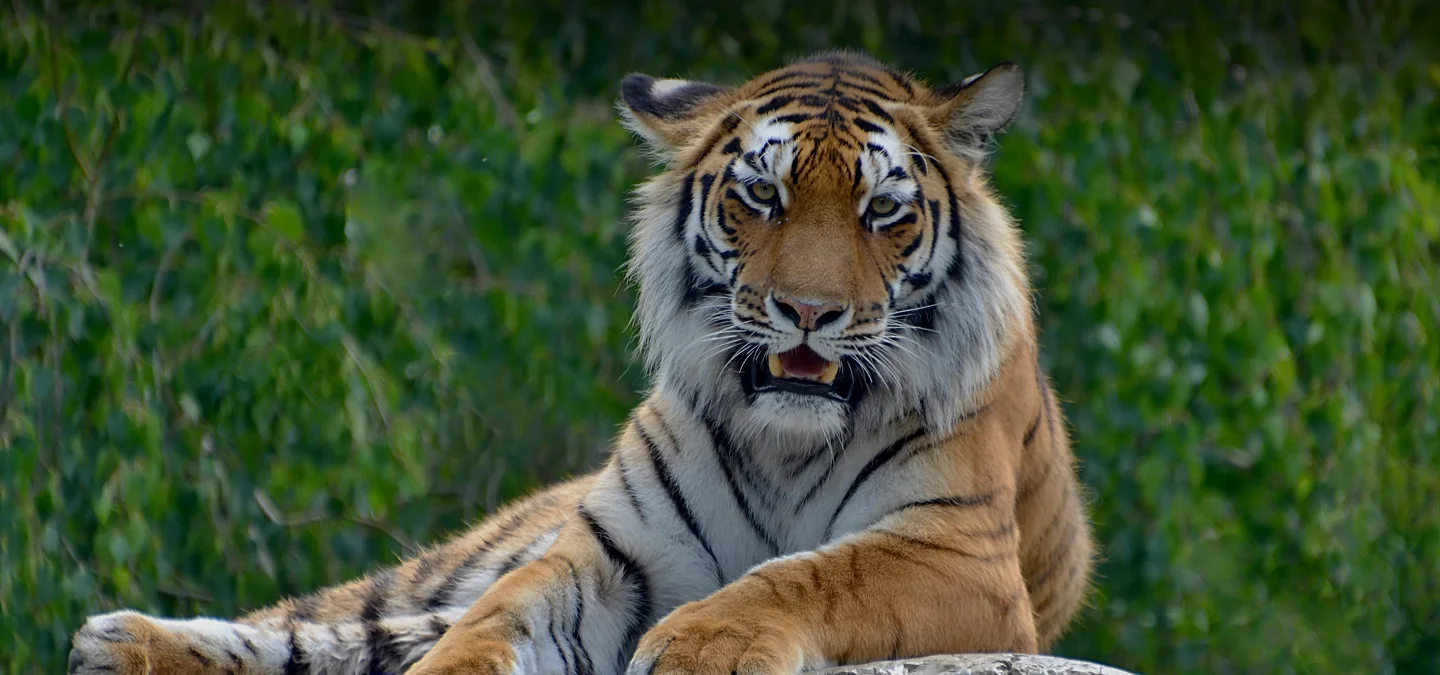
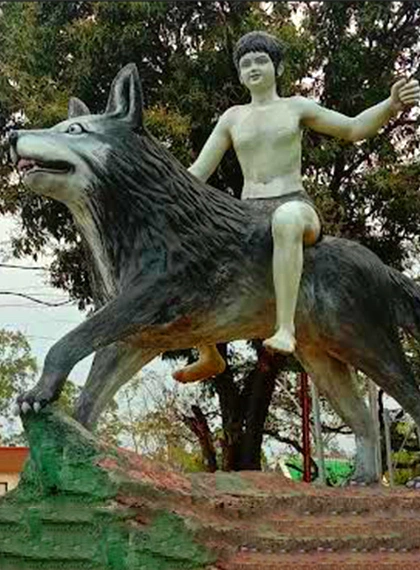
Some forests carry weight, not because of their size or their UNESCO designation, or the number of tigers that have been counted within their boundaries, but because of the stories associated with them. One such place is Pench National Park. Straddling the southern edge of the Indian state of Madhya Pradesh and the northern reaches of Maharashtra, in central India, this reserve is the setting that inspired Rudyard Kipling with its landscapes for The Jungle Book. Mowgli’s forest was not made up. It was an observation of real forests in central India.
Named after the Pench River that flows from north to south through its core, the reserve has a total area of around 758 square kilometers, with a core area of 292.85 square kilometers and a buffer area of 465 square kilometers. It was declared a National Park in 1983 and came under Project Tiger formally. Seven safari zones, spread across two state jurisdictions, offer the visitor many ways to experience the forest, each with differing terrain, wildlife patterns, and carrying capacities.
Pench National Park attracts families, wildlife photographers, birders, first-time safari travellers, and repeat visitors of Central India who desire a forest that is well-maintained and genuinely wild, yet accessible. This page covers everything from making your Pench jungle safari booking to selecting the right zone, planning your stay, and getting here from major cities.
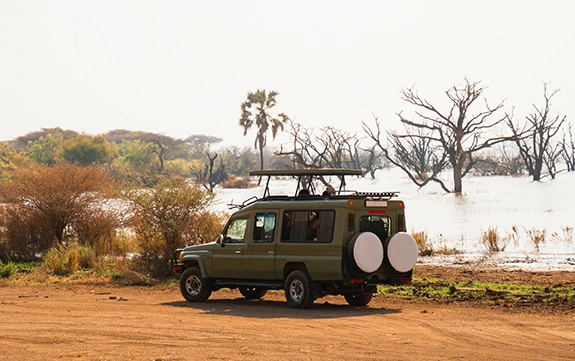
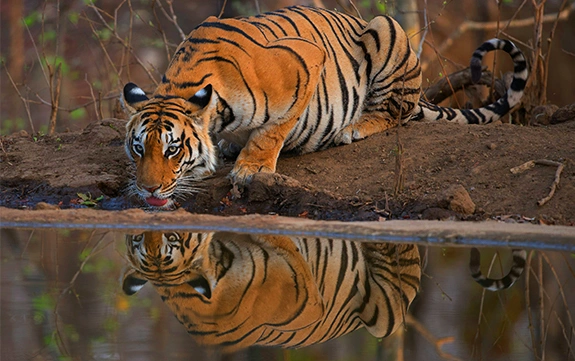
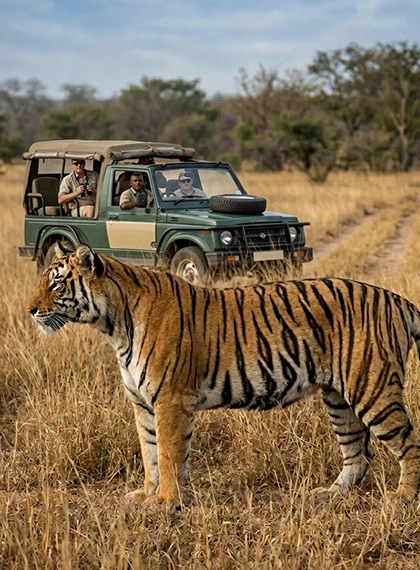
Turia is the oldest and most established safari area in Pench National Park in Madhya Pradesh side. It is near the border of the state with Maharashtra and is the busiest area for tiger movement in the region, with various waterholes, open corridors of teak forest, and reliable sighting records. The Pench Wildlife Museum is located at the Turia gate and records the natural history of the reserve as well as its more famous Jungle Book connection. With a carrying capacity of 74 jeeps per day, morning and night, Turia carries the highest visitor load in the reserve. It is the recommended starting point for first-time visitors making their Pench jungle safari booking.
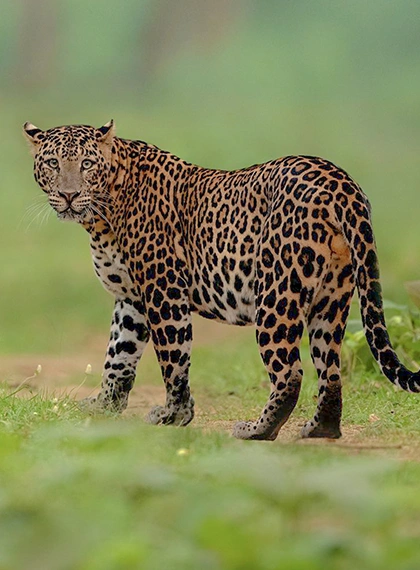
Karmajhiri and Jamtara are the quieter core zone options from the Madhya Pradesh side of Pench Tiger Reserve. Both have lower daily vehicle limits than Turia, which means that they are constantly less crowded and better suited to visitors seeking a leisurely safari pace. Karmajhiri includes the eastern forest block of the reserve, which cuts through the Seoni district forest division. The terrain here includes mixed dry deciduous cover and seasonal nullahs and patches of grassland with attractive chital, sambar, and gaur in good numbers. The RuniJhuni nature trail, which is accessible from the Karmajhiri gate, is a short guided walk and gives a closer experience of the forest floor and its ecology.
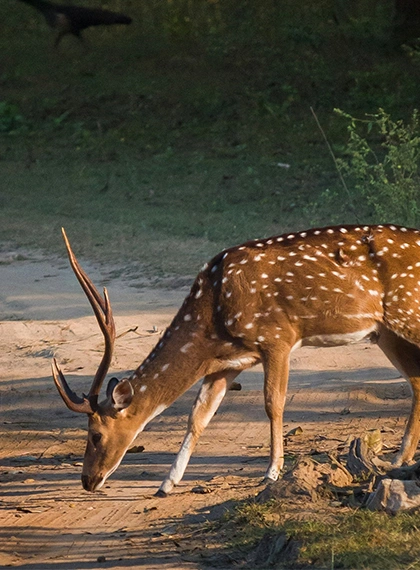
The Mowgli Pench Wildlife Sanctuary is a formally designated protected area of 118.30 sq km, which is a part of the core zone of Pench Tiger Reserve together with Indira Priyadarshini Pench National Park. It is a separate legal entity, not an alternate name for the national park. The sanctuary is located in the same safari zone network and is accessible through the standard Pench National Park safari booking system. Its name is a direct reference to the Jungle Book link in that the forests that comprise this landscape are often credited as being the source of much of the inspiration for Rudyard Kipling's work. Wildlife movement across the sanctuary and national park is continuous, with tigers, leopards, and wild dogs being tracked across both areas.
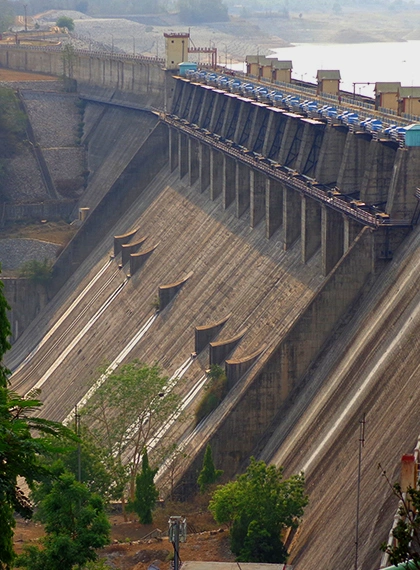
The Totladoh Reservoir or Meghdoot Dam reservoir is a large water body formed by a dam across the Pench River near Totladoh. It spans an area of about 72 square kilometres out of which 54 sq km is in Madhya Pradesh and 18 sq km in Maharashtra. The reservoir is an important dry-season water source for wildlife across the reserve, and its seasonal islands attract winter migratory waterfowl such as ducks, pochards, coots, and bar-headed geese. The surrounding area is productive for birding during the cooler months. It is also a scenic point within a broader Pench Tiger Reserve landscape and can be visited as a part of a buffer zone excursion or a naturalist-guided excursion.
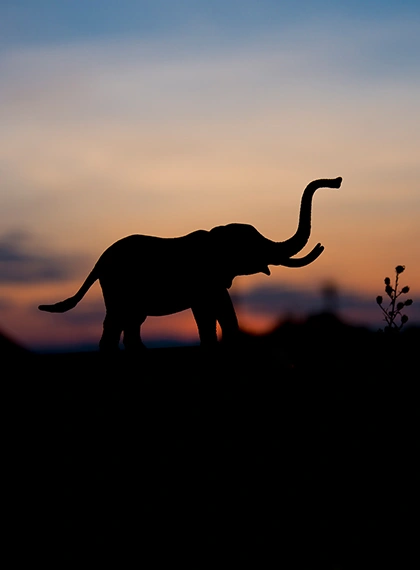
The Rukhad range forms a buffer zone on the Madhya Pradesh side of the Pench, which is a designated area for night safaris. After sunset, the dynamic in the forest changes completely. Nocturnal species such as Indian Civets, Spotted Owlets, Jungle Cats, Porcupines and Indian Wolves become active throughout the bamboo-rich Rukhad landscape. The night safari permits for this zone are issued on the day of safari from the forest department counter, and are not bookable through the standard Pench online booking system. Rukhad also adjoins the Pench-Satpura corridor and hence is ecologically important as a dispersal corridor for tigers and leopards from one reserve to another. The cycling excursion in the Rukhad area, on a route passing through the forest roads, is another low-impact means of experiencing this area of the reserve.
The villages and the countryside outside the Pench Tiger Reserve, in Seoni district, provide a buffer-belt which is as much a part of the visit as the core zones. Communities including the Gond, Baiga and Kolam have been in coexistence with this forest for generations and this relationship with the land is evident in the local crafts, seasonal agricultural practice and ecological knowledge that is transmitted through families. The potter's village of Pachdhar is a short drive from the Turia gate area and is one of the known stops for visitors to learn about traditional craft. Guided village walks provide an opportunity to engage with these communities.

Winter is the peak season at Pench and the most competitive period to book the Pench safari. Temperatures remain between 8 and 25 degrees Celsius, making morning and evening slots genuinely comfortable. Thinning of vegetation helps to improve visibility in all zones. Wildlife is concentrated around waterholes and sightings are more frequent. This is the most popular time for family and first-time visitors. December and January dates, early booking several weeks in advance of Pench online booking is highly recommended to not to miss out on favorite zones.

Summer is hot, with temperatures up to 42 degrees Celsius through April and May, but consistent with wildlife experiences, it is always the best season to spot tigers. Seasonal streams dry up, compelling animals to move along predictable waterhole circuits, known well by guides. Morning safaris start earlier to beat the heat. Vegetation is sparse, and therefore, there are clear lines of sight through the forest floor. Wildlife photographers who come specifically for tiger photography tend to target this window during the more comfortable winter months.

Pench National Park and Wildlife Sanctuary closes areas that are open for safari in the core areas during the monsoon season. The park is usually closed between the months of July and mid-October, as this is the main breeding period for resident wildlife, and the forest roads become impassable due to heavy rains. Pench safari booking online is suspended during this time period. The closure is not merely a matter of administrative choice but instead a conservation measure incorporated into the long-term management plan of the park. Any travel during these months would cover buffer zone villages and the wider landscape of Seoni district only, without core zone access.
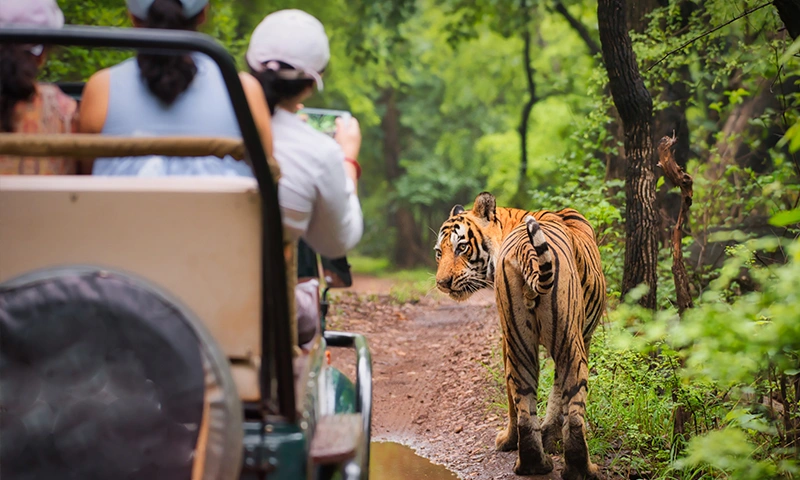
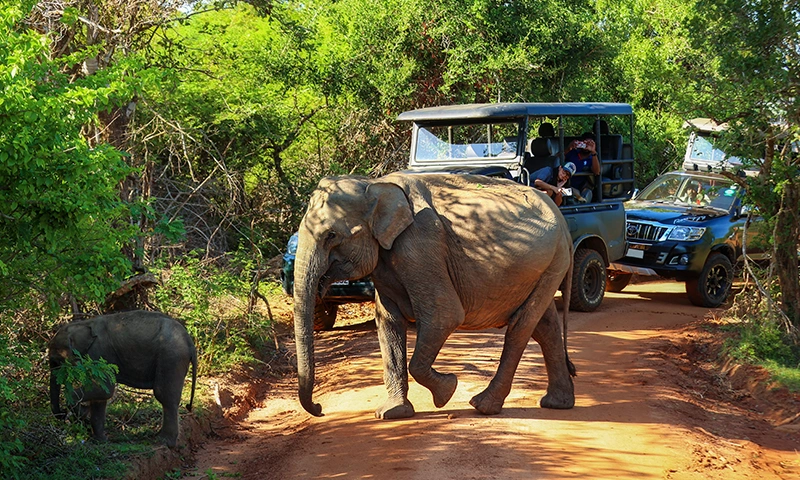
The core zone jeep safari is the primary reason why most visitors visit Pench, and it is still the best format to encounter the park's wildlife in different types of terrain. Licensed six-seater open jeeps run in all the main zone gates in both morning and evening shifts. Summer morning slots usually start around 6.30 AM; winter mornings are a little bit later, around 7.30 AM. Evening shifts are from mid-afternoon until soon after sunset. Each jeep takes up to six visitors and has a certified guide. Guides are assigned on a roster system on the day of the safari, rather than pre-selected by the visitor. Pench jungle safari booking needs to be done in advance.
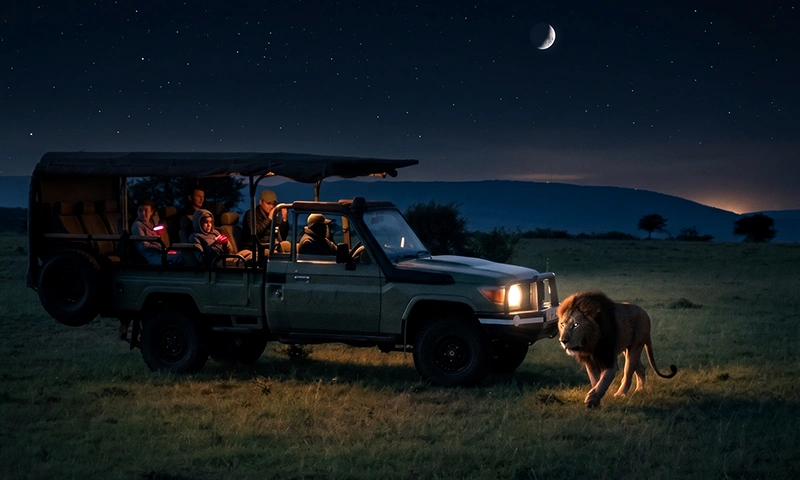
Night safaris at Pench are allowed at certain buffer areas, in sections of the Khawasa and Rukhad zones of the Madhya Pradesh side. These drives are held after sunset and last for about three hours. The experience is essentially different than with daytime safaris. Nocturnal species are active after dark, such as Indian Civets, Porcupines, Spotted Owlets, Jungle Cats, and small mammals that are rarely encountered in daylight hours. The atmosphere in a forest with just vehicle headlights and a canopy of stars above is one that the visitors specifically came back for. Night safari permits are issued on the day of the safari from the forest department counter and cannot be booked, unlike the case of a Pench National Park safari booking.
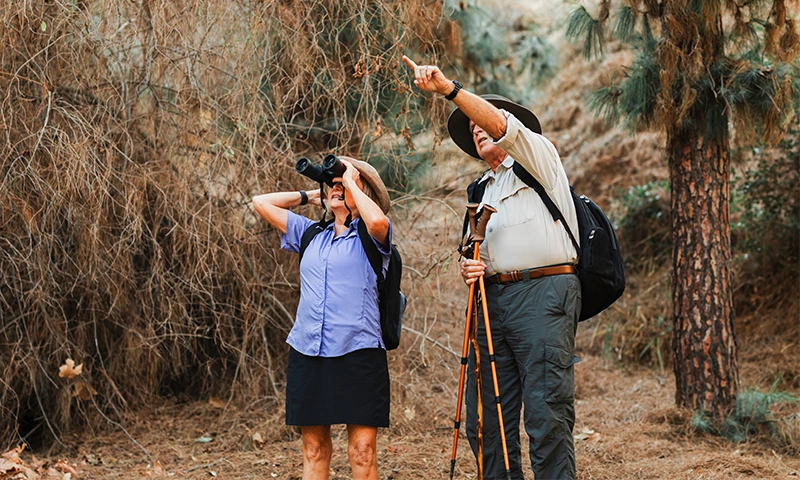
With more than 285 Resident and Migratory species of birds recorded within the reserve, Pench offers serious opportunities to birders that go far beyond anything one can cover on a moving safari vehicle. Dedicated birding walks along forest edges, riparian corridors, and buffer zone wetlands reveal species that need stillness and patience: the Brown fish-owl perched over a stream, the Indian Pitta foraging in leaf litter, raptors circling thermals above the canopy. Early morning from 6 AM - 8 AM is most productive. These walks are made in the buffer zone with certified naturalists. There is no need for any separate government permit, but it is highly recommended to have accommodation booked in advance from accommodation at Pench National Park for the early morning slots.
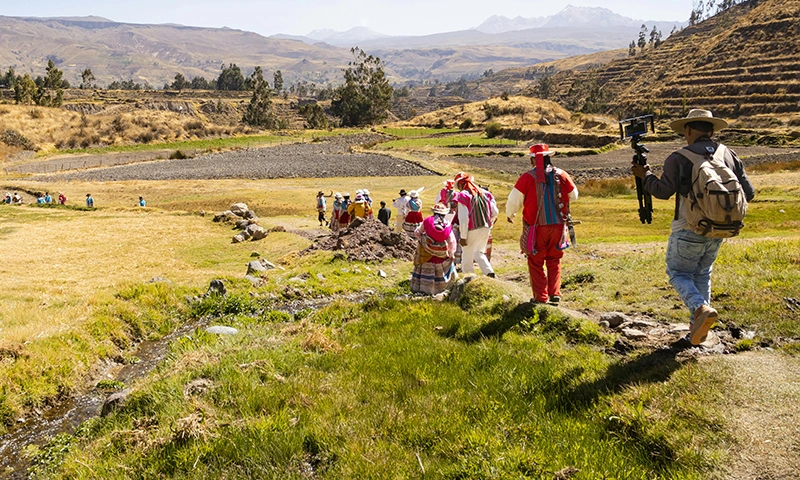
The communities residing along the boundary of the buffer zone at Pench are a lifestyle that has been in existence with this forest for generations. Craft traditions, agricultural practices and knowledge of forests related to the calendar and ecological knowledge of communities such as the Gond and Korku people are shared through structured interactions. These are not staged cultural plays. They are true exchanges based on mutual benefits models that give local communities an economic stake in the protection of the reserve. Most quality lodges around Pench have the same or are able to facilitate these walks without any additional government permits.
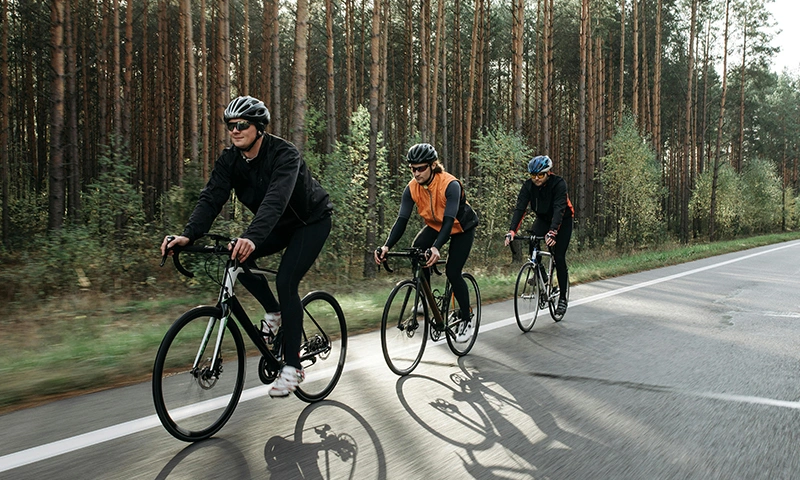
Cycling tours through the Pench buffer zone are provided by some of the lodges and responsible tourism operators as a low-impact alternative to motorised exploration. Routes usually include riverside trails, agricultural edges, and forest corridors that act as a border to the reserve and take between one and three hours, depending on the route selected. The slower pace of cycling provides conditions for close observation of the smaller wildlife, tree species, and insect life, and the broader ecological landscape that is located between the human settlements and the core forest. These tours are suitable for relatively fit adults and older children. Prior booking through your accommodation provider is required, as independent entry into buffer trails is not permitted.
Pench's open dry deciduous terrain works strongly in favour of photographers. The lower understorey level and thinned canopy from February onwards mean that there are clear sight lines that are hard to get in the denser woodland of places such as Kanha or Tadoba. Dedicated photography safaris can be taken where you have time at the sighting spots without the pressure of a normal safari schedule. The golden light at the edge of the forests in the hour after the sun rises and an hour before it sets generates the type of clean images of tigers and raptors that fill serious photo albums of wildlife photography. A few lodges near Pench support private photography safaris with naturalists who know how to understand animal behaviour and move the vehicle for the best possible framing. For this, a telephoto lens of at least 400mm is strongly recommended.
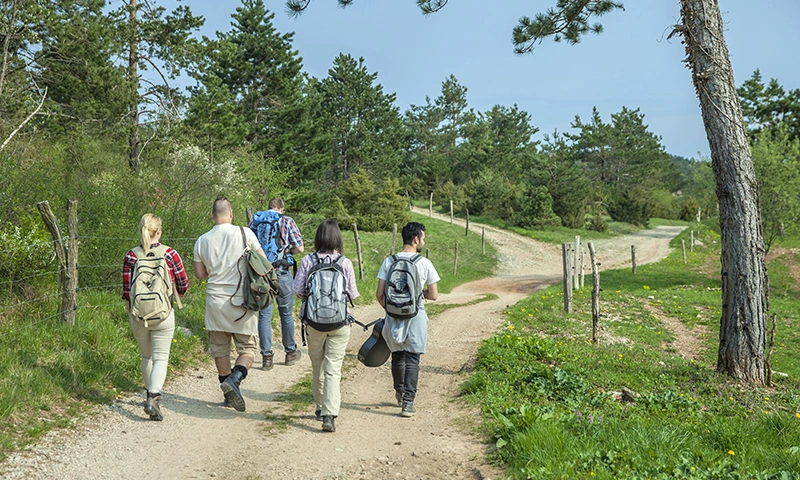
Guided nature walks are available in the buffer zone of Pench, and they are carried out by naturalists approved by the forest department. They redirect the destination of the forest experience away from sightings of large mammals into ecology, tracking, and natural science. Participants learn how to read pug marks, identify tree species by bark and leaf, learn about the function of forest waterholes, and bird behaviour at close range. Nature walks usually take between two and three hours, and are most productive in the early morning. They are especially suited to repeat Pench visitors who have done several jeep safaris in Pench and wish to have a more down-to-earth and educational experience of the same forest. Availability must be checked with the accommodation at Pench National Park before arrival.
Wildlife travel in central India makes most sense if it is planned as a connected circuit, rather than an isolated visit to a destination. Pench lies at the heart of one of the wealthiest wildlife corridors in India and is flanked by the Kanha National Park to the north and the Bandhavgarh Tiger Reserve further east. A single itinerary that connects these three reserves offers what no park visit can provide: an outstanding depth of knowledge of central Indian forests and the wildlife that moves through them.
Memorable India’s Bandhavgarh, Kanha, and Pench wildlife package is a tailor-made tour package designed for travellers who want to experience the full picture. It starts from Delhi, two safari days in Pench National Park via Nagpur, then head north to Kanha to explore the Barasingha habitat and then proceed to Bandhavgarh which has one of the highest densities of tigers in any reserve in India. The itinerary has been designed to avoid dead days and logistical gaps, and overnight stays are arranged as close to the morning safari gates at each location.
There is no holiday with the wildlife as a background. It is a trip when wildlife is the topic, the timetable, and the memory you bring back with you. Every accommodation choice, every safari zone selection, and every transfer is aligned to maximise time inside the forest and minimise time on the road between experiences.
The Pench safari part of this trip is managed to end, including zone selection, online safari booking for both MP and Maharashtra sides where applicable, certified guide coordination and on-ground support. For the families, solo travellers, couples, and small groups who wish to have a structured but flexible way of seeing Central India’s wildlife circuit without having to deal with multiple state portals and disconnected logistics, this package is a more coherent alternative.
If you are a first-time safari traveller who is looking to know which national parks in India offer the best wildlife experiences across different kinds of forests, the Memorable India wildlife guide is a good reference point before finalising your itinerary. For those who have already settled on Pench and are now wanting to add Bandhavgarh to the same trip, the Bandhavgarh travel guide on the Memorable India blog describes zone planning, timing, and what to expect from that reserve in detail.
Reach out to Memorable India to discuss itinerary options, zone recommendations, and safari availability for your desired travel dates.