Kailash Mansarovar Tour Package from Ahmedabad | 2026 Yatra
  • Duration

    Duration

    14 Days
  • Destination Covered

    Destination Covered

    Kathmandu, Nepalgunj, Simikot, Hilsa, Taklakot, Mansarovar Lake, Darchen, Yamdwar, Dirapuk, Dolma La, Zuthulpuk, Saga, Kerung
  • Places

    Places

    13 Places

Overview

Sardar Vallabhbhai Patel International Airport handles a rising share of pilgrim traffic bound for Mount Kailash each season, most of it routed through Kathmandu with a single Delhi connection or a direct sector when carriers add capacity for the May to September window. The kailash mansarovar tour package from ahmedabad is built around this routing reality and around Gujarat’s strong Jain and Hindu pilgrim base, which places specific expectations on meal planning, acclimatisation pacing, and group composition.

This package serves seniors travelling in family groups, working professionals joining a fixed departure batch, and small private circles who prefer chartered vehicles across the Tibet plateau or Nepal-side overland stretches. Format flexibility sits at the core: pilgrims can choose the helicopter-assisted itinerary via Simikot and Hilsa for shorter timelines, the overland Kerung route for a slower and cheaper yatra, or the fully chartered private group for families travelling with elders.

Cost logic is driven by three variables: routing choice (helicopter versus overland), group size at the time of booking, and the season window. Family bookings of four or more pilgrims often reduce the ahmedabad to kailash mansarovar tour package per-person outlay because permit fees, guide costs, and vehicle charges get shared across the group. This is where the kailash mansarovar package from ahmedabad differs sharply from generic solo-batch products sold in metros.

The Memorable India kailash mansarovar tour from ahmedabad ships with satvik Jain-compliant meals through the yatra, oxygen support at higher altitudes, licensed Sherpa and Tibet-side guides, and 24/7 travel assistance from the day the permit process begins in Kathmandu.

Get Expert Advice & free Quote

=

Highlights

  • Routing: SVPI Ahmedabad to Kathmandu via a single Delhi connection, or direct sector during peak May to September months.
  • Yatra format: Helicopter-assisted Simikot and Hilsa itinerary for compressed timelines, plus overland Kerung route for slower acclimatisation.
  • Group flexibility: Fixed departure batches, small private circles of six to eight, or fully chartered private group for family travellers.
  • Meal planning: Satvik Jain-compliant meals across Kathmandu, Nepal border stops, and Tibet plateau accommodations throughout the yatra.
  • Permits handled: Chinese group visa, Tibet Travel Permit, and Alien Travel Permit processed centrally from the Kathmandu office.
  • Accommodation: Verified hotels in Kathmandu, guest houses at Nyalam and Saga, plus basic lodges at Darchen and Mansarovar.
  • Vehicles: Toyota Land Cruisers across the Tibet plateau, supply trucks for luggage, and oxygen cylinders inside each vehicle.
  • Parikrama support: Yak and porter arrangements for the three-day Kailash parikrama, with medical staff on standby at Dirapuk.
  • Acclimatisation buffer: Two-night halts at Kathmandu, Kerung, and Saga built into the schedule to reduce altitude sickness risk.
  • Documentation: Passport, photograph, and medical fitness certificate collection coordinated from Ahmedabad ahead of the group departure.
  • Language support: Gujarati-speaking tour manager available on request for senior pilgrim groups travelling from Gujarat.
  • Emergency planning: Evacuation protocol pre-mapped with Kathmandu-based coordinators and 24/7 India-side backup from the operations desk.

Important Notes

  • Passport validity: Minimum six months validity required from yatra start date.
  • Medical fitness: Doctor certificate mandatory for pilgrims above sixty years age.
  • Cost per person: The kailash mansarovar tour package from ahmedabad cost per person varies by route choice.
  • Group discounts: kailash mansarovar tour package from ahmedabad price for 2 people differs from four-pilgrim bookings.
  • Baggage limit: One duffel bag under fifteen kilograms plus one small daypack allowed.
  • Weather variance: Temperatures drop sharply after Saga; layered warm clothing is essential throughout.
  • Cash carry: Nepali rupees needed for Kathmandu, small US dollar notes for Tibet.
  • Insurance: Travel insurance covering high-altitude trekking is mandatory for all pilgrims.
  • Photography rules: Restricted at monasteries and Chinese checkpoints; the guide advises clearly onsite.
  • Alcohol and tobacco: Not advisable during yatra; also prohibited at several holy sites.
  • Booking window: Secure the kailash mansarovar tour package from ahmedabad booking eight weeks ahead.
  • Latest offers: Ask directly for the kailash mansarovar tour package from ahmedabad latest offers before batch closes.

Best Time to Visit

The Kailash Mansarovar operational window runs from early May to late September, with the two strongest travel windows falling in late May to mid-June and again in early September. Both windows offer stable weather across the Tibet plateau and manageable snow conditions at Dolma La pass during parikrama.

Peak Window A: Late May to Mid-June

Skies stay clear across Mansarovar lake and Mount Kailash, daytime temperatures at Darchen sit comfortably in single-digit positives, and the Dolma La crossing remains largely snow-free for most pilgrims. Demand peaks sharply in this window, which pushes the best kailash mansarovar tour package from ahmedabad into early booking territory, often four to five months ahead. Helicopter seats on the Nepalgunj to Simikot sector sell out first.

Shoulder Window: Mid-June to Late July

Monsoon reaches Kathmandu and the Nepal side during this stretch, though the Tibet plateau stays mostly dry due to the rain-shadow effect. Landslide risk on the Kerung overland route rises marginally, so operators favour the helicopter itinerary during these weeks. Costs soften slightly by mid-July, making it an affordable kailash mansarovar tour package from ahmedabad window for flexible pilgrim groups with schedule elasticity.

Avoid Window: Late July to Mid-August

Heaviest monsoon activity in Nepal disrupts helicopter operations at Simikot and delays overland movement through Kerung. Cancellation risk climbs sharply, and the cheapest kailash mansarovar tour package from ahmedabad rates during this window often carry hidden reschedule costs. Most seasoned operators discourage this window for senior pilgrims and family groups travelling with children.

Edge Window: Early to Late September

Post-monsoon clarity returns after mid-August, giving another sharp window of stable weather at Mansarovar and clean Kailash darshan. Nights turn colder at Darchen and Dirapuk, which requires heavier woollens. This is the last practical window before the border shuts for winter, and pilgrims booking here often ask about the kailash mansarovar tour package from ahmedabad cost 2026 to lock in early rates.

Group size and month together drive cost most sharply. Family bookings across late May and September typically capture the sharpest 2026 deals, especially when four or more pilgrims share the same batch. Solo travellers joining fixed departures find the kailash mansarovar tour package from ahmedabad with price sheet varies with twin-sharing availability and helicopter seat load on shared sectors.

Day By Day Itinerary

  • DAY 1

    icon

    Ahmedabad to Kathmandu

    Board the morning flight from Sardar Vallabhbhai Patel International Airport, connect through Delhi, and land at Tribhuvan International in Kathmandu by early evening. The airport transfer takes the group to a verified hotel in the Thamel or Boudha area. Post-check-in, the tour manager runs an orientation briefing, collects passports for permit processing, and conducts a first medical vitals check. Dinner served with a Gujarati satvik menu on request. Overnight in Kathmandu.

    icon
  • DAY 2

    icon

    Kathmandu Preparation Day

    Morning darshan at Pashupatinath temple, followed by a visit to the Boudhanath stupa. The Chinese group visa application moves forward in parallel through the operator’s Kathmandu office. Afternoon slot is kept free for warm-gear rental, oxygen kit familiarisation, and a briefing on parikrama pacing. A group welcome dinner is arranged in the evening with Jain-compliant options. Overnight in Kathmandu.

    icon
  • DAY 3

    icon

    Kathmandu to Nepalgunj to Simikot

    An early domestic flight takes the group to Nepalgunj in the western Terai. After a short refuelling halt, a connecting light aircraft carries the batch onward to Simikot at 2,910 metres. A brief acclimatisation walk around Simikot village is scheduled before dinner. Simple lodge accommodation with hot local meals. Overnight in Simikot.

    icon
  • DAY 4

    icon

    Simikot to Hilsa to Taklakot (Purang)

    Helicopter transfer lifts the group across the ridge from Simikot to Hilsa at the Nepal-China border. Immigration formalities are completed after crossing the Karnali river bridge on foot. Chinese SUVs meet the batch on the Tibet side and drive to Taklakot, also known as Purang, at 3,930 metres. Rest and acclimatisation through the afternoon. Overnight in a Taklakot guest house.

    icon
  • DAY 5

    icon

    Taklakot Acclimatisation Day

    A full rest day is scheduled at Taklakot to help the body adjust to the altitude gain. Short walks around town, monitoring of oxygen saturation levels, and hydration protocols are followed. An optional visit to the local Tibetan market is possible for those feeling well. Hot Indian-style vegetarian meals are served through the day. Overnight in Taklakot.

    icon
  • DAY 6

    icon

    Taklakot to Mansarovar Lake

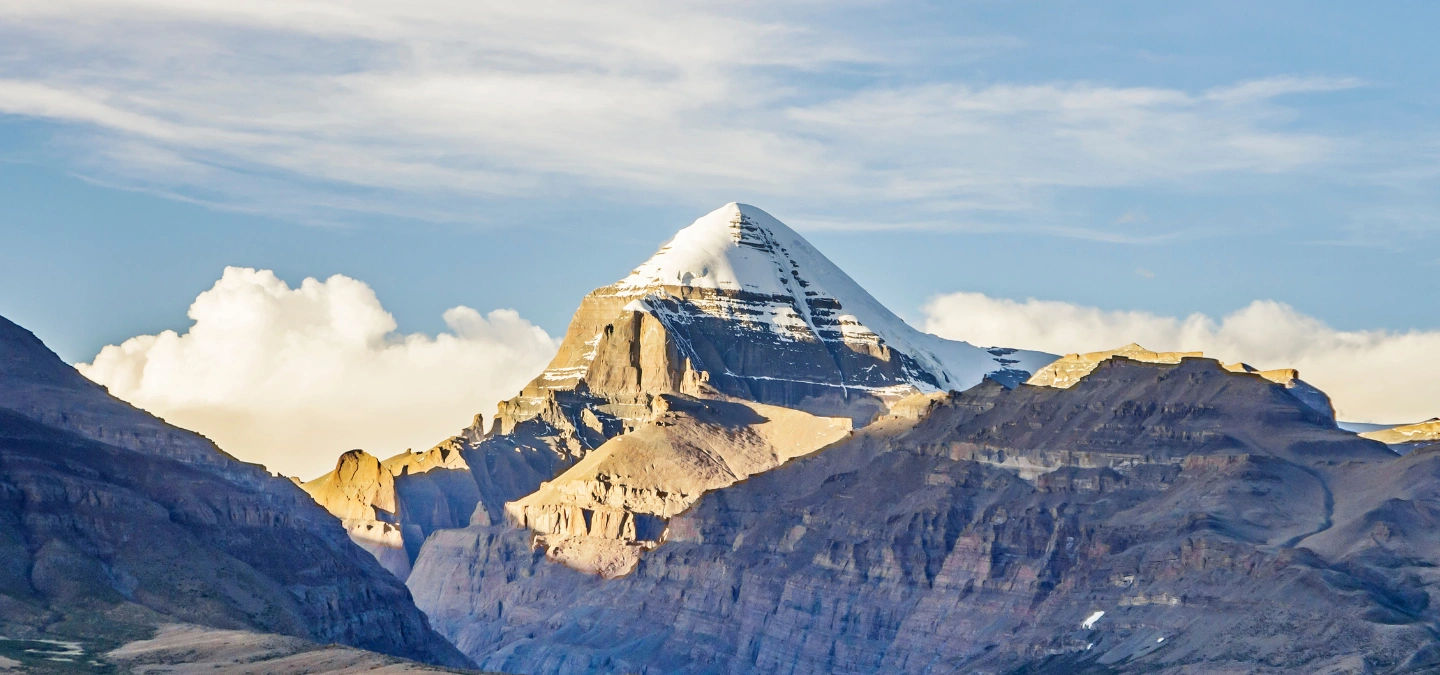
    The convoy drives across the Tibetan plateau toward Chiu Gompa on the shore of Lake Mansarovar at 4,590 metres. First darshan of the holy lake and a clear view of Mount Kailash open up during the drive. An evening puja and havan are conducted on the lake shore by a travelling priest. Overnight in a guest house near the lake.

    icon
  • DAY 7

    icon

    Mansarovar Parikrama and Drive to Darchen

    Sunrise offers a chance for a holy dip at Mansarovar for those medically cleared. The vehicles complete a partial circumambulation of the lake before proceeding to Darchen at 4,600 metres, the base for the Kailash parikrama. The rest of the day is used for kit preparation, yak and porter allocation, and briefing. Overnight in Darchen.

    icon
  • DAY 8

    icon

    Parikrama Day One, Darchen to Dirapuk

    A short vehicle transfer takes the group to Yamdwar, the traditional starting point of the parikrama. A trek of roughly 12 kilometres follows through the Lha Chu valley to Dirapuk at 4,900 metres, offering the closest north face darshan of Mount Kailash. Yak and porter support is available throughout for baggage. Overnight at Dirapuk guest house.

    icon
  • DAY 9

    icon

    Parikrama Day Two, Dirapuk to Zuthulpuk via Dolma La

    This is the longest and toughest day of the yatra, covering close to 22 kilometres. The route crosses Dolma La pass at 5,630 metres, then descends past Gauri Kund before reaching Zuthulpuk at 4,790 metres. The tour manager sets a slow, staggered pace and keeps oxygen support close at hand. Simple meals served at Zuthulpuk. Overnight guest house stay.

    icon
  • DAY 10

    icon

    Parikrama Day Three, Zuthulpuk to Darchen, Drive to Saga

    A short 6-kilometre walk completes the sacred parikrama and returns the group to Darchen. Vehicles then drive back across the plateau to Saga at 4,600 metres, where hot showers, warm meals, and full rest are available. Recovery from the parikrama begins here. Overnight in Saga.

    icon
  • DAY 11

    icon

    Saga to Kerung

    The drive descends toward Kerung at 2,700 metres, and the drop in altitude brings noticeable relief in breathing and appetite. Chinese immigration procedures are initiated for the exit. Overnight in a Kerung guest house with regular power and hot water availability.

    icon
  • DAY 12

    icon

    Kerung to Kathmandu

    Chinese immigration exit is completed in the morning, followed by a walk across the friendship bridge to the Nepal side. Nepali vehicles drive the group back to Kathmandu, with lunch stops en route. Arrival in Kathmandu is expected by early evening. A celebratory dinner is arranged for the group. Overnight in Kathmandu.

    icon
  • DAY 13

    icon

    Kathmandu Leisure Day

    A full rest day is kept aside for physical recovery and reflection. An optional half-day tour of Patan or Bhaktapur heritage sites is available for those interested. Gear returns, laundry, and packing for the return flight are completed through the afternoon. Farewell dinner in the evening. Overnight in Kathmandu.

    icon
  • DAY 14

    icon

    Kathmandu to Ahmedabad

    Morning airport transfer to Tribhuvan International Airport. The return flight to Sardar Vallabhbhai Patel International Airport is routed through Delhi, or on the direct sector where available. The yatra concludes with arrival in Ahmedabad, closing the kailash mansarovar yatra package from ahmedabad on schedule.

    icon

How to Book

Booking with Memorable India starts with a short conversation. The team maps route choice, group size, medical readiness, and departure batch to the pilgrim profile before quoting numbers, so pricing reflects the actual yatra shape, not a template. Pilgrims from Gujarat can call the Ahmedabad-facing coordinator directly, drop a query through the Memorable India Contact Us page, or start a chat request through the parent Kailash Mansarovar Yatra page for a same-day callback.

Three practical routes exist to lock a booking. The first is a direct call for seniors and family groups who prefer a walkthrough of the itinerary before payment. The second is an online enquiry form for research-stage pilgrims comparing operators. The third is a WhatsApp-based confirmation used most often by returning clients from Gujarat’s Char Dham circuit who already trust the operator. Each route ends in the same personalised quote, seasonal advisory, and permit-timeline commitment.

Early bookings unlock priority helicopter seats, verified hotel picks, and Gujarati-speaking manager allocation. Start eight to twelve weeks ahead of the intended batch for the smoothest permit cycle.


Inclusions

Price Guide

Hotels

Other Info

Frequently Asked Questions

Three factors drive pricing sharpest: route choice between helicopter and overland Kerung, group size at booking, and departure window inside the May to September season. Helicopter itineraries via Simikot and Hilsa carry higher per-person costs due to fixed-wing and rotary charter loads, while the Kerung overland route trims cost for pilgrims with a longer window. Twin-sharing arrangements at Kathmandu, Saga, and Darchen also shift the final quote.

Head to the Memorable India Contact Us page or the parent Kailash Mansarovar Yatra product page and submit the enquiry form with the intended batch month, group size, and pilgrim age brackets. Users searching to book kailash mansarovar tour package from ahmedabad online land on the same form regardless of entry point. A Gujarat-facing coordinator returns the call within one working day with a routing recommendation and a permit timeline. Payment happens in two tranches, an advance to block permits and a balance closer to departure.

The 14-day itinerary described above is the standard schedule for SVPI departures. Costs are quoted only after route selection, because the helicopter-assisted variant and the overland Kerung variant have different fixed-cost bases. Requesting a written breakdown by section, flights, permits, hotels, vehicles, and parikrama support, is the fastest way to compare quotes across operators fairly.

Judgement here rests on three tests: operator track record on the Simikot and Hilsa sectors, permit handling reliability at the Kerung and Purang borders, and the ability to serve satvik Jain-compliant meals across Tibet. Memorable India runs the Nepal-side circuit under a single accountability chain, from Ahmedabad-facing sales to Kathmandu operations, which senior pilgrims consistently rate on that reliability axis.

Family bookings of six or more pilgrims see the sharpest per-person savings because permit fees, guide charges, and vehicle costs get spread across the group. Late May and September batches also lower the effective quote. Requesting a private group format instead of joining a fixed departure gives full control on pacing, meal timing, and stopover choices, which suits multigenerational families.

Send a short brief covering intended batch month, total pilgrim count with ages, route preference between helicopter and Kerung overland, and any medical considerations. That single message is enough for the coordinator to draft a customised itinerary and a numbered quote. Quotes are held valid for two weeks in most cases, which gives Gujarat-based families room to align schedules internally before confirming.

Three anchors: a fixed accountability line from Ahmedabad sales into Kathmandu operations, satvik Jain-compliant meal planning end to end, and Gujarati-speaking tour manager availability for senior groups. Generic packages sold in metros often route Gujarat pilgrims through third-party consolidators, which weakens the accountability chain when altitude or weather triggers a schedule change on the Tibet side.

A pre-yatra doctor consultation is mandatory above sixty years, with clearance on cardiac, respiratory, and blood pressure fronts. A daily walking practice of five to eight kilometres for eight to ten weeks before departure builds the base stamina needed at Dolma La. Ahmedabad's flat terrain means most pilgrims need a specific climb-training add-on, which the tour manager briefs on during the first call.

Satvik vegetarian meals are arranged from Kathmandu onward, with Jain-compliant variants available on request at every meal stop. The Tibet-side kitchens are briefed in advance on onion-garlic-free preparation, and dry rations from Kathmandu are carried forward for the parikrama nights at Dirapuk and Zuthulpuk. Jain pilgrims should flag the requirement at the enquiry stage so the kitchen brief locks in before permits are filed.

Yes. Post-yatra extensions to Haridwar, Rishikesh, or a full Char Dham Yatra circuit are commonly booked by South Indian families making the journey up north. The return leg is re-routed through Delhi or Lucknow so travellers do not fly back to Bangalore and then out again. Details on the Uttarakhand Tours and Char Dham Yatra pages help plan the joint itinerary.

What Our Travellers Say