+919871148514
 info@memorableindia.com


Day By Day Itinerary
DAY 1

Hospet
Upon your arrival at Hubli Airport or Hospet Junction, a Memorable India representative will meet you and transfer you to your hotel in Hospet by private air-conditioned vehicle. The drive from Hubli Airport to Hospet covers approximately 144 kilometres and takes around three hours to reach, while the railway station is within the town itself. After check-in, take some time to rest and settle in.
In the late afternoon, head to the Tungabhadra Dam, located at a short drive from Hospet. Built across the Tungabhadra River, the dam offers panoramic views of the reservoir and surrounding hills. The garden area of the dam and the musical fountain (operational during evening hours, subject to schedule) make for a relaxed start to your trip. This visit also helps orient you to the landscape around Hospet before the intensive heritage exploration that follows over the next two days.
Evening: Return to your hotel in Hospet. Dinner at leisure (not included in package). Your guide will brief you on the next day’s Hampi itinerary and provide tips for comfortable exploration, including footwear recommendations and water carry reminders, as the terrains at Hampi involve significant walking on uneven and rocky ground.
Overnight: Hospet

DAY 2
Hampi Heritage
After your breakfast at the hotel, begin your full-day Hampi heritage tour with an early start. The 13-kilometre drive from Hospet to Hampi takes roughly 25 minutes. An early arrival helps you beat the midday heat and gives you the best light for photography at the monument sites.
Your guide will begin the tour at the Virupaksha Temple, the oldest and most significant structure in Hampi. Dedicated to Lord Shiva, this temple has been in continuous worship since the 7th century and features a towering 50-metre gopuram visible from across the site. The temple complex includes pillared halls, courtyards, and a smaller shrine dedicated to Goddess Pampa (Parvati). Memorable India’s blog on the Virupaksha Temple architectural history provides additional information if you want to prepare before your visit.
From the Virupaksha Temple, walk through the Hampi Bazaar, a long colonnaded street that once served as the main marketplace of the Vijayanagara capital. Continue to the Hemakuta Hill group of temples, which offers elevated views of the Virupaksha Temple complex and the boulder-dotted landscape stretching to the horizon.
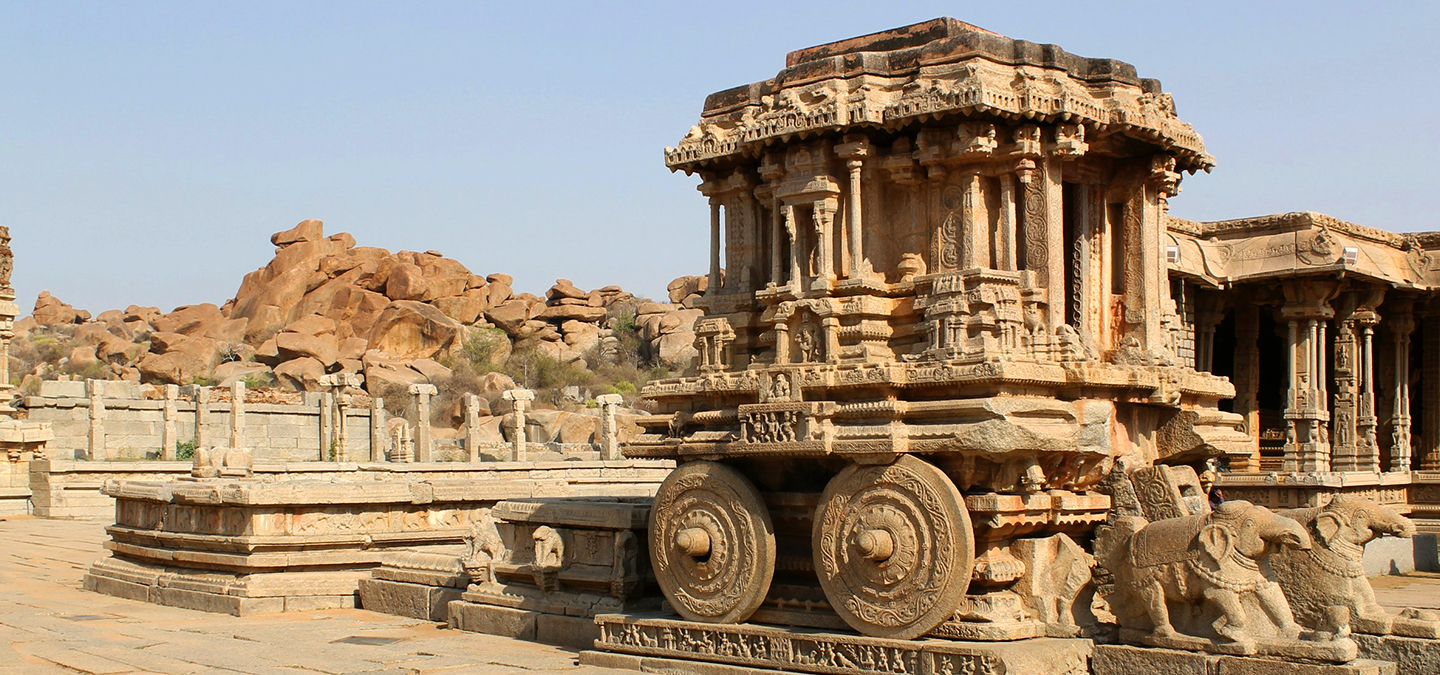
The Vittala Temple complex is the architectural highlight of Hampi. Dedicated to Lord Vishnu in his Vittala form, this 15th-century structure houses the famous stone chariot (a shrine shaped like a temple chariot on wheels) and the musical pillars, which are said to produce distinct tonal sounds when tapped. The open-air pillared hall (maha mandapa) and the intricate carvings on every surface demonstrate the peak of Vijayanagara craftsmanship. Allow at least 90 minutes here to explore thoroughly.
After a lunch break (at your own expense; several small restaurants and cafes operate near the main sites), continue to the Royal Enclosure area. Key stops here include the Lotus Mahal, an ornamental pavilion blending Hindu and Islamic architectural elements; the Elephant Stables, a long structure with domed chambers that once housed the royal elephants; the Queen’s Bath, an indoor pool surrounded by arched corridors; and the Stepped Tank near the Krishna Temple, notable for its geometric precision. The Hazara Rama Temple within the enclosure features detailed narrative panels depicting scenes from the Ramayana across its outer walls.
If time and energy permit, you can also take an optional coracle ride on the Tungabhadra River (available locally, not included in the package) to cross over to Virupapur Gadde on the opposite bank, known for its quiet atmosphere and riverside cafes.
Evening: Return to Hospet. Dinner at leisure.
Overnight: Hospet
DAY 3
Hospet to Badami
After an early breakfast, check out from your Hospet hotel and begin the drive northwest towards Badami. This leg of the Hampi Badami Hospet tour covers roughly 145 kilometres through the Deccan countryside. The route passes through small towns and agricultural land, giving you a glimpse of rural Karnataka that contrasts sharply with the monumental sites.
Your first stop en route to Badami is Pattadakal, located about 22 kilometres before Badami town. This UNESCO World Heritage Site served as the ceremonial capital of the Chalukya dynasty, where kings were crowned. The temple complex here contains around ten major temples, with the Virupaksha Temple (not to be confused with Hampi’s Virupaksha) and the Mallikarjuna Temple being the most prominent. What makes Pattadakal architecturally significant is the coexistence of Nagara (North Indian) and Dravidian (South Indian) temple styles in a single complex, a feature that reflects the Chalukya dynasty’s position at the crossroads of two major architectural traditions.
From Pattadakal, continue to Aihole (approximately 16 kilometres further). Often described as an open-air museum of Indian temple architecture, Aihole contains 120 temples that span over several centuries and multiple experimental styles. The Durga Temple, with its apsidal (curved) plan, and the Lad Khan Temple, one of the oldest surviving structural temples in India, are the main highlights. Aihole is the site where Chalukyan architects tested forms that would later be refined at Pattadakal and Badami, making it a place of considerable academic and historical importance.
After completing Aihole, drive to Badami (about 34 kilometres). Check in to your hotel, have lunch (at your own expense), and then proceed to the Badami Cave Temples. There are four main caves, each carved into the face of a red sandstone cliff:
- Cave 1 is dedicated to Lord Shiva and features a large Nataraja sculpture with 81 dance poses.
- Cave 2 is a Vaishnavite cave with depictions of Vishnu in his Trivikrama and Varaha forms.
- Cave 3 is the largest and most ornately carved, dating back to 578 CE, featuring Vishnu seated on the serpent Adishesha.
- Cave 4 is a Jain cave with sculptures of Jain Tirthankaras, notably Mahavira and Parshvanatha.
The caves involve a moderate climb up stone-cut steps. Each cave provides views over the Agastya Lake below as well as the surrounding town. After the caves, if time allows, walk to the Bhutanatha group of temples at the edge of Agastya Lake, particularly scenic during sunset.
Evening: Return to the hotel. Dinner at leisure.
Overnight: Badami
DAY 4
Badami Fort
After breakfast, visit the Badami Fort perched on the cliff above the caves. The fort area includes the Upper Shivalaya and Lower Shivalaya temples, along with fortification walls and granary ruins. The climb is moderate and rewards you with panoramic views of the town, the red sandstone gorge, and the Malaprabha River valley beyond.
Agastya Lake is flanked by the cave-temple cliffs on one side and the Bhutanatha group of temples on the other. The early morning light makes this the best time for photography. The reflection of the sandstone cliffs in the lake is one of the most recognizable images from Karnataka’s heritage circuit.
After completing your Badami exploration, check out and transfer to Hubli Airport (approximately 100 km, 2.5 hours) or Badami Railway Station for your onward journey. Your Memorable India representative will ensure a timely drop-off based on your flight or train schedule.
This marks the conclusion of your Hampi Hospet Badami tour. For travellers who wish to extend their Karnataka experience, Memorable India can arrange connections to Goa (approximately 5 hours by road from Badami), Mysore, or the coastal town of Gokarna.