 +919871148514
 info@memorableindia.com
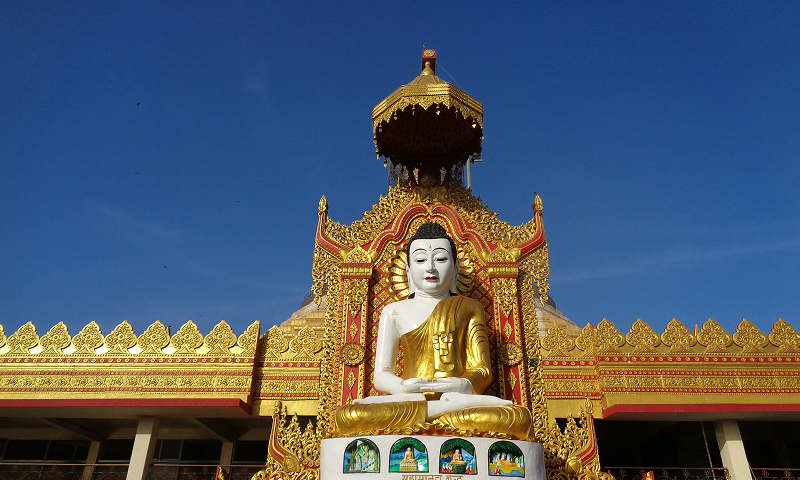
India occupies a very special position in the history of Buddhism, as it is the land where Prince Siddhartha was born, attained enlightenment, preached his teachings and finally attained Mahaparinirvana. Even today, the teachings of Lord Buddha continue to guide millions of people across the world for peace, compassion and mindfulness. Buddhist temples and monasteries spread all across India are not only religious centres but also a living reminder of this spiritual journey. For travellers planning a Buddhist Tour In India, this sacred connection makes the country an irreplaceable destination.
Visiting Buddhist Temples in India is more than a religious activity. These places provide peaceful environments, quiet meditation rooms, and an opportunity to slow down from everyday life. Many Buddhist temples are located in serene environments like hills, forests or ancient towns which help visitors feel relaxed and connected. The sound of chanting monks, spinning prayer wheels and gentle bells creates an atmosphere of deep calmness and reflection. Choosing the Best Time to Visit India can further enhance this peaceful experience, especially when the weather complements meditation and temple visits.
Buddhist temples also narrate tales of ancient learning and the exchange of culture. Monks and scholars used to travel long distances to learn and teach knowledge in these centres. Today, people of different nationalities and backgrounds come to these sacred sites to learn about the Buddhist philosophy, history and traditions. Even people who have no religious background often find comfort in the simplicity and silence of these spaces.
This blog by Memorable India is about 10 popular Buddhist temples of India that are significant for spiritual seekers, history buffs, and travellers alike. In fact, they are often regarded as the Must Visit Buddhist Temples in India for a pilgrimage tour, offering a complete spiritual circuit across the country. Each temple covers a different chapter of Buddhism and is unique and worth exploring. Read ahead to know more:
The Mahabodhi Temple located in Bodh Gaya is the holiest site of Buddhism in the world. It marks the exact spot where Prince Siddhartha meditated under the Bodhi Tree and achieved enlightenment as Lord Buddha. As a result of these, Bodh Gaya attracts monks, pilgrims, and travellers from every corner of the world.
The temple complex is large and peaceful with the main temple rising tall and elegant. The Bodhi Tree, which is said to be a descendant of the original, is located next to the temple and is surrounded by meditation areas. Visitors often sit in silence for long periods for reflection or meditation. The peaceful energy of the place is deeply moving. Mahabodhi Temple is a UNESCO World Heritage Site and is still called the center of Buddhism in India.
Sarnath is one of the most important Buddhist destinations and is located near the city of Varanasi. After reaching enlightenment, Lord Buddha visited here to give his first sermon to his disciples. This moment marked the beginning of Buddhist teaching and the spread of Dharma.
The site comprises ancient stupas, monasteries, and the Dhamek Stupa which stands as a symbol for Buddha’s teachings. The Sarnath Museum, close by, exhibits beautiful sculptures and relics from ancient times. The surroundings are green and peaceful which makes it easy to take a slow walk and think. Sarnath is the perfect place for travellers who want to understand the foundation of Buddhism and its early history.
Kushinagar is the place where Lord Buddha passed his last moments and attained Mahaparinirvana. It is one of the four major pilgrimage sites of Buddhism that holds deep emotional and religious significance. The Mahaparinirvana Temple here has a large statue of Buddha lying on his back, symbolizing peace and acceptance.
The ambience at Kushinagar is silent and respectful. Monks of various nations conduct prayers throughout the day, creating a very holy atmosphere. The tranquil environment is conducive to visitors thinking about life, death and impermanence. Kushinagar is not crowded like many tourist places and one gets to experience silence and inner peace while learning about the last chapter of Buddha’s journey.
Nalanda Mahavihara was once one of the greatest learning centres in the ancient world. Scholars from countries such as China, Korea, Tibet and South East Asia came here to learn Buddhism, philosophy, medicine and science. Though now in ruins, Nalanda still stands as a symbol of great ancient knowledge and education.
Walking through the remains of monasteries and classrooms gives visitors an idea of the former importance of Nalanda. The way the site is laid out illustrates how well thought-out the university was. Nearby museums exhibit manuscripts and artefacts discovered during excavations. Nalanda is a must-visit for history lovers who wish to understand the contribution of Buddhism to education and cultural exchange throughout Asia.
Tawang Monastery is the largest Buddhist Monastery in India and one of the largest in Asia. Located at a high altitude in the state of Arunachal Pradesh, it boasts gorgeous mountain views and spiritual depth. The monastery is a component of the Mahayana school of Buddhism.
The complex consists of prayer halls, living quarters for monks, and a library of ancient texts. Inside the main hall is a large golden statue of the Buddha which makes a powerful presence. The quiet mountain air and the scenic surroundings contribute to the spiritual feeling. Tawang Monastery is also important in the lives of the local people and is part of the cultural environment: it is not only a religious but also a cultural landmark.
Rumtek Monastery is one of the most important centres of Tibetan Buddhism in India. It is the principal seat of the Karmapa, the spiritual leader of the Karma Kagyu lineage. Located near Gangtok, the monastery is on a hill surrounded by greenery.
The architecture of Rumtek has colourful details and is complex, which is a sign of Tibetan traditions. Visitors can watch monks chanting prayers, conducting rituals, or studying scriptures. The monastery also contains sacred relics and murals. Rumtek is a serene place where one can get to know about Tibetan Buddhist practices and enjoy the natural beauty of Sikkim.
Hemis Monastery is the largest and richest monastery in Ladakh and it is part of the Drukpa lineage of Tibetan Buddhism. It is best known for the Hemis Festival, held every year, which is complete with masked dances, music and cultural performances.
Even outside of festival time, Hemis Monastery is worth a visit, as it is a quiet place with a spiritual atmosphere. Surrounded by mountains, the monastery is remote and peaceful. Inside, visitors can see ancient murals, prayer halls and sacred artefacts. Hemis provides insight into the strong connection between Buddhism and daily life in Ladakh.
Mindrolling Monastery is one of the largest Buddhist centres in India and it follows the Nyingma school of Tibetan Buddhism. It is known for its tall stupa, detailed wall paintings and beautifully maintained gardens.
The monastery complex is large and quiet, and ideal for quiet walks and reflection. Visitors often spend some time sitting near the stupa or watching the monks during prayer sessions. Mindrolling Monastery is also an important learning centre where the Buddhist teachings are preserved and passed on. It is a perfect place for travellers to get a calm and spiritual insight.
Thiksey Monastery is one of the most visually outstanding monasteries in Ladakh. Located in a spot on a hilltop, it overlooks the Indus Valley and has stunning views. The monastery subscribes to the Gelug school of Tibetan Buddhism.
The complex has several levels which contain prayer halls, living areas and statues. A giant statue of Maitreya Buddha is one of the attractions. Morning prayers at Thiksey are particularly peaceful and the monks chant in unison. The combination of spiritual practice and scenic beauty makes Thiksey Monastery a place that is memorable to visit.
Enchey Monastery is situated near Gangtok and is surrounded by pine forests and rolling hills. It is of the Nyingma tradition and is said to be blessed by a flying monk, adding to its importance as a spiritual object.
The monastery is smaller in size as compared to others but has a quiet and welcoming atmosphere. During festivals, colourful masked dances are performed, which are extremely popular with locals and visitors alike. Enchey Monastery is ideal for travellers to go for a peaceful experience in nature, while learning about Buddhist culture and traditions.
Buddhist Temples in India are not only places of worship but also centres of learning, peace and reflection. They represent important moments in the life of Lord Buddha and the spread of his teachings throughout the world. Each temple discussed in this blog has something to offer, whether it is rich history, scenic beauty or spiritual peace. Together, they are often counted among the Top 10 Most Popular Temples to Visit in india for those seeking both devotion and discovery.
From the sacred grounds of Bodh Gaya to the mountain monasteries of Ladakh and Sikkim, these places help the visitors to slow down and reconnect with themselves. They welcome people from all backgrounds and encourage values, such as compassion, mindfulness and simplicity.
Exploring Buddhist temples in India can be a deeply meaningful journey. Whether your purpose is spiritual growth, cultural understanding, or quiet moments away from the hustle and bustle of modern life, these sacred sites are often included in Buddhist pilgrimage tour, providing lasting memories and a sense of inner peace that will stay with you long after the journey is over.
The Kerala Backwaters: 11 Things To Know Before You Visit
23 Sep 2026
Udaipur Itinerary: How to Spend 3 Days in Udaipur
22 Sep 2026
The Best Places to See in Varanasi, India
22 Sep 2026
11 Ancient Temples in Palakkad That Deserve to Be Seen
22 Sep 2026
Best Places to Visit in Tamil Nadu, India: A Traveller’s Guide for 2026
21 Sep 2026


