 +919871148514
 info@memorableindia.com
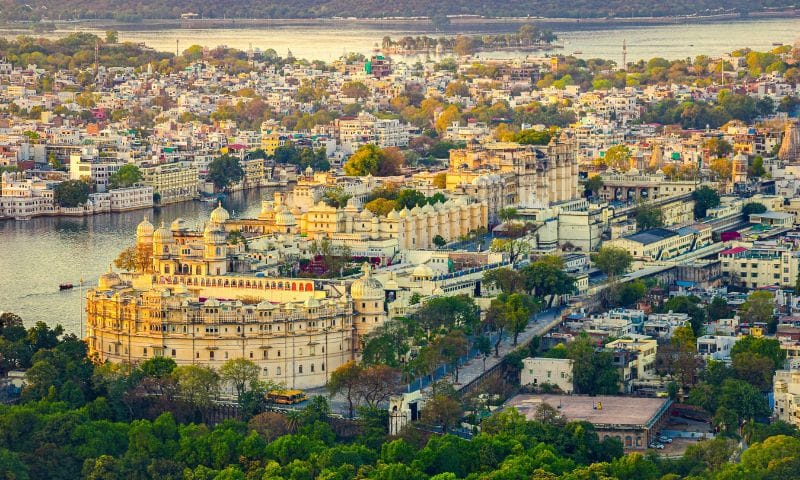
Three weeks is the threshold where an India trip shifts from a highlights reel to a genuine immersion. With 21 days, you can move through four or five distinct regions without the rushed transfers that compress shorter itineraries. You have time to adjust to the pace of each city, eat at local restaurants instead of hotel buffets, and build in a rest day when the heat or the sensory volume calls for one.
India rewards this kind of pacing. The difference between Delhi’s Mughal monuments and Varanasi’s riverside rituals is not just geographic but sensory and emotional. Kerala’s backwaters and Rajasthan’s desert forts belong to different climatic zones, culinary traditions, and cultural vocabularies. A three-week window lets you absorb these contrasts rather than just photograph them.
The 10 destinations below form a practical route that covers northern heritage, spiritual India, wildlife, tropical coastline, and the country’s commercial capital. The suggested day counts add up to 21 to 23 days, depending on pace, and the sequence follows a logical travel path that minimises backtracking.
Suggested Days: 3 days | Best For: History, Mughal architecture, street food, and city energy
Delhi is where most international visitors land, and it earns more than a transit stop. Old Delhi’s narrow lanes around Chandni Chowk pack Mughal-era mosques (Jama Masjid), spice markets, and some of India’s finest street food, from parathas at Parathe Wali Gali to chole bhature at Sita Ram Diwan Chand, into a compressed grid of activity. New Delhi, by contrast, spreads across British-era boulevards connecting India Gate, Rashtrapati Bhavan, and Humayun’s Tomb, a precursor to the Taj Mahal and a UNESCO World Heritage Site.
The Qutub Minar complex, Lodhi Gardens, and the Hauz Khas area add further layers. Three days lets you explore both old and new cities without fatigue.
For a day-by-day breakdown of Delhi’s key sights, the India tour itinerary for 10 days starts with a detailed Delhi section.
Suggested Days: 2 days | Best For: Mughal heritage, the Taj Mahal, and Fatehpur Sikri
Agra’s reputation rests on one building, but the city delivers more than a single monument. The Taj Mahal at sunrise, when the marble shifts from grey-pink to white as the light changes, is a moment that lives up to its reputation. The Agra Fort, a sprawling red sandstone complex on the Yamuna, held four Mughal emperors and offers direct sightlines to the Taj from its upper terraces.
Fatehpur Sikri, 37 kilometres west, is Akbar’s abandoned capital, a ghost city of sandstone palaces and courtyards that conveys the scale of Mughal ambition. Two days covers all three sites comfortably and includes time for Agra’s famous petha sweets and Mughlai cuisine.
Suggested Days: 3 days | Best For: Forts, palaces, textile markets, and Rajasthani culture
Jaipur closes the Golden Triangle and opens the door to deeper Rajasthan. The Amber Fort, perched on a hillside 11 kilometres from the city centre, combines Rajput military architecture with Mughal-influenced interiors. The City Palace, Hawa Mahal, and Jantar Mantar (an 18th-century astronomical observatory) sit within the Pink City’s walled quarter.
What Jaipur adds beyond its monuments is a commercial energy that makes it one of India’s best cities for shopping. Johari Bazaar for gemstones, Bapu Bazaar for textiles and leather, and the block-printing workshops of Sanganer on the city’s outskirts give purpose to a third day. The food, from dal baati churma to pyaaz ki kachori, is distinctly Rajasthani and worth seeking out at local eateries rather than tourist restaurants.
Suggested Days: 2 days | Best For: Lakeside romance, palace architecture, and Mewar heritage
Udaipur sits in a valley surrounded by the Aravalli hills, with a series of man-made lakes that give the city its postcard identity. The City Palace, a massive complex above Lake Pichola, took 400 years to build and mixes Rajput, Mughal, and European influences. A boat ride on Lake Pichola at sunset, with the Jag Mandir and Lake Palace Hotel reflected on the water, is among the most photographed moments in Indian travel.
Udaipur’s appeal extends beyond palaces. The old city has narrow lanes with miniature painting studios, silver jewellery shops, and rooftop cafes that look out over the lake. A day trip to the Ranakpur Jain temple, roughly 90 kilometres northwest, adds one of India’s most intricate marble structures to the itinerary.
Suggested Days: 2 days | Best For: Wildlife safari and Bengal tiger tracking
Ranthambore National Park, on the route between Jaipur and Agra, is one of the best places in India to see Bengal tigers in the wild. The park’s dry deciduous landscape, centred around a 10th-century fort, provides open sightlines that improve spotting chances compared to denser forests. Jeep safaris run twice daily, at dawn and in the late afternoon.
Even if the tigers remain hidden (sightings are probable but never guaranteed), the park’s other residents, including leopards, sambar deer, marsh crocodiles, and a large bird population, fill the safari experience. Two days allows for three or four safari drives, which statistically gives a strong chance of at least one tiger encounter.
Suggested Days: 2 to 3 days | Best For: Spiritual India, Ganga Aarti, ghats, and ancient ritual life
Varanasi is one of the world’s oldest continuously inhabited cities, and it operates on a rhythm entirely its own. The ghats along the Ganges are the city’s central stage: pilgrims bathe at dawn, cremation fires burn around the clock at Manikarnika Ghat, and the evening Ganga Aarti at Dashashwamedh Ghat draws thousands for a choreographed fire ceremony.
The city’s old quarter is a labyrinth of narrow alleys filled with silk weavers, sweet shops, and small temples. A sunrise boat ride on the Ganges offers the widest view of the ghat line and is the single best way to take in the city’s scale. A day trip to Sarnath, where the Buddha gave his first sermon, adds a Buddhist counterpoint to Varanasi’s Hindu intensity.
Suggested Days: 2 days | Best For: Yoga, adventure sports, and Himalayan foothills
Rishikesh has two identities. The first is its role as India’s yoga capital, a legacy reinforced by the Beatles’ visit in 1968 and sustained by hundreds of ashrams and training centres that draw students from around the world. The second is its position as northern India’s adventure hub, with white-water rafting on the Ganges, bungee jumping at Jumpin Heights, and cliff-side cafes overlooking the river.
The Lakshman Jhula and Ram Jhula suspension bridges connect the two sides of town across the Ganges. The evening Ganga Aarti at Triveni Ghat is smaller and more intimate than Varanasi’s but equally atmospheric. Two days is sufficient to experience both the spiritual and adventure sides of Rishikesh. A side trip to Haridwar, just 25 kilometres downstream, adds the Har Ki Pauri Aarti experience.
Suggested Days: 3 days | Best For: Beaches, Portuguese heritage, seafood, and relaxation
Goa functions as India’s beach intermission. Three days here, placed after the cultural intensity of Rajasthan and Varanasi, gives the itinerary a deliberate change of pace. North Goa (Anjuna, Vagator, Baga) has the livelier scene, with beach shacks, flea markets, and nightlife. South Goa (Palolem, Agonda, Colva) is quieter and more suited to rest.
Beyond the sand, Old Goa’s Portuguese churches, including the Basilica of Bom Jesus (a UNESCO World Heritage Site housing the remains of St. Francis Xavier), and the Latin Quarter of Fontainhas in Panjim add cultural dimension. Goan cuisine, shaped by Portuguese, Konkani, and Hindu influences, centres on seafood, coconut, and vinegar-based preparations that differ markedly from the rest of India.
Suggested Days: 2 to 3 days | Best For: Houseboat cruises, tropical landscape, Ayurveda, and spice plantations
The Kerala backwaters are a network of lagoons, canals, and lakes that run parallel to the Malabar Coast. An overnight houseboat cruise from Alleppey (Alappuzha) is the signature experience: you drift through narrow canals lined with coconut palms, past village life that unfolds on the water’s edge, with freshly cooked Kerala meals served on board.
Beyond the houseboats, this section of the trip can include a visit to Munnar’s tea plantations (a four-hour drive into the Western Ghats), an Ayurvedic spa session in Kumarakom, or a walk through a spice garden in Thekkady. Kerala adds a sensory dimension to the trip that neither Rajasthan nor the Ganges plain can replicate: tropical humidity, coconut oil in the cooking, and a landscape that is green in every direction.
For deeper Kerala planning, the India travel guide covers regional logistics and seasonal advice.
Suggested Days: 2 days | Best For: India’s commercial capital, street food, colonial architecture, and Bollywood energy
Mumbai is the logical endpoint for a three-week trip that enters India through Delhi. The Gateway of India, the Chhatrapati Shivaji Maharaj Terminus (a Gothic-revival railway station and UNESCO site), and Marine Drive’s seafront promenade define the city’s colonial core. The Dhobi Ghat open-air laundry and the Dharavi neighbourhood offer perspectives on urban India that sanitised tourist circuits tend to avoid.
Mumbai’s food scene is unmatched in India. Vada pav from a street cart, pav bhaji at Juhu Beach, and a thali at a Mangalorean restaurant in Fort are culinary experiences worth planning around. Two days covers the main sights with enough margin for an evening at Leopold Cafe or a Bollywood film at a grand old cinema hall. International flights from Chhatrapati Shivaji International Airport connect to most major hubs.
The sequence above follows a practical north-to-south arc: Delhi → Agra → Jaipur → Udaipur → Ranthambore → Varanasi (fly) → Rishikesh (fly via Delhi or train) → Goa (fly) → Kerala (fly or train) → Mumbai (fly or train). Domestic flights between cities are affordable and frequent, especially on the Delhi-Varanasi, Varanasi-Delhi-Rishikesh, and Goa-Kochi-Mumbai corridors. Overnight trains are a viable and culturally immersive alternative for some legs.
October to March is the most comfortable window for a pan-India trip. Temperatures are moderate across the north, Rajasthan is pleasant, Goa and Kerala are in their dry season, and Varanasi’s ghats are not oppressively hot. Avoid April to June unless you are heading exclusively to the Himalayas, and be aware that the monsoon (July to September) closes some routes while making others, especially Kerala, spectacularly green.
Most foreign nationals can apply for an Indian e-Visa online at indianvisaonline.gov.in. The e-Tourist visa allows stays of up to 30 days, 1 year, or 5 years depending on the category. Processing takes three to five business days, but applying seven to ten days ahead is advisable.
For a complete first-timer’s planning resource, the how to plan a trip to India guide covers visas, budgeting, health, and cultural etiquette in detail.
India’s climate diversity means you need layers: light cottons for Rajasthan and the south, a light jacket for Delhi winter evenings, and comfortable walking shoes for temple visits and market lanes. The packing essentials guide for India provides a region-by-region checklist.
Twenty-one days in India is not a vacation. It is a recalibration. The country forces you to slow down, look closely, and respond to what is in front of you rather than what you expected. These ten places are not the only ten worth visiting, but they represent the most balanced cross-section of what India offers within a single trip: history, spirituality, wildlife, tropical coastline, culinary range, and the kind of everyday human energy that no guidebook fully prepares you for.
Memorable India’s destination specialists design customised three-week itineraries that handle flights, hotels, guides, and ground transport across all ten destinations. Get in touch to start planning your India holiday.
Three weeks is enough to see a well-curated selection of India, not the entire country. The itinerary above covers the Golden Triangle, Rajasthan, spiritual north India, a wildlife park, tropical Kerala, a beach segment, and Mumbai. It provides a balanced first impression. A return trip can focus on regions this route skips, such as Ladakh, the Northeast, Hampi, or Tamil Nadu.
Costs vary widely by travel style. Budget travellers can manage on USD 30 to 50 per day using guesthouses, trains, and street food. Mid-range travellers spending USD 80 to 150 per day access three to four-star hotels, private car transfers, and guided tours. Luxury travellers investing USD 250 or more per day stay in heritage palaces, fly between cities, and enjoy private experiences. Domestic flights between major cities typically range from USD 30 to 80 per leg if booked in advance.
October to March offers the most comfortable conditions across the widest range of destinations. December and January are peak season, with the best weather but the highest prices and busiest monuments. November and February provide a good balance of pleasant weather and slightly thinner crowds.
India is visited by millions of international tourists annually and is broadly considered safe with standard precautions. Use registered transport, drink bottled or filtered water, keep valuables secure, and be cautious in crowded areas. Travelling with a reputable tour operator simplifies logistics and provides local support in case of unexpected situations.
Both approaches work. Independent travel is feasible across all ten destinations in this itinerary, especially with domestic flight apps and hotel booking platforms. A structured package through an experienced operator removes the friction of coordinating trains, drivers, guides, and hotel check-ins across multiple cities, which is particularly valuable on a three-week trip where logistical fatigue can accumulate.
Memorable India offers fully customisable India tour packages ranging from budget to luxury, with flexibility to adjust the itinerary as the trip unfolds.
No vaccinations are legally required for most travellers entering India, but Hepatitis A, Typhoid, and Tetanus boosters are recommended by most travel health advisories. Consult your doctor at least four to six weeks before departure. Carry a basic medical kit with rehydration salts, anti-diarrhoeal medication, and any personal prescriptions.

20 Best Hill Stations in Uttarakhand for Family Vacation, Corporate Trips, Nature Lovers & Adventure
26 Aug 2026
15 Best National Parks and Wildlife Sanctuaries in North East India
25 Aug 2026
16 Best Romantic Hill Stations in India for Honeymoon Holidays
23 Aug 2026
Top 30 Must-See Forts and Palaces in Rajasthan
21 Aug 2026
Top 30 Krishna Temples in India: A Complete Pilgrim and Traveller Guide
21 Aug 2026


