 +919871148514
 info@memorableindia.com
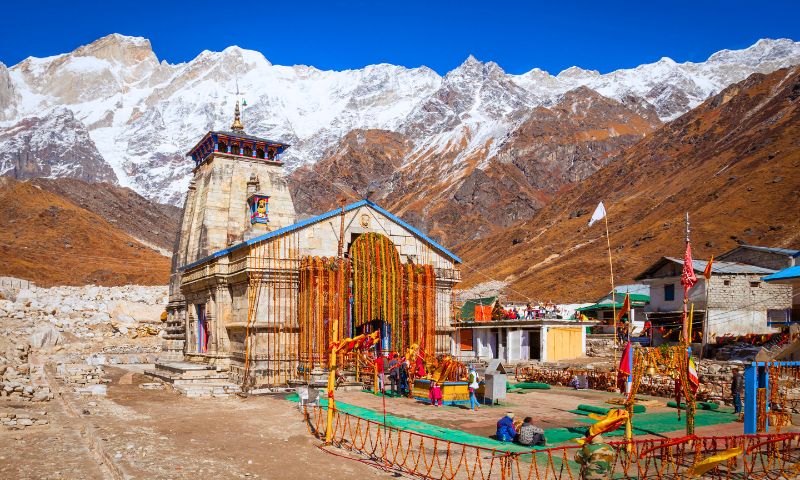
Long before motorable roads reached the interior of Uttarakhand, pilgrims walked for months to touch the source of the Ganga, offer prayers at a Shiva shrine hidden behind a Himalayan ridge, and stand before Vishnu at a valley that opens toward the Tibetan plateau. What began as scattered acts of devotion at Yamunotri, Gangotri, Kedarnath and Badrinath eventually became a single, coherent circuit, one that shaped Hindu pilgrimage geography and still moves millions of devotees every summer. The history of char dham reveals how philosophy, politics, earthquakes, royal patronage and hereditary village priesthood together produced the four temples that stand today. This piece traces each shrine from myth to masonry, explains who actually built the structures pilgrims see now, and offers grounded context that helps first-time yatris and returning devotees understand the ground beneath their feet.
The origin of the Uttarakhand pilgrimage circuit is closely tied to Adi Shankaracharya, the 8th to 9th century philosopher who reorganised Hindu religious practice across the subcontinent. He established four cardinal mathas at Sringeri, Puri, Dwarka and Jyotirmath (Joshimath), and the pan-India Char Dham of Badrinath, Puri, Rameswaram and Dwarka refers to those four corners of the country. The Uttarakhand circuit, sometimes called the Chota Char Dham to distinguish it, developed alongside this larger framework. Shankaracharya is credited with re-establishing Badrinath as a formal pilgrimage site in the 9th century, retrieving the black Saligram idol from the Alaknanda and reinstating structured temple worship.
Local priesthood traditions and older shrines already existed at Kedarnath and at the sources of the Ganga and Yamuna. What Shankaracharya added was a unifying philosophical and administrative structure that connected these four Himalayan spots to a wider spiritual map, giving the Char Dham Yatra of Uttarakhand the shape pilgrims still follow today.
Yamunotri, the first stop in the traditional clockwise circuit, sits at roughly 3,293 metres in Uttarkashi district near the Yamuna glacier. Ancient texts refer to sages Asit Muni and Divodas performing penance nearby, and the region carries mythological associations with Surya, the Sun god, since Yamuna is considered his daughter and the twin sister of Yama. Worship at Yamunotri predates any built structure. For centuries, priests conducted rituals at the natural rock outcrops and the hot springs of Surya Kund, where pilgrims still cook rice and potatoes wrapped in cloth to take home as prasad.
The current temple is comparatively young. It was constructed in the 19th century under the patronage of Maharani Guleria of Jaipur, after the earlier structure was damaged by earthquakes and heavy snow. It has been rebuilt and repaired several times since, most recently after weather-related damage in the last few decades. The idol of Goddess Yamuna inside is carved from black stone, distinct from the white marble idol of her sister Ganga at Gangotri.
Priesthood at Yamunotri has traditionally been held by pujaris from Kharsali village, roughly 6 kilometres away. In winter, when the shrine closes around Diwali, the deity is ceremonially moved to Kharsali, where worship continues until the doors reopen on Akshaya Tritiya. This annual migration of the idol is one of the clearest surviving links between the temple’s built history and the older village-priest tradition that preceded it.
The Gangotri temple sits at around 3,100 metres on the left bank of the Bhagirathi in Uttarkashi district. The mythological anchor here is King Bhagiratha, whose severe penance to Lord Shiva is said to have brought the Ganga from the heavens to the earth to liberate the souls of his ancestors. A partly submerged Shiva lingam near the temple, called Bhagirath Shila, marks the spot where the river is believed to have first descended.
For most of history, Gangotri had no built temple. Pilgrims and priests worshipped the river directly on its banks. The shrine acquired its present form only after the 1803 Garhwal earthquake and the Gorkha annexation of Garhwal that followed. The Gorkha general Amar Singh Thapa arranged funds and labour to construct a modest white granite temple with five shikhars, roughly 20 feet in height, along with a few wooden huts for pilgrims. Maharaja Madho Singh II of Jaipur restored and expanded the structure in the early 20th century.
The temple is dedicated to Goddess Ganga and follows a simple Katyuri-influenced Nagara design without the elaborate carvings seen at many North Indian shrines. Priesthood was originally held by Khas Budhere families of Dharali, and later transferred to the Kedar Dutt lineage from Mukhwa. In winter, the deity is moved to Mukhwa temple, mirroring the migration pattern at Yamunotri.
Kedarnath, at 3,583 metres in the Mandakini valley, is one of the twelve Jyotirlingas of Lord Shiva and among the most spiritually charged char dham temples uttarakhand recognises as its highest pilgrimage. Popular tradition credits the Pandavas with building the original shrine after the Kurukshetra war, seeking Shiva to absolve them of the sin of killing kin. The story says Shiva, unwilling to face them, took the form of a bull and dived into the ground, leaving his hump exposed at Kedarnath. Other parts surfaced at Tungnath, Rudranath, Madhyamaheshwar and Kalpeshwar, the sites that together form the Panch Kedar.
Architectural and stratigraphic readings suggest the present stone temple is far older than most Himalayan shrines. Studies of the masonry, particularly the massive interlocked slabs on the plinth, indicate a construction that has withstood high-altitude conditions for well over a thousand years. Adi Shankaracharya is said to have attained samadhi behind the temple in the 9th century, and the samadhi shrine still stands.
The 2013 Kedarnath disaster brought the temple’s endurance into sharp focus. A cloudburst and glacial flood devastated Kedarnath town, but the temple itself remained standing, protected in part by a massive boulder, since called Bhim Shila, that diverted the debris flow. According to Government of India records on the Uttarakhand floods, the wider flood event caused more than four thousand deaths and disappearances across the region, yet temple worship resumed within months. For readers planning a visit, our detailed guide to Kedarnath temple, the holy shrine of Lord Shiva covers the trek route, opening timings and darshan conditions.
Badrinath, at 3,133 metres in Chamoli district on the banks of the Alaknanda, is dedicated to Lord Vishnu in his Badrinarayan form. It is the northernmost of the four cardinal Char Dhams of India and among the most textually documented shrines in the country. The temple is mentioned in ancient religious texts including the Vishnu Purana and Skanda Purana, and Adi Shankara established Badrinath as a formal pilgrimage site in the ninth century. The presiding deity is a one-foot black Saligram idol of Vishnu, considered one of the eight svayam vyakta kshetras, or self-manifested forms of the god.
The site’s name comes from the Badri, or Indian jujube tree, said to have sheltered Vishnu while he meditated at the spot. Local tradition holds that the region was originally a Shiva stronghold, and that Vishnu requested the land from Shiva for his tapasya. This explains the presence of Shiva shrines nearby and the ritual precedence given to Kedarnath in the yatra sequence.
The temple’s rawal, or head priest, is drawn from the Nambudiri Brahmin community of Kerala, a tradition established by Shankaracharya to bind the northern and southern schools of Hindu worship. The current structure has been rebuilt after damage from avalanches and earthquakes, most substantially in the 17th century by the Garhwal kings and later by the Kingdom of Jaipur. It is now administered by the Shri Badarinath Kedarnath Temple Committee, established under a 1939 legislative act. Outside the temple sits Tapt Kund, a sulphurous hot spring where pilgrims bathe before darshan. Mana village, three kilometres further, is the last inhabited settlement before the Indo-Tibetan border.
The sequenced pilgrimage from Yamunotri to Gangotri to Kedarnath to Badrinath was formalised in medieval devotional literature and standardised further under colonial-era road building and post-Independence infrastructure work by the Border Roads Organisation. The traditional clockwise route reflects both geography and ritual logic. Pilgrims begin at the sources of the two rivers, purify themselves at Kedarnath through Shiva darshan, and complete the circuit with Vishnu at Badrinath.
For centuries this journey took two to three months on foot. The completion of the Rishikesh to Badrinath road in the mid 20th century and the extension of motorable roads to Gangotri and Janki Chatti brought the timeline down to roughly 10 to 12 days. Helicopter services introduced in the 2000s reduced it further to under a week for those choosing air darshan. Registration became mandatory for all pilgrims in 2014, administered by the Uttarakhand Tourism Development Board, and remains one of the most important planning steps for any modern yatra.
Understanding temple history helps set realistic expectations for the physical journey. Yamunotri and Kedarnath both involve treks. Yamunotri is roughly 6 kilometres from Janki Chatti, and Kedarnath is 16 kilometres from Gaurikund. Ponies, palkis and helicopter services are available for those unable to walk long distances. Gangotri and Badrinath are accessible directly by road.
Pilgrims should check current opening dates announced each year by the temple committees, usually between late April and early November. Winter darshan continues at the respective winter seats: Mukhwa for Gangotri, Kharsali for Yamunotri, Ukhimath (Omkareshwar temple) for Kedarnath, and Joshimath (Narsimha temple) for Badrinath.
For a broader look at nearby shrines, viewpoints and settlements that add depth to the circuit, our guide on places to visit in Char Dham Yatra offers useful planning context. Pilgrims looking at 2026 travel windows can also refer to our post on Char Dham opening dates for 2026 with registration and tips for the current year’s registration process and revised operating windows.
The four shrines of the Garhwal Himalayas carry layered histories, from Vedic sages and Pandava legends to Gorkha generals, Jaipur royalty and modern temple committees. Reading these stories before the yatra changes how the journey feels on the ground. Pilgrims who arrive knowing that Bhim Shila protected Kedarnath in 2013, that Amar Singh Thapa funded Gangotri from personal savings, or that Vishnu’s black idol at Badrinath is one of eight self-manifested forms, tend to move through the circuit with a deeper sense of place. If you are considering the pilgrimage this season, our team at Memorable India helps travellers plan the full circuit, including registrations, road or helicopter options and family-grade accommodation. Reach out through our contact page to begin planning a Char Dham Yatra tailored to your pace and preferences.
Q1. Who originally started the Char Dham pilgrimage tradition in Uttarakhand?
Adi Shankaracharya is credited with formalising the Char Dham concept in the 8th to 9th century. He re-established Badrinath and connected the four Himalayan shrines to a wider pan-India pilgrimage framework, though local worship at all four sites predates him.
Q2. How old is the Kedarnath temple?
The exact age is undocumented, but architectural and mythological evidence suggests the present stone temple is more than a thousand years old. Popular tradition credits its origins to the Pandavas, and Adi Shankaracharya is said to have attained samadhi at Kedarnath in the 9th century.
Q3. Who built the current Gangotri temple?
The Gorkha general Amar Singh Thapa built the present Gangotri temple in the early 18th century using white granite. Maharaja Madho Singh II of Jaipur restored and expanded it in the early 20th century.
Q4. Why is the Badrinath temple’s chief priest from Kerala?
Adi Shankaracharya, a Kerala-born philosopher, established the tradition of appointing a Nambudiri Brahmin from Kerala as the rawal of Badrinath. This symbolic link between north and south Indian schools of Hindu worship continues to this day.
Q5. Are the current Char Dham temples the original structures?
No. All four temples have been rebuilt or restored multiple times due to earthquakes, avalanches and floods. Kedarnath retains the oldest surviving core structure. The Gangotri and Yamunotri temples visible today are 18th and 19th century constructions respectively.
Q6. In what order should Char Dham Yatra be performed?
The traditional clockwise sequence is Yamunotri, Gangotri, Kedarnath and finally Badrinath. This order reflects both the geography of the Garhwal Himalayas and the ritual logic of moving from river sources through Shiva darshan to Vishnu darshan.

20 Best Hill Stations in Uttarakhand for Family Vacation, Corporate Trips, Nature Lovers & Adventure
26 Aug 2026
15 Best National Parks and Wildlife Sanctuaries in North East India
25 Aug 2026
16 Best Romantic Hill Stations in India for Honeymoon Holidays
23 Aug 2026
Top 30 Must-See Forts and Palaces in Rajasthan
21 Aug 2026
Top 30 Krishna Temples in India: A Complete Pilgrim and Traveller Guide
21 Aug 2026


