 +919871148514
 info@memorableindia.com
India has quietly built one of the more interesting private art circuits in the world, and much of it hangs inside hotels. Some properties commission living artists. Others hold works that pre-date Independence. A handful double as informal galleries where guests can join curator-led walks between check-in and dinner. For travellers who plan trips around museums, biennales and gallery openings, this changes what a hotel booking actually buys.
This guide covers ten hotels in India for art lovers, from Mumbai’s Taj Mahal Palace to a boutique property in Fort Kochi that describes itself as an art hotel outright. Each entry notes what makes the collection worth the detour, who curates it, and how it fits into a wider travel plan. The list mixes iconic five-star properties with smaller design-led stays, so the shortlist works for a Delhi weekend and for a two-week luxury India circuit alike.
Not every luxury property earns the label. Genuine art hotels do at least one of three things: hold a serious permanent collection, commission original work for their public spaces, or run an active exhibition and residency programme. The Taj group, for instance, has publicly stated it holds several thousand artworks across its portfolio, with more than a hundred pieces rated as museum quality. Le Sutra in Mumbai bills itself as the country’s first Indian art hotel, with themed rooms designed as three-dimensional interpretations of mythology and philosophy. Reading between those two ends of the spectrum tells you most of what you need to know about the category.
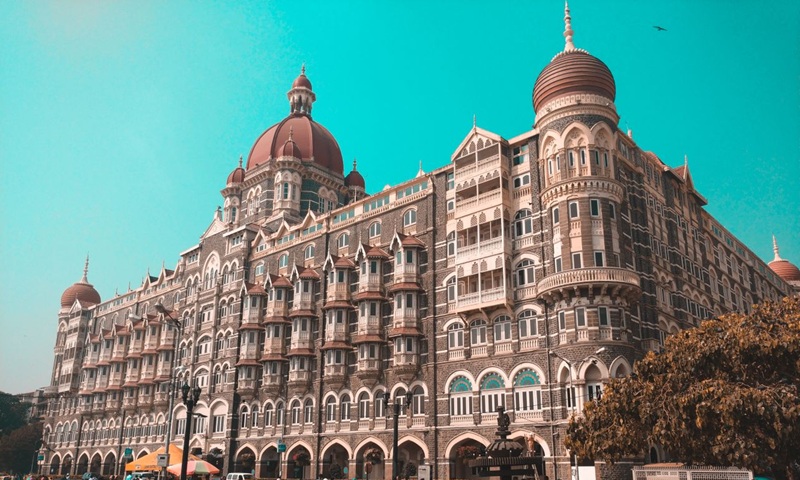
The Taj Mahal Palace has been collecting Indian art since the early twentieth century, when it hosted Amrita Sher-Gil, and its walls now carry works by V.S. Gaitonde, Ram Kumar, Jehangir Sabavala and M.F. Husain among others. A commissioned piece by Laxman Shreshtha, developed in conversation with the late Ratan Tata, anchors the hotel’s contemporary story. Resident guests can book the Heritage Walk, run three times a day, which covers the property’s Indo-Saracenic architecture along with its collection. It is one of the few hotel tours in India that reads more like a curator-led museum visit than a corporate walkthrough, and the guides know the material well enough to answer follow-up questions on provenance and restoration.
Opened in 1931 on Janpath, The Imperial holds a private collection of colonial, Mughal and Sikh-era paintings, prints and lithographs, spanning roughly the seventeenth to the nineteenth century. Guests can join a guided walk through the corridors and the 1911 Bar, where botanical and topographical studies of nineteenth-century India sit alongside portraits from the durbar period. The collection is unusually strong on Company School painting and on the Daniells, and it offers a rare view of India as seen through European artists working on the subcontinent, all under one hotel roof.
At The Leela Palace on Chanakyapuri, the Delhi-based artist Satish Gupta was commissioned to create two large lotus murals in copper, pewter and gold, extending the lobby’s water-and-lotus motif. A sixteen-foot bronze Devi statue presides over the public space. The digital art wall, which rotates works from Delhi galleries, is a smart touch for guests curious about the current Indian contemporary scene without having to build a separate gallery day into their itinerary. The property runs a strong programme of curator introductions on request, and the concierge can arrange gallery visits in nearby Lado Sarai and DLF Emporio.
Man Singh Road’s Taj wraps its restaurants around commissioned art. At Varq, an Anjolie Ela Menon fresco inspired by the picture walls at Jahangir’s palace sets the visual tone for the room. House of Ming, the Chinese restaurant, opens with a brass chain curtain installation titled Princess of Ming. The corridors of The Chambers members’ club carry R.K. Laxman caricatures of public figures including JRD Tata, Rabindranath Tagore and Ravi Shankar, with A. Salui’s watercolours of Delhi’s monuments in the meeting rooms. Few Delhi hotels weave art this tightly into their dining experience.
The former residence of Maharaja Sawai Man Singh II runs a Palace Heritage Walk that covers Rajput miniatures, silver furniture and photographs from the Jaipur royal collection. Rambagh sits inside the wider Taj art programme, which means the walk is genuinely researched rather than scripted for tourists. For travellers building an itinerary around forts, palaces and folk art, this is a natural anchor stay and pairs neatly with day visits to the City Palace museums and Anokhi Museum of Hand Printing. It also works well as part of a longer Royal Rajasthan tour that stitches heritage stays across Jaipur, Udaipur, Jodhpur and Jaisalmer.
Le Sutra in Bandra was designed as a walk-through art object. Its sixteen rooms are each built around a character or idea from the Ramayana or from Indian philosophy, with headboards, furniture and sculptural detail commissioned from contemporary artists to interpret them. The Ravana room, for instance, uses an unusual yellow headboard as an artist’s reading of Ravana’s thoughts, along with an abstract Veena-legged table. The property runs a ground-floor gallery that hosts rotating exhibitions and remains one of the few boutique hotels in the country that treats guest rooms as installation spaces rather than styled bedrooms.
A boutique heritage property in a building that dates to 1755, The Malabar House calls itself an art hotel outright, and the description holds up. Its seventeen rooms and suites carry a curated collection of contemporary Kerala and pan-Indian works, and the property sits within easy walking distance of the galleries and biennale venues of Fort Kochi. During the Kochi-Muziris Biennale season, it becomes one of the most efficient bases for gallery-hopping in South India. Pair it with a walking day around Mattancherry Palace, the Paradesi Synagogue and Jew Town on our Kochi tour for a full arts-and-heritage sweep of the old city.
Devi Ratn, part of IHCL’s SeleQtions collection, was reworked around the theme of Ratn, the Indian motif of jewels. Room headboards use digitally printed wall coverings inspired by Jaipur’s meenakari and kundan traditions, with framed replica jewellery pieces built into the design. The porch installations, including a repurposed auto-rickshaw finished in Jaipur art motifs and a royal chariot at the entrance, sit at the boundary between hospitality and installation art. It is a strong pick for design-led travellers who want a Jaipur base outside the classic palace-hotel circuit, with Aravalli views thrown in.
ITC Maurya’s lobby is home to Krishen Khanna’s mural The Great Procession, a monumental work commissioned when the hotel opened in the late 1970s and still one of the most photographed pieces of public art inside any Indian hotel. The property carries art on every guest floor, with regional themes running through the corridors and suites, and the collection has been steadily updated over the decades. For anyone tracking post-Independence Indian modernism, this stay puts a canonical work within a few metres of the room key, alongside the well-known Bukhara and Dum Pukht restaurants.
At around 8,700 feet in the Pir Panjal range, The Khyber uses its walls to document Kashmiri artisans and disappearing crafts. Photographs of papier-mache makers, sozni embroiderers and walnut wood carvers run through the corridors and lounges, framing the property as much as a record of a living craft economy as a mountain resort. It is a rare example of an Indian luxury hotel using photography as its primary art medium, and it makes a persuasive case for building a Kashmir craft trail into a wider Himalayan trip rather than treating Gulmarg only as a ski or summer stop.
A few practical notes for travellers building a trip around these properties:
For travellers who want the art thread woven through a longer trip, our team can build the properties above into a customised luxury India tour, or into a heritage circuit that mixes palace stays with craft studios and museums. Editorial context for the wider palace-hotel landscape is covered in our guide to award-winning heritage hotels in India.
For context on how Indian hotels have moved from decorative art to serious collecting, this recent Outlook Traveller feature on India’s art hotels is a useful primer, as is the Robb Report India piece on hotels housing world-class collections.
India’s hotel art scene rewards travellers who plan carefully. Collections vary in emphasis, walks fill quickly in season, and the best experiences usually come from stringing two or three properties together across cities. To turn the shortlist above into a full itinerary with curator-led walks, biennale timing and craft studio visits built in, get in touch with our team at Memorable India for a tailored plan built around the art you actually want to see.
Which is the best hotel in India for art lovers?
The Taj Mahal Palace in Mumbai is widely regarded as the single strongest choice, given the depth of its permanent collection and the quality of its Heritage Walk. The Imperial in New Delhi is a close second for travellers focused on colonial and Mughal-era work, while Le Sutra is the best pick for contemporary and immersive art formats.
Are hotel art walks open to non-resident guests?
Most curator-led hotel art walks in India, including those at The Taj Mahal Palace and Rambagh Palace, are reserved for resident guests. The Imperial occasionally opens its heritage walks to outside visitors through advance concierge requests, subject to availability.
Which Indian hotel chain has the largest art collection?
The Taj group has publicly stated that it holds several thousand artworks across its properties, with more than a hundred rated as museum quality. The Taj Mahal Palace in Mumbai and Rambagh Palace in Jaipur hold particularly significant portions of that collection.
Is Le Sutra worth visiting only for the art?
Yes, for design-led travellers. Its themed rooms function as walkable installations rather than styled bedrooms, and even a single-night stay works as an immersive introduction to contemporary Indian mythological interpretation. The rotating exhibitions in the ground-floor gallery add further reason to plan the visit around a specific show.
When is the best time to plan an art-focused hotel trip to Kochi?
The Kochi-Muziris Biennale, held roughly every two years between December and April, is the peak window for art travellers. Book The Malabar House and other Fort Kochi boutique properties well ahead, as inventory fills quickly during biennale months.
Can art-focused hotel stays be combined with wider India tours?
Yes, and they often work best that way. Delhi, Jaipur, Mumbai and Kochi anchor most itineraries, and a customised plan can integrate the properties above with museum visits, craft workshops and private gallery introductions.
The Kerala Backwaters: 11 Things To Know Before You Visit
23 Sep 2026
Udaipur Itinerary: How to Spend 3 Days in Udaipur
22 Sep 2026
The Best Places to See in Varanasi, India
22 Sep 2026
11 Ancient Temples in Palakkad That Deserve to Be Seen
22 Sep 2026
Best Places to Visit in Tamil Nadu, India: A Traveller’s Guide for 2026
21 Sep 2026


