+919871148514
 info@memorableindia.com
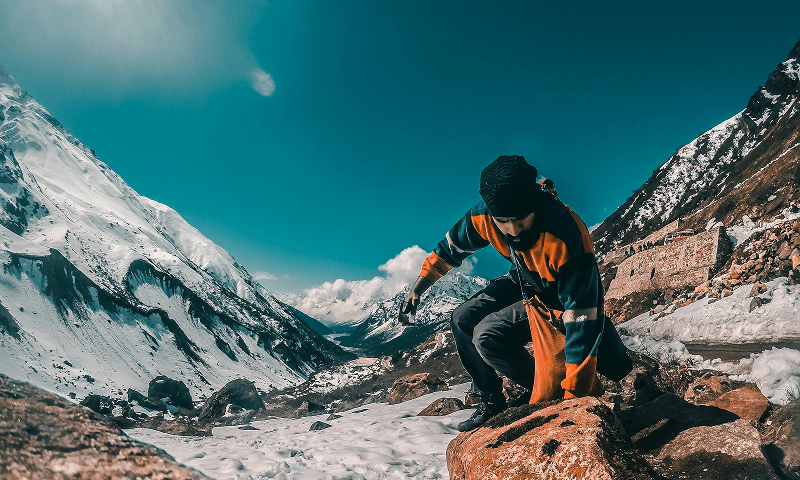
Sikkim packs more trekking diversity per square kilometer than perhaps any other state in India. Wedged between Nepal, Bhutan, and Tibet, this small Himalayan region offers everything from easy strolls around the monasteries to brutal high-altitude crossings that test even the most experienced mountaineers. The landscape changes dramatically -rhododendron forest gives way to alpine meadows which then transition into glacial moraines within a single day’s walk. For adventure enthusiasts exploring Some of the Best Trekking Trails in North, Sikkim naturally stands out as a destination that blends raw terrain with spiritual depth.
What makes Sikkim special is its perfect combination of authenticity and accessibility for trekkers. Most trails start within a few hours’ drive from Gangtok, yet within 24 hours, trekkers are deep in the wilderness, where villages exist on subsistence farming and prayer flags mark every ridgeline. The state’s stringent environmental laws have helped protect trekking trails by preventing them from being overdeveloped like in many other places. Many travellers also combine trekking with monastery visits, often designing their journey around a Sikkim Buddhist Tour to experience both the mountains and the region’s deep-rooted spiritual traditions.
This guide covers ten different expeditions which cover a range of difficulty levels, expedition and ecosystems. Whether you are testing your first pair of trekking boots or signing another high pass in your travel bucket list, Sikkim delivers landscapes and challenges that are well worth the effort. Read on to know more:
The Goecha La trek is Sikkim’s most acclaimed trek for good reason. As you travel through Kanchenjunga National Park, a UNESCO World Heritage Site, you pass through ecosystems ranging from subtropical forests to glacial zones. The trail leads to the Goecha La pass via old trade routes that were used by Tibetan traders, which pass through Dzongri, Thangsing, and Goecha La.
From the pass, Kanchenjunga’s southwest face dominates the horizon just 20 kilometers away – a wall of ice and rock that catches first light in shades of orange and pink that photographs rarely capture accurately. The trek requires acclimatization discipline; altitude sickness often affects trekkers who are overconfident about the trek and rush up.
Key highlights include the Samiti Lake camp, from where still mornings reveal sixteen peaks of over 6,000 meters, and the rhododendron forests between Yuksom and Tshoka that burst in crimson blooms in April and May.
Duration: 10-12 days
Difficulty: Moderate to Difficult
Maximum Altitude: 4,940 meters
Considering Dzongri trek as Goecha La’s younger sibling, with similar landscapes, less commitment and with slightly lower altitude. This expedition is especially perfect for those trekkers who have limited vacation days and who still wish for some genuine exposure to the Himalayas.
The trail starts from the first capital of Sikkim, Yuksom, through forests of magnolia and oak trees and then breaks out into the alpine areas. Dzongri top (4,200 meters) provides panoramic views of Kanchenjunga, Pandim, Kabru and Rathong peaks without requiring the extra days and altitude hurdles of Goecha La.
Spring trekkers are subject to valleys carpeted with primulas and rhododendrons, while October offers crystal-clear visibility and stable weather. The trail has moderate traffic with never feeling crowded – Sikkim permits system is responsible for keeping the numbers in check.
Duration: 5 – 6 days Moderate
Difficulty: Moderate
Maximum Altitude: 4,200 meters
The Green Lake trek is an excursion into restricted territory, which is located near the Indo-China border, and requires special permits that take weeks to process. This administrative barrier is preventing crowds from being too large and maintaining a wilderness experience that becomes rare throughout the Himalayas.
From Lachen in North Sikkim, the trail makes its way through the Zemu River valley to the Zemu Glacier. You’ll camp beside glacial streams, cross rickety log bridges, and navigate boulder fields where trail markers go under seasonal rockfall. The eponymous Green Lake is located in an amphitheater surrounded by peaks such as Siniolchu, considered by many mountaineers as one of the most beautiful mountains in the world.
This trek requires self-sufficiency. Villages end after the first day, and you’re reliant on what you have on your support team. Weather windows become much more narrow; the monsoon rains make it dangerous to cross the river, and winter snow closes the trail completely.
Duration: 12 – 14 days
Difficulty: Difficult
Maximum Altitude: 4,940 meters
The Singalila Ridge defines Sikkim’s border with Nepal, which provides a unique experience of trekking a country’s international boundary with political lines blurred in the mountain landscape. The trail is from Uttarey in West Sikkim to Dzongri in where the ridge elevation is maintained for most of its length.
The thing that separates this trek is biodiversity. The Singalila National Park conserves red pandas, Himalayan black bears and blood pheasants, though spotting them is a matter of luck and patience. Spring brings with it the blooms of orchids (more than 600 are in this region), but also rhododendron forests open up tunnels of color during April and May.
Villages along the way engage in traditional subsistence farming on impossibly steep terraces. Expect simple teahouse accommodation rather than camping, with dal-bhat meals prepared over wood fires and family-style.
Duration: 7-8 days
Difficulty: Moderate
Maximum Altitude: 3,636 meters
This expedition is not meant for amateur trekkers and casual enthusiasts. The Kanchenjunga Base Camp trek requires serious fitness, acclimatization, patience, and mental strength for three weeks of strenuous mountain travel.
Starting from Yuksom, the route takes the Goecha La trail initially and then branches off to the North and South base camps of Kanchenjunga. You’ll go over several passes that exceed 5,000 meters, traverse glacial terrain and camp in altitudes where the oxygen level present in the air is reduced for about 50% of sea level.
The payoff is commensurate with the effort. Standing at base camp at the foot of the world’s third-highest mountain, with icefalls cascading down the flanks of Kanchenjunga and absolutely no infrastructure for kilometers in any direction around, delivers the kind of wilderness immersion that justifies weeks of preparation.
The main difficulty is weather variability. Even in good seasons (April-May and September-October), sudden storms can render trekkers stuck in camps for days. Flexibility in scheduling is found to be essential.
Duration: 18 – 22 days
Difficulty: Very Difficult
Maximum Altitude: 5,250 meters
Not every worthwhile Sikkim trek takes two weeks and requires high altitude acclimatization. The Maenam trek beautifully displays this quality by offering legitimate summit satisfaction in a day trip from Gangtok or a weekend excursion from Ravangla.
The trail ascends through dense forest, reaching the Maenam Peak with a small monastery at the top. On clear days – usually pre-monsoon mornings – you’ll see Kanchenjunga to the north and the Himalayan chain stretching on into Bhutan eastward. The forest itself is worth taking notice of; old-growth firs and oaks create cathedrals like spaces, through which the sunlight shines through the morning mist.
Spring trekkers visit to see rhododendrons in full bloom, while November offers crisp visibility and comfortable temperatures. The trail is also frequented by local pilgrims and school parties in addition to trekkers, thus having a different flavour from remote high altitude routes.
Duration: 1-2 days
Difficulty: Easy to Moderate
Maximum Altitude: 3,263 meters
The passage of the Barsey Rhododendron Sanctuary trek is on a certain calendar. Come during late March through April, and you’ll experience forests turned into color exhibitions when several species of rhododendron bloom at the same time. Visit any other time, and you will have a pleasant but undistinguished forest walk.
The sanctuary preserves more than 600 varieties of rhododendrons from the tall tree-sized ones to the ground-hugging shrubs. Trails are set with winds through differing elevations with supporting different blooming species. Early mornings bring bird activity – rufous vented tits, fire-tailed sunbirds, and sometimes blood pheasants.
This trek is for families with older children or trekkers looking for natural beauty without technical difficulties. Accommodation is available in the basic guesthouses and forest rest houses on the way.
Duration: 3 – 4 Days
Difficulty: Easy to Moderate
Maximum Altitude: 3,200 meters
When time limits preclude multi-day expeditions but you still want to be immersed in the forest, then the Fambong Lho sanctuary delivers. Located just 25 kilometers from Gangtok, this protected area has short trails that go through the temperate forests that are not often traversed by international trekkers.
The sanctuary is home to red pandas, Himalayan black bears and clouded leopards, though efforts to spot the animals are not very successful. What you will see: dense understories of ferns, moss-covered trees and impressive birdlife such as sunbirds, thrushes and a variety of laughingthrushes.
Several trail options are available, ranging from two-hour loops to full-day circuits. The lack of altitude challenge makes this ideal for acclimatization days before attempting higher treks or recovery walks after coming back down from elevation.
Duration: 1 – 2 days
Difficulty: Easy
Max. Altitude: 2,600 meters
The Varsey valley is a truly off-the-beaten-path route for most trekking itineraries, despite the fact that its landscape is similar to that of more famous routes. This remoteness implies basic facilities, minimum trail maintenance, and a kind of solitude that is becoming rarer in the Himalayas.
The trek passes through traditional Limbu and Lepcha villages where agriculture and animal husbandry are done in the same way they have been for generations. Expect farmstead stays instead of teahouses with meals consisting of local preparations you won’t find on mainstream trekking menus.
Spring brings with it the blooms of rhododendrons equivalent to Barsey, and in October, there is spectacular visibility throughout the Singalila Range. The trail requires a moderate level of fitness, but no technical skills.
Duration: 4-5 days
Difficulty: Moderate
Maximum Altitude: 3,700 meters
Sometimes referred to as the Gangtok Day Trek, this one ascends to a sightseeing point above the capital city. The “throne” is a name applied to a flat rocky outcrop which affords 360-degree views which incorporating the sprawl of Gangtok, the Teesta valley, and distant Himalayan peaks.
The four to five-hour round-trip travel time from the trailhead makes this an easy time to do as a half-day activity. Families with children do this walk regularly, but the trail is not entirely flat, with some steep sections that require basic fitness.
Local school groups use this trail for their outdoor education, creating an atmosphere in the community unlike that of the tourist-oriented treks. Tea stalls at the summit sell chai and momos with properly earned mountain views.
Duration: 1-2 days
Difficulty: Easy to Moderate
Maximum Altitude: 2,100 meters
Best Seasons: Pre-monsoon (March – May) is ideal for blooming flowers and warming temperatures. The post-monsoon season( September – November) offers clear skies and distant visibility of mountain views. Winter treks (December-February) require serious cold-weather gear and trekking experience to deal with heavy snowfall and Freezing temperatures. Monsoon months (June-August) are generally not considered because of trail closures, leeches, and landslide dangers.
Permits and Regulations: Protected area Permits, Inner Line Permits where required, trekking permits, all need to be processed in advance. For foreign nationals, additional documentation is required. It is advisable to begin the permit applications at least three weeks before the planned trekking dates. Sikkim’s environmental rules forbid single-use plastics on trekking trails, so pack accordingly.
Acclimatization Matters: Altitude sickness can affect anyone, irrespective of their fitness level. Any trek above 3500 meters requires a proper acclimatization program. Plan rest days, ascend slowly, and recognize the symptoms in the early stages, such as headache, nausea, and disturbed sleep. Descent is the only effective treatment for severe altitude sickness.
Sustainable Trekking Practices: Pristine trails of Sikkim sustain their existence due to responsible trekking behavior. Carry back all waste, including organic material. Use established campsites instead of creating new ones. Support local guides and porters rather than relying on large, outside operators. Respect monastery rules, village customs, and local traditions.
For detailed itineraries across different parts of Sikkim with expert guides and sustainable practices, explore our Sikkim adventure tour packages for varying fitness levels and commitment. Many travellers planning Tours Trekking Tours across the Eastern Himalayas often include Sikkim in their itinerary for its unmatched ecological diversity and well-regulated trekking routes.
Sikkim trekking offers trekking experiences from simple day walks to serious high altitude treks. There is enough in the infrastructure to support independent trekkers with reasonable experience, while at the same time requiring genuine effort – you are unlikely to find mechanized transportation shortcuts or luxury resort camps at the ends of trails.
What you will find: Trails through some of the richest forests in Asia, views of Himalayan giants from angles no other photographer captures, villages where traditional cultures remain not as tourist performance but living reality. The combination justifies the number of vacation days you can dedicate.
Start researching specific routes, check seasonal weather patterns, and start the process to obtain permits. Sikkim’s mountains aren’t going anywhere, but your trekking window is dependent on planning well in advance. If you are extending your trip towards North Sikkim, do not miss exploring Best Places to Visit in Lachung Sikkim Your itinerary can include scenic valleys, waterfalls and high-altitude landscapes that perfectly complement your trekking adventure. Explore our Sikkim holiday packages that offer a mix of trekking and cultural exploration for a complete exploration of this region.
Q: Which fitness level do I need for Sikkim treks?
Basic treks such as Maenam or Coronation Throne have a general fitness comparable to a comfortable 3-4 hours walk with altitude gain. Moderate treks (Dzongri, Singalila) require stamina to trek for 5-7 hours a day in varying types of terrain with light daypacks. Difficult expeditions (Goecha La, Green Lake) require documented experience at altitude, cardiovascular fitness for multi-day efforts above 4,000 meters, and mental strength for challenging conditions.
Q: What is the best time to trek in Sikkim?
April through May brings out the rhododendrons and warms up the weather, perfect for flower-focused treks. September to November is the best time of the year to get a good sight as the weather is stable and the mountain views are clear. December through February is only for the experienced winter trekkers, with the necessary specialized gear. Avoid June through August altogether–monsoon rains cause landslides, damage trails, and leeches.
Q: Do I need a guide for Sikkim treks?
Solo trekking is not allowed in most of the protected areas and restricted areas of Sikkim, like Goecha La, Green Lake, and border areas. Some regulations require registered guides for these routes. Basic treks around Gangtok are possible on one’s own, though it is safe and easier to understand the culture with the help of local guides. Permits, weather knowledge, and emergency support systems make expeditions in a guided form quite favorable, even where technically optional.
Q: What should I pack for a Sikkim trek?
Essential items to pack for trekking in Sikkim include sunglasses, gloves, hiking boots, hiking pants, a backpack, and a small sleeping bag. Quality trekking boots before departure break in blisters. Sun protection (hat, sunscreen, sunglasses) to fight the strong UV exposure in the mountains. Water purification tablets or filters can guarantee safe drinking water. Personal medical kit which includes altitude sickness medication, blister treatment, and any prescription requirements. Sikkim bans the use of single-use plastics – carry reusable water bottles and bags.
Q: How do I prevent altitude sickness on Sikkim treks?
Climb slowly with acclimatization days scheduled into itineraries – never exceed 500 meters increase in altitude per day above 3,000 meters in sleeping altitude. Hydrate aggressively, drinking 3-4 liters a day; Avoid alcohol and sleeping pills that suppress breathing. Recognize early symptoms: headache, nausea, disturbed sleep, unusual tiredness. Diamox (acetazolamide) is helpful for some trekkers to acclimatize – check with your physician before departure. If symptoms get worse with rest, descend immediately. Altitude sickness may prove life-threatening within hours if it is ignored.