+919871148514
 info@memorableindia.com
The Himalayas call to you – snow-dusted Himalayas rising out of morning mist, wild-flower carpeted meadows, and trails that wind through forests. If you have been putting off making your first trek in the mountains, thinking it takes years of experience or some extreme fitness to do it, it is time to think again. The Indian Himalayas have many trails for the uninitiated to explore, which are just the right amount of challenging and jaw-dropping at the same time.
These trails for beginners will be through Uttarakhand, Himachal Pradesh, Ladakh, and West Bengal and will offer different landscapes and cultural experiences. Many travellers include these trails as a part of their India travel itinerary 2 weeks which combines their mountain adventures with cultural explorations, often extending their journey to explore The Best Towns in India for Your Himalayan escape before or after their trek.
For first-time trekkers, especially international visitors who seek to explore the best places to visit India for the first time, these ranges have several advantages. The infrastructure surrounding popular beginner trails is well-developed with established campsites and experienced local guides, as well as clear route markers. Most of the trails have gentle altitude gains, which will allow acclimatisation to occur naturally.
The cultural dimension is an additional level. You will pass through remote Himalayan villages and interact with mountain communities and visit ancient temples. For those doing an India trip, this cultural richness is essential as the Himalayas provide adventure with authenticity. Many travelers who plan a Best of North East India Tour often discover that Himalayan trekking adds a completely different mountain perspective to their overall India experience.
Triund Trek, Himachal Pradesh
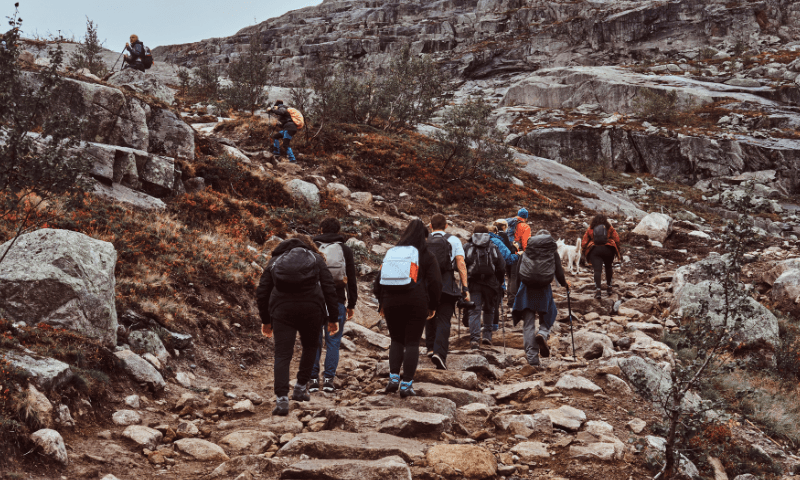
Triund sits like a natural balcony overlooking the Kangra valley with the Dhauladhar range rising behind it. This short trek takes nine kilometers from McLeod Ganj and takes four to five hours. The trail passes through oak and rhododendron forests, then opens up to the Triund meadow at 2,850 meters. The well-marked trail has tea stalls and easy gradients with no technical sections.
Nag Tibba Trek, Uttarakhand
Nag Tibba (meaning “Serpent’s Peak”) is the highest peak in Uttarakhand in the lower Himalayan region, at an altitude of 3,022 meters. This trek from Pantwari village is 15 kilometers one way in two days. Dense oak and deodar forests are interspersed into ridge walks with panoramic views of Bandarpoonch, Swargarohini, and Kala Nag peaks. Winter transforms Nag Tibba into a snow trekking heaven.
Brahmatal Trek, Uttarakhand
Brahmatal is the ascent to 3,800 meters in five to six days, through Lohajung and Bekaltal to the Brahmatal Lake that is frozen in the peak winter. Despite the high altitude, the trek is filled with beginner-friendly gradients with natural acclimatisation built into the itinerary. You will camp next to alpine lakes and walk through ancient forests with unhindered views of Mt. Trishul and Mt. Nanda Ghunti.
Kedarkantha Trek, Uttarakhand
Kedarkantha is the most popular winter trek in India. Reaching 3,850 meters, this six-day trek from Sankri village combines manageable difficulty with spectacular views. The trail passes through areas of snow-laden pine forests and emerges into massive meadows at Juda Ka Talab. The pre-dawn ascent to the summit allows visitors to witness the painting of the snow peaks by the sun’s rays in shades of gold and pink.
Dayara Bugyal Trek, Uttarakhand
Dayara Bugyal means “high altitude meadow”, sprawling alpine grasslands between 3,000 to 3,750 meters. Starting from Barsu village this three to four-day trek provides one of the easiest climbs in the Garhwal Himalayas. Summer meadows explode with wildflowers; winter covers landscapes with pristine snowfields. Many hill station tour packages in Uttarakhand cover this trek with traditional sightseeing.
Deoriatal-Chandrashila Trek, Uttarakhand
This trek is a combination of the serene beauty of Deoriatal Lake and Chandrashila Peak at 4,000 meters. The four-day journey from Sari village comes through Chopta, passing through dense rhododendron forests. Deoriatal Lake gives mirror reflections of Chaukhamba Peak, while Chandrashila Top gives 360 degrees views. The Tungnath temple is the highest Shiva temple in the world adds spiritual factor to this solace.
Sham Valley Trek, Ladakh
Known as the “Baby Trek” of Ladakh, Sham Valley is the place for high altitude trekking without too much difficulty. This four to five-day trek between 3,000 to 3,750 meters goes through apricot orchards, Buddhist villages, and ancient monasteries. During harvest season, the region becomes one of the Beautiful Apple Orchard Destinations in India for a travelers, offering a refreshing contrast to the stark desert mountains are dramatically different from lush Garhwal or Himachal treks. Travelers choosing India tourism packages that include this trek in their tourism packages in order to experience the unique high-altitude desert ecosystem of Ladakh.
For more challenging experiences after Sham Valley, check out our trekking tour packages where you can explore routes such as Markha Valley, Stok Kangri, etc.
Prashar Lake Trek, Himachal Pradesh
Prashar Lake is located at a height of 2,730 meters, in the lap of the Dhauladhar range, with a very unique floating island, giving it an additional mystique. This small trek from the Baggi village takes four to five hours and is perfect for day treks or overnight camping. Despite being short, the rewards are spectacular views of Pir Panjal and Dhauladhar range that can be seen throughout the year.
Har Ki Dun Trek, Uttarakhand
The “Valley of Gods” extends over the Garhwal Himalayas at an altitude of 3,566 meters. This seven-day trek from Sankri goes through ancient villages such as Osla, where traditional wooden houses have not changed for hundreds of years. The mythological significance of the valley (said to be the route of the Pandavas to heaven) adds to the depth of the physical journey. This trek is regularly shown in India hill station holiday packages.
Sandakphu Trek, West Bengal
Sandakphu, the highest mountain of West Bengal at 3,636 meters, is the best panorama of the Himalayas from the viewpoint of an amateur. This six-day trek from Manebhanjan is through the Singalila National Park. The summit rewards trekkers with views of four of the world’s five highest peaks – Everest, Kangchenjunga, Lhotse, and Makalu – which form the “Sleeping Buddha” formation.
Kuari Pass Trek, Uttarakhand
Kuari Pass at 3,820 meters is one of the most scenic beginner routes in Uttarakhand. The six-day trek from Joshimath passes through oak and rhododendron forests and alpine meadows and ridge walks. The pass offers spectacular views of Nanda Devi, India’s second-highest peak, and Dronagiri and Kamet.
Most of the beginning trails are fine from March to June (spring/early summer), and September to November (autumn). Spring comes with blooming rhododendrons and comfortable temperatures. Autumn provides stable weather, dry air and incredible visibility.
Winter trekking (December to February) turns trails into snow wonderlands. Treks such as Kedarkantha, Brahmatal and Nag Tibba are designed for winter, that offers safe snow walking introductions. Monsoon months (July to August) are when most treks are closed because of landslide dangers. When evolving your India trip planning guide, foreigners coordinate trekking with the seasons, sometimes combining it with broader journeys such as a Best of South India Tour for a complete contrast of mountains and coastal culture.
Physical preparation begins weeks before your trek. Focus on cardiovascular fitness with regular walking, running, or cycling. Stair climbing builds leg muscles to be used in uphill trekking. It is more important to be consistently moderately fit than to be peak-fit.
Invest in good quality trekking shoes with support for the ankle and a good grip. Layer clothing: base layers for moisture control, insulating middle layers, and waterproof outer shells. Many India tour packages that are chosen by international tourists incorporate options for gear rental.
Acclimatization is not an optional thing. Even on starting treks that go up 3000 + meters, altitude can get to you. Ascend slowly, drink plenty of water, but do not drink alcohol. Headaches, nausea, or unusual fatigue are indications that there are altitude problems too fast, and most problems clear up.
Consider booking with reputable operators. Memorable India’s trekking tour packages offer experienced guides, good quality equipment, healthy meals, and safety protocols.
Q1: How fit do I need to be for beginner Himalayan treks?
You do not have to be very fit, but at least you have to have a base cardiovascular health. If you are able to walk three to four hours with breaks on flat terrain, you have enough fitness. When you are preparing for a trek, start four weeks ahead and walk on a routine basis with increasing time periods and uphill sections.
Q2: What is the typical cost range for these beginner treks?
Costs change depending on duration, services, group size and season. Organized group hikes with reputable operators are usually a better value guide service, camping equipment, meals, permits and safety provisions all included. Quality operators are transparent about pricing.
Q3: Can international tourists trek independently or join organized groups?
For first-time Himalayan trekkers, organized groups are of great help. Professional guides are aware of route, weather patterns and potential hazards. They take care of the permits and logistics. Many India tour packages that are chosen by international tourists include guided trekking for these reasons.
Q4: What should I pack for a beginner Himalayan trek?
Some essential items are quality trekking shoes, warm layers, a waterproof jacket and pants, sun protection, water bottles, headlamp & extra batteries, a basic first aid kit, and personal toiletries. Most organized treks include camping equipment and food.
Q5: How do I deal with altitude sickness on beginner treks?
Prevention begins with good acclimatization. Stay hydrated (three to four liters a day), avoid alcohol and eat light but regular meals. Recognize symptoms early, such as headache, nausea, dizziness or unusual fatigue. If symptoms appear make your guide aware immediately and consider descending.
Q6: Are these treks suitable for solo female travelers?
Yes, with standard safety precautions. Organized group treks through reputable operators offer safe environments with experienced guides. The Himalayan trekking community generally treats the solo female trekkers with respect.
Q7: Can I include trekking in a broader India tour itinerary?
Absolutely. Many travellers add a bit of Himalayan trekking to cultural explorations of Rajasthan or spiritual journeys to Varanasi. When you plan your India travel itinerary 2 weeks that involves trekking, you should give at least four to seven days to your trek, plus buffer days such as travel and acclimatization days.
The Himalayas welcome beginners who are willing to walk and wander themselves in a landscape that both humbles and inspires. These eleven trails provide different introductions from Triund’s accessibility, Sham Valley’s cultural immersion, to Sandakphu’s panoramic grandeur or Har Ki Dun’s mythological resonance.
Your first trek in the Himalayas is the starting point of a relationship, perhaps for life with mountains. Many beginners come back year after year, moving from easier trails to more difficult routes.
Planning for assistance does make a difference. Memorable India specializes in creating comprehensive trekking experiences that take care of logistics and have expert guidance. Our India tour packages go hand in hand with trekking adventures, cultural, spiritual, and wildlife experiences.
The mountains are calling. Your Himalayan story begins with that first step on a mountain trail. These eleven trails are waiting for you to introduce you to India’s greatest natural treasure, the timeless and transformative Himalayas.