 +919871148514
 info@memorableindia.com
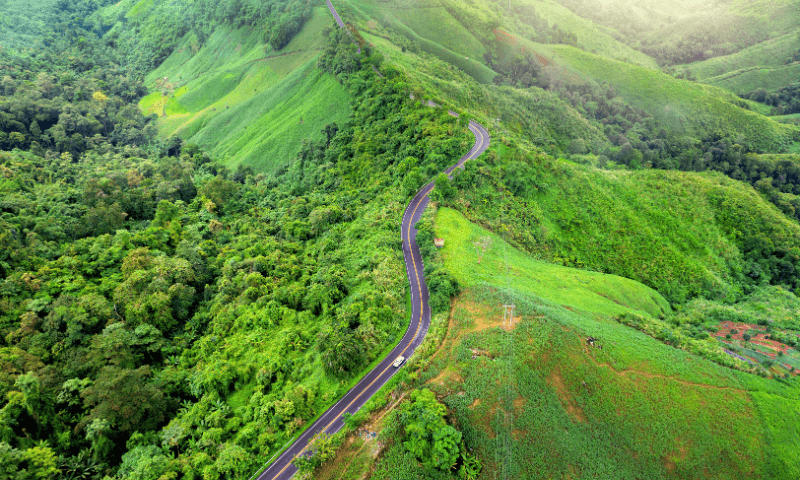
Meghalaya, which literally means “the abode of clouds,” lives up to its name with hills covered in mist, cascades of waterfalls, and landscapes that seem to have been copied from a fantasy novel. This northeastern Indian state is a place like few other places can match, starting from its traversing bridges that grow from living tree roots to bathing in crystal-clear rivers that show every pebble on their beds.
Planning a trip here means entering a world where nature is the main attraction, and present-day life is part of the backdrop. Three major regions of the state are Khasi Hills, Garo Hills and Jaintia Hills, which have their own unique flavour, from limestone caves that extend kilometers underground to villages nestled on top of hills that the clouds roll in like ocean waves.
This guide takes you through eleven must-visit destinations that offer a complete outlook of Meghalaya. Whether you are into adventure, cultural immersion or just want to see landscapes unlike any other in India, these places form the backbone of a journey that you will never forget.
Most travelers consider Shillong as a way point but the state capital deserves at least two full days. The city is located at an altitude of 1,496 meters, with a pleasant climate year-round, and a culture that combines Khasi traditions with influences of the colonial age.
Ward’s Lake makes a serene beginning to any morning, as walking paths circle the water, and gardens burst into color during the spring. The Don Bosco Museum, meanwhile, is the best introduction to the cultures of the indigenous people of Northeast India you will find anywhere seven floors and everything from traditional dress to musical instruments to belief systems.
For panoramic sights, arrive at Shillong peak early in the morning before the clouds obstruct the sight of the city spreading down below. The nearby Elephant Falls, though touristy, is truly impressive with its 3-tiered cascade that can be reached by well-maintained paths.
Cherrapunji gets mentioned in every conversation about extreme rainfall, but reducing it down to weather statistics misses the point entirely. The landscape here has been shaped by water over thousands of years, producing a landscape that appears out of this world even on dry days.
The town itself is perched on a plateau edge and provides vistas from the viewpoints across the plains of Bangladesh far below. Nohkalikai Falls falls 340 meters into a pool, the green color of which is almost artificial in its intensity. The falls flow strongly during the monsoon, but even in the winter months, there is sufficient water available to make the visit worthwhile.
Seven Sisters Falls gets its name from the seven distinct streams that flow down the face of the cliff during their peak season. In drier months, only two or three might flow, but the amphitheater-like rock formations are a sight to behold no matter what.
Thangkharang Park offers another good view, especially over the valley below at sunset when the light reflects on the valley. The park also has the best views of Kynrem Falls, one of the highest in India, standing at 305 meters.
Many visitors book a Cherrapunji Shillong tour 5 days to cover both places adequately without rushing, which is a good choice considering how much there is to be experienced in this region.
Mawlynnong became celebrated as ‘Asia’s cleanest village,’ and although tourism has no doubt altered the landscape, it is still remarkably well-kept. Bamboo dustbins line every path, and the inhabitants have a very visible pride in their surroundings.
The living root bridge here is not as large as the ones near Nongriat, but can be accessed with a much easier walk, making it ideal for travelers with limited mobility or time. The roots for generations have been guided and trained to make a structure both functional and beautiful.
Sky View, a bamboo platform built high on a tree, has views all over the border into Bangladesh. The structure sways uncomfortably in the wind, uncomfortable at first, but completely safe.
What is often overlooked is Riwai village, a short drive away, that has an even more impressive root bridge, and far fewer visitors. The walk down is about 20 minutes through forest that offers welcome shade on hot days.
4. Dawki: Where Water Becomes Invisible
The Umngot River near Dawki has attained some social media fame for a reason. When the sun is at the right angle, the boats seem to hover on the surface of the air, and the water looks so clear that shadows fall on riverbeds six meters below.
Dawki crystal clear river in Meghalaya, tour experience is at its peak between November and early May, as water levels drop and sediment levels are at their lowest. Monsoon months result in higher, murkier water, which, although beautiful in its own way, lacks that magical clarity.
Boating here is not very expensive, and most operators will paddle slowly enough for photography. The surrounding hills form a natural amphitheater and on the Bangladesh side, you will often see people going about daily activities along the shore.
This might be Meghalaya’s most iconic and also most challenging sight. Reaching the double-decker living root bridges involves descending some 3,500 steps through thick jungle, a trek that takes fit trekkers 1.5 hours to make, coming down, and much longer climbing back up.
Most people who visit arrive exhausted and then take pictures and leave. That is a mistake. The area around the bridges begs for exploring from its pools perfect for swimming, smaller root bridges upstream, and trails leading to remote villages. Spending a night in one of the basic homestays in Nongriat village turns this from a tourist attraction into a real immersion.
Tests of endurance, especially during humidity, are made in the return climb. Start early, be sure to carry enough water and do not rush. Local guides can be hired in the village of Tyrna at the beginning of the trek, something worth considering if you have no experience in jungle trekking.
Laitlum means “end of hills,” and it is easy to understand why as you stand on the viewpoint. The land falls away sharply into a succession of valleys and ridges stretching to the horizon and forms a layered landscape changing in colour with the changing light.
The main viewpoint is located around 45 minutes away from Shillong via progressively bumpy roads. A small tea stall has been set up, where simple snacks and hot drinks are sold by the vendors welcome sight on these chilly mornings when the mist blurs everything before burning off by mid-morning.
More adventurous visitors can trek down into the canyons themselves on paths that are used by the locals to reach villages below. This takes a full day and you have to be in good shape to do it but it puts you in a type of landscape that few tourists see. Hiring a local guide is highly recommended as the paths are not always obvious and the weather can change quite quickly.
Photography here is best done during that golden hour at early morning or late afternoon, when the contours of the landscape are marked by horizontal light. Midday sun has a way of flattening everything out.
While Meghalaya has innumerable waterfalls, Krangsuri stands out for the facility of swimming. The falls produce a large, relatively safe pool that remains cool even on the hottest of days. Natural rock formations around the edges offer places to sit or jump from, or simply to watch the water.
The falls are at Jaintia Hills about three hours from Shillong. The last kilometer involves leaving vehicles and walking down a moderately steep path, a walk that is manageable for most people, but which may be challenging for people with mobility limitations.
Weekends are busy with activity and especially so from October through March when the weather is ideal. Visiting on weekdays is much more peaceful and you can sometimes have the place to yourself for hours on end.
The surrounding forest contains a number of smaller waterfalls and caves worth exploring if you have time. Local guides loiter in the parking area and can guide the treks to less-visited spots nearby for half a day.
This 78-hectare forest has been protected by the local Khasi population for centuries, maintained as sacred territory where certain trees are not allowed to be cut and certain rituals are performed. Walking through is like entering another time; everything is covered in moss, the sunlight barely penetrates the canopy, and the silence is profound.
Local guides are provided by Mawphlang village and accompany all walks, telling stories of the spiritual importance of the forest and identifying species of plants that are used in traditional medicine. The forest has more than 1000 species of plants, some of which are found nowhere else. The walk is quite easy, in mostly level country, taking two hours at a relaxed pace. Rubber-soled shoes are recommended as paths can be slippery due to constant moisture.
Smit village is only 16 kilometers away from Shillong, but worlds away. This is where the cultural traditions of the Khasi are still most apparent in everyday life and the annual Nongkrem Dance (one of Meghalaya’s most significant festivals) is held each November.
The traditional Khasi houses of the village, with their unique sloping roofs and raised buildings, flank trails winding up the hillside. Local weavers still practice traditional textile arts and if you can visit workshops, you can see the whole process from preparing the thread to the weaving of the cloth.
The Smit Cultural Museum, quite small but well curated, showcases traditional implements and jewelry, and photographs documenting Khasi history and customs. The caretaker, often in attendance, can tell the significance and use of items.
Visiting during the Nongkrem Dance Festival changes the experience completely. The multi-day celebration features traditional dances, rituals and gathering of people from villages throughout the region a rare opportunity to see living cultural practices, rather than performances for the tourist.
India’s fourth-longest cave system, Krem Mawmluh, extends for more than 7 kilometers underground, though visitors usually go for just the first kilometer or two. The cave is located near Cherrapunji and can be reached by a walk that is a bit challenging.
Inside huge chambers opening up, and some large enough to hold buildings. Stalactites and stalagmites grow throughout and underground streams run through several areas. Proper equipment is crucial with good headlamps, shoes that stick if they get wet and muddy, and clothes you do not mind getting wet and muddy.
Guided caving tours can be organized through tours in Cherrapunji, though it typically lasts for 4-6 hours for deeper explorations. These ventures are not for the claustrophobic or those who are uncomfortable in dark enclosed spaces.
Yes, Elephant Falls is very crowded. It is all developed to a great extent with pathways, viewing platforms, and vendors. It is still worth visiting because the three-tiered cascade is really impressive, especially after a rain when the flow of water is at its peak.
The falls are only 12 kilometers away from Shillong and so make an easy addition to any itinerary. The name is derived from an elephant-shaped rock which stood nearby until it was destroyed by an earthquake in 1897.
The developed pathways enable visitors to see the falls from different angles and levels, which is not possible in natural terrain. This accessibility makes it suitable for an elderly visitor or young children who could not handle more demanding hikes.
Visit early in the morning or late in the afternoon to avoid peak crowds. The light is also much better during these times, especially when it comes to photography.
Understanding the best time to visit Meghalaya weather patterns significantly impacts trip quality. From October to May provides the best weather, blue skies, comfortable temperatures and accessible roads. From June to September, known as the monsoon months, these are spectacular waterfalls, but also difficult travelling conditions, roads are blocked, and visibility is poor.
Most well-rounded trips take 7-10 days to visit major highlights without constant hustle and bustle. A well-planned Meghalaya tour package will usually cover accommodation, transport, and guides who know the current conditions and best practices.
The state’s infrastructure has improved dramatically over the last few years; however, roads are still challenging in many areas. Hiring experienced drivers who are familiar with mountain driving makes a lot of difference in safety as well as comfort.
What is the ideal duration for a first-time visit to Meghalaya?
Seven to eight days allow you to cover major destinations without any rush. This timeframe includes Shillong, Cherrapunji, the living root bridges and Dawki and a few waterfalls with buffer time for weather delay or spontaneous explorations. Shorter durations mean choosing between the regions and longer durations allow adventures to less-trodden areas such as the Garo Hills.
How challenging are the treks to living root bridges?
The difficulty differs considerably from bridge to bridge. Mawlynnong’s bridge does not require much walking on fairly flat ground suitable for most fitness levels. The double-decker bridge at Nongriat requires descending and climbing some 3,500 steps through humid jungle, a full-day strenuous activity that requires good fitness. Several intermediate options are available, so research specific bridges based on your capabilities.
Can Meghalaya be visited during monsoon season?
Visiting is even possible during the monsoon, but one has to be flexible and realistic. Waterfalls run at their peak and landscapes are intensely green, but heavy rain results in road closures, poor visibility and some activities are unsafe. The leeches become prevalent on jungle trails. If your schedule is set and there are special places that you must visit, then October through May is more dependable.
What should I pack for a Meghalaya trip?
Regardless of the season, pack layers as temperatures differ greatly from day to night, and from one elevation to another. Rain gear is needed throughout the year. Sturdy waterproof shoes with good grip are very important for most activities. Sun protection may be the last thing on your mind when spending time at higher elevation exposure to UV rays is still significant at higher elevations. Include basic first aid supplies since medical facilities are limited outside Shillong.
Are permits required for visiting Meghalaya?
Indian citizens do not need any permits for Meghalaya. Foreign nationals must register with the Foreigners’ Regional Registration Office within 24 hours of arrival, if they stay more than 24 hours, but this is often ignored. Protected Area Permits or Restricted Area Permits are not required for the regular tourist destinations, but there might be restrictions at some border areas near Bangladesh.
Meghalaya is a place of great rewards for those who take the time to go beyond the surface-level tourism. Its landscapes, ranging from caves and waterfalls to traditional villages with centuries-old customs, provide a depth few destinations can match.
A successful journey requires patience with unpredictable weather, acceptance of basic facilities outside Shillong, and a willingness to walk long distances. In return, travellers experience things found nowhere else, including bridges that grow rather than are built, exceptionally clear rivers and cultural traditions that have survived in spite of strong pressure to modernize.
These eleven destinations constitute a flexible structure. Allow flexibility, follow local suggestions, and stay longer in places where unexpected interest develops.
15 Best Places to Visit in Ajmer, Rajasthan: A Complete Travel Guide
18 Feb 2026
12 Blue Flag Beaches in India: Where Pristine Shores Meet World-Class Standards
18 Feb 2026
11 Best Places to Visit in Meghalaya for an Ethereal Experience
18 Feb 2026
How To Plan The Perfect Family Holiday In A Budget
13 Feb 2026
The Art of Living: The Best Ayurvedic Centres In India
12 Feb 2026


