 +919871148514
 info@memorableindia.com
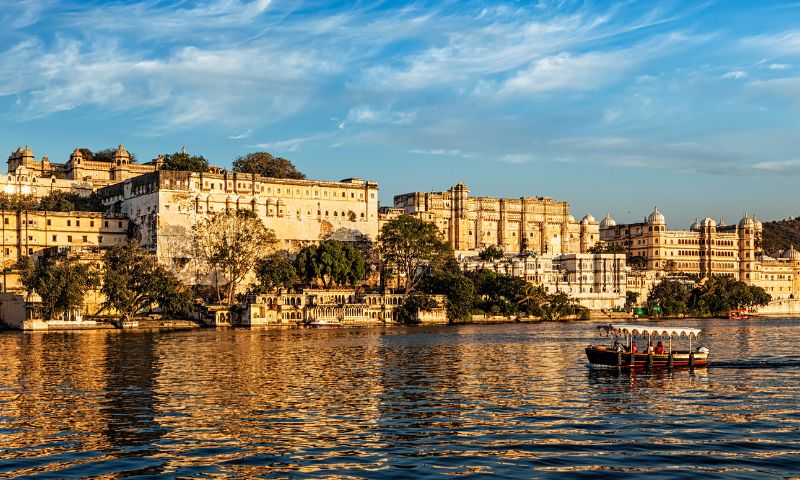
Jaisalmer does not announce itself gradually. You drive across a flat, honey-coloured stretch of the Thar, and suddenly a sandstone citadel rises out of the horizon like it was pressed there by hand. Locals call it Sonar Quila, the golden fort, and for good reason. When the late afternoon light hits, the whole town glows amber for close to an hour.
Founded in 1156 by Rawal Jaisal of the Bhatti Rajput clan, the city sits closer to the Pakistan border than to Jaipur, which explains its slightly untamed character. It is not a museum town. People still live inside the fort, cook inside its 400-year-old havelis, and drive camels for a living. For centuries, Jaisalmer was a strategic node on the Silk Route, taxing caravans that moved between Central Asia and the Indian subcontinent. That trade money is what built the fantastical merchant houses you will see. This guide covers the twenty stops that actually earn a place on your itinerary, along with the practical context you will need to plan the trip well.
Most Rajasthan itineraries treat Jaisalmer as an afterthought, tucked in after Jodhpur. That is a mistake. The city offers a specific combination that no other Indian destination replicates: a living UNESCO fort, dune camping under some of the darkest skies in the country, medieval Jain temples with carving quality that rivals Dilwara, and abandoned villages steeped in local legend. If you can only pick one Rajasthan city for the desert experience, this is the one. Add to that a genuine border-region character, war memorials that carry real weight, and food traditions like ker sangri and daal baati that you will not find refined to the same level elsewhere.
The fort is the heart of the city and one of the few living forts left in the world. Around a quarter of Jaisalmer’s population still resides inside its walls. Built in yellow sandstone that shifts from honey to deep amber through the day, it was inscribed as a UNESCO World Heritage Site in 2013 under the Hill Forts of Rajasthan grouping. Enter through the Ganesh Pol, climb the ramped approach past the four massive gateways, and walk up to the Raj Mahal, the seven-storey royal palace. Give yourself at least three hours to wander the interior lanes, where you will find working shops, home kitchens, and boutique guesthouses layered inside centuries-old stone. Recent conservation efforts have addressed drainage problems that once threatened the foundation, so the fort is more stable than it was a decade ago.
A cluster of five havelis built in the early 19th century by the Patwa family, then wealthy brocade and opium traders. The jharokha balconies, gold-leaf paintings, and mirror inlays here are considered among the finest in Rajasthan. The detailed guide to Kothari’s Patwon Ki Haveli is worth a read before your visit. Open 9 am to 5 pm.
About 42 km west of the city, Sam is where most desert camps operate. The dune belt here rises to 30 or 40 metres in places and shifts noticeably in shape year to year. Camel safaris at sunset, folk performances featuring Manganiyar and Langa musicians in the evening, and a night in a Swiss tent are standard fare. It gets crowded during peak season between November and February, so book ahead. For a quieter experience within the same drive, ask your operator about the smaller dune pockets closer to the road toward Kanoi.
A man-made rainwater reservoir built in the 14th century by Maharawal Gadsi Singh. Once the city’s only water source, it is now a quiet spot for early-morning bird watching, with migratory species arriving in winter. The Tilon Ki Pol gateway at the entrance is a photograph in itself. Small boats can be hired for a slow circuit.
Built around 1815 by the notorious prime minister Salim Singh, this haveli has an unusual peacock-shaped upper storey with 38 balconies. The story goes that Salim Singh attempted to build it taller than the Maharaja’s palace and was ordered to demolish the top floors. It sits close to the fort’s entrance.
Two brothers, Hathi and Lulu, carved this haveli in the late 19th century, each working on one half. Look closely and you will spot subtle asymmetries. It served as a prime minister’s residence and is still partly occupied.
Six kilometres north of Jaisalmer, Bada Bagh is a set of royal cenotaphs commemorating the Bhatti rulers. Go at sunset. The rows of chhatris silhouetted against the wind turbines in the distance make for one of the most striking scenes in the region.
An abandoned Paliwal Brahmin village that emptied overnight in 1825. The reasons remain contested. Local folklore blames the same Salim Singh mentioned earlier, whose demands on the villagers grew intolerable. The Archaeological Survey of India now manages the site, and it is genuinely eerie in the late afternoon.
Spread over roughly 3,162 sq km, this park protects one of the last habitats of the critically endangered Great Indian Bustard. Jeep safaris can be arranged from the city. Winter and early spring are the productive months for wildlife.
Around 120 km from Jaisalmer, close to the border, this temple carries a story from the 1965 and 1971 wars. Enemy shells reportedly landed within the temple complex without detonating, and the Border Security Force now maintains the shrine. It has become both a pilgrimage and a patriotic stop.
Another abandoned Paliwal settlement, less visited than Kuldhara and arguably more atmospheric. The ruined fort sits on a low hill with unobstructed views of the surrounding scrub. Peacocks wander through the ruins at dusk.
A cluster of Brahmin cenotaphs perched on a ridge northwest of the fort. This is where locals go for sunset, not tourists. The view of the golden fort catching the last light from this vantage is the shot most photographers chase.
The site of the 1971 Battle of Longewala, where a small Indian post held off a Pakistani armoured advance. Tanks, artillery pieces, and a small museum tell the story. It is a long day trip, roughly 130 km each way, but memorable if you have interest in modern military history.
Seven interconnected Jain temples built between the 12th and 15th centuries, dedicated to various Tirthankaras. The carvings, particularly in the Parshvanath and Rishabhanatha temples, rival Dilwara in intricacy but see a fraction of the crowd. Modest dress is required and photography restrictions apply.
A garden and lake complex about 5 km from the city, built by Maharawal Amar Singh in the late 17th century. The Adinath Jain temple within the grounds has finely restored sandstone carving and is often empty of visitors.
The former capital of the Bhatti dynasty before Jaisal shifted it to the current site. What remains is a serene Jain temple complex with a famous kalpavriksha, or wish-fulfilling tree, cast in metal. About 15 km northwest.
A small privately run museum near Gadisar Lake, curated by folklorist LN Khatri. Fossils, opium boxes, textiles, and manuscripts. He usually gives the tour himself, and it is easily the best hour you will spend indoors in Jaisalmer.
Roughly 17 km from the city on the road to Barmer, this geological park holds fossilised tree trunks estimated to be 180 million years old, remnants of a Jurassic-era forest. It is a niche stop, but geology enthusiasts will find it rewarding.
Established by the Indian Army in 2015 near the Jaisalmer Military Station. Two indoor halls, an audio-visual room, and an outdoor display of captured tanks and aircraft. Free entry, and worth ninety minutes.
A quieter alternative to Sam, about 40 km southwest. Khuri retains more of a village feel, with fewer camps and less commercial noise. Recommended if you prefer your desert nights without amplified music.
October to March is the workable window. Days sit between 20 and 28 degrees Celsius, nights cool sharply. Avoid April to June when temperatures cross 45 degrees. The annual Jaisalmer Desert Festival falls in February and is worth timing your trip around if you want to see traditional Rajasthani folk performances at scale.
Two nights is the minimum. Three nights lets you cover the town, one desert night, and one day trip to Longewala or Lodhruva without rushing. For a fuller sense of the region, our 3 Days Jaisalmer tour package covers heritage sightseeing along with camel and jeep safaris.
Dress modestly at temples. Bargain courteously at markets, especially in Sadar Bazaar and Bhatia Market for embroidery and camel-leather goods. Tip camel handlers at the dunes; their income depends on it.
Jaisalmer pairs naturally with Jodhpur and Udaipur for a classic desert-to-lakes arc. If you want the full royal circuit including Jaipur, Bikaner, and Ranthambore in one trip, our 15 Days Rajasthan tour from Delhi is structured to give each city its due without the fatigue of hurried transfers.
Among the many jaisalmer sightseeing places listed above, the four that consistently make the strongest impression on first-time visitors are the fort, Patwon Ki Haveli, Kuldhara, and a sunset at Bada Bagh. Build around those, then add depth based on your interests: Jain heritage, military history, wildlife, or simply more time in the dunes. For travellers focused on architecture, our earlier piece on the top tourist attractions in Jaisalmer covers the fort ecosystem in more detail.
If you would rather have the logistics handled by a specialist team familiar with the region, get in touch through our contact page. Our travel consultants have been organising Rajasthan itineraries for two decades and can tailor the pace to families, seniors, or solo travellers with equal ease. We do not sell templated trips, and we do not add hidden costs at the end.
Jaisalmer rewards travellers who slow down. Give it the time it deserves.
Three days is the sweet spot. Day one covers the fort, havelis, and Gadisar Lake. Day two is for a desert night at Sam or Khuri with camel safari and cultural evening. Day three lets you cover Kuldhara, Bada Bagh, and either Lodhruva or the war museum depending on your interest. Two days works if you skip the outer sites.
The comfortable travel window is late October through mid-March. December and January nights can drop close to freezing in the desert, so pack a heavy layer. February brings the Desert Festival, which is worth planning around. Avoid April to September when daytime temperatures make outdoor sightseeing genuinely difficult.
Broadly yes, and it has a stronger track record than many Indian tourist cities. The old town is walkable during the day, and most guesthouses are used to hosting solo women. Standard precautions apply after dark, and it is wise to arrange desert camps through a reputed operator rather than walk-in touts near the fort.
Three practical options. Fly to Jaisalmer Airport directly on seasonal routes, roughly 90 minutes. Take the overnight train, which is comfortable and drops you in the city by morning. Drive or take a bus to Jodhpur and continue by road, around 5 hours further. The train is the value option; flights are fastest when available.
Sam is bigger, busier, and more commercial, with larger dunes and a range of camp options. Khuri is quieter and more village-like, better for a lower-key desert night without amplified performances. First-time visitors usually prefer Sam; repeat travellers tend to pick Khuri.
The haunted reputation is largely a tourism board addition. The historical reality is that the Paliwal Brahmin community left the settlement in the early 19th century, likely under pressure from taxation and water scarcity. What remains is genuinely atmospheric, particularly around dusk, but the eeriness comes from the abandonment itself, not the supernatural stories layered on top later.

A Guide to Exquisite Indian Handicrafts and Where to Buy Them in India
26 Oct 2026
A Journey to Leh and Srinagar: Firsthand Travel Experience
25 Oct 2026
A Guide to Famous Temples in Himachal Pradesh
24 Oct 2026
9 Best Places to Visit in Lakshadweep, a Top Island Getaway in India
23 Oct 2026
7 Reasons Why One Should Travel by Indian Rail
22 Oct 2026


