+919871148514
 info@memorableindia.com
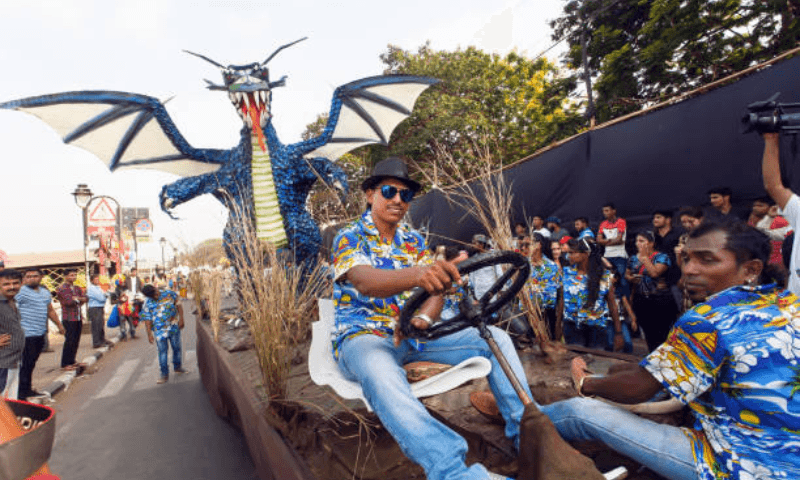
Goa’s annual carnival is the biggest pre-Lenten carnival in India. In 2026, it will take place from February 13 to 17. This four-day festival turns the coastal state into a riot of colour, music, and unbridled celebration. Rooted in the Portuguese colonial traditions that go back to the 18th century, the carnival has become a uniquely Goan celebration that attracts tourists from all over the country, making Goa Carnival one of the most awaited cultural festivals in India.
The festival commences with King Momo’s famous edict – “Kha, piye aani majja kar” (Eat, drink and be merry) and from then on the streets of Goa become open-air stages for parades, folk performances and non-stop festivities. The 2026 edition is spread out to six locations around the state, making it more accessible than ever.
The Goa Department of Tourism has confirmed that Goa Carnival 2026 will start from February 13 to February 17, 2026, and which was earlier concentrated in fewer locations, it will expand to six venues across North and South Goa.
Day-by-Day Schedule
February 13 (Friday) – Curtain Raiser, Porvorim
The parade route starts from IHM(Institute of Hotel Management) to ACDIL School with some local performers and a preview of floats.
February 14 (Saturday) – Panaji Grand Parade
The main event. The parade goes from New Patto Bridge to Campal Ground. King Momo makes his grand entrance here, with decorated floats, musicians and dancers. Arrive early to secure a place along D.B. Bandodkar Road.
February 15 (Sunday) – Margao
The parade starts from Holy Spirit Church to Margao Municipal Council Square. Known for good participation from locals and traditional Goan folk performances such as Fugdi, Dekhni, and Corridinho dance.
February 16 (Monday) – Vasco da Gama
A family-friendly celebration with more traditional food stalls & community floats, offering an intimate carnival experience.
February 17 – Mapusa and Morjim ( Finale)
Simultaneous celebrations conclude the carnival. In Mapusa, the parade takes place from Milagres Church to the Comunidade ground in front of Dev Bodheshwar Temple. The evening ends with the famous Red and Black Dance at the Samba Square in Panaji.
The Goa Carnival dates back to the Portuguese colonial era, when it was brought in during the 18th century, as a pre-Lent celebration. The word “Carnival” comes from the Latin word “Carne levare”, which means “farewell to meat” – a reference to the fasting period of Lent that follows.
The festival almost disappeared during the later period of Portuguese colonialism under the Estado Novo regime. After the liberation of Goa in 1961, the musician Timoteo Fernandes revived it in 1965, making the modern celebration of Goa similar to that of Brazil’s Rio Carnival. This changed the carnival from an exclusive colonial event to an inclusive public event where all communities participate.
Today, the Goa Carnival is the manifestation of the state’s unique cultural blend, bringing together Portuguese heritage, traditional Goan folk, and contemporary influences.
Each Goa Carnival is presided over by King Momo, a jovial figure who symbolises revelry. Every year, a resident is chosen to play this role.
The grand arrival of King Momo on the first day of the Panaji parade is the official start. Dressed in an elaborate royal costume of crown, cape, and sceptre, he rides on a decorated float surrounded by dancers and musicians. His proclamation is to invite everyone to join in the celebrations.
The King Momo Parade includes dozens of themed floats from Goan folklore to social commentary. Local schools, cultural groups and commercial entities compete for best float prizes.
Parades and Floats
Each city has an elaborately decorated procession of floats depicting historical events, mythological stories and artistic expressions. Performers dressed in colourful costumes dance along and bands play music in Konkani, Samba and other current rhythms.
Music and Dance
Traditional Goan folk music with guitar, mandolin and ghumat is used alongside Latin beats and EDM. Live bands perform at Samba Square and on parade routes. Watch out for Fugdi, Dekhni and Corridinho folk dance performances.
Street Theatre
In villages, especially the Salcete taluka, Khell Tiatr, which are traditional street-side plays in Konkani, provide very real glimpses of the local culture, with satire and social commentaries.
The Red and Black Dance
The Carnival’s grand finale in the Samba Square in Panaji is organised by Clube Nacional. Attendees appear in red and black exclusively for this masquerade ball, which continues into early Ash Wednesday morning. Purchase red and black outfits beforehand – stores are selling out locally.
Street-stalls line parade routes with authentic Goan cuisine:
Goan Fish Curry Rice: Fresh fish in tangy, spicy coconut gravy with red rice – available everywhere.
Pork Vindaloo: Scalding spicy curry of Portuguese origin made with local vinegar and hot spices. Pair with sannas or poi bread.
Xacuti: Aromatic curry of chicken or lamb with roasted coconut, poppy seeds, cinnamon and nutmeg.
Bebinca: The signature multi-layered, rich, dense, and slightly caramelised coconut milk pudding of Goa.
Feni: Local spirit distilled from cashew fruit or coconut sap, which is served neat or in cocktails.
Choris Pav: Spiced sausage Goan style in a soft roll – popular carnival street food.
Panaji (Feb 14): D.B. Bandodkar Road From Patto to Campal Ground. Arrive two hours early. The Church Square area provides shade.
Margao (Feb 15): For the start, near Holy Spirit Church or Municipal Council Square to view floats at rest.
Vasco (Feb 16): Not as crowded with a relaxed atmosphere. Several food stalls are located along the way.
Mapusa (Feb 17): Shorter route from Milagres Church – ideal for those who prefer smaller crowds.
Getting to Goa
By Air: Dabolim Airport is 26 km from Panaji. Manohar International Airport at Mopa serves as North Goa.
By Train: Madgaon and Vasco da Gama stations are the connecting ones to major cities. Book early – trains fill up fast during carnival.
By Road: NH 66 from Mumbai (about 11 hours) or NH 48 from Bangalore (about 11 hours).
Accommodation
Book early, prices are very high during carnival week.
Getting Around
Roads adjacent to parade routes are closed to private vehicles. Rent a scooter, but be prepared to walk around the areas close to the venue. Taxis are in high demand-bargain on fares ahead.
Practical Tips
Here are some options to explore in February: February is the peak season that offers ideal weather:
For travellers who love exploring diverse regions, pairing Goa with destinations mentioned in The Complete Assam Travel Guide Where to Go can turn a single holiday into a multi-state cultural journey. Similarly, itineraries like Uncover India Delhi to Goa allow visitors to experience historic capitals before ending their trip amidst Goa’s vibrant carnival atmosphere. Many operators now offer customized Tours Goa Tours that combine parades, beaches, heritage walks and culinary trails into one seamless experience.
For an all-inclusive experience of combining carnival with sightseeing, you should consider a Goa tour package that makes sure to have a balance of festivities and beach time, along with exploring heritage.
Q: When is Goa Carnival 2026?
A: Goa carnival 2026 will be held from 13th to 17th February 2026. The curtain-raiser is held in Porvorim (February 13th), the main parade takes place in Panaji (February 14th), and the carnival ends in Mapusa and Morjim on February 17th.
Q: What is King Momo, and why is he Important?
A: King Momo is a symbolic character that presides over the Goa Carnival and symbolizes joy, indulgence and celebration. Every year, a local Goan is selected to take this position, while he or she is to lead the grand parade, chanting the traditional message of “Eat, drink and be merry.”
Q: Is the Goa Carnival free to attend?
A: Yes, the main street parades and public celebrations are free. However, some private parties and events, such as the Red and Black Dance, may require entry tickets.
Q: What is the dress code for the Red and Black Dance?
A: Light cotton clothes are recommended as the temperature in February is warm (28–32°C). For the Red and Black Dance, people are expected to wear costumes based on red and black theme to match the theme of the finale.
Q: Which day of the Goa Carnival has the best parade?
A: February 14 offers the biggest and most vibrant experience with the grand parade of Panaji parade. The parades on February 15 th and 16 th in Margao and Vasco da Gama are less crowded and more relaxed.
Q: Is the Goa Carnival suitable for families with children?
A: Yes, daytime parades are family-friendly, with colourful floats, music, and performances. Evening events (such as the Red and Black Dance) are more adult-oriented.
Q: What food should I try during the carnival?
A: Must-try dishes are fish curry rice, pork vindaloo, xacuti, bebinca, choris pav, and a local spirit called feni.
Q: How do I reach carnival venues from the airport?
A: Dabolim Airport is around 26 km away from Panaji. Pre-booked taxis and app-based cabs are available but travellers must plan extra time because of road closures and for carnival traffic.
Final Thoughts
Goa Carnival 2026 is a once-in-a-lifetime chance to see India’s best pre-Lenten celeberation. From the theatrical arrival of King Momo to the masked revelry of the Red and Black Dance, the festival embodies Goa’s unique cultural identity.
Book accommodation early, familiarize yourself with the parade schedule, and prepare yourself for warm weather and long hours on your feet.
For hassle-free travel with the carnival and the beaches and heritage sites, check out Goa tourism packages that will take the stress out of your trip as you celebrate the carnival.