 +919871148514
 info@memorableindia.com
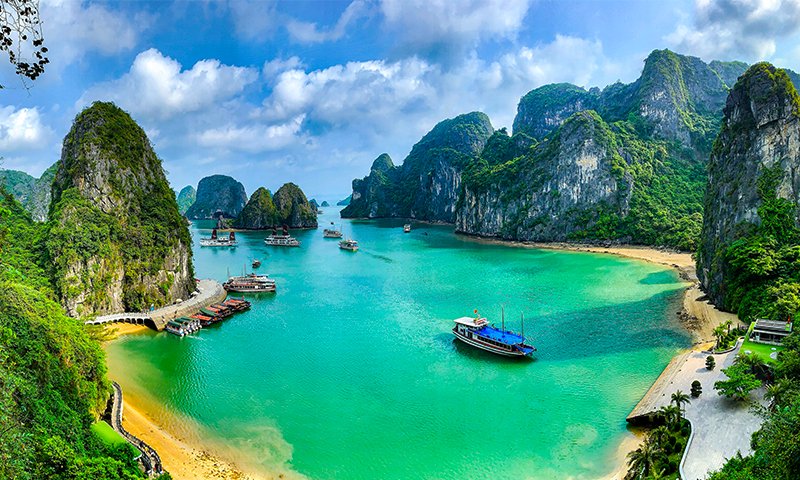
Vietnam has quietly become one of the most popular international escapes for Indian travellers, and the reasons are hard to argue with. Short flights, affordable stays, dependable e-visas, and a coastline that runs from the karst islands of Ha Long Bay down to the Mekong Delta make it an easy first stamp in a new passport. Yet a well-planned vietnam trip from india still needs a bit of homework, mainly because the country is longer than it looks on a map and the north and south feel like separate holidays. This guide walks you through visa steps, flight routes, timing, budgets, and a realistic itinerary so you can move from a screenshot on your phone to a confirmed booking without second-guessing yourself.
Three practical reasons keep pulling Indian tourists towards Vietnam. First, the visa is issued online in most cases, so the paperwork stays on your laptop. Second, non-stop and one-stop flights from Delhi, Mumbai, Bengaluru, Kolkata, and Hyderabad now run daily, keeping airfares competitive. Third, the ground cost is genuinely low once you land, which lets couples, families, and small groups stretch a mid-range budget into an experience that feels premium. Vegetarian food is easier to find than most travellers assume, English is widely spoken in tourist zones, and safety levels in the main cities are on par with Southeast Asian standards. Add to this a cultural familiarity: Buddhist temples, roadside chai stalls (Vietnamese ca phe sua da is the local equivalent), and a shared love for street food make the shift feel less foreign than a first European trip.
Vietnam runs long from north to south, so the weather is never uniform. Instead of asking when Vietnam is at its best, ask which region you want to see.
For Indian travellers, the December to March window works best because it lines up with school holidays, wedding season breaks, and cool northern weather. Shoulder months like April and October are cheaper and still comfortable if your itinerary sticks to one region.
Indian citizens need a visa to enter Vietnam, and the good news is that the e-visa is the standard route in 2026. It is valid for stays of up to 90 days and allows multiple entries, which is useful if you plan a side trip to Cambodia or Laos.
Always apply through the official government portal at evisa.gov.vn to avoid third-party mark-ups. Your passport must have at least six months of validity and two blank pages. If you plan to work, study, or stay beyond 90 days, a consular visa through the Vietnamese Embassy in Delhi is the correct route.
Direct flights from India to Vietnam operate mainly to Hanoi (HAN) and Ho Chi Minh City (SGN). VietJet Air and Vietnam Airlines run non-stop routes from Delhi, Mumbai, Bengaluru, Hyderabad, and Ahmedabad, with flight time between four and six hours. IndiGo has also expanded its Southeast Asia network with direct services, which has kept ticket prices in check.
Most Indian travellers underestimate distances inside Vietnam. Hanoi to Ho Chi Minh City is more than 1,700 kilometres, so trying to cover everything in five days ends in exhaustion. Pick a pace that matches your holiday length.
If Vietnam is your first international holiday, the 10-day route delivers the best balance of variety and rest. For more ideas across Southeast Asia, our International Tour blog section compares itineraries across Vietnam, Bali, Bhutan, and Thailand so you can match a trip length to your leave calendar.
A realistic per-person cost for a 7-day trip on a mid-range plan sits between INR 55,000 and INR 85,000, excluding shopping. Here is where the money goes:
Luxury travellers can double these figures for boutique cruises, five-star stays, and private guides. Backpackers can cut costs by 30 to 40 per cent using hostels and overnight sleeper trains.
Hanoi is the cultural heartbeat of Vietnam with a French quarter, tree-lined boulevards, and a food scene that includes pho, bun cha, and egg coffee. Ha Long Bay, a UNESCO World Heritage Site, is a two-hour drive away and is best experienced on an overnight cruise. Sapa in the far north offers rice terraces and homestays with Hmong families.
Hoi An is a lantern-lit old town where tailors can stitch a suit in 24 hours. Da Nang has quiet beaches and the surreal Golden Bridge at Ba Na Hills. Hue holds the imperial citadel and royal tombs of the Nguyen dynasty.
Formerly Saigon, this is a fast, energetic city with rooftop bars, colonial cathedrals, and the sobering War Remnants Museum. Day trips run to the Cu Chi Tunnels and the floating markets of the Mekong Delta. Phu Quoc island offers palm-fringed beaches for a proper beach ending. If you have already ticked off Bali or Thailand, the southern coast of Vietnam is a fresh, less crowded alternative with better value for four and five-star resorts.
Vietnamese food is fresh, herb-heavy, and mostly cooked to order, which helps travellers with dietary restrictions. Jain and pure vegetarian meals need to be requested clearly, and Indian restaurants are available in Hanoi, Ho Chi Minh City, and Da Nang if you crave dal chawal after a week of pho.
A self-planned trip works, but many Indian travellers prefer a curated route with confirmed hotels, English-speaking guides, private airport transfers, and 24/7 on-trip support. When you plan vietnam tour india with a full-service operator like Memorable India, you get end-to-end coordination: e-visa assistance, vetted cruise operators for Ha Long Bay, internal flight bookings, and honest advice on which regions to prioritise. Couples looking at romantic short-hauls often pair Vietnam with a beach add-on or compare it against our Dubai Honeymoon Tour package before deciding. To customise dates, hotel category, and city combinations, you can reach out to our team through the Contact Us page and receive a tailored quote within 24 hours.
Vietnam rewards travellers who plan around regions rather than around bucket lists. A calm week in the north or a coast-to-coast fortnight will always beat a hurried five-day dash. Sort the e-visa early, book flights eight weeks out, keep buffer days between long transfers, and let the food do half the storytelling. Travel light, keep one afternoon in each city completely unplanned, and trust that the best moments (an early morning egg coffee in Hanoi, a lantern-lit dinner by the Thu Bon river in Hoi An, a slow Mekong sunset) usually arrive when you slow down. Do that, and your first Vietnam holiday will not be your last.
Yes, in most categories. Hotels, meals, and internal transport in Vietnam are typically 10 to 20 per cent cheaper than in Thailand. Flights from India are similar in price, so the overall trip cost tends to be lower.
The standard route in 2026 is the e-visa, applied online before travel. Visa on arrival is available only with a pre-approved letter through a licensed agency and is used mainly by business travellers. For tourism, the e-visa is faster and cheaper.
Seven days cover the north or the centre comfortably. Ten days give you a balanced north-to-south tour. Two weeks let you add Sapa, Ninh Binh, or a beach stop in Phu Quoc.
Vietnam is broadly safe for solo travellers, including women. Petty scams like inflated taxi fares exist, so use Grab for rides and keep valuables in hotel lockers. The main tourist trails are well-policed and busy well into the night.
Yes. Buddhist vegetarian restaurants marked “com chay” are common in Hanoi and Ho Chi Minh City. Indian restaurants serve full thalis, and hotels can arrange Jain meals with advance notice. Always confirm no fish sauce is used, as it is a common Vietnamese ingredient.
February to April is ideal. The weather is dry across most regions, Hoi An looks its romantic best, and Phu Quoc beaches are calm for a couple’s finish. December works well too but is peak season with higher rates.

A Guide to Exquisite Indian Handicrafts and Where to Buy Them in India
26 Oct 2026
A Journey to Leh and Srinagar: Firsthand Travel Experience
25 Oct 2026
A Guide to Famous Temples in Himachal Pradesh
24 Oct 2026
9 Best Places to Visit in Lakshadweep, a Top Island Getaway in India
23 Oct 2026
7 Reasons Why One Should Travel by Indian Rail
22 Oct 2026


