 +919871148514
 info@memorableindia.com
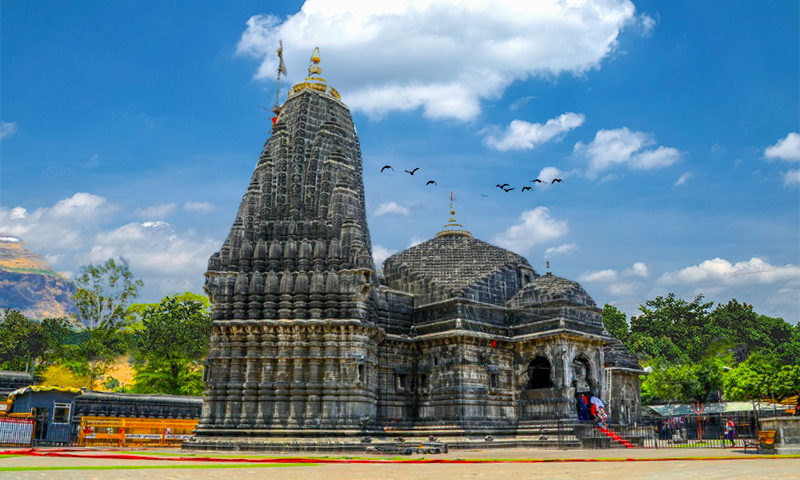
Five of the twelve luminous shrines of Lord Shiva sit inside a single state, and that is not an accident of geography. Maharashtra’s ancient trade corridors, Peshwa-era patronage and the Sahyadri’s dense forest cover gave these temples their footprint, their architecture and, in many cases, their survival. For a devotee planning a Shiva yatra, this concentration means one route, one week, and five Jyotirlinga darshans that would otherwise take a month of cross-country travel.
The Panch Jyotirlinga Maharashtra circuit spans Nashik in the north, Pune in the west, Aurangabad in the centre, and stretches east to Hingoli and Beed in the Marathwada belt. This guide covers what each shrine actually offers, how the route fits together on the ground, and the practical details that decide whether the yatra feels like devotion or damage control.
The Shiva Purana lists twelve Jyotirlingas, self-manifested pillars of light where Lord Shiva revealed his cosmic form. Of these, three sit unambiguously inside Maharashtra: Trimbakeshwar, Bhimashankar and Grishneshwar. The other two, Aundha Nagnath and Parli Vaijnath, are recognised as Jyotirlinga sites in parallel scriptural traditions that place Nageshwar in the Darukavanam forest of the Deccan and Vaidyanath in the Marathwada healing belt.
Regional tradition, temple trust records and centuries of unbroken worship treat all five as the Pancha Jyotirlingas of Maharashtra. Together they form the densest Shaivite pilgrimage cluster in India, which is why a well-planned five-day or seven-day circuit is entirely possible without long-haul flights or overnight trains between shrines.
Trimbakeshwar sits 28 kilometres from Nashik, at the foot of the Brahmagiri hills. The shrine is unusual in one immediate respect: instead of a single linga, the sanctum holds three small faces representing Brahma, Vishnu and Mahesh, worn down over centuries of abhishek. The present Hemadpanti-style structure was rebuilt in black basalt by Peshwa Balaji Baji Rao in the 18th century.
The Kushavarta Kund inside the temple complex is the acknowledged source of the Godavari river, which is why Trimbakeshwar is also a mandatory stop for Simhastha Kumbh Mela pilgrims every twelve years. Non-Hindus and cameras are not permitted inside the sanctum, and only the temple trust’s sanctioned priests conduct the Narayan Nagbali and Kaal Sarp Dosh Nivaran pujas that draw devotees here from across India.
Darshan timings: 5:30 AM to 9:00 PM, with the Tribhandari Puja in the early morning slot
Nearest access: Nashik railway station (28 km); Mumbai airport (180 km)
Best paired with: Anjaneri hill (Hanuman’s birthplace), Pandavleni Caves, Kushavarta Kund
Bhimashankar lies in the Sahyadri hills roughly 110 kilometres from Pune, inside a protected wildlife sanctuary that shelters the endangered Indian giant squirrel. Getting here means a climb through evergreen forest, and the last stretch of road narrows enough that large tour coaches routinely offload passengers a kilometre from the temple gate.
The Nagara-style temple, dating to the 13th century with Peshwa-era additions, marks the spot where Shiva is said to have defeated the demon Bhima. The sweat that dripped from his body after the battle formed the Bhima river, which rises in the hills behind the sanctum. The linga here is jyotirlinga-swayambhu, wider and lower than most, and the sanctum stays cool even in peak summer because of the thick stone walls and the surrounding forest canopy.
The site is inside a notified wildlife reserve, so plastic is prohibited, mobile signals are patchy, and the last vehicle down the ghat road usually leaves by dusk. Pilgrims travelling with elderly parents should time the darshan for mid-morning after the pre-dawn queue clears.
Darshan timings: 4:30 AM to 9:30 PM; Kakad aarti at 4:30 AM, shej aarti at 9:30 PM
Nearest access: Pune (110 km); Mumbai (220 km)
Grishneshwar sits at Verul village, less than a kilometre from the Ellora Caves UNESCO site, which makes it the only Jyotirlinga you can pair with a world heritage monument in the same afternoon. The current red-basalt structure was rebuilt in the 18th century by Ahilyabai Holkar, whose restoration work also revived Kashi Vishwanath and Somnath.
The temple’s carvings show scenes from the Dashavatara and the Shiva Purana on every external panel. Male devotees are asked to remove their shirts before entering the inner sanctum, a tradition that predates the Ahilyabai reconstruction and is enforced by the temple trust. The Grishneshwar legend centres on Kusuma, a devoted wife whose faith is said to have restored her son to life, which is why the shrine is particularly visited by couples praying for children.
For travellers combining this leg with Ajanta and Ellora, our Ajanta Ellora tour package pairs the caves with Grishneshwar darshan and Daulatabad fort inside a five-night itinerary.
Darshan timings: 5:30 AM to 9:30 PM (Mondays draw the largest crowds)
Nearest access: Aurangabad airport (30 km); Ellora Caves (1 km)
Aundha Nagnath in Hingoli district is the least visited of the five and, for that reason, the most atmospheric. The linga is set below ground level, so pilgrims descend a short flight of steps into the garbhagriha for darshan. Local tradition holds that the original structure was built by the Pandavas during their exile, then rebuilt in the 13th century under the Yadava dynasty.
The temple carries a Sikh connection as well. Sant Namdev, the 14th-century Marathi bhakti poet, spent years here, and Guru Nanak is recorded as having visited during his udasi travels across the Deccan. That layered devotional history gives the site a quieter, more contemplative pull than the busier three western shrines. Snakes are regularly sighted around the sanctum during the rains, which local priests treat as an auspicious sign linked to the Nageshwar identification.
Darshan timings: 4:00 AM to 9:00 PM
Nearest access: Nanded railway station (70 km); Aurangabad (210 km)
Parli Vaijnath crowns a small hill in Beed district, walled in stone on all four sides in a defensive layout that reflects the temple’s repeated reconstruction after medieval raids. The deity here is Vaidyanath, Shiva in his form as the physician of the gods, which draws devotees specifically praying for recovery from chronic illness.
Unlike most Jyotirlingas, Parli Vaijnath permits devotees to physically touch the linga during darshan, a concession the temple trust preserves as part of the healing tradition. The surrounding hills carry medicinal herbs still gathered by local Ayurvedic practitioners, and the annual Vaikuntha Chaturdashi festival is one of the few occasions in India when a single ritual honours both Vishnu and Shiva at the same shrine.
Darshan timings: 5:00 AM to 9:00 PM
Nearest access: Parli Vaijnath railway station (2 km); Aurangabad (240 km); Latur (85 km)
The five shrines split naturally into a western cluster (Bhimashankar, Trimbakeshwar, Grishneshwar) and an eastern Marathwada cluster (Aundha Nagnath, Parli Vaijnath). A logical route starts from Pune or Mumbai, moves anticlockwise, and returns via Aurangabad. Five days is tight, seven days is comfortable, and ten days lets you fold in Shirdi, Ajanta or Nanded Sahib without doubling back.
A well-run yatra of this length works best as a private-vehicle circuit rather than shared bus tours, because the eastern leg has limited public transport connectivity and darshan windows shift with festival calendars. If your group includes seniors, splitting the drive from Nashik to Aurangabad with an overnight halt at Shirdi is worth the extra day.
October to March is the most reliable window. Temperatures across Marathwada stay between 15 and 30 degrees Celsius, the roads are dry, and the darshan queues are manageable outside long weekends. The Shravan month (July to August in most years) is spiritually the most auspicious but also the most crowded, with Trimbakeshwar and Bhimashankar routinely running six-hour queues.
Mahashivratri (usually late February or early March) triggers all-night queues at all five shrines; plan an alternative date unless the festival itself is the reason for your yatra. The monsoon between June and September makes Bhimashankar’s ghat road slippery and Aundha Nagnath’s approach roads unreliable, though the Sahyadri hills at Bhimashankar in monsoon are genuinely spectacular for those willing to trade convenience for scenery.
For pilgrims wanting the wider twelve-shrine journey rather than only the Maharashtra circuit, our 28-day Sacred 12 Jyotirlingas Tour Package covers all five Maharashtra shrines alongside Somnath, Nageshwar, Mahakaleshwar, Omkareshwar, Kashi Vishwanath, Baijnath, Kedarnath, Mallikarjuna and Rameshwaram. For customised routing that fits fewer days or specific festival dates, our India pilgrimage tour packages team can build the yatra around your travel window.
A yatra to these five shrines is not a checklist. It moves through some of the oldest continuously worshipped sites in the Deccan, and the pace matters as much as the destinations. Rushed darshan runs miss the point; a route paced for reflection, with room for the temple trust’s aarti timings and the incidental sacred sites along the way, is what turns the journey from travel into pilgrimage.
If you are ready to plan a Panch Jyotirlinga Maharashtra yatra built around your dates, group size and preferred pace, get in touch with our pilgrimage travel team at Memorable India. We handle vehicle arrangements, temple trust liaison for priority darshan where permitted, and vetted accommodation across the route so your yatra runs the way it should.
Maharashtra has five Jyotirlingas: Trimbakeshwar in Nashik, Bhimashankar near Pune, Grishneshwar near Ellora, Aundha Nagnath in Hingoli and Parli Vaijnath in Beed. Three of these (Trimbakeshwar, Bhimashankar, Grishneshwar) are among the traditional twelve Jyotirlingas of India, while Aundha Nagnath and Parli Vaijnath are recognised as Jyotirlingas under parallel scriptural traditions.
Yes. All five Jyotirlinga temples in Maharashtra can be covered comfortably in a five to seven-day road circuit starting from Pune or Mumbai. A seven-day itinerary allows realistic pacing for senior travellers and buffer time for darshan queues, while a compressed five-day route is possible for younger travellers with fewer sightseeing stops.
October to March offers the most comfortable weather and manageable crowds. The month of Shravan (July to August) and Mahashivratri (February or March) are spiritually significant but extremely crowded. Monsoon travel to Bhimashankar is scenic but the ghat road becomes challenging, so it is best avoided by families with elderly members.
Pune is the most practical starting point because Bhimashankar is within a half-day drive and the anticlockwise route through Nashik, Aurangabad, Parli and Hingoli avoids backtracking. Mumbai works equally well for those flying in internationally, with the yatra ending at Nanded or Aurangabad for the return flight.
Yes. Traditional Indian attire is expected: dhoti or trousers with an upper garment for men, saree or salwar-kameez for women. Grishneshwar requires men to remove their upper garments before entering the sanctum. Mobile phones and cameras are prohibited inside all five inner sanctums. Non-Hindus are not permitted inside the sanctum at Trimbakeshwar.
The twelve Jyotirlingas are the pan-India self-manifested shrines of Lord Shiva listed in the Shiva Purana. The Panch Jyotirlinga Maharashtra refers specifically to the five Shiva shrines within Maharashtra worshipped as Jyotirlingas under regional and scriptural traditions. Devotees completing the Maharashtra circuit typically move on to the wider twelve-shrine yatra over subsequent trips.

A Journey to Leh and Srinagar: Firsthand Travel Experience
25 Oct 2026
A Guide to Famous Temples in Himachal Pradesh
24 Oct 2026
9 Best Places to Visit in Lakshadweep, a Top Island Getaway in India
23 Oct 2026
7 Reasons Why One Should Travel by Indian Rail
22 Oct 2026
6 Reasons to Visit Chopta Valley in the Himalayas
21 Oct 2026


