 +919871148514
 info@memorableindia.com
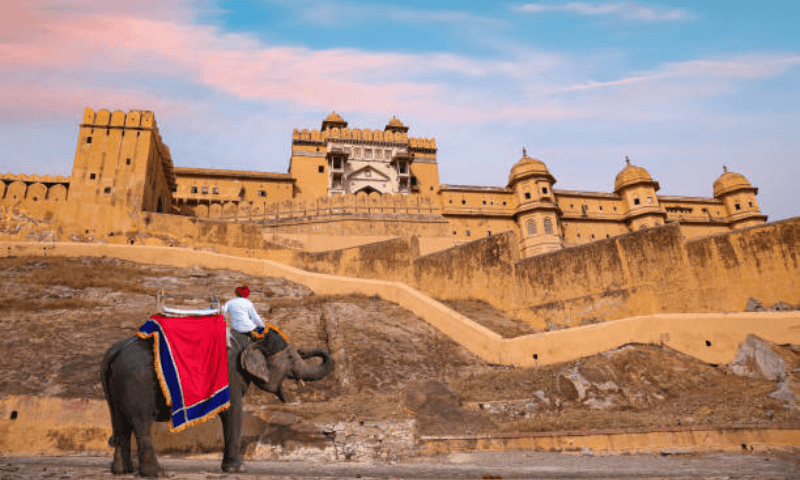
Rajasthan attracts foreign visitors as prominently as any other state in India. The combination of monumental forts, vast desert landscapes, and living royal heritage makes an experience both ancient and contemporary. For international travellers planning their India trip itinerary, the Land of Kings is consistently at the top of the list of priorities.
This guide covers the seven destinations that constantly receive the largest number of international tourists each year. Most Rajasthan tour packages include three to five of these destinations, depending on the duration of the trip and the preferences of travellers.
Most foreign visitors start their Rajasthan tour from Jaipur, conveniently located within the Golden Triangle circuit that includes Delhi and Agra. Amber Fort dominates most itineraries with a combination of defensive architecture and ornate decor. The Sheesh Mahal or Hall of Mirrors displays the craftsmanship that continues to impress visitors centuries after its construction.
The City Palace complex is still partly occupied by the former royal family, while significant sections are open to visitors. The adjacent Jantar Mantar observatory has the world’s largest stone sundial. The Hawa Mahal with its unique honeycomb-patterned facade, has become the most photographed monument of Rajasthan. For shopping, there are various traditional textiles, gemstones, and handicrafts available around Johari Bazaar.
Udaipur offers a slower pace and soothing environment compared to other cities in Rajasthan. Founded in 1568 by Maharana Udai Singh II, the city is surrounded by the Aravalli hills and centered around interconnected lakes. Many foreign visitors have described Udaipur as the most atmospheric destination in Rajasthan. The City Palace, which runs along the eastern side of Lake Pichola, is a gigantic structure that was built over more than 400 years and was expanded by various rulers.
The Lake Palace on Jag Niwas Island is now a luxury hotel, its white marble silhouette featured in films all over. Boat rides on Lake Pichola at sunset have become something of a ritual for visitors. Rajasthani temple architecture is well illustrated at the Jagdish Temple, where the carvings depict Hindu mythology and culture. Saheliyon Ki Bari (Garden of Maidens) is a much more peaceful contrast to the grandeur of the palace.
Jaisalmer is located on the western edge of Rajasthan, closer to the Pakistan border than to Jaipur. The city’s yellow sandstone buildings have given it the nickname called the Golden City, which actually reflects the beauty of these walls, where in the evening they get shone up in the fading light.
Jaisalmer Fort is a vibrant fort with living shops, hotels and residences inside the fort. The Jain temples within the fort complex have some of the finest stone carving in western India. The largest merchant mansion, Patwon Ki Haveli, has carved facades of remarkable intricacy. Camel safaris into the Sam or Khuri dunes provide an overnight camping experience under clear desert skies, a complete contrast to the density of urban India.
Jodhpur’s nickname is derived from blue-painted houses that are clustered together below the Mehrangarh Fort and are best seen from the fort ramparts above. Mehrangarh stands 125 metres above the city on a sheer cliff face and contains several palaces inside it. The museum collection includes cradles and palanquins used by royalty and also a vast collection of arms covering hundreds of years of martial tradition.
Jaswant Thada is a white marble cenotaph that contrasts sharply with sandstone fortifications above. Umaid Bhawan Palace, completed in 1943, is one of the last great palaces to be built in India. Part is a heritage hotel, part remains the residence of the Maharaja, and part functions as a museum.
Pushkar holds religious significance that distinguishes it from ordinary royal cities. The town is clustered around a lake that is considered sacred in the Hindu religion and has 52 bathing ghats and more than 400 temples. The Brahma Temple is one of very few temples in the world dedicated to the creator deity. The Pushkar Camel Fair, held each November, turns the town into a huge cultural event, attracting thousands of foreign visitors by combining livestock trading, folk performances, and competitions. Outside the fair period, Pushkar retains its quieter aspect with prohibition on alcohol and meat; a sense of the atmosphere of a temple-town.
Ranthambore National Park is the best chance in Rajasthan to catch a glimpse of the wild tiger. The landscape is a mix of dry deciduous forest and the spectacular Ranthambore Fort in the background. Safari operations are conducted twice per day, at dawn and at late afternoon when tiger activity is on the rise.
The park’s tigers have gotten used to vehicles over the decades and sightings are more likely than in some other reserves in India. Beyond tigers, there are leopards and sloth bears in the park as well as a variety of birds. Ranthambore Fort is a 10th-century construction providing an atmosphere of romantic decay in the sheltered forest.
Mount Abu is located at an elevation of about 1220 metres in the Aravalli Range giving climatic respite from the desert plains. Foreign visitors usually include Mount Abu in their itinerary to get relief from the heat or to visit the Dilwara Jain Temples. Built between the 11th and 13th centuries, these temples show marble carving of such exquisite delicacy that it defies the constraints of stone. Nakki Lake is the focal point of the tourist area, and Sunset Point attracts evening crowds for views over the Aravalli hills.
The best traveling time is from October to March, when the weather is not too cold or too hot for outdoor exploration. Most foreign travellers spend between 10 and 14 days exploring a full circuit, although it is possible to make focused trips visiting three or four sites in a week. Well-designed Rajasthan holiday packages take care of the logistics such as booking of hotels of heritage sites, permits for safaris, and guiding by experienced locals. Our destination experts design custom travel itineraries for your interests and travel style.
What is the best season to visit Rajasthan as a foreign tourist?
October to March offers the most comfortable temperatures ranging from 20°C to 28°C. Summer months are extremely hot and temperatures can exceed 45°C in desert regions. The peak tourist season runs from November to February.
How many days are needed for a complete Rajasthan tour?
A complete circuit with five to six destinations takes 12 to 15 days. Shorter tours of 7 to 10 days are effective to explore the Jaipur-Jodhpur-Udaipur triangle or the Golden Triangle extension.
Which Rajasthan destination suits first-time India visitors?
Jaipur represents good tourist infrastructure, international hotels and the positioning of the Golden Triangle. Udaipur is more laid-back alternative for those looking for more gentle introduction to India.
Can wildlife safaris combine with heritage sightseeing in Rajasthan?
Ranthambore fits very well with the heritage circuits, on the route between Jaipur and Agra. Two to three nights give sufficient safari time with morning and afternoon game drives.
Why choose organized tour packages over independent travel in Rajasthan?
Packages provide a solution to any number of logistic issues such as booking heritage hotels at properties that do not often accept walk-ins, procuring safari permits, and having access to knowledgeable guides who make monument visits that much better.

Festivals Galore: Fairs and Festivals In India In November
28 Mar 2026
Govind Pashu Vihar Wildlife Sanctuary: The Home Of The Wild
28 Mar 2026
The Serenity Of The Western Ghats
27 Mar 2026
A Walk Through The Culinary Lanes Of India
27 Mar 2026
Padmanabhaswamy Temple – The mysterious abode with never-ending wealth
26 Mar 2026


