 +919871148514
 info@memorableindia.com
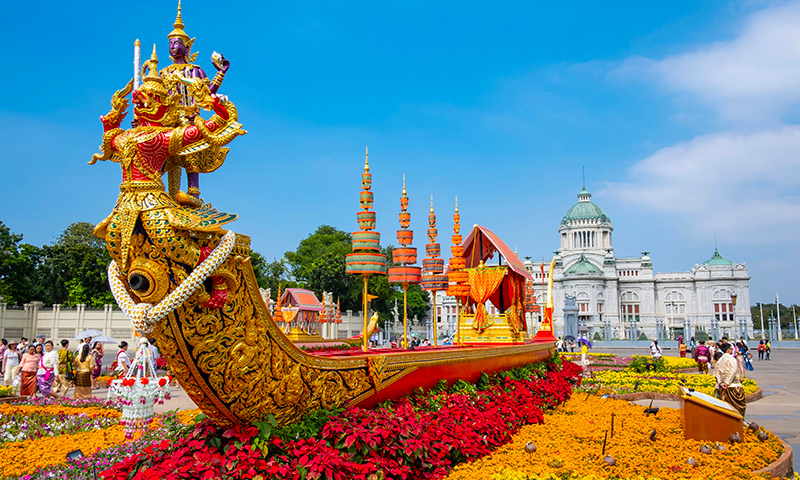
Bangkok rewards travellers who arrive with a plan. The city sprawls across the Chao Phraya delta, and the difference between a rushed stopover and a trip that actually works usually comes down to one thing: grouping the right sights together. The royal temples sit tightly packed in the Rattanakosin old quarter. The big markets lie north and southwest. Malls, parks and rooftop bars run along the Sukhumvit and Silom corridors. Hop between these zones at random and traffic will eat your afternoon. Sequence them by river boat and metro, and the same list turns comfortable.
This guide covers the top 12 places to visit in Bangkok, grouped the way a local guide would actually run them, with entry fees, timings and transport notes that change how your day unfolds. If Thailand is your first trip to Southeast Asia, our Thailand travel guide for first-time visitors pairs well with this list and covers currency, etiquette and packing before you get to the sightseeing.
The single most photographed address in Thailand, and the one worth reaching at opening time. Built from 1782, the complex holds more than thirty halls, throne rooms and pavilions, plus Wat Phra Kaew, home of the Emerald Buddha carved from a single block of jade. Foreign visitors pay 500 THB, and that ticket also covers the Queen Sirikit Museum of Textiles. Ticket sales run 8:30 am to 3:30 pm, with the grounds open until about 4:30 pm. The dress code is enforced at the gate: shoulders and knees covered, no see-through fabric. Children under 120 cm enter free. Check current visiting rules on the official Grand Palace site, since ceremonial closures happen at short notice.
A seven hundred metre walk south of the palace gates sits the gilded 46 metre Reclining Buddha, its feet inlaid with mother of pearl. Entry is 300 THB. Behind the crowds, the quieter cloisters hold 108 bronze bowls representing the auspicious signs of the Buddha, and dropping a coin into each is a small ritual most visitors enjoy. Wat Pho also houses Thailand’s oldest and most respected traditional massage school, and you can book an hour on site for a fraction of hotel spa rates. Pairing the palace and Wat Pho into a single morning is the standard, sensible move.
Directly across the water, Wat Arun rises in a central spire roughly 82 metres tall, its entire surface pressed with fragments of Chinese porcelain that catch light differently through the day. The crossing from Tha Tien pier costs a few baht and takes two minutes, which makes it the cheapest memorable boat ride in the city. Despite the name, late afternoon is the better slot: the western face glows near sunset, and the riverside cafes opposite give you the postcard view with a cold drink in hand.
The river is not just scenery in Bangkok, it is functioning public transport. The orange-flag express boat runs the length of the central city for a nominal fare and moves faster than any taxi during peak hours. Ride it once purely to watch temple spires, teak barges, luxury hotels and stilt houses slide past in the same frame. For an evening version, dinner cruises depart from Asiatique and River City with buffet service and live music, which works well for families and for groups celebrating something.
One of the largest weekend markets on earth, spread over roughly 35 acres with around 15,000 stalls sorted into 27 numbered sections. Saturday and Sunday, 9 am to 6 pm, with a plant and flower section that also runs Friday evening. Arrive at opening: by noon the lanes are hot and shoulder to shoulder. Reach it via MRT Chatuchak Park or Kamphaeng Phet, or BTS Mo Chit, and leave the same way, since ride-hailing near the exits on a Sunday afternoon is genuinely painful. The Tourism Authority of Thailand listing is a reliable place to confirm section layouts before you go.
Yaowarat Road is at its best after dark, when the gold shops shut and the food carts take the pavement. Grilled river prawns, oyster omelettes, guay jab noodle soup and stewed pork leg over rice are the staples, and the queues in front of a stall are a fair guide to quality. Vegetarians do better here than most Bangkok districts, particularly during the annual Vegetarian Festival, when yellow flags mark meat-free kitchens across the neighbourhood. MRT Wat Mangkon drops you at the heart of it, which removes the parking problem entirely.
An artificial hill topped by a golden chedi, reached by a spiral staircase of about three hundred shaded steps. Entry to the summit is 100 THB and the temple grounds below are free. This is the best accessible viewpoint over the old city: from the terrace you can pick out the palace roofs, Wat Arun’s spire and the low sprawl of Rattanakosin against the modern skyline behind. Late afternoon is the comfortable slot, and it slots neatly after a temple-heavy morning.
Six traditional teak houses, relocated from around Thailand and reassembled beside a canal, once home to the American who rebuilt the Thai silk export trade after the Second World War and then vanished in Malaysia in 1967. The compound holds his Southeast Asian art collection and remains one of the calmest, most genuinely interesting hours in central Bangkok. Guided tours run through the day, and it sits a short walk from BTS National Stadium, which makes it easy to combine with the Siam shopping belt.
Bangkok shopping runs on tiers. Siam Paragon and CentralWorld cover international brands and food halls, MBK Center handles bargaining, electronics and souvenirs, and ICONSIAM on the Thonburi bank pairs a luxury mall with an indoor floating-market food floor. A free shuttle boat connects ICONSIAM to Sathorn pier. In the hot months, this is also the practical answer to the afternoon heat: air-conditioned floors, cheap food courts and skywalks that let you cross half the district without stepping outside.
About two hours southwest, Maeklong Railway Market runs straight along a live railway line, and several times a day the vendors calmly fold back their awnings, let the train pass at walking pace, and set up again. It is usually combined with a floating market: Damnoen Saduak for the classic canal-and-boat scene, or Amphawa for a quieter evening version with firefly boat rides after dark. Book this as a single organised day trip rather than piecing it together, because the timings depend on the train schedule.
Roughly ninety minutes north lies the former Siamese capital, sacked in 1767 and now a UNESCO World Heritage site. The ruins are genuinely atmospheric: the sandstone Buddha head grown into banyan roots at Wat Mahathat, the row of chedis at Wat Phra Si Sanphet, and Wat Chaiwatthanaram in Khmer style beside the river. Trains, minivans and organised coaches all run from Bangkok. Bicycles are the pleasant way to link the temple clusters once you arrive, though the midday heat argues for an early start.
Lumphini Park is where the city exhales: tai chi at dawn, paddle boats, joggers at dusk and resident monitor lizards that surprise most first-timers. It is free, and it is the best counterweight to a temple-and-mall itinerary. After sunset, the Silom and Sathorn rooftop bars deliver the skyline view, most enforcing smart-casual dress. For a livelier evening, Asiatique combines a riverside night market with a Ferris wheel, while Khao San Road remains the backpacker centre of gravity, best sampled for an hour rather than a night. All three sit within easy reach of a BTS or river stop once the daytime sightseeing is done.
November to February is the cool dry season and the most comfortable window for walking-heavy sightseeing, with warm days and manageable humidity. March to May is the hot season, when afternoons regularly push into the high thirties and indoor attractions earn their place in the plan. June to October brings the southwest monsoon, usually as short heavy bursts rather than all-day rain, and hotel rates drop noticeably. Two dates worth planning around: Songkran, the Thai new year water festival in mid-April, and Loy Krathong in November, when floating lanterns and offerings fill the river.
Thailand’s entry rules for Indian passport holders are in active transition and need checking close to your travel date. At the time of writing, the 60-day visa exemption introduced in 2024 remains in force at the border. However, the Thai Cabinet approved a revised framework in July 2026 that places India in a 30-day visa exemption category. Those measures take effect fifteen days after publication in the Royal Gazette, which had not occurred when this article was prepared. Confirm the position on the Royal Thai Embassy in New Delhi page before booking non-refundable flights.
One requirement applies regardless of how you enter. Every foreign national must complete the Thailand Digital Arrival Card online within 72 hours before arrival. It is free, it takes a few minutes, and airlines can refuse boarding without it. Any site charging a fee for it is not the official channel.
Two nights covers the essential Rattanakosin temples, one market and an evening on the river. Three to four nights is the comfortable figure for most first-time visitors: it absorbs the shopping belt, Chinatown, Jim Thompson House and a slower pace between sights. Five nights or more lets you add Ayutthaya and the railway and floating markets without compressing anything. Many Indian travellers pair the city with a beach leg, and the best places to visit in Phuket guide is a useful companion when you are deciding how to split those nights.
The strongest Bangkok itineraries are built around geography rather than a wish list. Keep the old-city temples in one morning, the markets in another, and reserve the hottest hours for malls, museums or the river. Book the Grand Palace early in the trip so a ceremonial closure does not cost you the sight altogether, and keep one evening genuinely unplanned, because Bangkok tends to fill it well on its own.
Memorable India has been building customised Southeast Asia itineraries since 2005, with ground handling, airport transfers and 24/7 on-trip support included as standard. Our Thailand tour packages can be built as a Bangkok city break, a Bangkok and Pattaya combination, or a longer circuit taking in Phuket or Chiang Mai. Share your travel dates and group size through our Contact Us page, and a travel specialist will come back within 24 hours with a costed itinerary shaped around the places on this list.
Q1. Which Bangkok tourist places should first-time travellers prioritise?
First-time visitors should prioritise the Grand Palace and Wat Phra Kaew, Wat Pho with its 46 metre Reclining Buddha, Wat Arun across the river, Chatuchak Weekend Market if the dates fall on a weekend, and an evening in Yaowarat for street food. Those five cover royal architecture, Buddhist heritage, shopping and food, and they can be done comfortably in three days.
Q2. How many days are enough for Bangkok?
Three to four nights suits most first-time visitors. Two nights covers only the core temples and one market. Five nights or more allows a day trip to Ayutthaya or the Maeklong Railway Market and floating markets without rushing the city itself.
Q3. What is the Grand Palace Bangkok entry fee?
Foreign visitors pay 500 THB. The ticket also covers Wat Phra Kaew and the Queen Sirikit Museum of Textiles. Ticket counters operate from 8:30 am to 3:30 pm and children under 120 cm enter free. A dress code covering shoulders and knees is enforced at the entrance.
Q4. What is the best time to visit Bangkok?
November to February is the best window, with dry weather and lower humidity that suits long days of walking. March to May is hot, and June to October brings monsoon showers along with the lowest hotel rates of the year.
Q5. What are the best free things to do in Bangkok?
Lumphini Park, the grounds of Wat Saket below the summit, walking Yaowarat after dark, browsing Chatuchak, and riding the Chao Phraya express boat for a nominal fare all cost little or nothing. Several temple compounds also charge only for their inner sanctuaries.
Q6. Does Memorable India offer customised Bangkok and Thailand tour packages from India?
Yes. Memorable India builds customised Thailand itineraries covering flights, hotels, transfers and day-by-day sightseeing, from a short Bangkok city break to longer circuits including Pattaya, Phuket or Chiang Mai. Share your dates, group size and budget, and our team will return a tailored itinerary within 24 hours.

A Family Trip to Uttarakhand, For the Love of Mountains!
27 Oct 2026
A Guide to Exquisite Indian Handicrafts and Where to Buy Them in India
26 Oct 2026
A Journey to Leh and Srinagar: Firsthand Travel Experience
25 Oct 2026
A Guide to Famous Temples in Himachal Pradesh
24 Oct 2026
9 Best Places to Visit in Lakshadweep, a Top Island Getaway in India
23 Oct 2026


