+919871148514
 info@memorableindia.com
Sikkim punches well above its weight. For a state occupying a relatively compact slice of the Eastern Himalayas, it manages to pack in glacial lakes, ancient monasteries, rhododendron forests, river valleys and cuisine that deserves a dedicated trip of its own. Whether you are heading here on a Sikkim Darjeeling Gangtok 7 days package or carving out two full weeks, the trouble is never finding things to do. It is about choosing the ones that should not be missed.
This guide deals with 13 activities that definitely merit a place on an itinerary based on the full range of what Sikkim has to offer, drawing from the four districts of Sikkim.
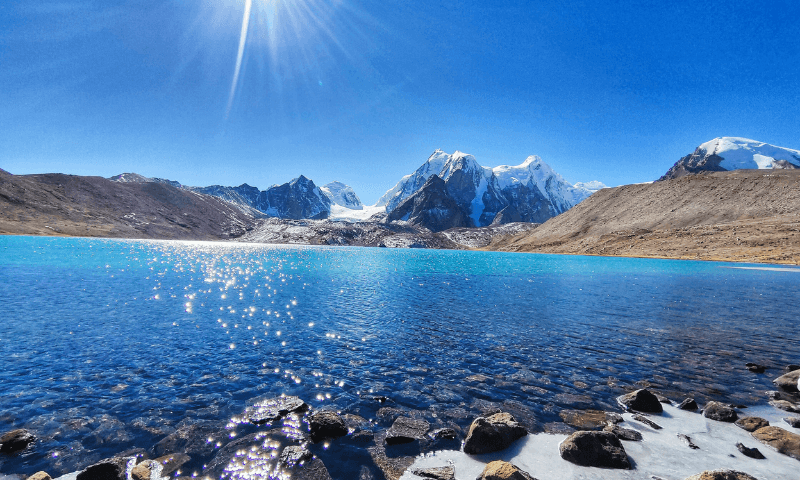
At an elevation of almost 17,800 feet above sea level, Gurudongmar Lake is one of the highest lakes in the world, and one of the most sacred ones in Sikkim. Revered by both Buddhists and Hindus, the lake has an incredible spiritual significance, as well as visual impact. The water is of brilliant blue-green colour, surrounded by a snow-covered terrain and mountains that border Tibet.
The North Sikkim tour via Lachung, Lachen and Gurudongmar needs advance permits and usually comprises a structured itinerary. Most travellers make an overnight stay at Lachen before making an early morning drive to the lake. Altitude acclimatization before this visit is strongly recommended.
Known locally as the Valley of Flowers, during the months from March to May, Yumthang Valley is carpeted in shades of pink, red and white as rhododendrons blossom in profusion along the valley slopes. The Teesta River flows through the valley floor and the peaks enclosing the valley floor make it a natural amphitheatre that is difficult to describe without sounding excessive.
Zero Point, further up from Yumthang, is near the edge of the snowline even in the warmer months. The drive is part of the experience, winding through forests and small rivers. This is part and parcel of the North Sikkim tour to Lachung and Lachen, and generally involves overnight stays in the area.
Tsomgo Lake is also known as Changu Lake, which is located at an altitude of about 12,400 feet and about 40 kilometres from Gangtok. It is among the best accessible high altitude lakes in the region and attracts visitors throughout the year because of its fantastic scenery and yak rides offered along its shores.
Nathula Pass, near Tsomgo, is a high altitude mountain pass between Sikkim and Tibet. Its history as part of the Silk Route adds interest to it apart from the scenery. Nathula is a Protected Area, and foreign nationals need a Protected Area Permit (PAP) to visit this place, and so do Indian citizens. On this day, most tour operators include both in the same day excursion.
Rumtek Monastery, at a distance of about 24 kilometres from Gangtok, is one of the most important Kagyu Monasteries outside Tibet.
The complex consists of the original monastery, a more recent and larger structure built in the 1960s, and a stupa containing rare relics. The monastery is on a hill overlooking a broad green valley, and the approach in itself is picturesque.
For travellers who are interested in the Sikkim monastery and nature tour, Rumtek is a non-negotiable site. The interiors have traditional Tibetan murals, thangka paintings, and ceremonial objects that provide a true introduction to Himalayan Buddhist art and practice.
Mahatma Gandhi Marg, Gangtok’s pedestrian promenade, is the social heart of the capital. Lined with shops, restaurants, bakeries, and handicraft stores, it comes alive in the evenings when the locals and visitors mingle freely. The street food situation here consists of momos, thukpa, Sikkimese noodles, and local snacks that are worth trying without giving much thought.
Gangtok also has Enchey Monastery, Namgyal Institute of Tibetology, and the Flower Exhibition Centre within easy reach. It acts as a planning and logistical centre for itineraries in most of Sikkim, including itineraries extending into the North.
West Sikkim’s Pelling is mostly known for the view of Mount Kanchenjunga from the place on clear mornings; it offers surprising views when the clouds cooperate. The new Skywalk near Pelling is another way of experiencing the landscape.
Khecheopalri Lake, not too far from Pelling, is sacred to both Buddhists and Hindus. The lake is unusual in that the surface is actually said to be kept free of leaves by birds, a detail that is mentioned with quiet pride by locals. The walk around the lake takes less than an hour and passes through the forested paths, which have their own atmosphere.
The Teesta River is one of the best white river rafting experiences available in the Eastern part of the Himalayas. Stretches along the Makha and Singtam are popular for grade one rapids for both the first-timers and the more experienced rafters. The surrounding scenery, forests, and canyon walls provide more visual interest than just the rapids alone.
The Rangit River, in South Sikkim, is another option, though it is a much more peaceful experience, which is good for families. River rafting here is better planned between October and May. For those who want to combine rafting with trekking and other outdoor activities, our guide to the top adventurous things to do in Sikkim covers the full range of things that are available here.
The Goechala trek is the most celebrated high-altitude trek in Sikkim and also among the best trekking trails anywhere in the Himalayan region. Starting from Yuksom in West Sikkim, the trail goes through dense forests and open meadows, glacial ground, and finally reaches Goechala viewpoint at around 16,000 feet where the face of Kanchenjunga can be visible at a close range.
The trek usually takes between eight and ten days to complete and requires reasonable fitness, proper gear and permits. It is best undertaken between April and May or October and November. This route rewards patience.
Located near Pelling, Pemayangtse is one of the oldest and most revered monasteries in Sikkim, which was founded during the 17th century. The main attraction inside is the seven tiered wooden model of Guru Rinpoche’s celestial palace called Sangha Tholing, which is an intricate handcrafted structure and is said to have taken years to complete.
The monastery sits at a comfortable altitude with wide views of the Himalayan ranges. It forms a natural companion stop to Khecheopalri Lake and Rabdentse Ruins, which are at a short distance and form a coherent half-day circuit around Pelling.
Sikkim’s festivals are part and parcel of its identity as a Buddhist state. Losar, or the Tibetan New Year usually falls in the month of February or March, and it is celebrated with colourful ceremonies at the monasteries throughout the state. Saga Dawa, commemorate the birth, enlightenment, and passing of the Buddha, is marked with processions and prayers in the major monasteries in May or June.
If your visit coincides with these festivals, make visits to the monasteries accordingly. The celebrations are open to visitors, and a combination of rituals, traditional dress, and mountain settings makes for an atmosphere unlike most things you will find in any other part of India.
Sikkimese food needs to be given more prominence than it usually receives in travel writing. The cuisine is strongly influenced by Nepali, Tibetan, and Lepcha traditions and is based on fresh, locally grown ingredients. Some dishes that would be worth trying would be gundruk soup made with fermented greens, sinki made out of radish tap roots, sha phaley, which are meat-filled pastries, and chan,g which is a slightly fermented drink made from millet and drunk in social settings.
Most of the local restaurants of Gangtok, Pelling and Namchi serve inexpensive home-style meals. The night markets in Gangtok are a mini introduction to the range of flavours available. This is not a cuisine that needs much persuasion for a try.
South Sikkim is quieter and less visited than Gangtok or North Sikkim, which makes it more interesting for travellers who prefer to visit such places that do not feel managed. Namchi has the Char Dham replica complex at Solophok Hill, situated on a hilltop, where replicas of the four great Hindu pilgrimage sites in India are located along with a massive Shiva statue.
Ravangla, higher up, is known for Buddha Park with its huge statue of Buddha and the Temi Tea Estate. The estate produces some of the most sought after single origin teas in India. A stroll through the tea rows in the early morning is a truly pleasant way to spend an hour, especially if the hills are visible above the garden.
Sikkim and Darjeeling are natural travel companions. The base is normally New Jalpaiguri (NJP) station or Bagdogra Airport in West Bengal, from where both destinations are accessible. A Sikkim Darjeeling Gangtok 7 days package usually gives one enough time to cover Gangtok, Tsomgo Lake, Nathula and a two-night stay in Darjeeling for the Tiger Hill sunrise and the heritage toy train experience.
For travellers who want to experience more in the North, going up to Lachung and Lachen adds at least 2 or 3 more days. The combination of the colonial nature of Darjeeling and the alpine landscape of Sikkim makes for a good one-trip itinerary especially when visiting for the first time to the Eastern Himalayas.
Best time to visit Sikkim weather-wise: April to June and October to November are the most visited months of this destination. Summer months are filled with clear skies and flowering rhododendrons. Autumn brings stable weather with good mountain visibility. Monsoon (July to September) brings torrential rains and many roads are closed. Winter is cold, especially in the North, and several roads may be inaccessible.
Sikkim permit for foreigners, how to get: Foreign nationals require an Inner Line Permit (ILP) to enter Sikkim and a Protected Area Permit (PAP) for North Sikkim and Nathula. Permits can be had at border checkposts, at Rangpo for people coming by road, or at Sikkim tourism offices at Gangtok. Passports and recent photographs are mandatory. Most of the organized tour operators include the processing of permits as part of their service. Processing times are typically short, but the availability of photocopies of all documents is highly advisable at all times.
For travellers who would particularly like to visit the North Sikkim circuit, the complete travel guide to Lachung can be read and everything from accommodation to altitude precautions has been covered in one place.
Q1: What are the best things to do in Sikkim for a first-time visitor?
Start from Gangtok for orientation, Tsomgo Lake and Nathula for the altitude view, Rumtek Monastery for the cultural touch and Pelling for the Kanchenjunga view. This covers the core of what Sikkim has to offer over a reasonable course of travel.
Q2: How many days are enough for a Sikkim holiday?
A minimum of 5 nights is required to cover Gangtok and the surrounding areas. For a complete experience with North Sikkim and West Sikkim, an 8 to 10 nights stay is more suitable. A Sikkim Darjeeling Gangtok 7 days package can work if you are selective about stops.
Q3: How do I get Sikkim permit for foreigners?
Foreign nationals require an Inner Line Permit that can be obtained at the checkpost at Rangpo or in the tourism office of Gangtok. For North Sikkim and Nathula Pass an additional Protected Area Permit is also required. Most tour operators deal with this process when they book. Carry your passport and passport sized photographs.
Q4: What is the best time to visit Sikkim considering weather?
April to June and October to November have the most stable weather with clear skies. April and May are optimal times for rhododendron blooms while October and November are best for views of the mountains. Monsoon months mean beauty, but also danger of landslides and blocked roads.
Q5: What does a Sikkim monastery and nature tour typically cover?
A combined monastery and nature tour includes typically Rumtek Monastery, Pemayangtse Monastery, Enchey Monastery in Gangtok, Tsomgo Lake, Yumthang Valley and Khecheopalri Lake. Such tours usually last 7 to 10 days depending upon the pace and the districts visited.
Sikkim rewards planning done properly. The permits, the altitude, the road conditions, and the permit-restricted North all require some advance preparation, but the payoff is a destination that combines spiritual depth, natural scale, and cultural richness in a way that few places in India can match. If the idea of exploring this with an expert team appeals to you, check out Memorable India’s Sikkim holiday packages for structured itineraries that take care of the logistics while you focus on the experience.