+919871148514
 info@memorableindia.com
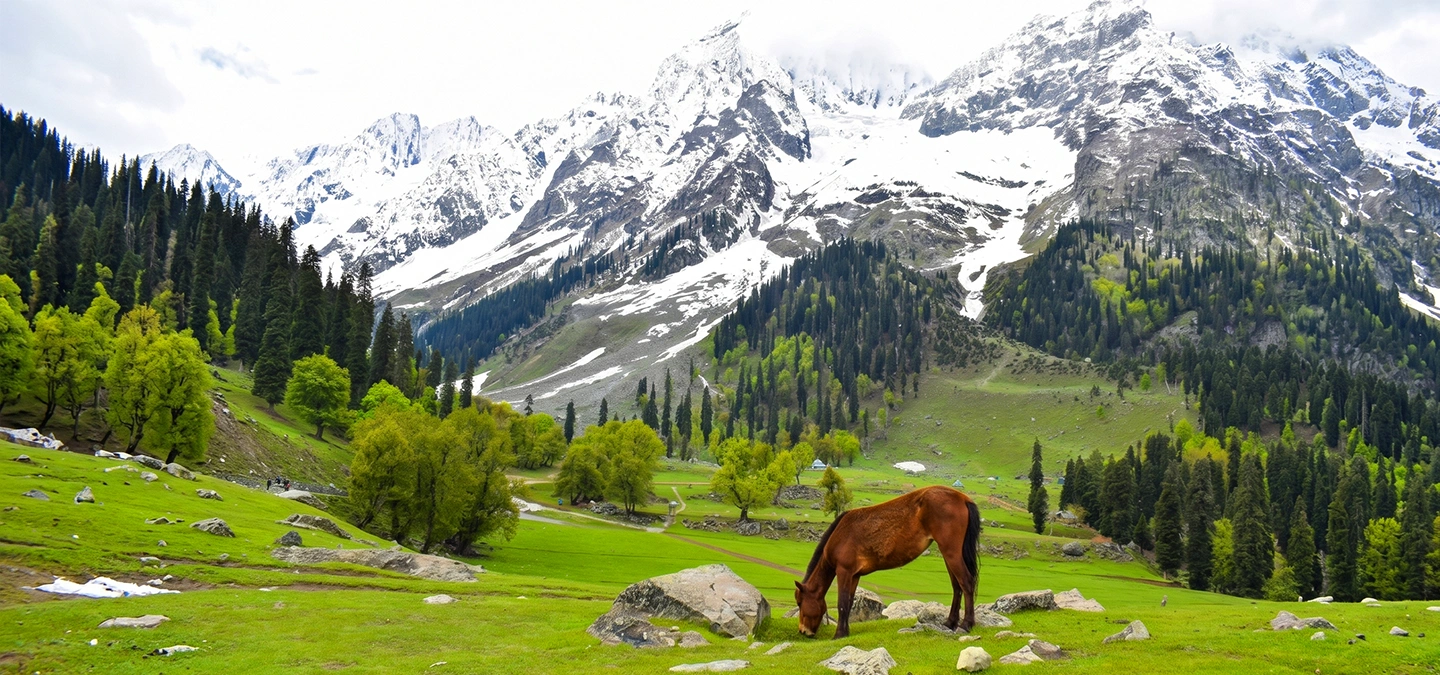
Sonmarg lies at an altitude of about 2,800 metres in the Ganderbal district of Jammu and Kashmir, and is known for its expansive alpine meadows, glacial streams, and the mountains that surround it. The name, which is often translated as “Meadow of Gold,” indicates the way the valley opens up from the changing light conditions, particularly during the warmer months. Compared to destinations such as Srinagar and Gulmarg, Sonmarg is a bit of a high-altitude, open landscape destination.
The destination is good for a variety of travellers. Families find it accessible to make short visits and for scenic exploration. Trekkers use Sonmarg as a base for trekking to the higher Himalayas. Couples and leisure travellers love its more tranquil environment with its natural surroundings.
To plan a Sonmarg tour, you need to know about seasonal access, travel logistics, and the amount of time you will need to spend on your tour to cover major locations. This page is an organized itinerary to give you an overview of sightseeing, things to do, the best time to visit Sonmarg, and other practical information on how to plan your trip to Sonmarg.
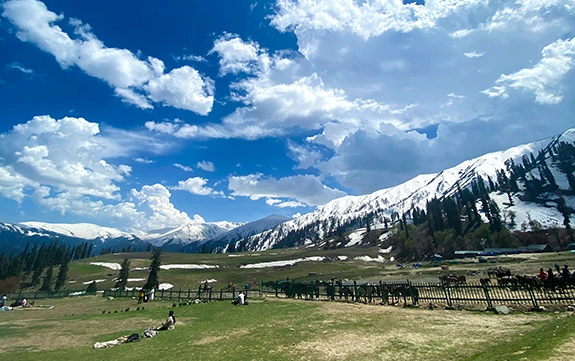
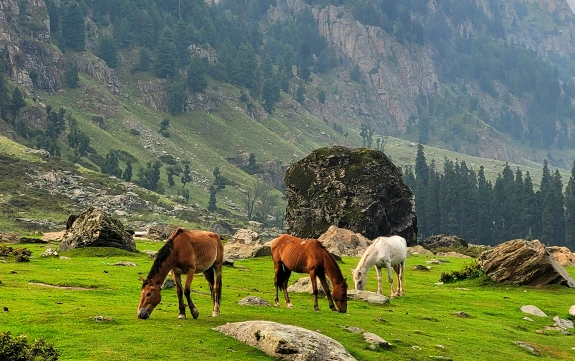
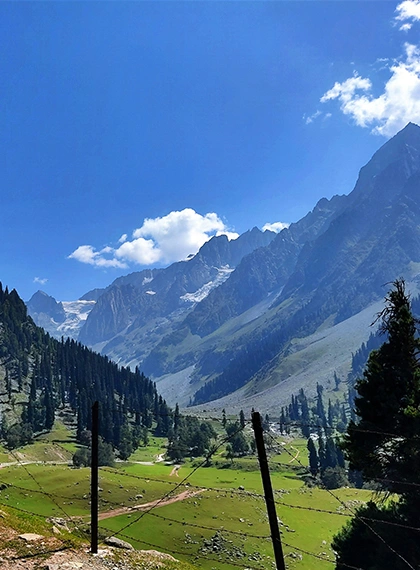
Thajiwas Glacier is the most visited of all the Sonmarg tourist places, and for good reason. Located some 3 kilometres away from the main meadow, it can be reached by foot or by pony on a trail passing through pine woodland and alpine scrub before opening out into a broad glacial bowl. In the summer months, the lower part of the glacier is still solid enough to walk on, and the streams of meltwater cutting through the moraine are both visually framed and bracingly cold. Families with children, however, tend to rate this as the single highlight of their entire Kashmir itinerary. The approach is gentle enough for most fitness levels, and the arrival at the glacier face gives an actual feeling of scale that photographs are rarely able to do justice to.
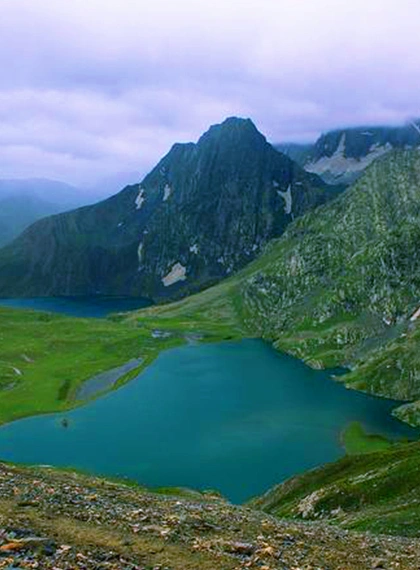
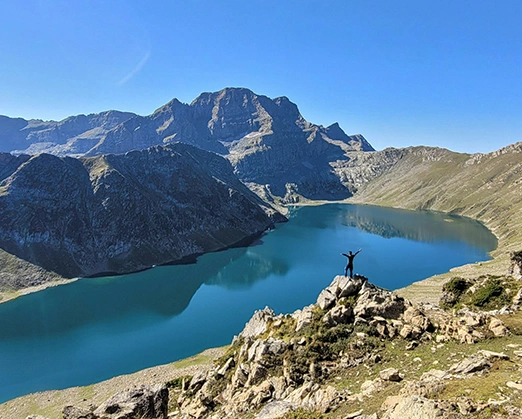
These twin alpine lakes are located at an elevation of more than 3700 metres and are accessible by a multi-day trek from Sonmarg. Lower of the two is Vishansar, which is known for its deep sapphire colour and healthy population of trout. Krishansar, a short climb higher up, is a more raw and solitary place. The route between them passes through snow bridges, wildflower meadows, and a high altitude pass that overlooks an unbroken ridge line in every direction. Sightseeing in Sonmarg at this altitude is an entirely different discipline than in the valley floor and requires fitness and planning, but it will both reward you with the scenery that very few people in the world ever see in person.
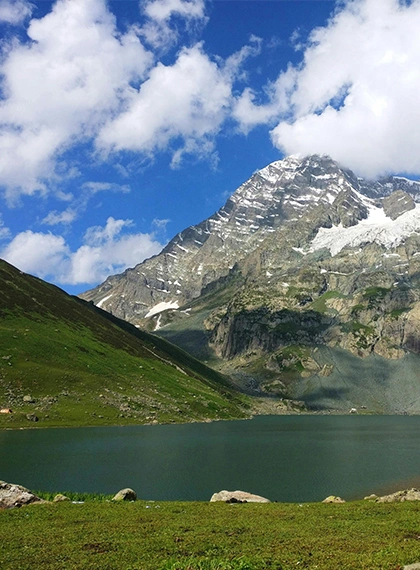
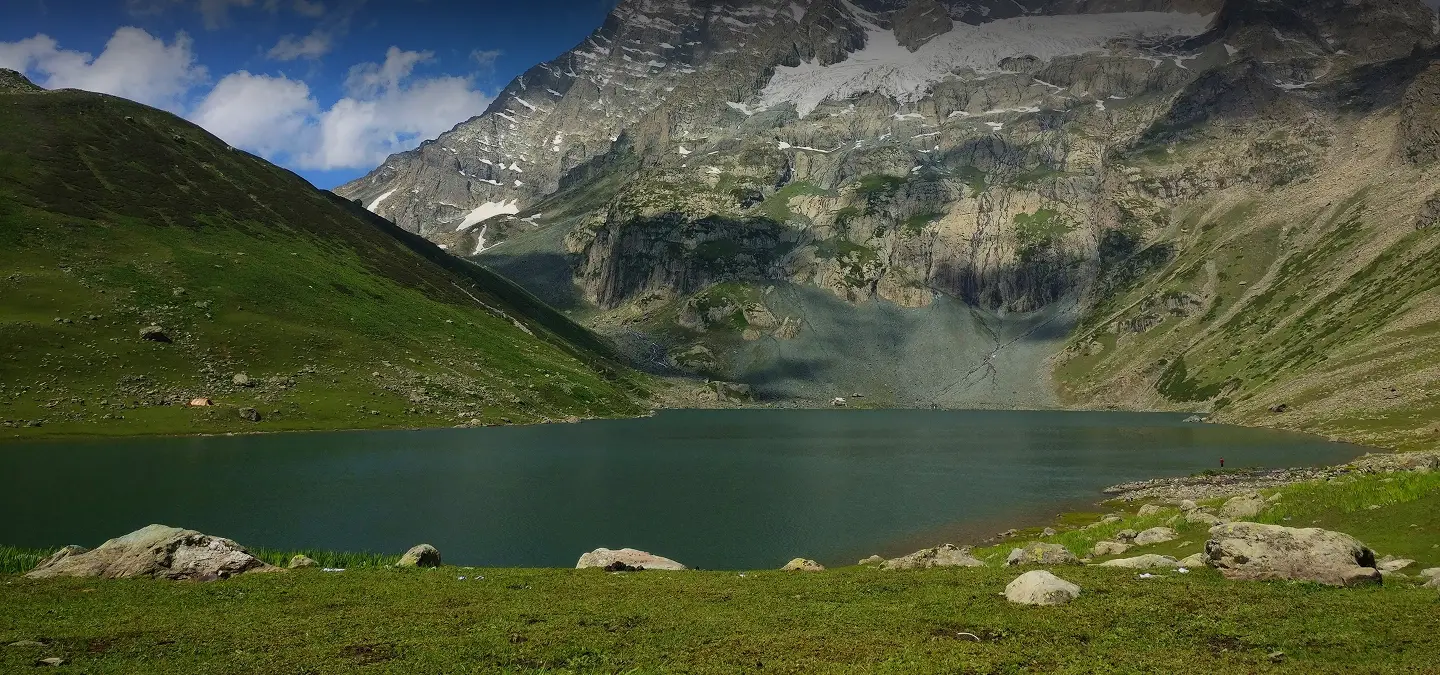
Gangabal is a sacred water body at the base of the Harmukh peak, held in Kashmiri Hindu tradition, and located in one of the more dramatic high altitude environments in the region. The trek here, either from Naranag or from Sonmarg, to reach via the route of Nichnai Pass, takes three to four days, and there is tremendous gain in elevation. On clear days, the Harmukh summit is reflected perfectly in the surface of the lake, and the meadows around it serve as natural campsites. This is not a day trip or casual detour. It is a commitment, and it delivers to that effect.
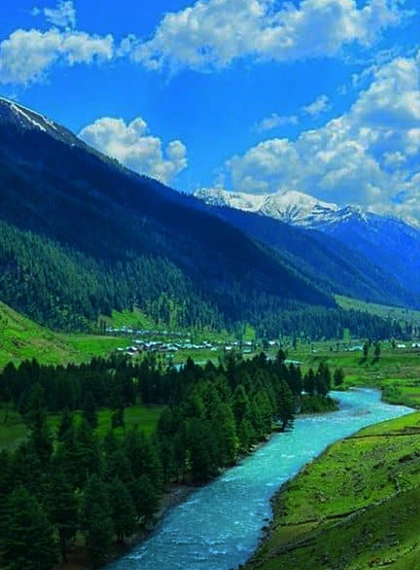
One of the details that is very easy to see but is skipped over by standard Sonmarg itineraries is the Nilagrad River. Located a short drive from Sonmarg on the Srinagar-Leh highway, the river flows with a distinctive reddish-brown hue caused by iron oxide deposits in the rock formations that surround it. The colour contrast with the grey-green mountain landscape is truly unusual, and the rocky riverbank is a comfortable place to make a roadside stop. For families or day visitors with limited time, Nilagrad is an easy and interesting detour, which does not require any physical effort or preparations, only a willingness to pull over and look.
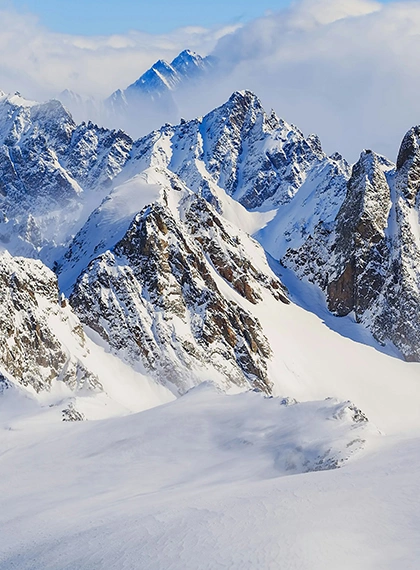
Zero Point is the final road accessible before the Zoji La pass and is located at around 3,000 metres high. Snow lingers here even into late summer, and consequently, sledding, snowball activities, and snow photography are available to visitors well outside the winter season. The views from Zero Point are panoramic and truly dramatic, with glacier tongues visible from the road and vertical drops of valleys on either side of the highway. It is especially popular with families that are travelling with children and would like the experience of snow without the full winter logistics, and it is the most common inclusion in most Sonmarg packages.
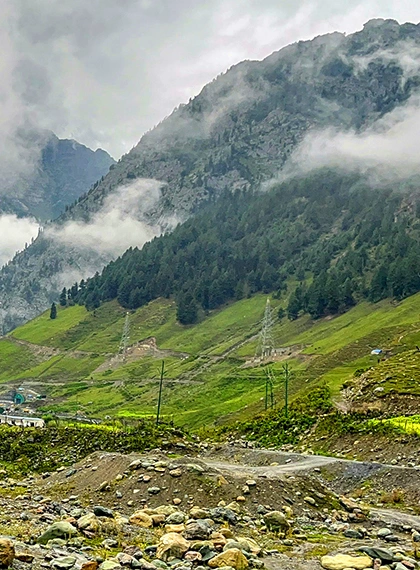
Baltal is the main base camp for the pilgrimage of the Amarnath Yatra, but outside that season, it is a calm, uncrowded valley with great visual interest. The campsite at Baltal is located between high towering ridges with a cold stream passing through the centre. There are no crowds, no souvenir stalls, and very little infrastructure other than a few tea stalls and military posts. Trekkers use it as a staging point for the Zoji La approach, but the casual visitors will find it a calming contrast to the busy main meadow at Sonmarg. Sonamarg sightseeing does not always need to mean full capacity tourist spots.

Summer is the main season for any Sonmarg tour package and the most practical window for the widest range of traveller types. Roads are open, in reasonable condition, the meadow is green and covered with wildflowers from June onwards, and all activities from glacier trekking to river fishing are fully operational. Daytime temperatures are very comfortable from 10 to 25 degrees Celsius, and cooler evenings make sleeping outside really pleasant. Accommodation and transport are quickly filled during July and August, so it is important to book beforehand, especially if you are travelling with a family or with a group.

Autumn brings a quieter, more photogenic version of Sonmarg. The summer crowds have declined, the valley colours change from green to amber and russet, and the light becomes warmer and directional. Temperatures fall very sharply after sunset and regularly reach near-freezing temperatures by October nights. However, during the day, the conditions are still good for walking and sightseeing. Sonamarg trips in autumn are more oriented towards repeat travellers and photographers who have already made the trip in the peak season and are looking for a different pace. This is a truly good season that a lot of travellers do not take much time to see.

Winter in Sonmarg is not for the faint-hearted. NH-1 is often closed because of snow and avalanche danger, and access totally depends on the weather window and official clearances. For those who take the time, the valley in full winter is visually complete: snow-buried meadows, frozen streams, ice-draped pines, and a near absence of other tourists. Skiing and snow trekking are available, and access by snowmobile across the valley floor is in operation. This season is suitable for experienced mountain travelers who know what limited infrastructure and extreme cold actually mean on the ground, not only on paper.
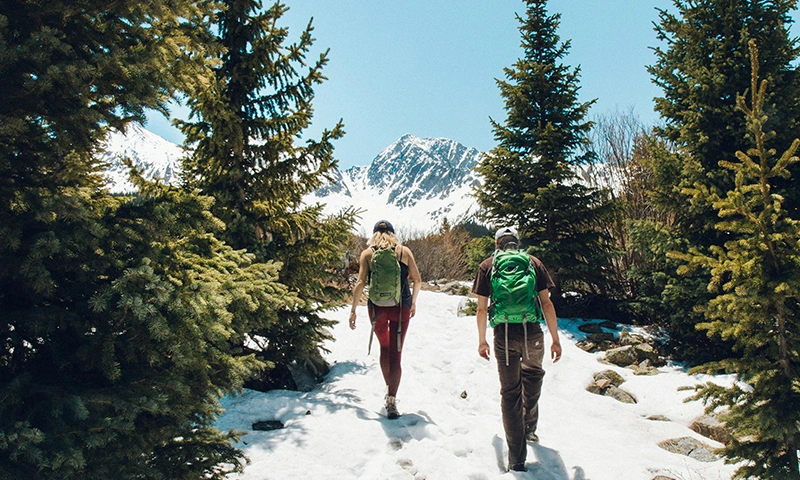
The Thajiwas Glacier trek is the most accessible high altitude trek on any Sonmarg tour and a good starting point for those who have never previously trekked at height. The trail starts near the main meadow and travels about 3 kilometres through some pine forest and open grassland before arriving at the glacier face. The path is well laid out and does not require any technical skill or specialised equipment for the lower route. Families, senior travellers, and first-time trekkers who are in reasonable health can easily complete it without any difficulty. The scale of the glacier up close is the payoff, a large expanse of solid ice against open sky that really deserves the effort it takes to reach it. Local ponies are available for the approach if walking is not preferred.
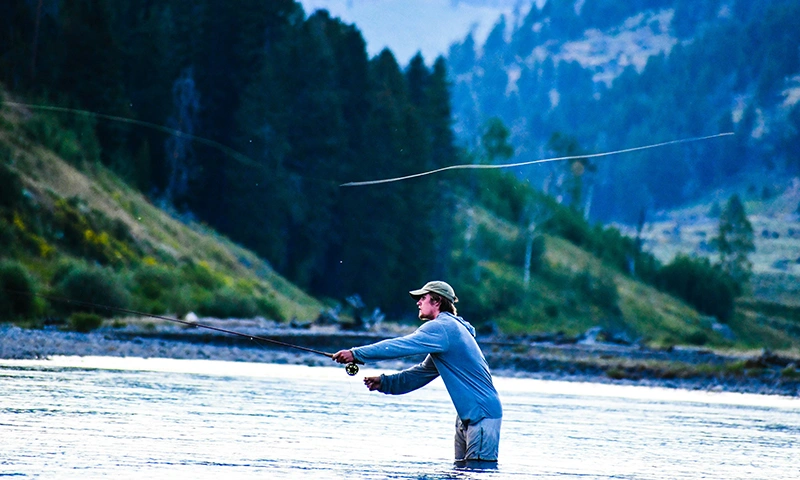
The Sindh River flows through Sonmarg and contains healthy populations of brown and rainbow trout, which makes it a place where one can do fly fishing if one knows what they are looking for. Fishing permits are compulsory, and can be arranged with the local fisheries department or through guided support. Sessions are usually held in the early morning or late afternoon when the fish are most active, and the light in the river is most workable. The experience is leisurely and tranquil, a contrast to the other, more physically demanding experiences in the area. Even the beginner's angler finds the setting rewarding, and the experience of standing knee deep in a cold Himalayan river is its own kind of reset.
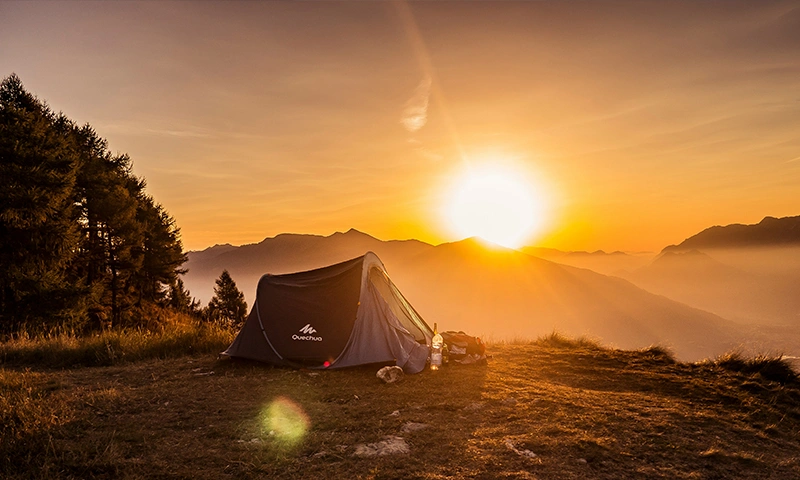
A night under canvas in the Sonmarg meadow changes the texture of the trip in ways that a hotel stay simply cannot replicate. Regulated campsite operators provide dome tents and fixed tent setups with basic but functional amenities, which include beddings suited for mountain temperatures. Even in July, the nights are cool, around 5 to 8 degrees Celsius, and the proper sleeping equipment is not an option. The sky above Sonmarg, far from light pollution by cities, is exceptional for star watching. Waking up to the sound of the Sindh river and the sight of frost-tipped grass with ridgelines visible in every direction is the kind of experience that lingers in the memory for a long time. Many travellers who camp here regard this as the best single decision of their Kashmir itinerary.
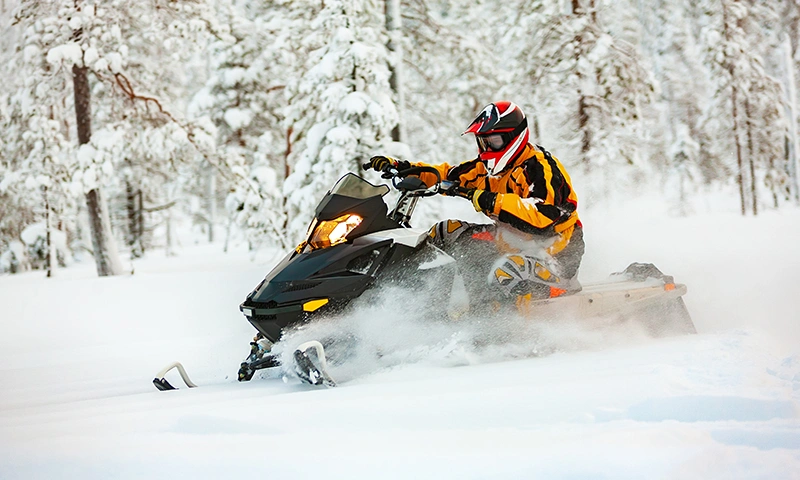
Snowmobiles may be rented from the end of autumn until early spring, when the valley floor is entirely covered with snow. Routes go across the open meadow and provide a mixture of speed, noise, and raw open landscape that is always thrilling to younger travelers and families with teenagers. The experience is short by design but extremely high-energy and is set against one of the most arresting natural backdrops in the Himalayas. For groups where people have very different energy levels and interests, snowmobile rides seem to be one of those activity that cuts across all age groups.
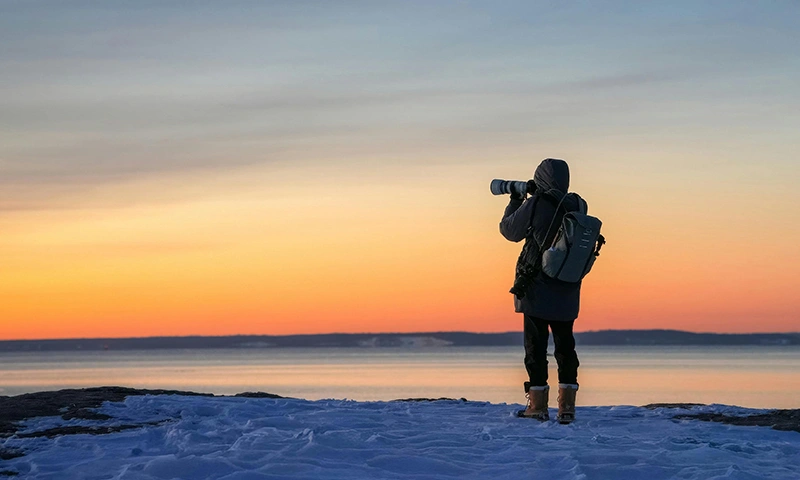
Sonmarg's visual range is wide enough that a serious photography walk is worth scheduling as something deliberate, not something done in passing between something else. The main meadow, Thajiwas approach trail, Sindh River banks, and the pine forest fringe all provide totally different compositions depending upon time of day and season. Sunrise is prized for the soft, warm directional light as well as the mist that often settles on the valley floor. Sunset casts the ridgelines in silhouette against a sky that changes between several distinct phases. A local guide who knows the vantage points of the valley adds a lot of value for photographers wishing to work with the light instead of against it.
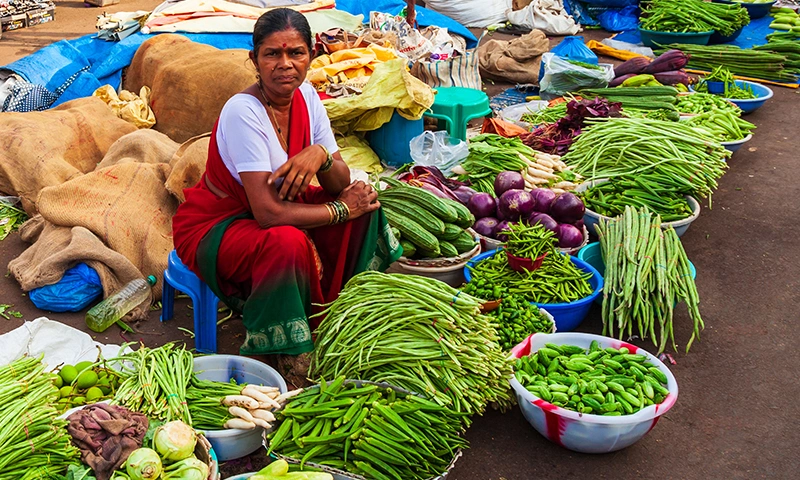
The principal market street at Sonmarg is small and certainly worth an hour of close and careful browsing. Local vendors sell Kashmiri dry fruits, saffron, walnut wood carvings, hand-embroidered textiles, and woollen products at reasonable prices by Kashmiri standards if negotiated directly. Bargaining is done in good humour and is expected. Beyond the market, with short walks into the residential edges of the town, it is possible to get a glimpse of the local architecture, daily routines, and how a mountain community functions around tourism without being defined completely. This kind of low-key engagement with the local economy is something Memorable India actively promotes as a part of responsible travel.
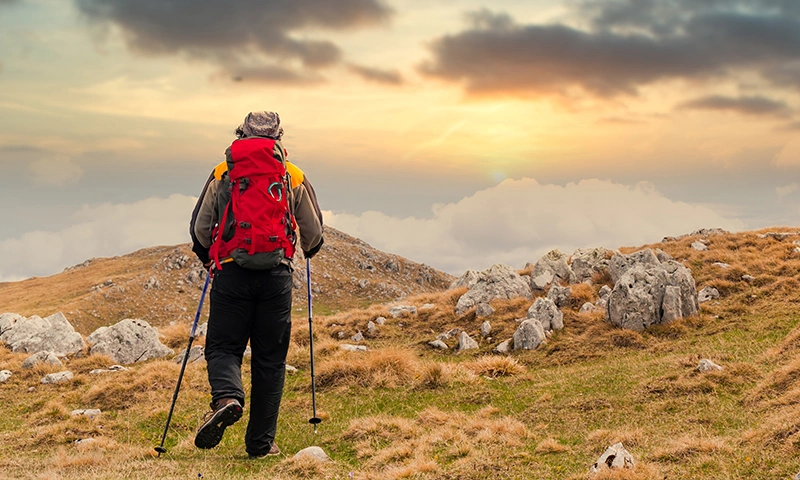
For experienced trekkers and with a few extra days at hand, the route from Sonmarg to the two lakes of Vishansar and Krishansar is one of the best high altitude trails available in Jammu and Kashmir. The circuit covers around 40 kilometres over four to five days and traverses the Nichnai Pass and Gadsar Pass, which are above 4,000 metres, with altitude gains that need proper acclimatisation planning. Licensed local guides are required for this route, and campsites are set up by registered operators at standard points along the route. The combination of glacial lakes, high mountain passes, open meadows, and uninterrupted ridgeline panoramas makes this a trek that experienced hikers in the Himalayas consistently rate as among the best they have done in India.
There is a gap between what travel content promises and what actually happens on the ground that is very meaningful. This section describes concretely what we do for you in our Sonmarg tour bookings with Memorable India in real life.
From the moment you confirm your booking, you are given a dedicated trip coordinator who takes care of the entire logistics chain: airport transfer, accommodation, activities bookings, permit assistance, and a day-by-day itinerary with flexibility built in. If NH-1 is a victim of snowfall or road work on a planned travel day, the itinerary adjusts without the scramble.
Accommodation is determined by verified quality from direct team inspection rather than star ratings given by online platforms. The properties we work with reflect the actual character of Sonmarg, from properly insulated tented camps to well-managed mid-range hotels offering consistent service without the pretension.
Your local guide is licensed, experienced with the particular terrain, and briefed both in terms of safety protocols as well as environmental considerations that are associated with taking groups into sensitive alpine zones. You will not be moved through the glacier as part of a procession of 200 people and charged for the ride. The pace and structure are calibrated to the composition of your group.
Meals that are served under Sonmarg tour packages usually contain a range of common hotel dishes as well as some Kashmiri specialties like rice preparations, local breads, mutton curries, and kahwa, depending on the property. For travellers who are keen to explore traditional Kashmiri cuisine in more depth, local dining experiences can be arranged as part of a customised itinerary.
Pricing is transparent. What is in your booking documentation is what you pay, with inclusions and exclusions written out clearly and cut. There are no surprise charges for vehicle changes, guide fees, or activity permits (unless you add something new after confirmation).
For families, age-appropriate activity planning is incorporated into the itinerary from the beginning. For those traveling at a senior level, mobility and altitude issues are taken into consideration before the first draft of the itinerary is sent out. For solo travelers, issues of security, connectivity, and pacing are given their own place in the planning process.
This is what a responsibly structured, experience-driven Sonamarg trip really looks like, and it is the standard that Memorable India holds itself to with every package that it delivers.