 +919871148514
 info@memorableindia.com
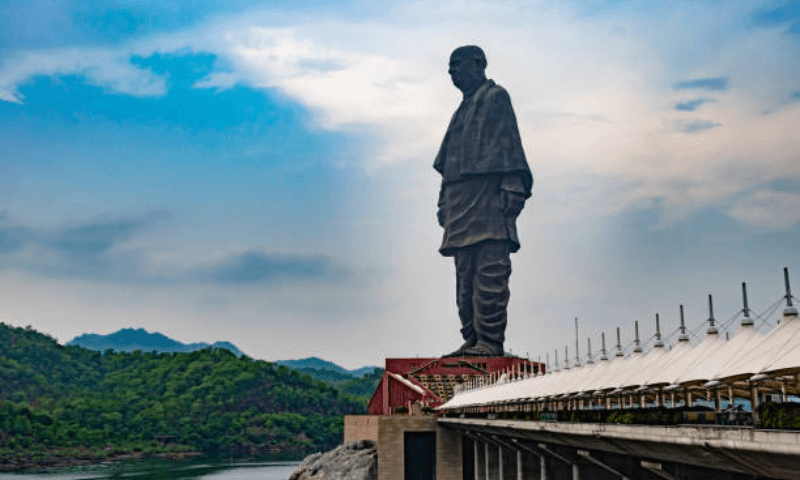
Gujarat is located on the western edge of India in an area where the Arabian Sea converges with salt deserts and ancient temple towns. This is a state that rewards the curious traveller – those who will look beyond the obvious and discover stories in its stepwells, wildlife in its grasslands, and flavours in its street food. From the white expanse of the Rann of Kutch to the sacred shores of Dwarka, there are experiences that Gujarat has to offer that any other Indian state can match.
Here’s a useful guide to the best places to stay in Gujarat, from heritage sites, wildlife destinations, coastal escapes, and cultural towns. All these locations are worth exploring.
The Great Rann of Kutch is the best-known landscape of Gujarat. This enormous salt marsh occupies a vast area of almost 7500 square kilometres, which turns into a surreal white desert during the dry season between October and March. The annual festival of Rann Utsav livens the region with cultural performances, handicraft exhibitions and luxury tent accommodations. The 2025-2026 season occurs from November through February, which provides longer opportunities to experience this incredible terrain.
Beyond the white desert, the Kutch region has a huge cultural depth. The villages of Bhuj, Ajrakhpur and Nirona are centres for traditional crafts – block printing, bandhani tie-dye and Rogan art are surviving due to generations of artisan families. A visit to Kutch is a kind of a combination of nature and the living heritage.
Best time to visit: November to February
Recommended duration: 3-4 days
Gir National Park is the last place in the world where Asiatic lions are free to roam in the wild. This distinction alone makes it a must-visit place for wildlife enthusiasts visiting Gujarat. The park covers more than 1,400 square kilometres of dry deciduous forest, and has a population of lions that has continuously recovered from constant conservation efforts.
Safari experiences at Gir offer true back-to-nature experiences. Apart from lions, the park has leopards, spotted deer, nilgai, and more than 300 species of birds. The nearby Devaliya Safari
Park offers a smaller, controlled environment for short-termers. Safari bookings must be made in advance even during the peak season (December to March).
Best time to visit: December – March (park usually closed mid June to mid October)
Recommended duration: 2 days
Dwarka is of immense importance in Hindu tradition being one of the ancient Four Char Dham pilgrimage sites and the legendary kingdom of Lord Krishna. The Dwarkadhish Temple is the main attraction of the town with its over 2,500-year-old five-storey structure and intricate carvings.
The coastal setting gives the spiritual experience additional atmospheric depth. Bet Dwarka is an island that is accessible by boat and it provides a quieter pilgrimage site as well as beaches and seafood. Nageshwar Jyotirlinga, one of the twelve sacred shrines of Shiva, is only 17 kilometres away from the main town.
Best time to visit: October to March
Recommended duration: 1-2 days
Ahmedabad became a member of the list of World Heritage Cities in 2017, which recognises the outstanding preservation of the walled old city. The Sabarmati Ashram, where Mahatma Gandhi lived and began the Salt March, is important for the historical context of understanding modern India.
The city is in a good balance of heritage and modern culture. The traditional residential clusters (pols) of the old city have carved wooden facades and hidden courtyards. Adalaj Stepwell, which is just outside the city, reflects the unique stepwell architecture of Gujarat with five storeys made of carved sandstone. For architecture lovers, modernist buildings by Le Corbusier provide an additional level of interest. The better connection of the city via the metro in 2026 makes it much easier to move between heritage sites and modern attractions.
Best time to visit: October – February
Recommended duration: 2-3 days
Somnath Temple is one of the most significant Shiva temples in India, which has been reconstructed several times over the centuries after being destroyed time and again. The present building, finished in 1951, is a symbol of architectural resilience and spiritual continuity. The fact that it lies on the Arabian Sea coast makes it a powerful setting, especially at the evening aarti ceremony.
The town is also the gateway to the Gir forest region and the coastal town of Diu. Triveni Sangam, where three rivers meet with the sea, is within walking distance from the main temple.
Best time to visit: October to March
Recommended duration: 1 day
Vadodara, earlier called Baroda, has a fine heritage of the Gaekwad dynasty. Laxmi Vilas Palace, still a private residence of the royal family, is said to be four times the size of Buckingham Palace and it exhibits Indo-Saracenic architecture in all its grandeur.
The cultural institutions of the city include the Maharaja Fateh Singh Museum, which houses works by Raja Ravi Varma, and the Faculty of Fine Arts of the MS University, one of the best schools of art in the country. Champaner-Pavagadh Archaeological Park, a World Heritage Site, is approximately 50 kilometres distant and is a mix of medieval Islamic architectural style and ancient Hindu temples.
Best time to visit: October to March
Recommended duration: 2 days
Saputara is a change of pace from the arid plains of Gujarat. Located in the Sahyadri range at about 1000 metres elevation, this little hill station offers relief during summer months and pleasant weather throughout the year. The landscape consists of waterfalls, viewpoints and the Purna Wildlife Sanctuary nearby.
While Saputara is not as dramatic as the Himalayan hill stations, it is a good weekend getaway from Ahmedabad or Mumbai, which are within reasonable driving distance.
Best time of the year to visit: March to May (summer escape) or September to November
Recommended duration: 1-2 days
Getting around: Gujarat has well-connected domestic airports in Ahmedabad, Vadodara, Rajkot, and Bhuj. The state’s road network is very good, and self-drive or chauffeur-driven trips are possible. Trains are used to connect major cities efficiently.
Food not to miss: Gujarati thali, dhokla, fafda-jalebi, undhiyu (winter specialty) and kutchi dabeli.
Travel considerations: Gujarat is a dry state – alcohol is banned without a permit. Plan accordingly.
What is the best time to visit Gujarat?
October to March provides the most comfortable weather in the entire state of Gujarat. This period is in the Rann Utsav festival season and an ideal season for a wildlife safari at Gir National Park.
How many days are enough for a Gujarat trip?
A proper Gujarat tour itinerary requires 10-12 days to cover Rann of Kutch, Gir National Park, Dwarka, Ahmedabad and Vadodara. A shorter trip for 5-7 days can be on either the Kutch region or the Saurashtra circuit (Gir, Somnath, Dwarka).
Is Gujarat safe for solo travellers?
Gujarat is known to be one of the safest states in India for solo travellers, even women. The state has low crime rates, good infrastructure and generally helpful locals.
What is Gujarat famous for?
Gujarat is known for the Rann of Kutch white desert, Asiatic lions at Gir, ancient temples at Dwarka, Somnath, colorful textiles and handicrafts and the special vegetarian cuisine. The state is also important from a historical point of view as the birthplace of Mahatma Gandhi.
Can I see lions in Gujarat?
Yes, it is Gir National Park in Gujarat where you will find the Asiatic lions in its natural habitat in the world. Safari bookings must be done in advance from the official forest department portal.

20 Best Hill Stations in Uttarakhand for Family Vacation, Corporate Trips, Nature Lovers & Adventure
26 Aug 2026
15 Best National Parks and Wildlife Sanctuaries in North East India
25 Aug 2026
16 Best Romantic Hill Stations in India for Honeymoon Holidays
23 Aug 2026
Top 30 Must-See Forts and Palaces in Rajasthan
21 Aug 2026
Top 30 Krishna Temples in India: A Complete Pilgrim and Traveller Guide
21 Aug 2026


