 +919871148514
 info@memorableindia.com
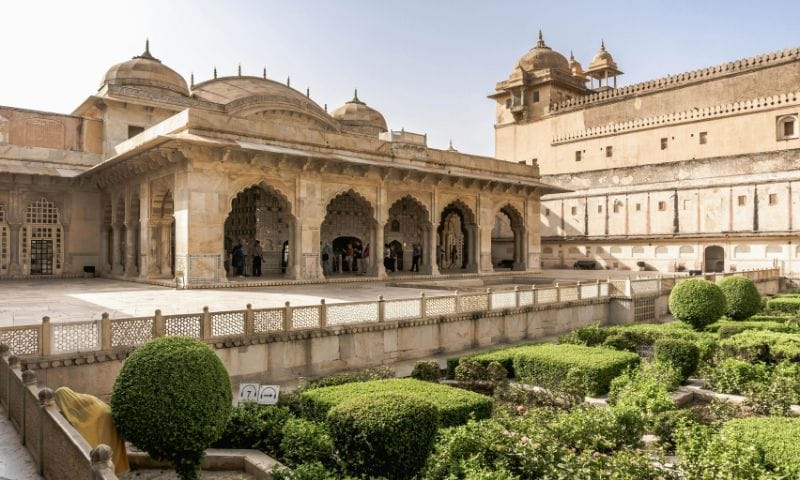
Rajasthan’s forts and palaces own the first page of every travel guide, and fairly so. Amber Fort, Mehrangarh, the City Palace of Udaipur, and the Hawa Mahal are architectural achievements that justify long journeys. But reducing Rajasthan to its stone walls and royal corridors misses a vast, living landscape that many travellers never see. Beyond the ramparts, this state holds the Thar Desert’s shifting sand dunes, leopard-inhabited granite hills, abandoned ghost villages, one of India’s most celebrated livestock fairs, artisan communities whose craft traditions predate the forts themselves, and a culinary heritage as layered as any palace courtyard.
For travellers who have already photographed the big monuments, or for those planning their first visit and wanting something richer than the standard route, the things to do in Rajasthan beyond palaces and forts are where the state reveals its truest character. This guide maps out those experiences, from the desert floor to village hearths.
The Sam Sand Dunes near Jaisalmer are where most visitors get their first taste of the Thar Desert, typically a sunset camel ride followed by a cultural performance at a desert camp. That short encounter, however, only skims the surface. Multi-day camel safaris push deeper into the desert, following ancient trade routes through remote villages, dried riverbeds, and sand dune corridors where the silence is complete and the night sky is thick with stars.
Routes typically begin from villages near Jaisalmer or Bikaner, and two-to-four-day itineraries are the most popular. Nights are spent at temporary camps or in the homes of desert communities, and meals are cooked over open fires using traditional Rajasthani methods. The pace is slow, dictated by the camels, and the rhythm of the desert encourages a contemplative mode of travel that no road trip can replicate. The Rajasthan camel safari tour is one of the most requested offbeat Rajasthan experiences among international travellers, particularly those seeking an alternative to the monument-heavy Golden Triangle circuit.
Planning tip: October to March is the ideal season. Carry layers for cold desert nights. Book through operators who work with local Rajasthani camel herders rather than commercial camp chains.
While Ranthambore draws tiger-seeking crowds, the Jawai region in Pali district has quietly become India’s premier destination for leopard sightings. The granite hills of the southern Aravalli range here are home to free-roaming leopards that have coexisted with local Rabari pastoral communities for generations. Jeep safaris at dawn and dusk navigate terrain where leopards rest on exposed boulder faces, often visible through binoculars before the vehicle has even stopped.
What makes Jawai distinctive among hidden Rajasthan travel destinations is the absence of a formal national park structure. There are no gates, no zones, no vehicle quotas. The experience feels raw and unregulated in the best sense, closer to a naturalist expedition than a managed safari. The Jawai Dam and surrounding wetlands also attract flamingos and several stork species during winter, adding a birding dimension. India’s best wildlife safari destinations now routinely include Jawai alongside the traditional roster of national parks.
Planning tip: Jawai is roughly equidistant from Udaipur and Jodhpur (approximately 150 to 160 km each). The season runs from October to March. Accommodation ranges from tented camps to boutique lodges.
Ranthambore sits in southeastern Rajasthan, roughly 130 kilometres from Jaipur, and offers one of the best chances in India to see a Bengal tiger in the wild during daylight hours. The park’s landscape of dry deciduous forest, ancient ruins, and lakes creates a setting quite unlike the dense forests of central India. The 10th-century Ranthambore Fort, a UNESCO World Heritage Site, rises above the tree canopy as a constant reminder that this wilderness was once a royal hunting ground.
Open-top jeep safaris run in the early morning and late afternoon across ten zones, with Zones 1 through 5 being the most popular for tiger sightings. Beyond tigers, the park shelters leopards, sloth bears, sambar deer, marsh crocodiles, and a rich roster of bird species. Ranthambore wildlife tours typically run between October and May.
Planning tip: Book safari permits well in advance, especially for November to February. Sawai Madhopur is the nearest railway town, connected to Jaipur and Delhi by train.
The Shekhawati region, spread across the Jhunjhunu and Sikar districts of northeastern Rajasthan, is sometimes called the open-air gallery of India. Its towns are filled with ornately painted havelis, built by Marwari merchants in the 18th and 19th centuries, whose frescoed walls depict everything from mythological scenes to early motor cars and steam trains. But the real depth of a Shekhawati visit lies not in the havelis themselves but in the rural life that surrounds them.
Village homestays in and around towns like Mandawa, Nawalgarh, and Fatehpur offer direct participation in daily Rajasthani routines: morning chai preparation on a wood-fired stove, walking with livestock to grazing grounds, learning traditional textile dyeing techniques, and sharing meals cooked on open hearths. These encounters give travellers access to a Rajasthan that moves at a pace entirely different from the tourist trail. The Rajasthan villages tour with Taj builds a full itinerary around these rural encounters, connecting them with the broader heritage circuit.
Planning tip: Shekhawati is roughly three to four hours by road from Jaipur or Delhi. The region is best explored by car with a local driver who can navigate between villages. October to March is the most comfortable window.
The Pushkar Camel Fair, held annually in October or November to coincide with Kartik Purnima (the full moon of the Hindu month of Kartik), is one of the most extraordinary spectacles in Indian travel. Thousands of camels, horses, and cattle are brought to the fairgrounds by traders from across Rajasthan, adorned with intricate jewellery, colourful fabrics, and painted designs. The animals participate in beauty contests, races, and parades, while the surrounding grounds transform into a carnival of folk music, dance performances, food stalls, and cultural competitions.
The Pushkar Camel Fair is also deeply spiritual. Pilgrims gather at Pushkar Lake, one of the most sacred bodies of water in Hinduism, to take ritual baths believed to cleanse sins. The combination of livestock commerce, cultural performance, and religious devotion within a single event, set against the backdrop of the Aravalli hills, is unique to Rajasthan. For international travellers, attending the fair requires advance booking, as accommodation fills up months ahead.
Planning tip: Dates shift annually based on the lunar calendar. Arrive a day or two before the main festival days for the best atmosphere. Memorable India’s fairs and festivals packages can time your Rajasthan itinerary around the fair.
Rajasthan’s textile heritage runs as deep as its architectural one, and nowhere is this more accessible than in the printing villages near Jaipur. Sanganer and Bagru, both within an hour’s drive of the city, are centres of hand block printing, a craft that involves carving intricate designs into wooden blocks and pressing them across lengths of cotton fabric using natural dyes. Workshops in both villages invite visitors to watch the full process, from block carving to dyeing, and many offer hands-on sessions where you can print your own fabric.
The craft traditions here are family-run and generational. In Bagru, the Chhipa community has been printing textiles for centuries, using mud-resist and indigo techniques that produce the deep blue and earthy tones the village is known for. Sanganer specialises in finer, floral prints on lighter fabrics. For travellers interested in Rajasthan beyond sightseeing, a morning spent in a printing workshop offers one of the most tangible and personal cultural encounters available in the state.
Planning tip: Combine a printing village visit with Jaipur sightseeing. The Anokhi Museum of Hand Printing in Amber provides excellent historical context. Most workshops welcome walk-in visitors, but arranging a guided visit ensures access to the best artisans.
Kuldhara, approximately 18 kilometres west of Jaisalmer, is one of Rajasthan’s most intriguing archaeological curiosities. A Paliwal Brahmin settlement that was prosperous and well-organised, the village was abandoned overnight in the early 19th century. Local legend attributes the exodus to the tyranny of a local minister, though the precise circumstances remain debated. What remains today is a silent grid of stone houses, crumbling walls, and narrow lanes that visitors can walk through freely.
Kuldhara is at its most atmospheric in the late afternoon, when the low desert light catches the sandstone and the emptiness of the settlement feels genuinely eerie. The site has been preserved by the Archaeological Survey of India and functions as an open-air heritage zone. Combined with a visit to the Sam Sand Dunes (about 20 km further), Kuldhara makes a compelling half-day excursion from Jaisalmer that goes well beyond the standard fort visit.
Planning tip: Hire a car from Jaisalmer. There is a small entry fee. Combine with Sam Sand Dunes for a sunset camel ride and overnight desert camp.
Seeing Jaipur from above offers a perspective that no ground-level sightseeing can match. Hot air balloon flights operate at dawn, launching from sites outside the city and drifting over the Aravalli hills, rural villages, patchwork farmland, and the distant silhouettes of forts and palaces. On a clear winter morning, the visibility stretches far enough to see Amber Fort, Nahargarh, and Jaigarh from a single vantage point.
The flight lasts approximately one hour, and the stillness at altitude, broken only by the occasional blast of the burner, provides one of the most serene moments in any Rajasthan trip. This is one of the few aerial tourism experiences available in India and is particularly popular with photographers and honeymooners.
Planning tip: Flights run October to March, weather permitting. Book in advance through licensed operators. Early morning departures catch the best light and calmest winds.
The Bishnoi community, living in villages surrounding Jodhpur, follows an environmentally conscious philosophy that dates back to the 15th century. Their 29 principles (from which the name Bishnoi, meaning 29, derives) include strict prohibitions against cutting green trees and harming animals. As a result, the villages are surrounded by unusually dense vegetation for arid Rajasthan, and wild animals like blackbuck, chinkara, and nilgai roam freely alongside human settlements.
Village safari tours from Jodhpur visit Bishnoi hamlets where families demonstrate traditional crafts, including opium ceremony preparation (a social ritual, not recreational), pottery, and weaving. The encounter offers a window into a community that practised ecological conservation centuries before it became a global concern. A classic Rajasthan tour that includes Jodhpur typically offers the option to add a Bishnoi village half-day excursion.
Planning tip: Bishnoi villages are 25 to 30 km south of Jodhpur. Tours last three to four hours and are best arranged through a local operator with established community relationships.
Chand Baori, in the village of Abhaneri near Jaipur, is one of the deepest and most visually striking stepwells in India. Built in the 9th century by King Raja Chand of the Chauhan dynasty, the stepwell descends 13 storeys and contains 3,500 narrow steps arranged in a precise geometric pattern. The visual effect is dizzying and photogenic, and the architectural ingenuity of the water harvesting system reflects a level of engineering sophistication that often surprises visitors.
The village of Abhaneri also hosts the Harshat Mata Temple, partially ruined but still rich in carved detail, and an annual cultural festival featuring traditional Rajasthani folk dances like Kalbelia and Bhawai. The site sits conveniently on the road between Jaipur and the Ranthambore area, making it a natural stopover.
Planning tip: Abhaneri is approximately 95 km from Jaipur. Allow one to two hours for the stepwell and temple. The Abhaneri Festival, typically held in September or October, adds a cultural dimension.
Rajasthani cuisine is built around the constraints of the desert: limited water, scarce green vegetables, and intense heat. The result is a culinary tradition that is inventive, deeply flavourful, and unlike anything found elsewhere in India. Dal baati churma (lentils with baked wheat balls and sweetened cereal), gatte ki sabzi (gram flour dumplings in a spiced yoghurt gravy), laal maas (fiery red mutton curry), and ker sangri (dried desert beans and berries) are signature dishes that reflect the region’s resourcefulness.
Cooking classes offered in Jaipur, Udaipur, and Jodhpur, typically in home kitchens rather than commercial setups, allow travellers to prepare these dishes under the guidance of local cooks. The experience includes market visits, spice identification, and the cultural stories behind each recipe. In Jodhpur, the food trails through the old city’s lanes offer tastings of pyaaz ki kachori, mawa kachori, and makhaniya lassi that have been prepared by the same families for decades. For travellers interested in Rajasthan tours that go beyond monuments, a food-focused half-day is one of the most rewarding additions.
The conventional Rajasthan circuit runs Jaipur, Jodhpur, Udaipur, and sometimes Jaisalmer, with the agenda dominated by fort and palace visits. An experience-led itinerary retains those cities as anchors but fills the spaces between monuments with the encounters described here. A Jaipur day might combine Amber Fort in the morning with a block-printing workshop in Sanganer after lunch. Jodhpur could pair Mehrangarh with a Bishnoi village safari. Jaisalmer’s fort visit can lead into a multi-day camel safari. The route between Udaipur and Jodhpur passes directly through Jawai’s leopard country.
Memorable India, operating since 2005, specialises in building things to do in Rajasthan beyond palaces and forts into coherent itineraries that balance heritage sightseeing with the cultural, culinary, and wildlife experiences that give the state its depth. Their local expertise ensures that village visits, artisan workshops, and desert camps are authentic, well-timed, and logistically seamless.
Camel safaris in the Thar Desert, leopard tracking at Jawai, tiger safaris at Ranthambore, attending the Pushkar Camel Fair, visiting Bishnoi villages near Jodhpur, learning block printing in Sanganer, and exploring the ghost village of Kuldhara are among the most rewarding offbeat Rajasthan experiences available.
October to March is the most comfortable window for desert camping, wildlife safaris, village visits, and outdoor activities. The Pushkar Camel Fair falls in October or November. The Jaisalmer Desert Festival takes place in February. Hot air ballooning in Jaipur operates throughout the winter season.
Yes. Desert camping, village visits, cooking classes, hot air ballooning, and the Pushkar Fair are all family-friendly. Leopard safaris at Jawai and tiger safaris at Ranthambore suit families with children above five. Multi-day camel safaris are best for older children and teenagers who can handle extended outdoor activity.
Absolutely. The best itineraries weave these experiences into the spaces between major monuments. A two-week Rajasthan trip can comfortably include forts, desert camping, a wildlife safari, a village stay, a cooking class, and a craft workshop without feeling rushed. A specialist tour operator ensures the logistics connect smoothly.
Work with operators who have direct, long-standing relationships with the communities visited. Fair compensation, respect for local customs, and a genuine exchange rather than a performative display are the markers of responsible community tourism. Memorable India coordinates village experiences that prioritise mutual respect and economic benefit for host families.
Rajasthan is one of India’s safest states for travellers. The major cities have well-developed tourism infrastructure, and even offbeat areas like Jawai, Shekhawati, and the desert villages are accustomed to hosting visitors. Standard precautions around belongings and transportation apply. For remote desert safaris and village stays, travelling with a knowledgeable guide is recommended.
20 Best Hill Stations in Uttarakhand for Family Vacation, Corporate Trips, Nature Lovers & Adventure
26 Aug 2026
15 Best National Parks and Wildlife Sanctuaries in North East India
25 Aug 2026
16 Best Romantic Hill Stations in India for Honeymoon Holidays
23 Aug 2026
Top 30 Must-See Forts and Palaces in Rajasthan
21 Aug 2026
Top 30 Krishna Temples in India: A Complete Pilgrim and Traveller Guide
21 Aug 2026


