 +919871148514
 info@memorableindia.com
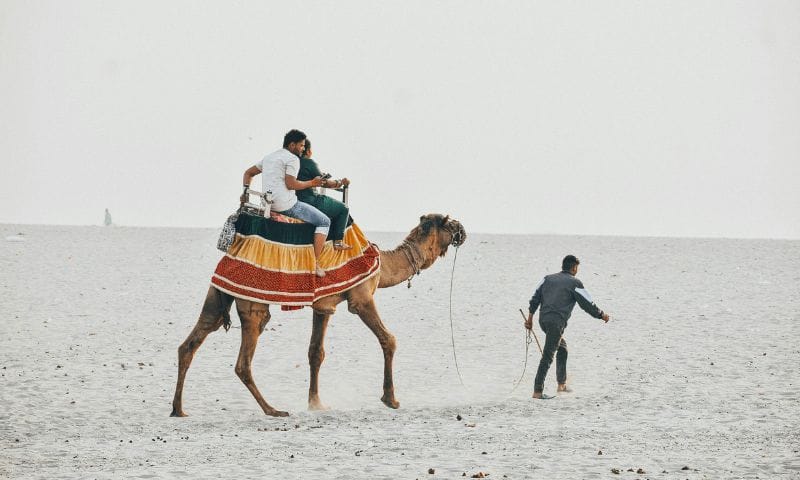
Gujarat is one of those Indian states that rarely tops the international tourist circuit but consistently surprises the travellers who do make the effort. It has no Taj Mahal, no Himalayan panorama, and no backwater houseboats. What it has instead is a white salt desert that stretches to the horizon, the last wild population of Asiatic lions on earth, a street food culture that rivals any city in India, and a craft heritage that has been passed down through families for centuries. For a solo traveller, Gujarat adds something else: it is one of the safest and most welcoming states in India, with low crime rates, helpful locals, and a well-developed road network that makes self-guided travel straightforward.
Daman, the tiny Union Territory on Gujarat’s southern coast, functions as a natural coda to a Gujarat trip. Its Portuguese-era churches, quiet beaches, and seafood restaurants provide a coastal counterpoint to Gujarat’s inland deserts and temples. Together, they form a route that covers cultural depth, natural extremes, and the kind of solitary calm that solo travel is supposed to deliver.
Here is how to put that trip together.
Ahmedabad is India’s first UNESCO World Heritage City, and its walled old quarter justifies the designation. The Manek Chowk area shifts from a vegetable market at dawn to a jewellery market by midday to a street food carnival after dark. For a solo traveller, this single square offers a full evening: plates of dabeli, pav bhaji, and khaman dhokla bought from different stalls and eaten standing up among locals.
During the day, the Sabarmati Ashram, Mahatma Gandhi’s home during the independence movement, sits on the riverbank and provides a reflective start to any Gujarat trip. The ashram’s simplicity, whitewashed buildings, a spinning wheel, and the view of the river, is a quiet counterweight to the city’s commercial energy. The Adalaj Stepwell, 18 kilometres north, is a five-storey subterranean structure carved with intricate Hindu and Islamic motifs that stays cool even in the Gujarat summer. The Calico Museum of Textiles, one of the finest textile museums in the world, requires a morning appointment but rewards with a collection that explains Gujarat’s centuries-old relationship with cloth.
Solo traveller tip: Ahmedabad’s auto-rickshaws run on meters, and the Ahmedabad BRTS (Bus Rapid Transit System) is efficient and safe. Two days is enough for the main sights and street food circuits.
The Great Rann of Kutch is roughly 7,500 square kilometres of white salt marsh that turns into a flat, blinding-white desert between October and March. Standing in the middle of it during a full moon, when the salt crystals reflect the moonlight and the horizon disappears, is one of those rare travel moments that lives up to every description you have read about it.
The Rann Utsav, a government-organised festival running from November to February, provides luxury tent accommodation, cultural performances, and organised excursions into the desert. For solo travellers, the Rann Utsav camp is a practical base: it handles logistics, meals, and evening entertainment, freeing you to focus on the landscape during the day. The sunrise and sunset over the white desert are the anchoring experiences. Between those, a visit to the Kalo Dungar (Black Hill) viewpoint and the Indo-Pak border post at India Bridge provide perspective on the Rann’s scale.
The Rann of Kutch with Gujarat wildlife tour combines the desert experience with Gir and Kutch craft villages in a single itinerary.
Bhuj, the gateway town to the Rann, is worth a day on its own for the Aina Mahal (Mirror Palace), the Prag Mahal, and the Kutch Museum. But the real draw for a solo traveller with time is the ring of artisan villages around Bhuj where traditional crafts survive as working practices, not museum exhibits.
Ajrakhpur is the centre of ajrakh block printing, a resist-printing technique using natural dyes that produces the deep indigo and red textiles Gujarat is known for. Nirona village is home to the only remaining practitioner of Rogan art, a technique where paint is applied to fabric using a metal stylus without the stylus ever touching the cloth. Bhujodi village is known for its Rabari and Ahir embroidery. These visits are best done with a local guide from Bhuj who can introduce you to the families and explain the techniques. The workshops are open to visitors, and watching an ajrakh printer work through 16 separate stages of printing and dyeing on a single cloth is an absorbing way to spend an afternoon.
Gir is the only place on earth where Asiatic lions live in the wild. The park, spread over 1,400 square kilometres of dry deciduous forest in the Saurashtra region, runs jeep safaris twice daily. Safari bookings must be made in advance through the official Gujarat Forest Department portal, and individual travellers can book single seats on shared jeeps.
Lion sightings are frequent; the population has grown to over 600 animals, and the open scrubland of Gir makes them easier to spot than tigers in denser forests. Beyond lions, the park shelters leopards, spotted deer, nilgai, marsh crocodiles, and a significant vulture population. The Devaliya Safari Park, a smaller fenced interpretation zone adjacent to the main park, offers guaranteed sighting of lions at closer range and is worth adding if your main safari does not produce a sighting.
Solo traveller tip: Sasan Gir village, the park’s gateway, has a range of lodges. Two nights allows for three safari drives, which gives a strong probability of lion encounters.
For broader Gujarat wildlife planning, the Gujarat travel guide covers Gir, the Wild Ass Sanctuary, and marine parks.
Somnath Temple, one of the twelve Jyotirlingas and among the most rebuilt temples in India (destroyed and reconstructed multiple times over a millennium), sits on the Arabian Sea coast south of Gir. The evening Aarti here, with the sound of waves mixing with temple bells, has a quality that justifies the detour. The light and sound show at the temple recounts the temple’s history of destruction and resilience.
From Somnath, the former Portuguese territory of Diu is roughly 90 kilometres further along the coast. Diu is a small island connected to the mainland by a bridge, and its low-rise Portuguese architecture, quiet beaches (Nagoa Beach is the most popular), and relaxed pace make it a strong solo stop. Unlike the rest of Gujarat, Diu permits the sale of alcohol, and its seafood restaurants serve fresh catch with a Goan-Portuguese inflection. The Diu Fort, St. Paul’s Church, and the Naida Caves (a network of eroded sandstone caverns) fill a comfortable day.
Vadodara (Baroda) is Gujarat’s cultural capital, home to the Laxmi Vilas Palace, the private residence of the Gaekwad royal family. The palace, claimed to be four times the size of Buckingham Palace, is open to visitors and combines Indo-Saracenic architecture with a collection that includes European paintings and Mughal miniatures. The Maharaja Fateh Singh Museum and the Faculty of Fine Arts (M.S. University) add further cultural weight.
Champaner-Pavagadh, a UNESCO World Heritage Site 47 kilometres from Vadodara, is a 15th-century ruined city that served as the capital of the Gujarat Sultanate before falling to the Mughals. The Jami Masjid here is one of the finest examples of Indo-Islamic architecture in western India. The site is spread across a hillside and requires two to three hours of walking, which makes it a satisfying physical outing alongside the more sedate palace visits in Vadodara.
Saputara, perched at 1,000 metres in the Dang district near the Maharashtra border, is Gujarat’s sole hill station. The town is modest in scale but offers a ropeway, a lake with boating, the Vansda National Park nearby, and viewpoints (Sunset Point and Sunrise Point) that overlook the Sahyadri hills. For solo travellers, Saputara works as a one-night decompression stop between the plains of Gujarat and the coast of Daman. The Artist Village, where tribal Warli painters display and sell their work, is a distinctive local attraction.
Daman, the small Union Territory sandwiched between Gujarat and Maharashtra on the Arabian Sea coast, functions as an ideal endpoint for this trip. The territory is divided by the Daman Ganga river into Nani Daman (the smaller, more commercial side) and Moti Daman (the larger, quieter side with Portuguese-era fortifications). The Fort of Moti Daman, the Church of Our Lady of the Sea, and the Church of Bom Jesus preserve a colonial atmosphere that feels closer to Goa than to Gujarat.
Jampore Beach on the southern edge and Devka Beach to the north are the main beaches. Neither is particularly glamorous, but both offer the simple pleasure of an uncrowded shoreline and a sunset over the sea. Daman’s seafood restaurants serve fresh fish, prawns, and crab in preparations that blend Gujarati and Portuguese influences. Like Diu, Daman permits alcohol sales, which adds a relaxation dimension that dry Gujarat does not offer.
Solo traveller tip: Daman is accessible by road from Vapi railway station (12 kilometres), which is on the Mumbai-Ahmedabad main line. A final night in Daman before catching a train to Mumbai or flying out of Surat airport (120 kilometres) makes for a clean exit.
A comfortable itinerary runs 10 to 14 days: Ahmedabad (2 days), Rann of Kutch and Bhuj (3 days), Gir National Park (2 days), Somnath and Diu (2 days), Vadodara and Champaner (2 days), Saputara (1 day), Daman (1 to 2 days). Intercity travel is best by private car or state transport buses (Gujarat’s GSRTC network is reliable), with one internal flight possible between Bhuj and Ahmedabad to save time.
October to March is the ideal window. The Rann of Kutch is only accessible during these months, Gir safaris run from mid-October to mid-June, and the coastal weather in Daman and Diu is pleasant. Summers (April to June) push temperatures above 40 degrees across the state. Monsoon (July to September) floods the Rann and disrupts Saurashtra road travel.
Gujarat is consistently rated among the safest Indian states for solo travel, including solo female travel. The state is vegetarian-dominant and dry (alcohol is prohibited except in Daman and Diu, which are Union Territories with separate regulations). Locals are generally helpful and curious about solo visitors, particularly outside the main tourist circuits. Standard precautions apply: use registered transport, inform your hotel of your daily plans, and carry a local SIM card for connectivity.
For broader solo travel guidance, the solo travel safety tips and destinations guide covers India-wide advice.
The solo travel packages offer customisable itineraries with private transfers and guided experiences.
A solo trip through Gujarat and Daman is not an adrenaline rush. It is a slow accumulation of satisfying moments: a plate of khaman eaten standing at a market stall in Ahmedabad, the silence of the white Rann under a full moon, a lion walking across the road in front of your jeep, an ajrakh printer showing you the 16th stage of a process that has not changed in 400 years, and a cold drink on a Daman beach at sunset. Gujarat does not compete for attention the way Rajasthan or Kerala does. It simply rewards the travellers who show up.
Memorable India’s Gujarat specialists design customised solo itineraries covering the Rann, Gir, Kutch, Diu, and Daman with private transfers, handpicked hotels, and local guides. Get in touch to start planning.
Gujarat is one of the safest states in India for solo travellers, including women. The state has low crime rates, well-maintained roads, a reliable public transport system, and a generally helpful local population. Standard travel precautions, such as using registered transport and avoiding isolated areas after dark, are sufficient.
Ten to fourteen days covers the main destinations comfortably: Ahmedabad, Rann of Kutch, Bhuj, Gir, Somnath, Diu, Vadodara, Champaner, Saputara, and Daman. A shorter trip of seven to eight days can focus on the Kutch-Gir-Diu circuit or the Ahmedabad-Vadodara-Daman corridor.
Gujarat prohibits the sale and consumption of alcohol within state borders. Daman and Diu, both Union Territories within the geographic area, operate under separate regulations and permit alcohol sales. Foreigners and visitors from other Indian states can obtain a temporary liquor permit in Gujarat through select hotels, though availability and process vary.
Gujarat’s cuisine is predominantly vegetarian and balances sweet, sour, and spicy flavours. Must-try dishes include dhokla, thepla, khandvi, undhiyu (a mixed vegetable dish), dal dhokli, and the Gujarati thali (a multi-dish platter served in small bowls). Street food highlights include dabeli, fafda-jalebi (a breakfast staple), and sev khamani. In Daman and Diu, seafood, especially fresh fish and prawn preparations, is the main draw.
The Rann of Kutch is accessible from October to March, when the monsoon floodwaters recede and the salt flats dry into their characteristic white expanse. The Rann Utsav festival runs from November to February and provides the best-organised visitor infrastructure. Full moon nights are the most visually dramatic time to visit the white desert.
Gujarat and Rajasthan share a border, and combining the two is a popular route for extended India trips. Ahmedabad to Udaipur is roughly 260 kilometres (five to six hours by road). A combined itinerary of 18 to 21 days can cover Kutch, Gir, and Daman in Gujarat before crossing into Udaipur, Jodhpur, and Jaipur in Rajasthan.
The Gujarat tour packages can be combined with Rajasthan itineraries for a comprehensive western India experience.
Top 7 South Indian Temples Known for Their Architectural Beauty
16 Oct 2026
What to Expect On Your Dream Alleppey Houseboat Trip
15 Oct 2026
12 Top Tourist Destinations in Jammu and Kashmir for a Memorable 2026 Trip
13 Oct 2026
12 Tips to Remember Before Holidaying in the Northeast Indian States
11 Oct 2026
An Aesthetic Guide for Kerala Tour: Backwaters, Tea Hills and Coastal Light
11 Oct 2026


