 +919871148514
 info@memorableindia.com
India is a 17-hour flight from New York, a 20-hour journey from Los Angeles, and a roughly 10,500-mile cognitive leap from everything most Americans consider familiar. The food is different, the traffic is different, the sensory volume is turned up in ways no guidebook fully prepares you for, and the sheer density of history, religion, landscape, and daily life can feel overwhelming on first contact. That said, India consistently ranks among the most rewarding travel destinations for Americans who make the trip. The country receives a substantial number of US visitors every year, and the reason most of them give for wanting to return is the same: nothing else compares.
The key to a good first visit is choosing the right type of holiday. India is not a single-note destination. It is a continent-sized country with radically different regions, climates, and experiences, and trying to see all of it in one trip is the fastest route to exhaustion. This guide lays out the best Indian holiday ideas for Americans visiting for the first time, organised by experience type, so you can pick a trip that matches your interests, fitness level, and travel style.
If you have 7 to 10 days and want a structured introduction to India’s heritage, the Golden Triangle tour covering Delhi, Agra, and Jaipur is the most logical starting point. It is popular for a reason: the three cities sit within a manageable driving circuit (each leg is roughly 4 to 6 hours by road), and together they offer a concentrated overview of Mughal architecture, Rajput grandeur, and modern Indian urban life.
Delhi serves as the entry point for most international flights. The city splits into Old Delhi, with its narrow lanes, spice markets, and the 17th-century Jama Masjid, and New Delhi, with its colonial-era government buildings, wide boulevards, and India Gate. Agra is home to the Taj Mahal, which even the most sceptical travellers admit is genuinely stunning in person. Jaipur’s Amber Fort, City Palace, and Hawa Mahal offer a vivid look at Rajasthan’s royal history. The triangle works well for couples, families, and older travellers alike, and most tour operators can extend it with a stop at Ranthambore for a wildlife safari or Varanasi for a spiritual dimension.
American travellers who want their first India trip to feel like stepping into a different century should consider a deeper Rajasthan tour. Beyond the Golden Triangle cities, Rajasthan offers Udaipur (lake palaces, rooftop dining, and a romantic atmosphere that rivals anything in southern Europe), Jodhpur (the blue-walled old city and the imposing Mehrangarh Fort), and Jaisalmer (a living sandstone fort rising from the Thar Desert).
For Americans accustomed to national park road trips, a Rajasthan circuit has a similar rhythm: drive between distinct destinations, spend a night or two in each, and watch the landscape shift from green hills to arid desert as you move west. Camel safaris in the Sam Sand Dunes outside Jaisalmer, cooking classes in Udaipur, and block-printing workshops in Jaipur add hands-on cultural layers that go well beyond sightseeing. A two-week Rajasthan itinerary can also include a Ranthambore wildlife safari, where tiger sighting probabilities are among the highest in Asia.
Kerala is the part of India that surprises Americans the most. The literacy rate is among the highest in the country, the food is outstanding (coconut-based curries, fresh seafood, appam with stew), and the landscapes, from the tea-covered hills of Munnar to the palm-fringed backwaters of Alleppey, feel distinctly tropical without the chaos that first-timers sometimes associate with India.
A Kerala holiday package for first-time visitors typically includes a houseboat stay on the Alleppey backwaters (a converted rice barge with a private crew and cook), a hill station retreat in Munnar, and a beach segment in Varkala or Kovalam. For Americans interested in wellness, Kerala’s Ayurvedic tradition is authentic and well-regulated, with treatments ranging from therapeutic oil massages to structured multi-day programmes. Periyar Wildlife Sanctuary near Thekkady adds a nature component, with bamboo rafting on the lake and guided forest walks. Kerala is especially well suited for couples, wellness travellers, and older Americans who want a gentler pace.
Goa operates on a different frequency from the rest of India, and that is precisely why it works as a first-timer destination. The Portuguese colonial influence, visible in whitewashed churches, Latin Quarter architecture, and the local cuisine (vindaloo originated here), gives Goa a hybrid character that many American travellers find immediately accessible.
South Goa’s beaches, including Palolem, Agonda, and Benaulim, are calmer and better suited for relaxation. North Goa offers livelier markets (Anjuna Flea Market, Saturday Night Market in Arpora) and a more social scene. A Goa holiday can be structured as a standalone beach break or combined with a heritage segment in Mumbai or the Golden Triangle. For Americans looking to ease into India with a shorter, less intensive trip, a 5-to-7-day Goa itinerary is an excellent entry point.
India does luxury differently from most destinations Americans are familiar with. Here, luxury often means staying in a converted maharaja’s palace where the architecture predates the United States, dining on a rooftop with a fort lit up behind you, or being driven between cities in a private car with a guide who has spent a decade studying Mughal history.
Memorable India’s luxury tour packages include properties like the Taj Lake Palace in Udaipur, the Oberoi Amarvilas in Agra (with direct views of the Taj Mahal from every room), and heritage havelis across Rajasthan that have been restored with meticulous attention to detail. The Maharajas’ Express and Palace on Wheels luxury trains offer another distinctly Indian way to travel in style. For American travellers accustomed to high-end travel, India’s luxury segment offers exceptional value: the quality of accommodation, food, and personalised service often exceeds what you would get at equivalent price points in Europe or the US.
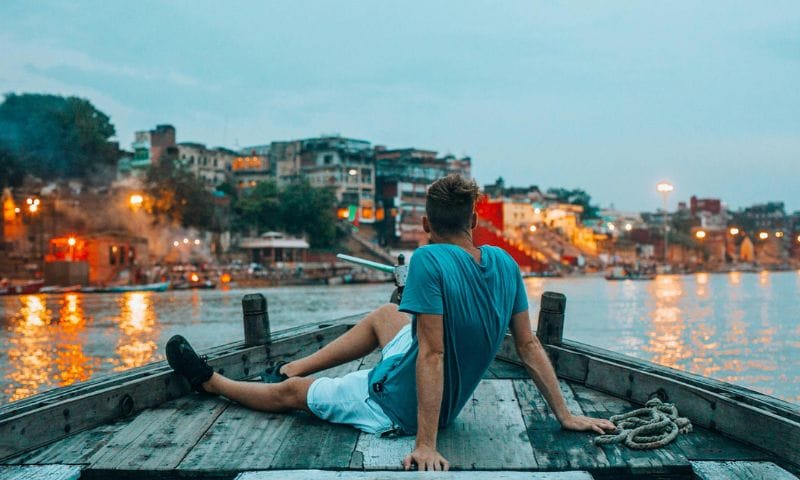
A significant number of American travellers come to India seeking something beyond tourism. Varanasi, on the banks of the Ganges, is the oldest continuously inhabited city in the world and remains the spiritual heart of Hinduism. The morning boat ride along the ghats, with cremation rituals, bathing pilgrims, and temple bells creating a layered soundscape, is an experience that most visitors describe as life-altering. It is not a comfortable or easy place, but it is profoundly honest.
Rishikesh, further north in Uttarakhand, offers a different spiritual register: yoga ashrams, meditation centres, and the Ganges flowing clean and fast through forested hills. American visitors interested in yoga will find Rishikesh’s offerings far more authentic (and far cheaper) than anything available in the US. The India travel guide for first-time visitors on Memorable India’s blog covers the practical logistics of reaching both cities and what to expect on arrival.
US citizens need an e-Visa to enter India, which can be applied for online through the official Indian government portal. Processing typically takes 3 to 5 business days. The 30-day e-Tourist Visa covers most first-time visits. Apply at least two weeks before departure to allow for any processing delays.
October to March is the peak travel season across most of India. Temperatures are comfortable, skies are clear, and major festivals like Diwali (October/November) and Holi (March) fall within this window. Avoid June to September unless you are specifically seeking the monsoon experience in Kerala or visiting the Himalayas.
A meaningful first trip to India should be at least 10 to 14 days. Anything shorter forces you to rush, which is the opposite of how India rewards visitors. If you can manage three weeks, you can comfortably combine two or three experience types (for example, the Golden Triangle plus Kerala, or Rajasthan plus Goa). Memorable India’s comprehensive India travel guide includes suggested itinerary structures by trip length.
Stick to bottled or filtered water. Eat at reputable restaurants or where food is freshly cooked. Carry basic medications (antidiarrhoeal, rehydration salts, antihistamines). Street food is part of the India experience, but ease into it gradually rather than diving in on day one. No special vaccinations are mandatory for US travellers, though Hepatitis A and Typhoid vaccines are recommended by the CDC.
Remove shoes before entering temples and many homes. Dress modestly at religious sites (shoulders and knees covered). Tipping is customary but not at US levels: 10 per cent at restaurants, INR 50 to 100 for porters and drivers. Indians are generally warm and curious toward American visitors; a respectful attitude and basic phrases in Hindi (‘Namaste’ goes a long way) open doors everywhere.
India’s logistics, from train bookings and domestic flights to navigating local transport and finding reliable accommodation, are genuinely complex for first-timers. A local operator like Memorable India handles everything from airport pickup to daily itinerary management, freeing you to focus on the experience. The company’s approach to maintaining high standards across every tour is built specifically for international travellers who expect consistency, transparency, and personalised service. Reach out to the team with your travel dates and interests, and they will build a customised itinerary from scratch.
India is not a destination that reveals itself casually. It demands a degree of planning, an openness to sensory overload, and a willingness to let the experience be different from anything you have known. But the payoff is substantial. The places Americans should prioritise on a first visit span ancient cities, tropical coastlines, royal deserts, and mountain landscapes, and the cultural depth behind each of them is what makes India the kind of destination people keep talking about long after they return home.
If you are ready to start planning, Memorable India’s team can design a first-time itinerary that matches your pace, budget, and interests. No templates, no cookie-cutter routes, just a trip built around what you actually want to see and experience.
The Golden Triangle (Delhi, Agra, Jaipur) is the most popular starting itinerary for American first-time visitors. It covers India’s most iconic landmarks in a manageable 7-to-10-day circuit. For a longer trip (14+ days), extending into Rajasthan, Kerala, or Goa adds depth without significantly increasing logistical complexity. A local tour operator can help structure the itinerary around your interests and travel pace.
Yes, India is generally safe for American tourists. The country receives a substantial number of international visitors annually, and tourist-frequented areas are well serviced. Standard precautions apply: use reputable transport, keep valuables secure, and stay aware of your surroundings. Travelling with a trusted local operator adds a significant layer of safety and logistical support.
A mid-range India trip for an American traveller typically costs between USD 100 and USD 200 per person per day, covering 4-star accommodation, private transport, guided sightseeing, and most meals. Budget options exist below this range, and luxury itineraries with palace hotel stays and private experiences can run USD 300 to USD 500+ per day. International airfare from the US to India ranges from USD 700 to USD 1,500 round trip, depending on season and advance booking.
Yes, US citizens require an e-Visa to enter India. The e-Tourist Visa can be applied for online and is typically processed within 3 to 5 business days. A 30-day e-Tourist Visa is sufficient for most first-time visits. Apply at least two weeks before your departure date.
October to March is the ideal travel window for most of India. Temperatures are moderate, rainfall is minimal, and the major festival season (Diwali, Holi, Christmas in Goa and Kerala) adds cultural depth to the trip. Hill stations like Shimla and Darjeeling are best visited between April and June. Avoid the monsoon months (June to September) for a first visit unless you are specifically heading to Kerala or the Himalayas.
Yes. Memorable India specialises in building customised itineraries for international first-time visitors, including American travellers. The process starts with a conversation about your interests, group composition, budget, and travel dates. The team then designs a bespoke itinerary covering accommodation, transport, guided experiences, and daily logistics. There are no hidden costs, and 24/7 on-trip support is included throughout.
15 Amazing Temple Fairs in India: A Traveller’s Guide to Faith, Colour and Living Tradition
30 Sep 2026
13 Best Places to Explore in the Youngest State of Telangana
29 Sep 2026
12 Less Explored Destinations in Maharashtra Worth Adding to Your Travel List
28 Sep 2026
11 Must-Visit Museums in India for Wildlife Lovers
27 Sep 2026
11 Best Places in India to Celebrate Christmas
26 Sep 2026


