 +919871148514
 info@memorableindia.com
At dawn in Kaziranga, mist rises off the elephant grass in long grey sheets, and somewhere inside that curtain a one-horned rhino is already grazing. You hear the park before you see it: the low grunt of buffalo, the distant trumpet of a wild elephant, kingfishers calling from the beel. This corner of Assam is not a place travellers pass through in a hurry. Between the Brahmaputra floodplain and the Karbi Anglong hills, it packs in more experiences per square kilometre than almost any wildlife destination in India. The park itself covers roughly 430 square kilometres of grassland, swamp and semi-evergreen forest, and it holds the largest population of Indian one-horned rhinoceros on earth, according to UNESCO, which listed it as a World Heritage Site in 1985. This guide walks you through the top activities in Kaziranga National Park and the experiences waiting just outside its gates.
Most first-time visitors plan a two-day stopover and later regret it. Kaziranga is split into four safari ranges, each with a distinct landscape and species mix, and the country beyond the park boundary holds waterfalls, ruins, tea gardens and Karbi villages that add real depth to a trip. Three unhurried days is the honest minimum. Four or five lets you slow down, take a boat out on the Brahmaputra, walk into a tribal hamlet, and still leave a morning free for the orchid park.
The park stays open from around 1 November to 30 April, with a partial-open window in October and May. Monsoon closure is not optional here: Brahmaputra flooding submerges vast tracts of the grassland every year. If you can travel between mid-December and February, expect crisp mornings, low grass after the burn, and the best rhino and tiger sightings of the season.
The jeep safari is the anchor experience and the most reliable way to see Kaziranga’s headline species. The park is divided into four ranges, and each one has its own character. Serious wildlife travellers try to cover at least two on a single trip.
Safari slots run in the morning and afternoon. The morning drive is colder but almost always more productive, since animals are active before the sun climbs. Book through your resort or tour operator well in advance during peak weeks, as permits are capped per range. Rules from the Assam Forest Department are strict: no getting off the jeep, no drone photography, and no flash. Follow them without exception. This is a protected reserve, not a photo studio.
The elephant safari is a shorter, earlier and more intimate experience. You set off at first light, the mahout guides the elephant into tall grass that a jeep cannot penetrate, and you find yourself eye to eye with a grazing rhino at a distance no vehicle safari can match. It is offered in Kohora, Bagori and sometimes Burapahar, and slots are limited and booked out fast. Priority usually goes to guests staying in nearby resorts.
One practical note. The elephant safari is short, roughly one hour, and it does not replace the jeep safari. Think of it as an add-on, ideally on your second morning, once you have a general sense of the park. For visitors focused on serious photography, the low light and closer approach make it a genuinely different frame from anything you can shoot from a jeep.
The Brahmaputra runs along the northern boundary of Kaziranga, and a boat ride offers a completely different perspective on the park. During the closed months, and sometimes during the open season as well, short country-boat trips and expedition-style river cruises let you glide past the park’s shoreline, spot Gangetic river dolphins, and watch riverine islands come alive at dusk. Sunset on the Brahmaputra, with the silhouette of the Karbi hills to the south and rhinos grazing on the sandbars, is one of the quiet highlights of any Assam itinerary.
Longer voyages such as the MV Mahabaahu luxury cruise combine Kaziranga safaris with river cruising, Majuli island and Assamese tea culture, and are worth considering if you have a week or more.
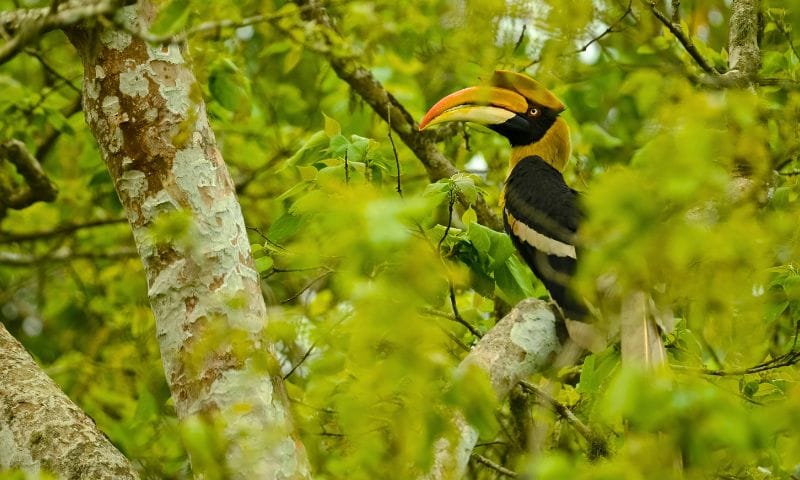
Kaziranga is home to close to 500 recorded bird species, which places it firmly on the list of India’s finest birdwatching destinations. The Eastern Range at Agaratoli is the standout zone for birders: shallow beels attract greater adjutant storks, spot-billed pelicans, black-necked storks, bar-headed geese and pallas’s fish eagle. Winter migrants from Central Asia arrive from November onward and stay until March.
Grassland specialists like the swamp francolin and the Bengal florican, one of the rarest bustards in the world, are also found here. A dedicated birder should ask for a naturalist-led early morning drive and carry binoculars with a decent low-light rating. The best sightings often happen in the first thirty minutes of grey dawn light, before the general safari traffic builds up.
A short drive from the Kohora gate, the Kaziranga National Orchid and Biodiversity Park is one of the most underrated stops in the region. It holds a large collection of wild orchid species, along with rice varieties, medicinal plants and bamboo groves native to the North East. There is a small cultural performance space where local Karbi, Mishing and Bodo dancers perform in the afternoons.
This works well as a relaxed post-lunch activity on a safari day. Families with children will find it easier going than a full jeep drive, and it is a good way to understand the wider biodiversity story of the region beyond rhinos and tigers.
About 13 kilometres from Bokakhat, Kakochang Waterfalls is a modest but pretty cascade tucked into coffee and rubber plantations near Numaligarh. It is a good half-day trip out of Kaziranga for anyone who wants to break up the safari rhythm with a walk in the hills. The drive itself passes through classic Assam countryside of rice paddies, bamboo thickets and tea gardens.
A short distance further, Deopahar Ruins near Numaligarh preserve the remains of a stone temple believed to date to the ninth or tenth century, with detailed rock-cut sculptures and a small archaeological site. Combine the waterfall and the ruins into a single half-day loop and you get a very different side of the region: forested, quiet and steeped in older Assamese history.
Assam is one of the largest tea-producing regions in the world, and the belt around Kaziranga is dotted with working gardens. Estates like Hathkhuli, Difalu and Behora sit within easy reach of the resorts and welcome visitors for guided walks, factory tours and tasting sessions where you can compare orthodox and CTC teas from the same estate.
Time your visit for the plucking season between April and November for the most active experience. Even in winter, a walk through a dormant garden at sunrise, with mist hanging low over the bushes and the Karbi hills behind, is a beautiful way to start the day. Many resorts can arrange a private tea tour with an estate manager for a small fee.
The communities living along Kaziranga’s boundary have shared this landscape for generations. A guided walk into a Karbi or Mishing village is one of the most meaningful cultural activities in the area. You see stilt houses built for annual floods, traditional weaving on backstrap looms, rice beer preparation and small kitchen gardens of bhoot jolokia chillies. The complete Assam travel guide from Memorable India covers regional culture in more depth if you want to prepare before you go.
Cultural evenings organised near many resorts feature Bihu and other folk dance performances by local troupes. These are honest, community-run programmes rather than commercial shows, and a small ticket fee usually goes back to the performers and their villages.
Panbari Reserve Forest, about 25 kilometres from Kohora on the road towards Bokakhat, is one of the few places in the Kaziranga circuit where you can actually walk into the forest on foot with a trained guide. The reserve is a semi-evergreen patch famous for the western hoolock gibbon, capped langur, and rare butterflies. A slow morning walk with a naturalist is a completely different experience from any safari, and it costs very little.
Kaziranga is a serious photography destination. Wildlife photographers plan trips around the specific windows when the grass is short and light is soft, and dedicated wildlife photography tours in India often build a full Kaziranga leg around the Bagori and Agaratoli ranges. Even if you are not chasing images, block one morning to simply sit on your resort deck with a coffee, listen to the birds, and let the pace of the place settle in. Not every hour of a wildlife trip needs to be scheduled.
If you are combining Kaziranga with the wider region, our guide to weekend destinations in North East India is a helpful starting point for structuring your itinerary. You can also talk to a travel specialist directly through the Memorable India contact page for a customised route.
The best Kaziranga trips are the ones that treat the park as a landscape rather than a checklist. Take the safaris seriously, of course, and give yourself a real chance at the rhino, the tiger and the swamp deer. But leave space for the quieter things too: the waterfall walk, the tea garden at sunrise, the Karbi village where a grandmother will show you how she weaves a gamosa on a bamboo loom. Combined, they turn a wildlife holiday into an Assam holiday. When you are ready to plan, the team at Memorable India can help you shape a route that fits your dates, pace and interests. Reach out through our travel planning desk and a specialist will respond within twenty-four hours.
The top activities include jeep safaris across the four ranges, elephant-back safaris in the grasslands, birdwatching in the Eastern Range, boat rides on the Brahmaputra, and visits to the Kaziranga National Orchid and Biodiversity Park. Around the park, travellers enjoy Kakochang Waterfalls, Deopahar Ruins, tea estate walks and guided visits to Karbi and Mishing villages.
The best time is between November and April, when the park is fully open and the weather stays cool and dry. Mid-December to February is ideal for wildlife photography, low grass and comfortable safari conditions. The park remains closed from mid-May to mid-October due to monsoon flooding of the Brahmaputra.
Plan at least two jeep safaris across different ranges. A common combination is one morning drive in the Central Range at Kohora and another in the Western Range at Bagori. Serious wildlife travellers add a third in the Eastern Range at Agaratoli for birdwatching.
Yes. Elephant safaris are still offered in the Kohora and Bagori ranges during the open season. Slots are limited and booked out early, so request a permit through your resort or tour operator as soon as your dates are confirmed.
Popular places near Kaziranga include Kakochang Waterfalls, Deopahar Ruins near Numaligarh, Panbari Reserve Forest, the Kaziranga National Orchid and Biodiversity Park, and working tea estates around Bokakhat. Majuli, the world’s largest river island, is a longer add-on for travellers with more time.
Three days is a comfortable minimum: one full travel and arrival day, one full safari day, and one day combining a second safari with cultural or nature activities. Four to five days lets you cover multiple safari ranges, a river cruise, tea estate visits and a village walk without rushing.

20 Best Hill Stations in Uttarakhand for Family Vacation, Corporate Trips, Nature Lovers & Adventure
26 Aug 2026
15 Best National Parks and Wildlife Sanctuaries in North East India
25 Aug 2026
16 Best Romantic Hill Stations in India for Honeymoon Holidays
23 Aug 2026
Top 30 Must-See Forts and Palaces in Rajasthan
21 Aug 2026
Top 30 Krishna Temples in India: A Complete Pilgrim and Traveller Guide
21 Aug 2026


