 +919871148514
 info@memorableindia.com

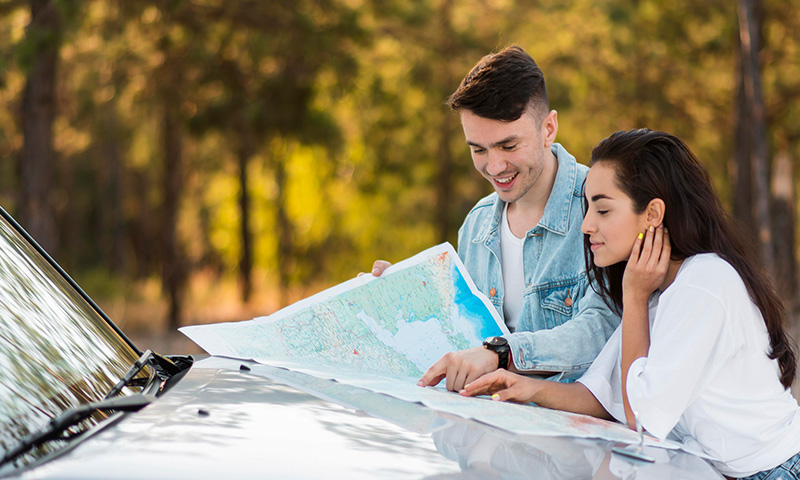
India rewards travellers who move at their own pace. The trouble is, most first-timers underestimate how varied Indian roads, driving styles, and city traffic can be. Hiring a car solves most of this. It gives you a comfortable base, a door-to-door schedule, and someone familiar with the terrain if you choose a chauffeur-driven option.
This guide walks you through everything a first-time visitor needs to know before booking a vehicle in India. You will learn when self-drive makes sense and when a driver is the smarter call, what paperwork actually matters, how pricing really works, and which routes are worth doing by road.
Memorable India has arranged car-and-driver travel across the country for over fifteen years, from the Golden Triangle to the Himalayan foothills. The practical insights below come from that experience and from honest feedback shared by travellers after their trips.
India’s distances are deceptive. A journey that looks short on the map often takes longer because of state border checks, local traffic, cattle crossings in rural stretches, and detours around construction. Trains and flights work for intercity hops, but they rarely drop you where you want to be or let you stop at a roadside temple or dhaba you spotted on the way.
A hired car fills that gap. You decide the pace, the route, the lunch halt, and whether to add a last-minute detour. Families with elderly parents benefit from doorstep comfort. Couples get privacy. Solo travellers get safety and company on long drives.
For foreign visitors, the biggest advantage is removing the stress of unfamiliar road signs and lane discipline. Indian roads reward patience and local awareness, both of which come with a professional driver who has done the route many times.
If your plan involves multi-day sightseeing in North India, our chauffeur-driven car rental services in Delhi are a straightforward starting point for most itineraries, with sedan, SUV, and Tempo Traveller options already priced for standard tourist routes.
Self-drive rentals exist in India through operators like Zoomcar, Revv, and the global Avis network, but they suit a specific kind of traveller: experienced drivers already familiar with Indian road behaviour.
Cars with a driver cover the overwhelming majority of the inbound tourist market, and there are good reasons for that.
A good driver doubles as a route expert, parking manager, and informal translator at highway stops. Most tourist drivers in Delhi, Jaipur, and Agra speak functional English and know the standard hotel pick-up and monument timing routines. According to the Ministry of Road Transport and Highways, India has one of the world’s largest road networks, which makes local navigation knowledge genuinely valuable.
Rental fleets across India broadly fall into five categories. Matching the right vehicle to your group size and route saves money and avoids discomfort on long drives.
For most first-timers planning a classic North India route, a sedan or Innova Crysta covers the brief. Our Golden Triangle tour packages are built around these two vehicles for a reason: they handle long highway stretches and city sightseeing equally well.
Rental paperwork is simpler than most travellers expect, but the exact requirements differ slightly between self-drive and driver-included bookings.
Indian residents renting a self-drive car need a valid Indian driving licence, Aadhaar, and often a utility bill as address proof.
A single tip saves time at the pick-up counter: send scanned copies of all documents to the rental operator at least 24 hours before pick-up. It cuts the vehicle handover from an hour to under fifteen minutes, especially at airport desks.
Headline rates in India can mislead first-time renters. A quoted figure of INR 14 per kilometre looks attractive until you understand what sits outside the base rate.
A typical outstation booking with driver included in India covers:
Fuel is almost always included when you book with a driver. For self-drive, fuel is on you.
Here is where many first-timers lose money: ignoring the 250 km daily minimum. If your itinerary is a Delhi to Agra return trip of around 450 km total, you have still signed up for 500 km across two days. Plan your route so you actually use the kilometres you are paying for.
For reference, mid-range tourist bookings for an eight to ten day North India itinerary typically land between INR 25,000 and INR 55,000 for the vehicle and driver portion, excluding fuel differentials, tolls, and accommodation for the driver.
Not every Indian trip needs a car. Short city breaks in Mumbai or Bengaluru often work better with the metro and app-based cabs. But some routes are built for road travel, and a rental car genuinely transforms the experience.
The Golden Triangle (Delhi, Agra, Jaipur) is the most popular road route for first-time visitors. The driving is manageable, the highways are decent, and the ability to stop at Fatehpur Sikri between Agra and Jaipur adds real value. Standard duration is five to seven days.
Rajasthan beyond the Triangle rewards slow travel. Routes like Jaipur to Jodhpur to Jaisalmer to Udaipur cover roughly 1,200 km across remarkable landscapes. Our Rajasthan tour packages are structured around this type of road-based circuit, with driver, fuel, and route planning rolled in.
Uttarakhand and Himachal Pradesh need experienced hill drivers. Routes like Delhi to Shimla, Delhi to Haridwar and Rishikesh, or Delhi to Jim Corbett involve twisting mountain roads where local navigation experience matters. A chauffeur-driven SUV is almost always the safer call.
Kerala’s backwaters and hill towns like Munnar and Thekkady work well with a hired car as the connective tissue between houseboat stays and plantation walks.
Ladakh is a specialist case. Permits are required for several circuits, altitudes exceed 5,000 metres at points like Khardung La, and only drivers familiar with the terrain should be considered. The Incredible India tourism portal has useful reference material for first-time planners on permits and seasonal access.
A ten-minute due diligence before you confirm saves hours of trouble on the road. Use this short checklist:
Reputable operators are transparent about all of the above. If a quote feels too cheap compared to the market, something is usually missing, often the kilometre cap, driver allowance, or GST.
A few small habits make the trip smoother for everyone.
Keep expectations realistic for drive times. A rough thumb-rule for Indian highways is an average of 50 to 55 km per hour, including stops. Add roughly 20 percent on hill routes.
Tipping the driver at the end of the trip is customary. The usual range is INR 300 to INR 500 per day for standard tourist trips, and higher for extended or luxury itineraries. It is appreciated, not expected.
Confirm meal and tea stops in advance. Most tourist drivers eat at dhabas separately from clients; this is standard practice, not a social cue to invite them along unless you prefer to.
For night driving, especially in rural areas, ask your driver to stop by sunset where possible. Indian highways have improved considerably, but animal crossings and poorly lit stretches remain real risks after dark.
Keep basic items in your handbag: water, hand sanitiser, a light shawl for air conditioning, and a copy of your passport. Carry small change for toll booths if you want to help speed things up.
Book early for the peak October to March window, when Indian tourism volumes rise sharply. Last-minute availability during Diwali, Christmas, and New Year is tight across most tourist regions.
Match your car category to the full trip, not just the longest leg. A sedan that handles Delhi to Agra comfortably may feel cramped on a seven-day Rajasthan circuit with four adults and luggage.
Build buffer time into the itinerary. A nine-day plan is usually more enjoyable than compressing the same destinations into seven.
Keep an open channel with the operator, not just the driver, in case anything needs adjustment mid-trip. Agencies that offer 24/7 travel desks are worth the slight premium.
For complex multi-region trips, a packaged tour with transport, hotels, and sightseeing bundled together often ends up cheaper and smoother than booking each piece separately.
A well-chosen car rental in India is the quiet backbone of a successful trip. It sets the pace, keeps the days flexible, and lets you spend your energy on the places you came to see rather than on the mechanics of getting between them.
If you are building a first-time itinerary and want help matching the right vehicle to the right route, speak to our India travel team for a quote shaped around your group size, dates, and interests. Our consultants have arranged thousands of chauffeur-driven itineraries across North India, Rajasthan, Kerala, and the Himalayan belt, and the recommendation you get will reflect that experience.
Can tourists rent a car in India?
Yes. Foreign tourists can rent a car in India either with a chauffeur or on a self-drive basis. Chauffeur-driven bookings require only a passport and visa copy, which is why most inbound travellers choose this option. Self-drive rentals require a valid home-country driving licence and an International Driving Permit.
Is it better to self-drive or hire a car with a driver in India?
For first-time visitors, a chauffeur-driven car is almost always the better choice. Indian traffic patterns, signage, and highway behaviour take time to learn, and a professional driver removes that learning curve. Self-drive makes sense only for travellers already familiar with Indian roads or those staying within a single city.
How much does a car rental in India cost per day?
For a chauffeur-driven sedan on an outstation route, expect base rates from roughly INR 14 per km with a 250 km daily minimum, plus a driver allowance of INR 400 to INR 800 per day. An SUV like the Innova Crysta sits around INR 18 per km. A full day of city use with driver typically ranges from INR 3,400 for a sedan to INR 5,250 for an Innova, excluding fuel for self-drive bookings.
Do I need an International Driving Permit to rent a car in India?
Yes, if you are self-driving. Foreign nationals need both a valid driving licence from their home country and an International Driving Permit issued before they travel. For chauffeur-driven rentals, no driving licence is required from the traveller.
What is the best car for a Golden Triangle road trip?
For two to three passengers with standard luggage, a Dzire or similar sedan is comfortable and economical for Delhi, Agra, and Jaipur. For families of four or more, or anyone adding Ranthambore or Ajmer to the route, an Innova Crysta or similar SUV handles luggage and longer stretches better.
How many kilometres are included in a standard outstation car rental in India?
Most tourist operators work on a 250 km per day minimum for outstation bookings. If your itinerary covers less than that, you still pay for 250 km. Any distance beyond is billed at the base per-kilometre rate. Always calculate your rough daily distances before booking to avoid paying for unused kilometres.
Is Uber or Ola a good alternative to renting a car for a long trip?
Uber and Ola work well for short city trips and airport transfers but are rarely practical for multi-city tourist itineraries. Outstation availability is limited, surge pricing is unpredictable, and drivers often decline longer routes. A pre-booked chauffeur-driven rental is more reliable for sightseeing covering more than one city.

10 Most Significant Buddhist Pilgrimage Sites in India: Complete Travel Guide
19 Oct 2026
A First-Time Traveller’s Guide to Car Rental in India
18 Oct 2026
13 Best Things to See and Do in Mizoram: A Traveller’s Guide to India’s Northeast Gem
17 Oct 2026
Top 7 South Indian Temples Known for Their Architectural Beauty
16 Oct 2026
What to Expect On Your Dream Alleppey Houseboat Trip
15 Oct 2026


