 +919871148514
 info@memorableindia.com

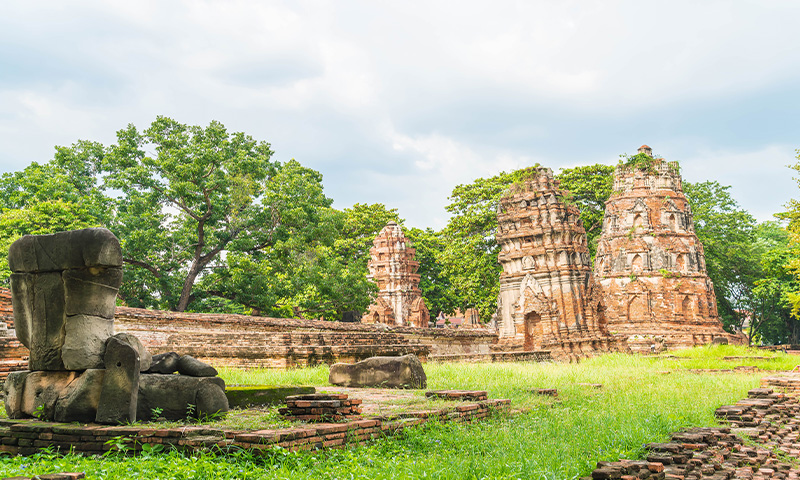
India holds a quiet distinction in the Buddhist world. It is where Prince Siddhartha became the Buddha, delivered his first sermon, and spent most of his teaching life. Centuries later, these places still draw monks, scholars, and travellers from Japan, Sri Lanka, Thailand, Vietnam, and much of the Western world.
For anyone planning a meaningful trip across the subcontinent, the Buddhist pilgrimage sites in India offer something rare, a route where history, philosophy, and living faith overlap in the same village square. This guide walks you through the ten most important sites, how they connect geographically, and what you need to know before you book your tickets.
The Buddha himself identified four places every follower should visit at least once: his birthplace, the site of his enlightenment, the location of his first sermon, and the place of his final passing. Over time, four more sites associated with major miracles were added, forming the Ashta Mahasthanas, or eight great places.
Three of the four primary sites sit in India (Lumbini, the fourth, lies just across the border in Nepal). The remaining locations stretch across Bihar, Uttar Pradesh, Madhya Pradesh, Maharashtra, and the Himalayan foothills. The result is a travel corridor that is equal parts spiritual journey and historical masterclass.
No site carries more weight. Bodh Gaya is where Siddhartha sat under a Bodhi tree, meditated through the night, and emerged as the Buddha. The Mahabodhi Temple complex, a UNESCO World Heritage Site, marks the exact spot. A descendant of the original Bodhi tree still shades the Vajrasana, the diamond throne, behind the main shrine.
The town itself is a layered experience. Monasteries built by Thailand, Bhutan, Japan, and Tibet line the streets, each in its own architectural style. Early morning chanting from different traditions overlaps in the air, and that layered sound is something you will not find anywhere else in India.
After enlightenment, the Buddha walked to Sarnath, near Varanasi, and delivered his first sermon to five disciples. That moment, known as the Dhammachakra Pravartana or the turning of the wheel of law, marks the formal beginning of Buddhism.
The Dhamek Stupa dominates the ruins, a cylindrical structure dating to the Gupta period. The Sarnath Archaeological Museum houses the original Lion Capital of Ashoka, now the national emblem of India. For visitors already in Varanasi for the ghats, Sarnath is a short, essential detour.
Kushinagar is where the Buddha passed into Mahaparinirvana at the age of 80. The Mahaparinirvana Temple holds a serene 6.1 metre reclining Buddha statue, carved from a single block of red sandstone. Just behind it lies the Ramabhar Stupa, built on the cremation site.
Kushinagar sees fewer casual tourists than Bodh Gaya, which is part of its appeal. The grounds are quiet, well kept, and conducive to the kind of reflection the site calls for.
Rajgir, the ancient capital of the Magadha kingdom, was one of the Buddha’s favourite retreats. He delivered several key sermons here, including the Lotus Sutra from Gridhakuta, or Vulture’s Peak. Today, a Japanese-built Vishwa Shanti Stupa crowns the hill, reachable by a short ropeway ride.
The town also hosted the first Buddhist council at the Saptaparni Caves after the Buddha’s death, where his teachings were first compiled.
Nalanda was one of the world’s earliest residential universities, functioning from the 5th century CE until its destruction in the 12th century. At its peak, it housed over 10,000 students and 2,000 teachers from across Asia. Chinese pilgrim Xuanzang studied here for several years and left detailed records of its library and teaching methods.
The excavated ruins, now a UNESCO World Heritage Site, cover 23 hectares. The adjacent Nalanda Archaeological Museum displays statues, seals, and manuscripts recovered during excavations.
Vaishali holds significance for two reasons. The Buddha delivered his last sermon here before travelling to Kushinagar, and he announced his approaching Mahaparinirvana at this location. It is also where the second Buddhist council was held, roughly a century after his death.
The Ashoka Pillar at Kolhua, topped with a single lion, remains in remarkable condition. The Relic Stupa at Vaishali is believed to contain a portion of the Buddha’s ashes, one of only eight original relic stupas.
The Buddha spent 24 monsoon retreats in Shravasti, more than at any other location. It was here that he performed the Twin Miracle, one of the eight great events in his life, and delivered a significant portion of his teachings. The Jetavana monastery, donated by the wealthy merchant Anathapindika, remains the main attraction.
The site is peaceful, well excavated, and increasingly popular with Thai and Sri Lankan pilgrim groups.
Sankassa marks the spot where, according to Buddhist tradition, the Buddha descended from Trayastrimsa heaven after preaching to his mother. An Ashoka Pillar with an elephant capital stands at the site, one of the few surviving examples of its kind.
Sankassa receives fewer visitors than other sites, making it a reflective addition for serious pilgrims rather than general sightseers.
Commissioned by Emperor Ashoka in the 3rd century BCE, the Great Stupa at Sanchi is the oldest stone structure in India and a UNESCO World Heritage Site. The four ornately carved toranas, or gateways, depict scenes from the Jataka tales and the Buddha’s life, told through symbols rather than human form, which was the convention of early Buddhist art.
Sanchi sits on a quiet hilltop near Bhopal, surrounded by smaller stupas and monastic ruins. It is easily combined with a trip to the rock shelters of Bhimbetka.
For travellers drawn to living Buddhist practice rather than ancient ruins, Tawang Monastery is essential. Founded in the 17th century, it is the largest monastery in India and the second largest in the world, home to over 450 monks of the Gelugpa school of Tibetan Buddhism. The sixth Dalai Lama was born nearby.
Tawang pairs naturally with other Himalayan Buddhist centres like Hemis and Thiksey monasteries in Ladakh. For a longer itinerary, our
For a longer Himalayan itinerary that includes major monasteries, our Leh Ladakh tour packages cover Hemis, Thiksey, and Diskit, giving travellers a complete picture of Mahayana practice in the Indian Himalayas.
The classic Buddhist circuit covers Bodh Gaya, Rajgir, Nalanda, Vaishali, Kushinagar, Sarnath, Shravasti, and often extends to Lumbini in Nepal. Most organised itineraries run 10 to 14 days, starting from either Patna or Varanasi.
For travellers wanting a curated version with transport, accommodation, and local guides sorted, our Buddhist tour packages cover these sites with vetted vendors and the right pacing for first-time pilgrims.
The ideal window is October to March. Summers in Bihar and Uttar Pradesh can cross 42°C, and monsoon travel between June and September often disrupts road connectivity in the plains. For the Himalayan monasteries in Tawang and Ladakh, reverse the calendar and travel between May and September when the passes are open.
First-time visitors to the region often combine this with other classics. Our Golden Triangle tour packages pair well as an add-on for travellers wanting to see Delhi, Agra, and Jaipur after the pilgrimage.
Buddhist sites are active places of worship. Dress modestly, cover shoulders and knees, and remove footwear before entering shrines. Photography is often permitted outside but discouraged inside sanctums. Support local monasteries and family-run guesthouses where possible, and avoid giving money directly to children at tourist spots.
A Buddhist pilgrimage across India is as much a journey through 2,500 years of history as it is a spiritual one. The sites are spread out, the local infrastructure varies, and the right pacing makes a significant difference to the experience.
If you are considering this trip, speak to one of our travel consultants at Memorable India. We will help you choose the right circuit length, assist with permits where needed, and arrange local guides who understand the historical and spiritual context of each site. Request a custom itinerary and we will come back to you within 24 hours.
The main Buddhist pilgrimage sites in India are Bodh Gaya, Sarnath, Kushinagar, Rajgir, Nalanda, Vaishali, Shravasti, Sankassa, Sanchi, and Tawang. Bodh Gaya, Sarnath, and Kushinagar are the three most important, forming part of the four primary sacred sites identified by the Buddha himself.
A standard Buddhist circuit tour takes 10 to 14 days. This covers Bodh Gaya, Rajgir, Nalanda, Vaishali, Kushinagar, Sarnath, and Shravasti, often extending to Lumbini in Nepal. Shorter 7 day versions focus on Bihar sites alone, while longer 18 day itineraries add Sanchi and Himalayan monasteries.
October to March is the ideal window for sites in Bihar and Uttar Pradesh, with pleasant daytime temperatures and dry weather. For Himalayan Buddhist sites like Tawang and Ladakh, travel between May and September when the mountain passes are accessible.
Bodh Gaya is widely considered the most important Buddhist site in India and the world. It is where Prince Siddhartha attained enlightenment under the Bodhi tree and became the Buddha. The Mahabodhi Temple complex is a UNESCO World Heritage Site and attracts pilgrims from every Buddhist tradition.
The fastest route is to fly directly to Gaya International Airport, which handles seasonal international and domestic flights. By rail, take an overnight train from New Delhi to Gaya Junction, roughly 12 to 14 hours. From Gaya, Bodh Gaya is a 30 minute drive.
Yes, most Buddhist sites are accessible for senior travellers. The main shrines at Bodh Gaya, Sarnath, and Kushinagar have paved pathways and are relatively flat. Rajgir involves a short ropeway ride to Vulture’s Peak, which is manageable. A guided tour with transport is recommended for comfort.
10 Most Significant Buddhist Pilgrimage Sites in India: Complete Travel Guide
19 Oct 2026
A First-Time Traveller’s Guide to Car Rental in India
18 Oct 2026
13 Best Things to See and Do in Mizoram: A Traveller’s Guide to India’s Northeast Gem
17 Oct 2026
Top 7 South Indian Temples Known for Their Architectural Beauty
16 Oct 2026
What to Expect On Your Dream Alleppey Houseboat Trip
15 Oct 2026


