 +919871148514
 info@memorableindia.com

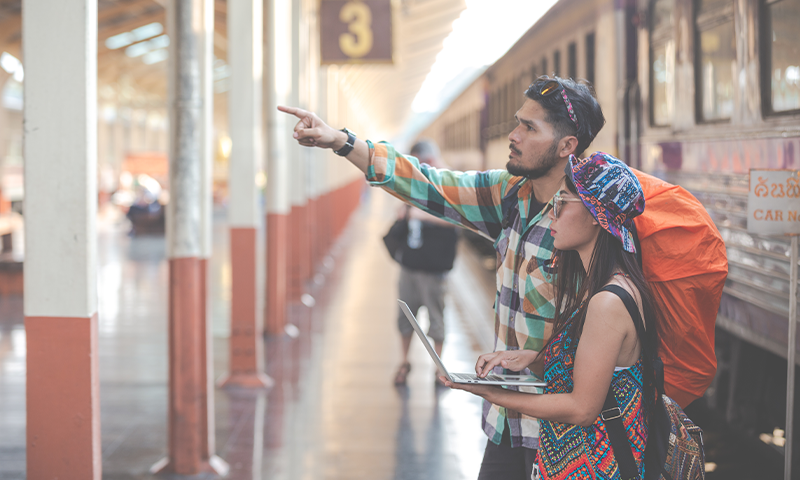
Ask any seasoned traveller how they prefer moving across India, and the answer often surprises first-timers. It is rarely the quickest flight or a chauffeured car. It is the train. Indian Railways carries millions every single day across one of the planet’s densest networks, stitching together deserts, snow lines, backwaters, and metropolises in a way no other mode manages. From a Delhi to Varanasi hop to a multi-week sweep through Rajasthan, Kerala, and the Northeast, rail travel often turns out cheaper, calmer, and far more memorable than the alternatives.
Here are seven grounded reasons the Indian railway network remains the most rewarding way to see the country, along with the practical insights that make the choice work in your favour.
The national rail system operates one of the largest networks in the world, spanning roughly 68,000 route kilometres and connecting more than 7,000 stations, as per data published on the Indian Railways official portal. That reach is the single biggest reason to pick a train over any other mode.
A regional airport may serve one or two cities in a state. A train, by contrast, drops you at hill towns, pilgrimage centres, coastal villages, tiger reserve gateways, and heritage districts that no commercial airline bothers with. Think of Khajuraho, Chittorgarh, Alleppey, Haridwar, Madurai, or Bikaner. Each is best accessed by rail. The network also runs through terrain where road travel is slow or seasonal, including the Konkan coast, the Western Ghats, and parts of the Himalayan foothills, where monsoon landslides and winter closures routinely disrupt highway schedules.
For travellers planning multi-city itineraries, this density turns India into a logical, hop-by-hop journey rather than a series of disconnected flights. A standard Golden Triangle tour between Delhi, Agra, and Jaipur is a classic example. Trains cover the stretch comfortably in under four hours each leg, often faster than the airport-to-airport equivalent once check-in and transfers are factored in.
Few countries offer the pricing range Indian Railways does. A sleeper berth from Delhi to Mumbai, a journey of about 1,400 kilometres, costs a fraction of a one-way flight even in air-conditioned classes. Reserved tiers include Sleeper, Third AC, Second AC, First AC, Executive Chair Car, and the premium Anubhuti coaches on Vande Bharat services.
This tiered pricing lets each traveller match comfort to budget without compromising on reach. A backpacker crossing from Kolkata to Chennai pays very differently from a couple booking a First AC cabin on the same route, yet both share the same tracks, scenery, and arrival window. Senior citizens, differently-abled travellers, and children receive concessional fares across most classes, which is a quiet advantage families often overlook when comparing total trip costs.
Food, bedding, and charging points are included in most reserved classes, with catering handled through pantry cars and authorised vendors. For longer journeys, this all-in-one pricing often works out more economical than driving the same distance with fuel, tolls, and overnight stays factored in. Current ticket pricing and class breakdowns are published on the IRCTC booking portal, which remains the official channel for reservations.
A flight gives you clouds. A road trip gives you a windscreen view and traffic. A train places you inside the landscape.
The Konkan Railway along India’s western coast runs through more than 90 tunnels and over 2,000 bridges, including the famous Panval Nadi viaduct. The route from Mangalore to Mumbai during the monsoon reveals waterfalls, paddy fields, estuaries, and Arabian Sea glimpses in a stretch few other journeys can match.
Up north, the Kalka to Shimla narrow-gauge line, part of the UNESCO-listed Mountain Railways of India, climbs through 102 tunnels and more than 800 bridges to reach the colonial-era hill station. The Jammu to Baramulla line through the Pir Panjal tunnel and across the Chenab bridge, now the world’s highest railway arch, has transformed access to Kashmir Valley. The Dudhsagar waterfall crossing between Goa and Karnataka during monsoon remains one of the most photographed train sightings in the country. These are visuals no plane window can offer.
Trains in India are small moving societies. Within a single compartment, you may share tea with a Tamil businessman, a Gujarati family on pilgrimage, a group of students returning from a trek, and a retired army officer with endless stories. Conversations spill across berths, meals are shared, and travel tips arrive unprompted.
For international visitors in particular, this is often the first unfiltered exposure to Indian life beyond hotel lobbies and curated tours. The food served on Indian trains is also hard to beat for authenticity. Platform vendors sell local specialities that change with every station. Expect kachoris at Jaipur Junction, idli vada at Vijayawada, aloo tikki at Lucknow, and masala chai almost everywhere, served in disposable earthen kulhads on many routes.
A reliable guide on how to travel in India can help first-time visitors navigate station etiquette, berth selection, and reservation categories so the social aspect becomes an opportunity rather than a hurdle.
The spectrum of comfort available on Indian trains is wider than most travellers realise. On one end sits the no-frills unreserved compartment. On the other, the Palace on Wheels, operating since 1982, offers heritage cabins, personal attendants, en-suite bathrooms, two dining cars, and a bar lounge, all moving through Rajasthan on a weekly itinerary.
Between these extremes lie several practical choices. Third AC Economy delivers a reliable overnight berth with linen and curtains at a sensible fare. The Vande Bharat Express, India’s modern semi-high-speed service, offers reclining seats, onboard catering, GPS passenger information, and air-conditioned coaches on key city pairs such as Delhi to Varanasi, Mumbai to Ahmedabad, and Chennai to Bengaluru.
For travellers chasing a once-in-a-lifetime experience, the Palace on Wheels, Maharajas Express, and Golden Chariot remain among the finest curated rail journeys in the world. Each pairs regional sightseeing with onboard dining and cultural experiences that are impossible to replicate on a conventional tour.
Sustainable travel matters more each year, and trains quietly outperform most alternatives. According to figures published by the International Energy Agency, passenger rail emits a fraction of the CO2 per passenger kilometre compared to short-haul aviation and private cars.
The national carrier has moved aggressively on electrification, with nearly the entire broad-gauge network now running on electric traction. The organisation has publicly committed to becoming a net-zero carbon emitter, with large investments in solar power at stations, LED lighting across rolling stock, and renewable procurement across its workshops and depots.
For travellers who care about the footprint of their trip, choosing rail over domestic flights for distances under 1,500 kilometres is one of the simplest shifts to make. A sleeper or AC train from Delhi to Jaipur, Mumbai to Pune, or Bengaluru to Mysuru replaces short-haul aviation without any meaningful loss of time once airport buffers are considered. Travelling slower also encourages a more considered itinerary and reduces the churn that drives most trip regrets.
Few countries can claim four UNESCO World Heritage listings tied directly to their railway system, yet India does. The Darjeeling Himalayan Railway, inscribed in 1999, continues to run its blue steam-era toy train through Batasia Loop and up to Ghum, the highest station in India. The Nilgiri Mountain Railway, added in 2005, climbs through Tamil Nadu’s tea country to Ooty on the only rack railway in the country. Full inscription details are maintained by UNESCO World Heritage Centre.
The Kalka to Shimla line joined the list in 2008 for its remarkable Victorian engineering across the Himalayan foothills. Chhatrapati Shivaji Maharaj Terminus in Mumbai, formerly Victoria Terminus, received its own UNESCO status in 2004 as a stunning example of Victorian Gothic Revival architecture that still functions as one of the busiest stations in India.
Travelling on any of these routes is less a journey and more a working heritage experience, with original rolling stock, period station buildings, and route alignments that have remained largely unchanged for over a century. These are living museums, and the ticket to see them is simply the standard fare. Few heritage sites in India can be experienced this directly, without barriers, queues, or interpretive panels in between.
A few practical pointers worth noting before you book:
For travellers who prefer a fully planned experience, a curated option such as the Luxury Train Tour Packages collection takes care of reservations, transfers, excursions, and dining in a single itinerary.
The train is more than a mode of transport in India. It is a working ecosystem that moves cultures, cuisines, students, pilgrims, and visitors across one of the most diverse geographies on earth. For anyone planning a serious India trip, factoring in at least one or two long rail journeys will add a texture to the holiday that cars and flights simply cannot replicate. Our team has spent over a decade building itineraries that pair comfortable rail segments with handpicked stays and local experiences, so travellers get the best of both the window seat and the destination. Speak to our travel specialists to design an itinerary that makes the most of what Indian Railways has to offer.
Is it safe to travel by Indian trains as a solo traveller?
Yes, travelling by Indian trains is generally safe, particularly in reserved air-conditioned classes. Choose upper or middle berths for overnight journeys, keep valuables locked, and use the IRCTC Rail Madad app to report any concerns. Women-only coaches on suburban networks and ladies’ quotas on long-distance trains add further comfort.
Which is the best train route for first-time visitors to India?
The Delhi to Agra to Jaipur circuit is widely considered the best starter route. The Vande Bharat Express and Gatimaan Express cover these cities comfortably in a few hours, making the Golden Triangle easily navigable by rail.
How far in advance should I book Indian train tickets?
Reserved tickets open 60 days before departure through IRCTC. For popular routes and festive seasons, booking as early as possible is advisable. Tatkal reservations open 24 hours ahead for emergency travel at a higher fare.
Are meals included in Indian train tickets?
On premium services such as Rajdhani, Shatabdi, Duronto, and Vande Bharat, meals are included in the fare. On most other trains, meals can be ordered through the pantry car or pre-booked via IRCTC e-catering partners.
What is the difference between Vande Bharat and Rajdhani Express?
Vande Bharat is a semi-high-speed chair-car service designed for shorter daytime intercity routes. Rajdhani Express is a long-distance overnight train with sleeper berths connecting major cities to New Delhi, with all meals included in the fare.
Which Indian trains are listed as UNESCO World Heritage Sites?
The Mountain Railways of India, which includes the Darjeeling Himalayan Railway, the Nilgiri Mountain Railway, and the Kalka Shimla Railway, are UNESCO World Heritage Sites. The Chhatrapati Shivaji Maharaj Terminus in Mumbai is also listed under the same programme.

7 Reasons Why One Should Travel by Indian Rail
22 Oct 2026
6 Reasons to Visit Chopta Valley in the Himalayas
21 Oct 2026
5-Step Guide to Plan a Jungle Safari Trip to Corbett National Park
20 Oct 2026
6 Popular Short Treks in Sikkim You Must Explore
19 Oct 2026
5 Jeep Safari Routes to a Paradise Called Leh
18 Oct 2026


