 +919871148514
 info@memorableindia.com

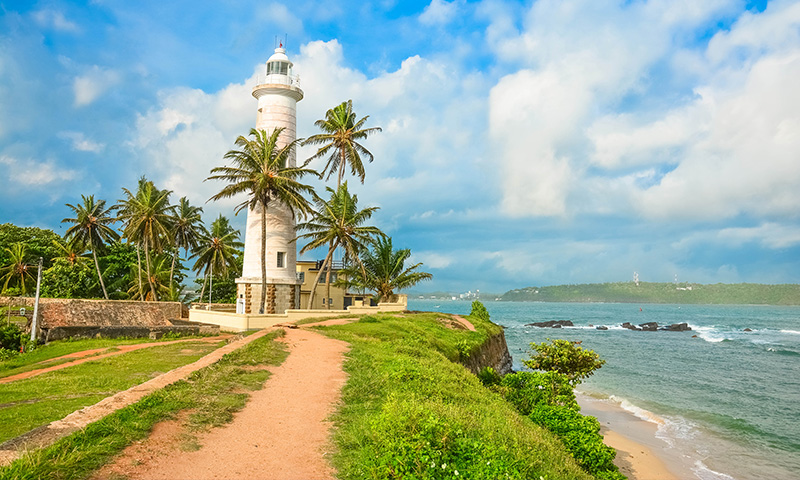
Pondicherry is one of those places that quietly collects stories. Most travellers arrive expecting yellow walls, croissants, and a long stretch of coastline, and leave with far more unusual memories. The Union Territory sits on the Coromandel Coast in South India, officially known as Puducherry since 2006, and it carries layers of history that are easy to miss on a weekend trip.
This short guide pulls back the curtain on five interesting facts about Pondicherry that even seasoned travellers often skip over. Some are quirks of geography. Others are leftovers from three centuries of French rule. One concerns an experimental township that functions on principles most governments would struggle to imagine.
If you are planning a trip, these Puducherry facts will reshape how you walk through the French Quarter and how you read the signs on Rue Dumas. Here is what the guidebooks tend to leave out.
The Union Territory of Puducherry is not a single patch of land. It is four separate enclaves scattered along the southern and eastern coasts of India, and they sit inside three different states.
The main Puducherry district is on the Coromandel Coast, surrounded by Tamil Nadu. Karaikal sits about 150 kilometres south, also on the coast of Tamil Nadu. Mahe is a small coastal pocket on the Arabian Sea in Kerala, roughly 650 kilometres west of Puducherry city. Yanam is tucked into Andhra Pradesh, on the Godavari delta, close to 850 kilometres north of the main district.
This odd geography is a direct inheritance from French colonial rule. France operated a chain of trading posts along the Indian coastline from the seventeenth century, and these four settlements were the ones that remained in French hands until the mid 1950s. When the French ceded control to India in 1954, the territories were kept together as a single administrative unit rather than being merged with the surrounding states. The Treaty of Cession was signed in 1956 and ratified in 1962, officially making Puducherry a Union Territory of India, as recorded by the Government of Puducherry.
The practical result is that Puducherry has one of the most unusual administrative geographies in the country. The legislative assembly meets in Puducherry city, but it makes laws for communities who may speak Tamil, Malayalam, or Telugu as their first language. Mahe residents watch Kerala news. Yanam shops use Telugu signage. Karaikal observes Tamil cultural rhythms. The French legacy quietly ties them together.
For travellers, this means a single Union Territory offers four very different coastal experiences. The main Puducherry district delivers the French colonial atmosphere most people associate with the name. Mahe is quieter, greener, and distinctly Malabari. Karaikal has important Hindu and Islamic pilgrimage sites. Yanam is a small town that still carries faint traces of French signage along its streets. If you want to explore the better-known southern circuit first, our curated South India tour packages cover the mainstream route, with options to extend into the lesser-visited corners.
When the French handed over Puducherry in 1962, the Treaty of Cession included a clause that many travellers find astonishing today. Residents of the four former French settlements were given a choice. They could either accept Indian citizenship or opt to retain French nationality.
Several thousand families chose to remain French citizens. That decision passed down through generations, which means Pondicherry today is home to one of the larger communities of French passport holders in Asia. Estimates from the French Consulate in Puducherry have placed the number at roughly 10,000 people in recent years, though the exact figure fluctuates with births, deaths, and migration.
You can spot the signs if you know where to look. The French Consulate still operates out of a dignified white building near the seafront. A branch of the Alliance Francaise runs active language and cultural programmes. The Lycee Francais de Pondicherry teaches a full French curriculum, and its students sit the French Baccalaureate. The Institut Francais de Pondichery, founded in 1955, runs one of the most respected South Asian research libraries, maintained by the French Ministry of Europe and Foreign Affairs.
French veterans who served in the Indian regiments of the French army are also a visible part of civic life. On 14 July, Bastille Day, you can still see a small parade along Goubert Avenue, with retired soldiers wearing their red kepis and ribbons. Many of these veterans and their descendants retain French social security benefits and vote in French elections from Indian soil.
The cultural results are subtle but real. Boulangeries sell genuine baguettes alongside filter coffee. Traffic police wear kepis. Street signs appear in French and Tamil. Menus at older restaurants carry sections that read like a Paris bistro. The blending is not costume, it is lived heritage. For travellers using our Pondicherry tour packages, a short visit to the Alliance Francaise or a stroll past the Lycee adds a layer of meaning that you cannot get from the cafes alone.
About 12 kilometres north of Puducherry city sits Auroville, one of the most unusual settlements in the world. It was founded in 1968 by Mirra Alfassa, known to her students as The Mother, who was the spiritual collaborator of Sri Aurobindo. Her vision was a township where people of every country could live together in peace, beyond the conventions of nationality, creed, or politics.
The inauguration was attended by representatives of 124 nations and 23 Indian states, each of whom poured a handful of their homeland soil into a marble lotus-shaped urn at the township centre. That urn still sits beside the Matrimandir, the golden globe that functions as the community meditation space, as described on the official Auroville website.
Auroville operates on principles that few other settlements attempt. Residents, who call themselves Aurovilians, do not earn a conventional salary for work done within the township. A central internal account system covers basic needs, and residents contribute time, skills, and services to the collective. There is no formal government in the Western sense. Decision-making is handled through working groups and community meetings. There is no single religion, and spiritual practice is personal.
The township was endorsed by UNESCO in 1966 and again in subsequent resolutions, recognising it as a project of significance for international understanding. Roughly 3,000 residents from about 60 countries now live there, alongside a floating population of volunteers and guests.
Visitors are welcome, though access to the Matrimandir meditation chamber is by prior booking and limited to a few slots each day. The Visitors Centre offers a free introductory film, a gallery, and a cafe. Nearby you will find bakeries, farms, workshops, and small boutiques producing hand-made textiles, incense, and leatherware, all run as Auroville units.
A quick practical note. Auroville is not a theme park. Residents live their daily lives there, and guest behaviour has at times created friction. Dress modestly, keep your voice low near the Matrimandir, and avoid taking photos of residents without permission. For families who want a thoughtful mix of culture and reflection, our India tour packages often include a half-day in Auroville as part of a wider Tamil Nadu itinerary.
Walk along Goubert Avenue at sunrise, look east, and you will see one of the strangest beachfronts in India. There is almost no sand.
The 1.5 kilometre promenade that runs along the seafront is one of Pondicherry iconic images. Joggers, old men on benches, students with earphones, and tea sellers with steel kettles all gather here. But the beach that gave the promenade its name has largely disappeared.
The culprit is a port. In 1989, a new commercial harbour was built just south of the city. The harbour southern breakwater interrupted the natural northward drift of sand along the Coromandel Coast, which means sand that would once have replenished the Pondicherry beachfront now piles up south of the harbour instead. The city beach eroded within a decade, leaving behind a rocky shoreline reinforced with boulders to protect the promenade from the sea.
Several restoration projects have attempted to rebuild the beach. A sand bypass system was installed, and an engineered beach was created just north of the promenade. There is some sand now, and more is slowly returning, though the original stretch of soft sand along Goubert Avenue is still mostly gone. The seafront you walk along today looks very different from the one described in travel accounts from the 1970s.
The promenade remains beautiful. You can still watch fishing catamarans slide in at dawn, salute the statue of Mahatma Gandhi framed by eight granite pillars, and smell the sea air. Just do not expect to find soft sand under your feet.
Walk through central Pondicherry with a map in hand and you will notice something odd. The streets run in two different grid patterns, meeting along a single leafy avenue that once held a canal.
The French planners laid out the city in the eighteenth century using a strict grid system, inspired by Roman military planning. The town was divided into two zones by a central canal, which has since been covered. On the sea side sat Ville Blanche, the White Town, where the French colonists lived. On the landward side sat Ville Noire, the Black Town, where Tamil residents lived and traded.
The two zones still look and feel distinct. The White Town, around Rue Romain Rolland, Rue Dumas, and Rue Suffren, carries mustard-coloured walls, bougainvillea, grand arched doorways, and small French bakeries. The Tamil Quarter, around MG Road and Mission Street, has temple gopurams, textile shops, flower markets, and the chatter of local commerce.
The canal itself was more than symbolic. It carried storm water, served as a commercial boundary, and reinforced colonial segregation during French rule. After independence, the canal was eventually covered, and the central reservation is now a landscaped avenue. A heritage walk along both sides of the former canal gives you a quick lesson in how colonial cities were planned. The INTACH Pondicherry chapter runs guided walks that explain the architectural details.
Knowing the history of a place changes the way you walk through it. The yellow walls become a record of trade. The Tamil mantra drifting from a doorway sits comfortably beside a French accent at the next cafe. The rocky seafront reads as a story of engineering, not disappointment. Auroville stops looking like a commune and starts looking like a serious experiment in human cooperation. If you are planning a trip to the French Riviera of the East, we build itineraries around these layers. Our Tamil Nadu tour packages weave Pondicherry into wider cultural circuits covering Mahabalipuram, Thanjavur, and Chettinad.
Pondicherry rewards travellers who look past the obvious. If you want a trip that includes these stories, heritage walks, and the lesser-known corners of the Union Territory, our travel desk can help you build an itinerary that fits your pace, budget, and interests. Call or write to the Memorable India team to start planning a Pondicherry trip you will actually remember.
The ideal months are October to March, when daytime temperatures hover between 20 and 30 degrees Celsius and humidity is manageable. April and May are hot, and the northeast monsoon brings heavy rain in October and November, so plan around short, sharp showers if you travel during those months.
The nickname comes from the French Quarter colonial architecture, the seafront promenade, and the surviving cultural traces of nearly 300 years of French presence. Mustard walls, French street names, boulangeries selling pain au chocolat, and the Bastille Day parade all contribute to the comparison.
Entry to the Visitors Centre is free, including the introductory film and gallery. Visiting the Matrimandir viewpoint requires a free pass, and entering the inner meditation chamber needs a booking made at least a day in advance. Slots are limited and often fill up during holiday weekends and school breaks.
Foreign nationals cannot buy immovable property in India without approval from the Reserve Bank of India, and Puducherry follows the same rule. French citizens of Pondicherry origin have specific rights related to inherited property, but general purchase by foreigners is restricted.
A relaxed first visit needs three to four days. One day for the French Quarter and promenade, one for Auroville and the Matrimandir, one for the Sri Aurobindo Ashram, Paradise Beach, and local food, and a spare day for day trips to Mahabalipuram or Chidambaram.

19 Incredible Places for Wildlife Jungle Safari Holidays in Rajasthan
20 Nov 2026
7 Must-Experience Things in Assam in January: A Practical Winter Guide
20 Nov 2026
7 More Sites Added to the World Heritage List by UNESCO: What Travellers Should Know in 2026
19 Nov 2026
7 Best Places to Visit Near Bandipur National Park: Distances, Routes and Planning Tips
19 Nov 2026
5 Lesser-Known Destinations of Incredible India Worth Your Next Trip
18 Nov 2026


