 +919871148514
 info@memorableindia.com

India’s tourist map has a shape most travellers already know: Taj Mahal in the north, backwaters in the south, forts in Rajasthan, and houseboats in Kashmir. Those places earn their reputation. But a return trip, a thoughtful first trip, or a slower itinerary deserves something quieter. The country has a long inventory of towns, valleys, and islands where the pace is set by farmers, weavers, monks, and river ferries rather than tour buses.
This guide covers five lesser-known destinations of Incredible India that reward travellers who prefer context over crowds. Each entry includes what the place actually offers, when to visit, how to reach it, and which Memorable India itineraries can fold it in. The focus is practical. The locations sit across four very different regions, so you can pick one for a weekend extension or stitch two together for a longer cultural trip.
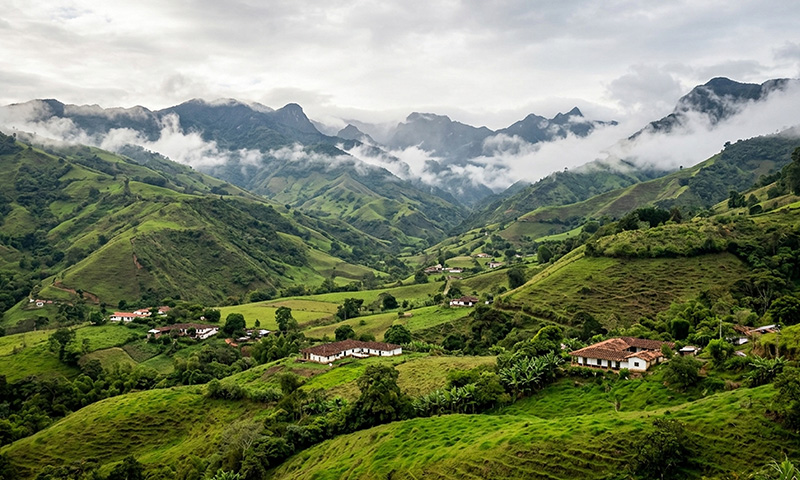
Ziro Valley sits in the Lower Subansiri district of Arunachal Pradesh, at an altitude of about 1,500 metres. It is home to the Apatani tribe, whose traditional villages and integrated rice-fish cultivation system have kept the valley on the UNESCO tentative list of World Heritage Sites for years. The valley is one of the most underrated travel destinations in India for travellers interested in living culture.
The Apatani villages of Hong, Hija, and Hari are organised around bamboo-and-wood houses, millet granaries, and sacred groves. Older Apatani women wear facial tattoos and nose plugs, a custom that is fading but still visible. The rice paddies double as fish farms, which is a lesson in how smallholder agriculture can be both productive and ecologically balanced. September brings the Ziro Festival of Music, an independent-music gathering that draws a loyal crowd each year.
The valley itself is a shallow bowl framed by pine-forested hills, with the Kele river threading through it. Mornings begin with mist over the paddy fields, and evenings slow down over bamboo mugs of apong, the local rice beer. Travellers who make the drive from Itanagar usually describe Ziro as the moment their trip stopped feeling like a tour and started feeling like a visit. Homestays run by Apatani families are the best way to stay, and most hosts are happy to walk you through the farming calendar, the clan structure, and the seasonal festivals that still anchor village life.
A northeast circuit that includes Ziro alongside Tawang and Bomdila is one of our most requested offbeat options. See the Arunachal Tribal Tour Package for a typical structure and customisation options.
Majuli is the world’s largest river island, sitting midstream in the Brahmaputra. It covers around 350 square kilometres today, down from nearly double that a century ago, thanks to steady erosion. The island is reached by a short ferry from Nimati Ghat near Jorhat. For many travellers it becomes the surprise highlight of an Assam itinerary.
Majuli is the spiritual centre of Assamese neo-Vaishnavism, the devotional movement founded by Srimanta Sankardeva in the 15th century. The island still houses active satras, which are monastic institutions combining prayer, dance, mask-making, and manuscript writing. Visitors can watch rehearsals of Sattriya dance, one of India’s eight classical dance forms, or buy traditional bhaona masks from the artisans at Samaguri Satra. The pace is slow, the roads quiet, and the sunsets over the Brahmaputra are the kind that pull travellers back a second time.
The island has a very different texture from the Assam mainland. Roads are narrow, villages are strung along raised earthen paths, and migratory birds crowd the wetlands in winter. Mishing tribal families farm along the river banks and welcome visitors into their stilt houses for simple meals of rice, fish, and bamboo shoot curry. Majuli is also environmentally fragile, with the Brahmaputra steadily eroding its edges. Visiting responsibly means choosing locally run guesthouses, paying for guided village walks, and buying directly from mask-makers and weavers who are preserving skills that have thinned out elsewhere in India.
For historical context on Majuli’s cultural landscape, the Government of India’s Incredible India listing for Majuli is a useful reference before you travel.
Gandikota is often called the Grand Canyon of India, which oversells it slightly, but the setting is genuinely striking. The Pennar river has cut a deep gorge through red granite cliffs, and the 13th-century Gandikota Fort perches on the edge. The village sits in the Kadapa district of Andhra Pradesh, a short drive from Bangalore or Hyderabad if you want a weekend break off the main circuits.
The fort complex includes the Madhavaraya temple with its carved pillars, the Jamia Masjid, a stepped tank called Rayalacheruvu, and granaries that once stored provisions for the garrison. The real draw is the gorge itself, best viewed at sunset when the cliffs turn orange and the river bends around them. The Andhra Pradesh Tourism Development Corporation runs a basic haritha resort inside the old fort wall, which is the only serviceable place to stay nearby. Kayaking on the Pennar reservoir, accessed from the Mylavaram dam, adds a half-day activity for travellers who want something active.
Gandikota makes most sense as part of a Rayalaseema loop rather than a standalone destination. The surrounding region of Andhra Pradesh holds the ruins of Vijayanagara outposts, the pilgrimage circuits of Yaganti and Mahanandi, and the striking Belum underground caves. For travellers who have already seen Hampi and want to understand how the same medieval empire fortified its southern flank, Gandikota fits a very specific gap. It is quiet, open to the sky, and refreshingly free of ticket queues even in peak season.
Chettinad is a cluster of about 75 villages in the Sivaganga and Pudukkottai districts of Tamil Nadu. It was the heartland of the Nagarathar Chettiars, a merchant community whose 19th and early 20th-century trade with Burma, Ceylon, and Southeast Asia produced some of the most remarkable private mansions in India. Karaikudi is the most convenient base. For culture-led travellers, Chettinad is one of the most rewarding offbeat places in India.
The Chettinad mansions use Burma teak, Italian marble, Belgian mirrors, English tiles, and local Athangudi floor tiles, all arranged around open courtyards built for both climate and family ritual. The BBC has reported that the region holds around 10,000 of these houses, many now unoccupied as families moved to Chennai and Bangalore. A handful have been restored as heritage hotels, including The Bangala and Chidambara Vilas, which also serve the region’s famously spiced cuisine. Chettinad food leans on freshly roasted whole spices, black stone pepper, star anise, and dried seafood, producing dishes that are richer and sharper than standard South Indian fare.
Breakfast in Chettinad means paal paniyaram or kuzhi paniyaram with coconut chutney. Lunches are long, served on banana leaves, and typically include kavuni arisi, a black heirloom rice brought back from Burma by Chettiar traders a century ago. Several heritage homes now run cooking classes, where you can learn how the spice blends are built up layer by layer. Travellers who care about food, textiles, or architectural history consistently rate Chettinad among the best offbeat destinations to visit in India.
Chettinad pairs well with the standard Madurai and Thanjavur circuit on our India tour packages for South India, where a two-night Chettinad extension replaces the usual rushed day stop.
Mawlynnong is a Khasi village in the East Khasi Hills district of Meghalaya, about 90 kilometres from Shillong. An Indian travel magazine named it the cleanest village in Asia back in 2003, and the villagers have kept that distinction seriously ever since. Bamboo dustbins line the lanes, plastic is discouraged, and literacy is close to 100 per cent. The village is one of the most peaceful hidden gems of India for anyone who wants nature, community, and a slower pulse.
The village itself is a short walking tour of flower-lined paths, a small viewing platform called Sky View made of bamboo, and the Church of the Epiphany from 1902. The real reason to make the drive is the living root bridges in the surrounding Khasi hills, grown over decades from the aerial roots of Ficus elastica trees. The single-decker bridge at Riwai, close to Mawlynnong, is accessible on a short walk. The famous double-decker at Nongriat requires a longer trek from Tyrna, which is worth building into a two-day plan.
If a Meghalaya extension is new to you, our introductory piece Meghalaya: Above the Clouds covers the broader state in brief before you commit to an itinerary.
The five destinations above are spread across four regions, so a single trip will rarely cover more than two. Two practical groupings work well. A northeast circuit of Ziro Valley, Majuli, and Mawlynnong gives you three to four weeks of culture, river geography, and tribal life, with Guwahati as the hub. A south and central combination of Gandikota and Chettinad works as a two-week loop from Bangalore or Chennai, with Hampi and Madurai as anchoring classical destinations.
Build in rest days. These are not towns with five-star hotels on every corner, and the pleasure of lesser-known destinations is in slow mornings, not stacked sightseeing. Local permits, ferry schedules, and homestay availability change season by season, so plan three to six months ahead for the peak October-to-March window. Travellers who prefer tried-and-tested routes before going fully offbeat can look at our broader portfolio of unexplored destinations in India for context.
Pack light but pack smart. A good pair of walking shoes, modest clothing for village visits and temple complexes, basic medicines, cash for rural stretches, and a small gift for homestay hosts go further than any guidebook. Hire a local guide wherever one is available. The context they add on tribal customs, temple symbolism, mansion architecture, and ferry culture is the actual reason these places matter, and their fees also keep tourism money inside the community rather than leaking out to distant operators. That single choice often changes an itinerary from a checklist into a trip travellers remember for years.
Memorable India has been building custom India itineraries since 2005, and our team handles the permits, ferry bookings, homestay choices, and guides that make an offbeat trip work rather than fall apart on day three. If you want a route that includes one or more of these destinations, contact our travel team with your dates, travel style, and group size, and we will come back with a draft itinerary within a working day.
Q1. Which are the best lesser-known destinations to visit in India for first-time cultural travellers?
Majuli in Assam and Chettinad in Tamil Nadu are the most approachable cultural options. Both have active traditions, decent heritage stays, and solid road and air connectivity to major cities, so you do not need extensive prior India experience to enjoy them.
Q2. When is the best time to visit offbeat places in India?
October to March works for most of the country. The northeast opens up fully in late September once the monsoon eases. Deccan destinations like Gandikota are best between November and February to avoid heat. Mawlynnong and the rest of Meghalaya are still beautiful during the monsoon if you can handle wet weather, because the waterfalls run at full strength.
Q3. Are permits needed for lesser-known destinations in India?
Yes, for Arunachal Pradesh, including Ziro Valley. Indian nationals require an Inner Line Permit and foreign nationals a Protected Area Permit. Majuli, Chettinad, Gandikota, and Mawlynnong do not need special permits for Indian or foreign tourists.
Q4. How many days should I plan for these offbeat places in India?
Allow three nights for Ziro, two nights for Majuli, two nights for Mawlynnong with the root bridges, two nights for Chettinad to see the mansions and cuisine properly, and one night for Gandikota. Add buffer days for road travel in the northeast, where distances are short but drives are slow.
Q5. Can I combine these hidden gems of India with popular tourist circuits?
Yes. Majuli slots into any Assam or Kaziranga itinerary. Chettinad fits easily on a classic Madurai, Thanjavur, and Pondicherry loop. Gandikota works as a weekend extension from Bangalore or Hyderabad. Ziro and Mawlynnong sit inside dedicated northeast trips rather than as quick extensions.
Q6. Are these underrated travel destinations in India safe for solo or female travellers?
All five are generally safe, with low crime and small, close-knit local communities. The main considerations are road safety on hill routes, staying with reputable homestays booked in advance, and carrying cash since digital payments are patchy in rural Arunachal and Meghalaya. Travelling through a vetted operator removes most of the usual friction.

19 Incredible Places for Wildlife Jungle Safari Holidays in Rajasthan
20 Nov 2026
7 Must-Experience Things in Assam in January: A Practical Winter Guide
20 Nov 2026
7 More Sites Added to the World Heritage List by UNESCO: What Travellers Should Know in 2026
19 Nov 2026
7 Best Places to Visit Near Bandipur National Park: Distances, Routes and Planning Tips
19 Nov 2026
5 Lesser-Known Destinations of Incredible India Worth Your Next Trip
18 Nov 2026


