 +919871148514
 info@memorableindia.com

Most travellers reach Bandipur for one reason: a jeep safari and the hope of a tiger crossing the track. Then the safari ends by mid-morning, the afternoon stretches ahead, and an obvious question comes up. What else is around here?
Quite a lot, as it turns out. Bandipur sits in Karnataka’s Chamarajanagar district, close to where Karnataka, Tamil Nadu and Kerala meet. Within two or three hours you can reach a misty hilltop temple, Asia’s oldest elephant camp, Stone Age rock carvings and a royal city. This guide covers the seven places to visit near Bandipur National Park that genuinely reward the drive, with approximate distances, route advice and the local rules that catch first-time visitors off guard.
Here are the best tourist places near Bandipur, ordered roughly by distance from the park reception on the Mysuru to Ooty road. Distances are approximate, and travel times depend on traffic and road conditions.
Bandipur is not an isolated patch of forest. It is part of the Nilgiri Biosphere Reserve and shares continuous boundaries with Mudumalai in Tamil Nadu, Wayanad in Kerala and Nagarhole to the northwest, according to the Key Biodiversity Areas factsheet for Bandipur. In practical terms, a short drive in almost any direction puts you in a different landscape, state and food culture. Karnataka Tourism also rates it among the better-managed national parks in India, which shows in how well its safaris run.
There is one rule every visitor must plan around. The two highways crossing the Bandipur Tiger Reserve, the road to Ooty and NH 766 towards Wayanad, are closed to regular traffic between 9 pm and 6 am to reduce wildlife deaths on the road. Mongabay India’s explainer on the night traffic ban covers the background. Plan every day trip so you are back through the forest stretch well before 9 pm, or stay overnight on the far side.
About 20 km from the park reception via Hangala village, Himavad Gopalaswamy Betta rises to roughly 1,450 metres and is the highest point within the park. The Venugopalaswamy temple, dedicated to Lord Krishna, stands at the summit. The word “Himavad” refers to the mist that covers the hill for much of the year, so mornings often arrive with clouds drifting past the temple walls.
Why go: The views stretch across the forest canopy towards the Nilgiris, and elephants are often seen grazing on the lower slopes. It is quiet and cool, a welcome contrast to the heat of the plains. Most travellers can visit Gopalaswamy Betta from Bandipur comfortably in a half day.
What to know before you go:
Cross the state border on the Ooty road and the forest simply continues as Mudumalai Tiger Reserve in Tamil Nadu. The best-known stop here is the Theppakadu Elephant Camp on the banks of the Moyar river. It is widely described as the oldest elephant camp in Asia, and it drew global attention when the Oscar-winning documentary The Elephant Whisperers was filmed there, as reported by The News Minute.
Why go: Watching mahouts bathe and feed the camp elephants is calm, educational and especially good for children. It also shows the human side of conservation, since the camp trains elephants that help manage conflict near villages. Seeing Mudumalai and Bandipur on the same trip also helps you understand how one forest stretches across state lines.
How to plan it:
A short detour from Theppakadu leads to Masinagudi, a small town on the Mudumalai side that has become a popular stopover for travellers heading towards Ooty. The scrub forest here feels more open than Bandipur, and the nearby Moyar Gorge, where the river cuts a deep channel through rock, is one of the most striking landscapes in the region.
Why go: The gorge and the grasslands around Masinagudi are rewarding for birdwatching. The cliffs of the Moyar valley are also known as nesting ground for vultures, a group of birds that has declined sharply across India, so a sighting here is meaningful.
Practical tips:
Climb out of the Mudumalai forest and you reach Ooty, the main town of the Nilgiris. The contrast is the appeal. Within a couple of hours you move from dry deciduous forest to tea estates, eucalyptus slopes and cool air.
Why go: Ooty suits families and senior travellers who prefer gentle sightseeing. The Government Botanical Garden, Doddabetta Peak and Ooty Lake are easy picks, and a ride on the Nilgiri Mountain Railway is worth planning a morning around. The line is part of the Mountain Railways of India UNESCO World Heritage Site.
Choosing your route:
Head west on NH 766 and Bandipur gives way to the Muthanga range of the Wayanad Wildlife Sanctuary in Kerala. Beyond the forest, Wayanad opens into coffee and pepper plantations, paddy fields and small towns such as Sulthan Bathery.
Why go: The standout is the Edakkal Caves on Ambukuthi Hill, around 12 km from Sulthan Bathery. According to Kerala Tourism, the carvings of human and animal figures inside date back to the Neolithic period, offering a rare window into prehistoric life in this region. Wayanad also falls within the Nilgiri Biosphere Reserve, as the Incredible India portal for Wayanad notes, so the wildlife link with Bandipur runs both ways.
Plan it right:
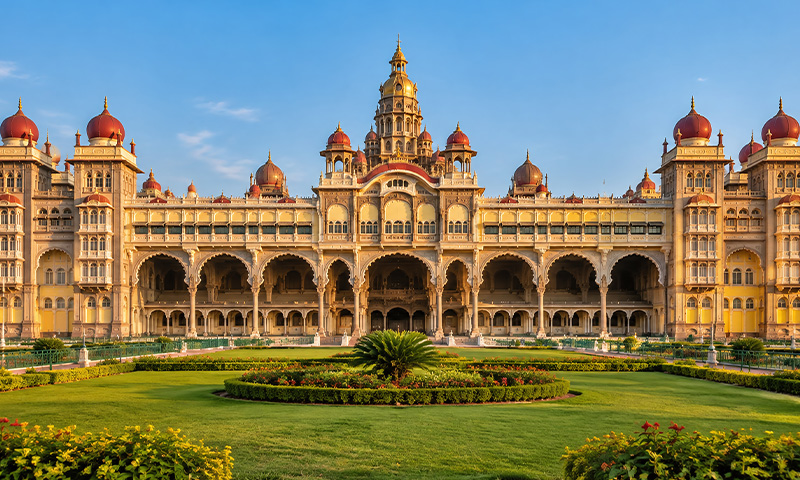
Mysuru is about 80 km from Bandipur and is the city most visitors pass through on the way in. It deserves more than a lunch stop. The Bandipur forests were once the private hunting reserve of the Mysore Maharajas, so time in the city adds real historical context to your safari.
Why go: Mysore Palace is the clear highlight, especially when it is lit up on select evenings. Add Chamundi Hills for city views and Devaraja Market for flowers, spices and sandalwood products. The Srikanteshwara Temple at Nanjangud sits on the same highway and makes an easy stop.
Tips:
Kabini lies on the southern edge of Nagarhole National Park, separated from Bandipur by the Kabini reservoir. It is roughly a two-hour drive via HD Kote. Wildlife moves between the two parks, which is why many travellers treat Bandipur and Kabini as one extended safari trip.
Why go: Kabini is known for large elephant gatherings along the reservoir shore in the dry months, and boat safaris on the backwaters offer a different angle from a jeep. The area has also produced well-documented sightings of a melanistic, or black, leopard, though no sighting is ever guaranteed.
Plan it right:
Not every stop works for every group. Use this quick match to shortlist before you plan the route:
Mixed groups can combine one quiet stop with one lively one each day, so nobody spends the whole trip waiting in the car.
Most travellers on a Bandipur weekend trip from Bangalore have two or three days. This simple structure keeps driving time sensible:
With a fourth day, add a night at Kabini. The logic is straightforward: group places by direction so you never cross the forest twice in one day.
October to March is the most comfortable window, with pleasant weather for both safaris and hill drives. For wildlife, the best time to visit Bandipur is often the drier stretch from March to May, when animals gather near waterholes, though afternoons get hot. The monsoon, from June to September, turns the forest green and the ghat roads slippery, so allow extra travel time if you go then.
Bandipur rewards travellers who look beyond the safari gate. A temple in the clouds, a working elephant camp, prehistoric carvings and a palace city all sit within a few hours, and each adds a different layer to the same journey. The secret is sequencing: group nearby places, respect the night closure and leave room for slow mornings.
If you would like help matching these stops to your dates, pace and budget, talk to our travel experts for a custom itinerary built around Bandipur and the Nilgiris.
Himavad Gopalaswamy Betta, about 20 km away, and the Theppakadu Elephant Camp in Mudumalai, about 15 to 20 km away, are the closest. Masinagudi and the Moyar Gorge are around 30 km away. All three fit easily into a single day.
Ooty is about 80 km from Bandipur. The drive takes around two to three hours depending on the route. The Kalhatti ghat via Masinagudi is shorter but steep, while the Gudalur route is longer and gentler.
No. Private vehicles must be parked at the forest check post at the foot of the hill. Visitors continue to the temple on authorised buses, and visits are allowed only during daytime hours.
Regular traffic is not allowed on the highways through the reserve, towards Ooty and towards Wayanad, between 9 pm and 6 am. The rule protects wildlife from road accidents, so plan to cross the forest stretch well before 9 pm.
Two to three days cover Bandipur, Gopalaswamy Betta, Mudumalai and either Ooty or Wayanad. Add a fourth day if you want a night at Kabini for a second safari experience.
Both are excellent and share the same wildlife corridor. Bandipur is easier to reach by road and has drier, more open forest. Kabini adds boat safaris and large elephant gatherings in the dry season. Many travellers do both on one trip.
19 Incredible Places for Wildlife Jungle Safari Holidays in Rajasthan
20 Nov 2026
7 Must-Experience Things in Assam in January: A Practical Winter Guide
20 Nov 2026
7 More Sites Added to the World Heritage List by UNESCO: What Travellers Should Know in 2026
19 Nov 2026
7 Best Places to Visit Near Bandipur National Park: Distances, Routes and Planning Tips
19 Nov 2026
5 Lesser-Known Destinations of Incredible India Worth Your Next Trip
18 Nov 2026


