 +919871148514
 info@memorableindia.com
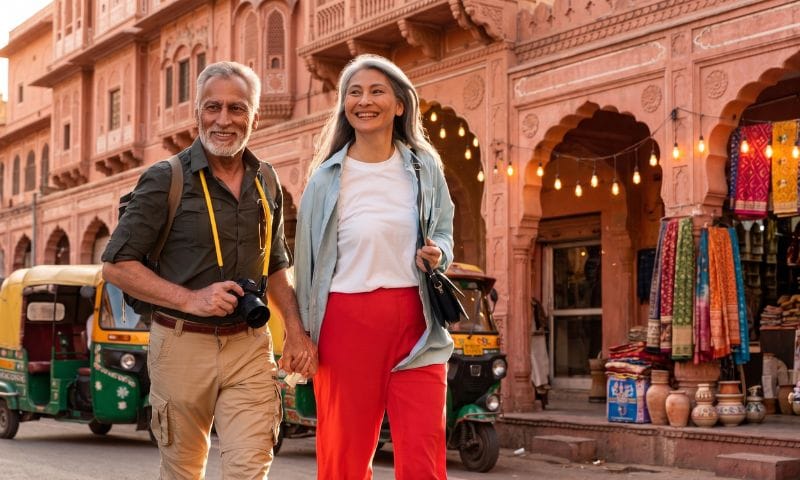
Retirement unlocks the one luxury that working life rarely offers: time. And for couples who have spent decades juggling careers, children, and responsibilities, a long, unhurried trip across India often sits right at the top of the bucket list. Not a rushed weekend getaway or a templated group bus tour, but a proper 30-day pan-India journey that moves at a pace comfortable enough for two people who have earned the right to slow down.
Planning a month-long trip across a country as vast and varied as India, however, is not a casual weekend project. It demands thought around health, comfort, regional weather patterns, realistic distances, and a willingness to leave room for spontaneity. This blog walks through the exact planning framework a retired couple can follow to design a 30-day pan-India journey that balances heritage, nature, spirituality, and relaxation without stretching physical limits.
Every recommendation here is rooted in practical realities, not postcard fantasies. If you are a retired couple thinking about this kind of trip, or the adult children planning it for your parents, this guide is your starting point.
A week in India barely scratches the surface. Two weeks feel productive but incomplete. Thirty days, on the other hand, give retired travellers enough breathing room to cover four to five distinct regions without feeling like they are racing from one airport to the next.
The logic is simple. India’s geography stretches from the Himalayan foothills in the north to the tropical backwaters in the south, from the Thar Desert in the west to the tea gardens in the east. Cramming this diversity into a short window forces early morning departures, late-night check-ins, and a kind of pace that leaves you more exhausted than when you started.
A pan-India tour itinerary spread over 30 days allows for two to three nights at each destination. That means no 4 a.m. alarms, time for a second cup of chai on the hotel terrace, and the freedom to skip a monument if the body says rest. For senior travellers, this pacing is not a luxury. It is a necessity.
Timing determines comfort, and comfort determines enjoyment. For a 30-day pan-India journey, the October to March window is the most favourable one. North India enjoys cool, pleasant weather during these months, Rajasthan is at its best, and South India remains warm but not oppressive.
Retired couples planning a long India trip should ideally start in late October or November. This avoids the tail end of the monsoon in Kerala and the Northeast, while catching Rajasthan and the Golden Triangle at their most comfortable. February and March work well too, though temperatures in central and western India begin to climb by mid-March.
Avoid the April to June window entirely for a month-long trip. The heat across most of India during this period makes extended travel physically challenging, especially for those managing blood pressure, joint conditions, or general fatigue.
A common mistake is trying to cover every famous city in one single trip. India has too many destinations for that, and the attempt usually results in exhaustion rather than enrichment. A smarter approach is to select four or five regional clusters and connect them with comfortable transit.
Here is a sample framework that retired couples can adapt based on personal interests:
Begin in Delhi with two nights to settle in, and then explore at a relaxed pace. From Delhi, move to Agra for the Taj Mahal and Agra Fort, spending one comfortable night. Then head to Jaipur for two nights, visiting Amber Fort, City Palace, and the local bazaars. Extend into Udaipur for two nights to enjoy the lake city’s calm and regal atmosphere. Udaipur, with its gentle topography and serene lakes, is particularly well-suited for senior travellers who prefer beauty without physical strain.
Fly from Udaipur to Varanasi for two nights. The Ganga Aarti at Dashashwamedh Ghat is a deeply moving experience, and the city’s spiritual energy offers something no other Indian city can replicate. From Varanasi, consider a short flight to Khajuraho to witness its UNESCO-listed temple complexes, followed by a visit to Orchha, a quiet heritage town with far fewer crowds than mainstream tourist spots.
Fly to Kochi and spend a night exploring Fort Kochi and colonial lanes, with Chinese fishing nets, and spice markets. Move to Munnar for two nights among tea plantations and cool hill air. Then head to Alleppey for a houseboat cruise through Kerala’s famous backwaters. This leg of the trip is ideal for rest and recovery after the busier North India segment. End this week in Mysore, known for its clean streets, the grand Mysore Palace, and Chamundi Hills.
For couples drawn to culture and history, Kolkata offers the Victoria Memorial, Howrah Bridge, and some of the finest Bengali cuisines in the country. Alternatively, couples who prefer to wind down can book a wellness or Ayurveda retreat in Kerala or Rishikesh for the final stretch. This decision often depends on energy levels by week four, and a good travel planner will keep both options open.
This framework is a starting point. The best pan-India tour itineraries are customised based on each couple’s interests, mobility, and appetite for exploration.
The single most important planning principle for an India tour for senior travellers is pacing. Every three to four days of active sightseeing should be followed by a lighter day. That might mean a morning at the hotel pool, a leisurely lunch at a local restaurant, or simply a day without a fixed itinerary.
Build at least four to five rest days into a 30-day trip. These are not wasted days. They are the reason the trip stays enjoyable rather than becoming a chore. Fatigue accumulates silently, and by the third week, even the most enthusiastic travellers need downtime.
Another practical tip: Avoid back-to-back road journeys exceeding four hours. India’s highways have improved significantly, but long drives still take a toll on the lower back, knees, and overall comfort. Break longer routes with a lunch stop or an overnight halt at a smaller town along the way.
A 30-day pan-India journey does not have to be extravagant to be comfortable. The beauty of India travel is the range of options available at every price point.
For retired couples, budget allocation typically falls into a few key buckets:
The key is to spend where it matters (comfortable beds, reliable transport, good food) and save where it does not (skip overpriced souvenir shops and unnecessary add-ons).
Long-duration travel demands a bit of health-related preparation. Retired couples should carry an adequate supply of regular medications, along with a basic first-aid kit that includes antacids, rehydration salts, and any prescribed supplements.
Travel insurance is non-negotiable for a month-long trip. Choose a policy that covers medical emergencies, trip interruptions, and evacuation if needed. Most reputable insurers offer senior-specific plans with reasonable premiums.
A few region-specific precautions to keep in mind:
Planning a 30-day trip independently is possible, but it demands significant effort in coordinating flights, hotels, ground transport, guides, and contingency options across multiple states. For retired travellers, the stress of logistics can undermine the very relaxation the trip is meant to provide.
A well-structured India tour package handled by a trusted operator simplifies the entire process. Everything from airport transfers and hotel bookings to guided sightseeing and emergency support is taken care of, leaving the couple free to focus entirely on enjoying the journey.
Operators like Memorable India, with over a decade of experience in crafting personalised itineraries, offer the kind of regional expertise and on-ground support that DIY planning cannot match. Their luxury India tour packages and heritage-focused itineraries are specifically designed for travellers who value comfort, depth, and seamless execution.
For couples interested in blending history with spirituality, the Golden Triangle Tour with Varanasi is a strong starting module that can be extended into a longer pan-India itinerary.
Those looking to add a wellness dimension to their retirement travel in India plans can explore the Yoga and Ayurveda Tour in Kerala, a seven-day programme that pairs beautifully with the South India leg of a 30-day trip.
And for couples who want to spend an extended period in the south, Memorable India’s Kerala Tour Packages cover everything from backwaters and tea plantations to temple circuits and beach retreats.
Packing for a month-long trip across multiple climatic zones requires a bit of strategy. The goal is to pack light but smart.
Avoid overpacking. Indian cities have pharmacies, laundry services, and markets where forgotten essentials can be picked up easily.
A 30-day journey is long enough to move beyond the checklist mentality. The most fulfilling retirement travel India experiences often come from unplanned moments: a conversation with a local artisan in Jaipur, an unplanned cooking session at a homestay in Kerala, or watching the sunrise over the Ganges without a camera in hand.
Encourage each other to try at least one thing outside the comfort zone. A short boat ride in Alleppey, an evening walk through a heritage village near Orchha, or a morning yoga session in Rishikesh can turn a good trip into an unforgettable one.
Travel, especially in retirement, is less about the number of places visited and more about the depth of each experience. Permit yourselves to linger.
A 30-day pan-India journey for retired couples is one of the most rewarding ways to experience this country. It offers the rare combination of time, freedom, and the maturity to appreciate what you are seeing. But the quality of the experience depends almost entirely on the quality of the planning.
Prioritise comfort over coverage. Choose a trusted travel partner who understands the needs of senior travellers. Build rest days into the itinerary. And above all, remember that this trip is not a race. It is a celebration of a life well-lived and the adventures still ahead.
If you are ready to start planning, reach out to Memorable India for a personalised consultation. Their team specialises in crafting long-duration India tours that balance exploration with ease, and they will work with you to build an itinerary that fits your pace, your interests, and your budget.
A 30-day pan-India journey is considered ideal because it allows retired couples to cover four to five distinct regions at a relaxed pace, with built-in rest days. Shorter trips of two weeks work for single-region exploration, but a month gives enough time to experience North, South, and Central India without rushing.
October to March is the most comfortable window for a long India trip. North India and Rajasthan enjoy cool weather, Kerala remains pleasant, and most heritage sites are accessible without the discomfort of extreme heat or monsoon rains.
Costs vary based on accommodation preferences, transport choices, and the regions covered. A comfortable mid-range trip with heritage hotels, private cars, and domestic flights can be planned at a reasonable budget. Customised India tour packages from experienced operators offer the best value because they bundle accommodation, transport, guides, and support into a single, transparent cost.
Yes, with proper planning. Choosing a reliable tour operator, carrying adequate medication, having travel insurance, and maintaining a relaxed itinerary with rest days make extended India travel safe and enjoyable for seniors. Operators like Memorable India provide 24/7 on-ground support and senior-friendly itinerary design.
Absolutely. The best long-duration India tours are built around the couple’s specific interests. A heritage-focused itinerary might emphasise Rajasthan and Varanasi, while a wellness-oriented plan could include Ayurveda retreats in Kerala and yoga sessions in Rishikesh. Customised India tour packages allow complete flexibility in destination selection, pacing, and activity preferences.
15 Amazing Temple Fairs in India: A Traveller’s Guide to Faith, Colour and Living Tradition
30 Sep 2026
13 Best Places to Explore in the Youngest State of Telangana
29 Sep 2026
12 Less Explored Destinations in Maharashtra Worth Adding to Your Travel List
28 Sep 2026
11 Must-Visit Museums in India for Wildlife Lovers
27 Sep 2026
11 Best Places in India to Celebrate Christmas
26 Sep 2026


