 +919871148514
 info@memorableindia.com
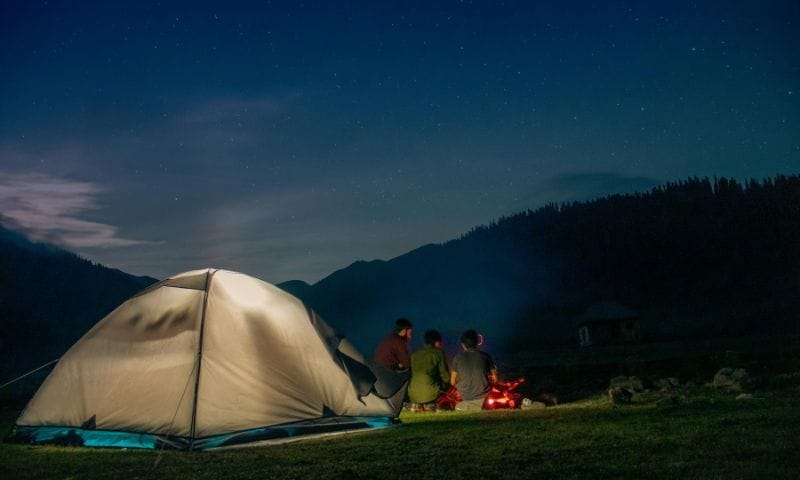
India’s geography holds a camping site for practically every visual preference: Himalayan meadows where the grass is ankle-deep and the snow line starts above your tent, desert dunes where the Milky Way stretches from horizon to horizon, river bends where you fall asleep to the sound of rapids, and coffee-plantation forests where the mist burns off by mid-morning. The common thread is that each of these settings looks better from inside a tent than from behind a hotel window.
Summer, specifically March to June, is the primary camping window for most of India. The Himalayan belt opens up as snow recedes from the passes, desert nights cool down enough for comfortable sleep, and the Western Ghats stay green before the monsoon arrives. This guide covers nine of the most visually striking summer camping destinations in India, each chosen for its landscape quality, campsite infrastructure, and the kind of morning view that makes the early alarm worthwhile. For a deeper look at Himalayan options specifically, our blog on summer campsites in the Himalayas covers ten high-altitude locations in detail.
Rishikesh is the most accessible camping destination on this list and the best starting point for first-time campers. The camps are set along the Ganges, typically upstream from the main town near Shivpuri or Byasi, where the river is wide, green, and flanked by forested hills. Most organised camps provide Swiss tents or dome tents with beds, attached washrooms, meals, bonfires, and guided rafting sessions. The setting is genuinely photogenic: mornings with mist rising off the river, evenings with fire reflecting off the water. Summer temperatures stay between 25 and 35 degrees Celsius, and the camps operate from September through June (closing during the monsoon when the river swells). Rishikesh is about six to seven hours from Delhi by road, making it viable for a weekend trip. Our Rishikesh travel guide covers adventure activities, spiritual sites, and access details.
Spiti is India’s most dramatic camping landscape: a cold desert valley at 3,800 to 4,500 metres, with barren brown mountains, turquoise rivers, ancient Buddhist monasteries, and skies so clear that the Milky Way casts a visible shadow. Chandratal (Moon Lake), at roughly 4,300 metres, is the most photographed campsite in the valley, with its crescent-shaped glacial lake reflecting the surrounding peaks. Camping at Chandratal is managed by licensed operators who provide tents, meals, and basic facilities at designated sites near the lake.
The Spiti camping season is narrow: June to September, after the Kunzum Pass opens and before the early autumn snowfall closes it again. Nights are cold even in summer (dropping to near freezing), so sleeping bags rated for sub-zero temperatures are essential. The remoteness is the point: no mobile signal at Chandratal, no restaurants, no traffic noise. Just the lake, the mountains, and the stars. The drive from Manali takes a full day via the Rohtang and Kunzum passes. For travellers interested in the trek routes in this region, our guide on Himalayan trails for beginners covers accessible options.
Pangong Tso sits at roughly 4,350 metres in eastern Ladakh, stretching 134 kilometres across the India-China border. The lake changes colour through the day, from deep blue to turquoise to almost green, depending on the light angle and depth. Camping options line the southern shore near Spangmik and Man villages, ranging from basic tent stays to more comfortable glamping setups with beds, blankets, and hot water.
The visual impact of Pangong is hard to overstate: the lake’s surface against the barren, rust-coloured mountains creates a contrast that looks digitally enhanced but is entirely real. Summer (June to September) is the only practical camping window, as winter temperatures plunge well below minus 20 degrees Celsius. The drive from Leh takes about five hours via Chang La pass (one of the highest motorable passes in the world), and a minimum of two days’ acclimatisation in Leh is essential before heading to this altitude. An Inner Line Permit is required for Indian nationals, and international visitors need a Protected Area Permit.
The Sam Sand Dunes, about 42 kilometres from Jaisalmer, provide the most photogenic desert camping experience in India. The dunes rise in golden waves, and the camps (ranging from basic to luxury) are set at their base with a view that stretches uninterrupted to the horizon. Sunset camel rides across the dunes, followed by folk music and dance performances around a bonfire under a star-filled sky, are the standard evening programme.
For summer camping, timing matters. The desert is extremely hot from April to June (regularly crossing 45 degrees Celsius during the day), so the comfortable desert camping window is October to March. Early summer (March) and late summer (post-monsoon September) are borderline viable with early morning and late evening activity schedules. The visual payoff, golden sand in every direction with a tent as the only structure in sight, is strongest at sunrise and sunset, when the light turns the dunes amber and the shadows stretch long.
Chopta is a small settlement at 2,680 metres in the Garhwal Himalayas, defined by alpine meadows, oak and rhododendron forests, and direct views of peaks including Nanda Devi, Trishul, and Chaukhamba. In summer, the meadows are green and dotted with wildflowers, and the temperature stays between 10 and 20 degrees Celsius, making it one of the most comfortable camping environments in India. Camping here is basic: small tents, sleeping bags, and meals prepared at temporary dhabas. The morning view from your tent, with mist clearing to reveal a Himalayan panorama, is one of the most reliably stunning camping sights in the country. Chopta is also the base for the trek to Tungnath (the highest Shiva temple in the world) and Chandrashila Peak, both reachable in a day. Our blog on summer camping in Uttarakhand covers twelve campsite options across the state, including Chopta.
Bir Billing, about 70 kilometres from Dharamshala, is best known as a world-class paragliding site, but its camping credentials are equally strong. The camps sit in the Billing meadow at roughly 2,400 metres, overlooking the Kangra Valley, with the Dhauladhar range as the backdrop. The combination of open grassland, mountain views, and a Tibetan Buddhist settlement in Bir (the landing zone) gives the area a visual and cultural layering that pure wilderness sites lack.
Summer (March to June) is the prime season for both paragliding and camping. The meadow is green, the views are clear, and the evenings are cool enough for comfortable bonfire sitting. Camps range from basic tent setups to well-equipped glamping options with mattresses, shared bathrooms, and on-site kitchens. The combination of adventure sport and camping makes Bir Billing particularly appealing for younger travellers and groups. For more on Himachal Pradesh’s hill stations and adventure circuits, our Himachal tour package from Delhi can be customised to include Bir Billing as part of a broader itinerary.
Tirthan Valley, at roughly 1,600 metres near the Great Himalayan National Park, is the quietest camping destination on this list. The camps are set along the Tirthan River, a clear trout stream that runs through dense temperate forest. Summer temperatures range between 15 and 22 degrees Celsius, and the river’s sound is the primary ambient noise.
The campsite aesthetic here is intimate rather than panoramic: you are not looking at a vast mountain range or a desert horizon, but at a river bend framed by trees, with sunlight filtering through the canopy. Activities include trout fishing (catch and release with a permit), forest walks, and treks into the Great Himalayan National Park. Tirthan is about 500 kilometres from Delhi, reachable via Aut on the Manali highway. Camps are small (typically 5 to 15 tents) and book up quickly in the May-June peak, so advance reservation is essential.
Coorg (Kodagu) in Karnataka is the best camping option in South India. The camps are set within coffee and spice plantations at 900 to 1,200 metres, surrounded by evergreen forest and the Western Ghats. The landscape is lush, humid, and green year-round, with mornings typically misty and afternoons warm but comfortable. The campfire experience in Coorg is distinctive: the air carries the scent of coffee and cardamom, and the sounds are forest birds, tree frogs, and the occasional elephant trumpet from the adjacent Dubare reserve. Activities include plantation walks, waterfall hikes (Abbey Falls and Iruppu Falls), wildlife spotting, and river rafting on the Barapole River. Coorg is about five to six hours from Bangalore by road. Our blog on Coorg covers the district’s sightseeing, adventure options, and tribal culture.
Solang Valley, about 14 kilometres from Manali, is an established adventure zone with camping options that sit between the green valley floor and the snow line. In summer, the valley is a landscape of bright green grass with snow-capped peaks visible above the tree line. Camps here are well-organised and typically include adventure activities like paragliding, zorbing, and rope courses as part of the package.
The photographic draw of Solang is the contrast: green meadow in the foreground, pine and deodar forest in the mid-ground, and snow-dusted peaks filling the upper frame. Summer temperatures range between 10 and 25 degrees Celsius. The proximity to Manali (a major tourist hub with full hotel and restaurant infrastructure) means Solang camping offers a hybrid experience: wilderness setting with town-level backup. The drive from Delhi takes about 12 to 14 hours, or you can fly to Bhuntar airport (about 50 kilometres from Manali) and drive the rest.
The packing list depends on the altitude and terrain. For Himalayan camps above 2,500 metres (Spiti, Pangong, Chopta), carry a sleeping bag rated for sub-zero temperatures, thermal layers, sun protection (UV is intense at altitude), and a headlamp. For riverside camps (Rishikesh, Tirthan), light cotton clothing, insect repellent, and quick-dry towels are more relevant. For desert camps (Jaisalmer), pack light fabrics, a wide-brimmed hat, and a warm layer for the surprisingly cold desert nights.
Most organised camps in India provide tents, bedding, and meals, so you rarely need to carry your own camping gear unless you are heading to a remote, self-supported site. Booking in advance is essential for popular sites like Chandratal, Pangong, and Tirthan Valley during May and June. For high-altitude destinations, allow two to three days for acclimatisation before sleeping above 3,500 metres. For travellers who want a fully planned camping itinerary with transport, permits, and campsite reservations handled end to end, get in touch with our travel specialists for customised adventure packages across India’s camping regions.
The nine camping destinations in this guide span five Indian states, three climate zones, and altitudes from sea-level desert to 4,350-metre alpine lakes. What they share is a visual quality that rewards the camper in a way no hotel can: the view from your tent is the destination. Rishikesh gives you the Ganges at dawn. Spiti gives you the Milky Way at midnight. Coorg gives you mist and coffee at first light. Jaisalmer gives you golden sand in every direction. Each one is a different kind of picture-perfect, and each one is a reason to spend a night outside.
Q: What are the best summer camping destinations in India?
A: The top summer camping destinations include Rishikesh (riverside camps on the Ganges), Spiti Valley and Bir Billing in Himachal Pradesh, Chopta in Uttarakhand, Pangong Lake in Ladakh, Tirthan Valley near the Great Himalayan National Park, Solang Valley near Manali, Coorg in Karnataka, and Sam Sand Dunes in Jaisalmer. Each offers a distinct landscape and camping experience.
Q: Is summer a good time for camping in India?
A: Yes. March to June is the primary camping season for most of India. Himalayan sites open up as snow melts, and elevated camps stay cool while the plains are hot. Desert camping is best from October to March. The only season to avoid across most camping destinations is the monsoon (July to September), when heavy rain and landslides make Himalayan and forest camps inaccessible.
Q: Which camping destination in India is best for beginners?
A: Rishikesh is the most beginner-friendly destination. Organised camps provide tents, meals, bonfires, and guided activities (including river rafting), so no prior camping experience or personal equipment is needed. Bir Billing and Coorg are also excellent for first-time campers, with comfortable campsite setups and mild weather.
Q: Do I need to bring my own camping gear?
A: For most organised camps in India, no. Camps at destinations like Rishikesh, Bir Billing, Jaisalmer, and Coorg provide tents, bedding, and meals. For higher-altitude or more remote sites like Chandratal in Spiti or Pangong Lake, operators typically provide tents but you should carry your own sleeping bag, thermal clothing, and personal essentials.
Q: What permits are needed for camping in Ladakh or Spiti?
A: For Pangong Lake and other restricted areas in Ladakh, Indian nationals need an Inner Line Permit (obtainable in Leh through a registered tour operator). International visitors need a Protected Area Permit. For Spiti Valley, no special permits are required for Indian nationals, but international visitors should check current regulations. Chandratal camping requires booking through a licensed operator as independent camping at the lakeside is no longer permitted.
Q: How much does camping in India typically cost?
A: Organised camping packages in India range from roughly INR 1,000 to INR 3,000 per person per night at standard camps (Rishikesh, Chopta, Bir Billing) and INR 3,000 to INR 8,000 per person per night for luxury or remote-location camps (Pangong Lake, Jaisalmer desert camps, Spiti Valley). Prices typically include tent accommodation, meals, and basic activities. Transport and permits are usually extra.

A Guide to Exquisite Indian Handicrafts and Where to Buy Them in India
26 Oct 2026
A Journey to Leh and Srinagar: Firsthand Travel Experience
25 Oct 2026
A Guide to Famous Temples in Himachal Pradesh
24 Oct 2026
9 Best Places to Visit in Lakshadweep, a Top Island Getaway in India
23 Oct 2026
7 Reasons Why One Should Travel by Indian Rail
22 Oct 2026


