 +919871148514
 info@memorableindia.com
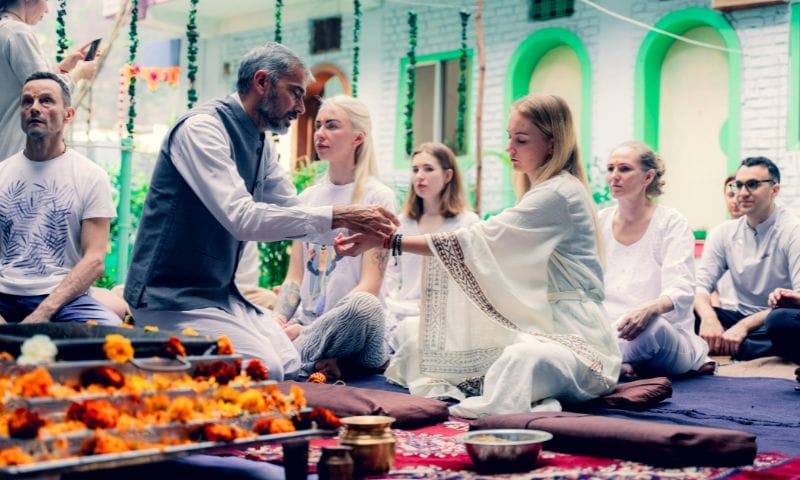
India’s spiritual fabric is not stitched from a single thread. It holds Hinduism’s oldest living city on the Ganga, the site where the Buddha sat under a tree and attained enlightenment, Sikh temples that feed tens of thousands of strangers daily without charge, Sufi shrines where qawwali music has echoed for centuries, and Himalayan monasteries where Tibetan monks chant at altitudes that test the lungs. For a foreign traveler arriving with curiosity rather than a fixed belief system, India does not ask you to convert or conform. It asks you to be present.
What makes spiritual experiences in India distinct for foreign traveler is the context. Yoga here is not a studio class; it began on these riverbanks. Meditation is not a phone app; it has been practised in these caves for millennia. Temple rituals are not performances; they are the daily pulse of communities that have maintained them without interruption across generations. This guide maps out the experiences most worth planning around, from sacred rituals and ashram stays to pilgrimage routes and contemplative treks.
Varanasi is among the world’s oldest continuously inhabited cities, and its spiritual gravity draws traveler of every background. The evening Ganga Aarti at Dashashwamedh Ghat is where most visitors first feel this gravity in physical form. Trained priests perform a synchronised fire ceremony with large brass lamps, incense, and Vedic chanting that reverberates across the river. The crowd is dense, the light golden, and the atmosphere a blend of devotion and spectacle unlike anything else in Indian travel.
But Varanasi’s spiritual depth goes well beyond the aarti. A pre-dawn boat ride past the bathing ghats, where pilgrims take ritual dips as the sun breaks over the temple-studded skyline, is one of the most quietly powerful moments available anywhere in India. Walking the narrow lanes behind the Varanasi ghats brings you past small shrines, Sanskrit schools, and the steady rhythm of a city where life and death coexist without pretence. For international visitors, Varanasi is not always comfortable, but it is almost always transformative.
Planning tip: Arrive at least a day before your first ghat visit to acclimatise to the city’s pace. A local guide who understands the rituals will make the experience significantly richer. Varanasi is accessible by air from Delhi, Kolkata, and Mumbai.
Rishikesh sits in the foothills of the Himalayas along the upper Ganga, and its reputation as the yoga capital of the world is not marketing. The town is home to ashrams and yoga centres that have been training practitioners, both Indian and international, for decades. Parmarth Niketan, Sivananda Ashram, and the Beatles Ashram (Maharishi Mahesh Yogi’s former retreat) all sit within the same stretch of riverbank, each offering a different approach to practice.
For foreign travelers, Rishikesh offers everything from single drop-in classes to month-long teacher training courses. The daily evening aarti at Triveni Ghat provides a gentler, less crowded alternative to Varanasi’s ceremony. The surrounding forests and the sound of the Ganga create a natural backdrop that amplifies the contemplative atmosphere. The annual International Yoga Festival at Parmarth Niketan, held each March, draws yoga teachers from around the world and is a good anchor point for timing a visit. India’s yoga and meditation retreats extend well beyond Rishikesh, with centres in Kerala, Pune, Tamil Nadu, and Himachal Pradesh, but Rishikesh remains the most accessible starting point for newcomers.
Planning tip: The nearest airport is Jolly Grant in Dehradun, approximately 35 kilometres away. October to March offers the most comfortable weather. Book ashram stays in advance during the yoga festival period.
Bodh Gaya, in Bihar, is the most important Buddhist pilgrimage site. It is where Siddhartha Gautama sat beneath a Bodhi tree and attained enlightenment, an event that gave birth to one of the world’s major spiritual traditions. The Mahabodhi Temple, a UNESCO World Heritage Site, stands at the exact spot, and the descendant of the original Bodhi tree still grows in its courtyard.
The town is small, unhurried, and dominated by monasteries built by Buddhist communities from across Asia. Thai, Japanese, Tibetan, Chinese, and Bhutanese temples sit within walking distance of each other, each reflecting the architectural and artistic traditions of its home country. For foreign travelers, Bodh Gaya offers a rare opportunity to sit in meditation at the precise location where the practice’s deepest roots lie. The atmosphere is calm, the local community welcoming, and the absence of commercial tourism creates a space that feels genuinely sacred. India’s Buddhist pilgrimage circuit typically connects Bodh Gaya with Sarnath, Kushinagar, and Rajgir for a comprehensive journey through the Buddha’s life.
Planning tip: The nearest airport is Gaya (approximately 17 km). October to March is the best season. Buddha Purnima (usually in May) is the most significant annual celebration.
The Harmandir Sahib, commonly known as the Golden Temple, is Sikhism’s holiest site, and it is also one of the most welcoming spiritual spaces for foreign visitors anywhere in India. The temple sits in the centre of the sacred Amrit Sarovar (pool of nectar), and its gold-plated exterior reflects in the water with a genuinely breathtaking intensity, particularly at night when floodlights illuminate the entire complex.
But the Golden Temple’s most powerful dimension for international visitors is not visual. It is the Langar, the community kitchen that serves free meals to everyone, regardless of religion, nationality, caste, or economic status. Volunteers prepare and serve food around the clock, feeding tens of thousands of people daily. Sitting cross-legged on the floor alongside pilgrims, soldiers, families, and fellow traveler, eating a simple meal of dal, roti, and kheer, is one of the most humbling and egalitarian spiritual experiences India offers. There is no VIP section, no ticket, no reservation. Everyone eats the same meal at the same level.
Planning tip: Amritsar has its own international airport with connections to Delhi and other major cities. The Wagah Border ceremony (approximately 30 km away) can be combined with a Golden Temple visit. Modest dress and head coverings (provided at the temple entrance) are required.
Ladakh’s high-altitude desert landscape, set between the Karakoram and Himalayan ranges, is home to some of India’s most striking Buddhist monasteries. Hemis, Thiksey, Diskit, and Lamayuru are working monasteries where resident monks follow daily prayer and meditation schedules that visitors can observe and, in some cases, participate in. Thiksey Monastery, often compared to the Potala Palace in Lhasa, houses a 15-metre Maitreya Buddha statue and offers panoramic views of the Indus Valley.
For foreign traveler willing to adjust to the altitude (Leh sits at approximately 3,500 metres), a few days spent attending morning prayers, sharing tea with monks, and walking between monasteries across stark mountain terrain is one of the most concentrated spiritual encounters available in India. The silence at this altitude, broken only by prayer bells and wind, creates a natural meditative environment. Ladakh’s Buddhist temples and monasteries are best visited between June and September, when roads are open, and weather permits comfortable travel.
Planning tip: Fly into Leh from Delhi and spend at least two days acclimatising before visiting high-altitude monasteries. Hemis Festival (usually in June or July) features masked Cham dances and draws visitors from around the world.
The Kumbh Mela is held on a rotating cycle at four river-bank cities: Prayagraj (Allahabad), Haridwar, Nashik, and Ujjain. The full Kumbh occurs every twelve years at each location, with the Ardh (half) Kumbh falling at the midpoint. During the Kumbh, millions of pilgrims, sadhus, and spiritual seekers converge on the riverbanks for ritual bathing, believed to wash away sins and accelerate the cycle toward liberation.
For foreign traveler, the Kumbh is not a curated experience. It is vast, intense, and logistically demanding. But it is also utterly unlike anything else on the planet. The sight of Naga sadhus (ash-covered ascetics) marching to the river at dawn, the sound of conch shells and chanting rising from tent cities that stretch to the horizon, and the sheer scale of collective devotion are experiences that recalibrate your sense of what human gathering can look like.
Planning tip: Dates shift based on astrological calculations. Working with a specialist like Memorable India ensures logistics are handled, from tented accommodation to guided access during the main bathing days.
Kerala’s Ayurvedic tradition is not a spa treatment repackaged for tourists. It is a medical system with roots stretching back thousands of years, practised by trained vaidyas (Ayurvedic physicians) who diagnose through pulse reading and prescribe personalised treatments involving herbal oils, dietary adjustments, and therapeutic procedures like Panchakarma (a five-step detoxification programme). Authentic Ayurvedic centres in Kerala operate more like wellness clinics than holiday resorts, with strict dietary regimes and structured daily schedules.
For foreign traveler seeking India spiritual tourism beyond temples and rituals, a residential Ayurvedic programme offers a body-centred path to balance that complements the more contemplative practices found elsewhere on this list. The best centres operate in quieter towns like Thrissur, Palakkad, and Kottakkal, though Kovalam and Varkala also have reputable options. A broader Kerala itinerary can combine Ayurvedic healing with temple visits, backwater cruises, and the Kathakali performances of Fort Kochi.
Planning tip: Genuine Ayurvedic treatment requires a minimum stay of seven to fourteen days for meaningful results. Monsoon season (June to September) is traditionally considered the best time for Panchakarma, as the humidity is believed to open the body’s channels for detoxification.
The Char Dham (four abodes) pilgrimage in Uttarakhand covers four Hindu temples set in the Garhwal Himalayas: Yamunotri, Gangotri, Kedarnath, and Badrinath. The circuit traces the sources of India’s holiest rivers and takes pilgrims through some of the most dramatic mountain scenery in the country. Kedarnath, dedicated to Lord Shiva, sits at over 3,500 metres and is reached by a trek of approximately 16 kilometres from Gaurikund. Badrinath, dedicated to Lord Vishnu, sits at a similar altitude in the Alaknanda Valley.
For foreign traveler with reasonable fitness, the Char Dham is not just a religious pilgrimage; it is one of India’s finest spiritual Himalayan treks, combining physical exertion with contemplative quietude at altitudes where the air itself feels thinner and the landscape encourages introspection. The circuit operates between May and October, with June and September being the most manageable months for weather and crowd levels.
Planning tip: The nearest airports are Jolly Grant (Dehradun) for Yamunotri and Gangotri, and Jolly Grant or Pithoragarh for the eastern temples. Helicopter services operate to Kedarnath during the season. A guided tour is strongly recommended for logistics and altitude management.
Sarnath, located just 13 kilometres from Varanasi, is where the Buddha delivered his first sermon after attaining enlightenment at Bodh Gaya. The Dhamek Stupa, a solid cylindrical structure dating to the 5th century, marks the exact spot. The Ashoka Pillar, whose lion capital became India’s national emblem, originally stood here. The Mulagandha Kuti Vihar, a more recent temple built in 1931, features interior murals by the Japanese artist Kosetsu Nosu that depict scenes from the Buddha’s life.
Sarnath is quieter and more contemplative than Varanasi, making it an ideal pairing for travelers who want both intensity and calm on the same trip. The deer park surrounding the stupa complex is peaceful enough for sitting meditation, and the archaeological museum houses one of India’s finest collections of Buddhist sculpture. India’s pilgrimage tour packages often combine Sarnath with Varanasi and Bodh Gaya for a circuit that covers Hinduism and Buddhism’s most sacred sites in a single journey.
Planning tip: Sarnath is a short taxi ride from Varanasi. An hour to two hours is sufficient for the main stupa and museum, but a full morning allows for meditation time and a slower pace.
India’s Sufi tradition offers a spiritual dimension that is often overlooked by international visitors focused on Hindu and Buddhist sites. The Ajmer Sharif Dargah in Rajasthan, the tomb of the Sufi saint Khwaja Moinuddin Chishti, is one of the most visited pilgrimage sites in South Asia. People of all faiths come to pray, tie sacred threads, and listen to qawwali devotional music that has been performed here for over eight centuries. The atmosphere is intense, emotional, and welcoming.
In Delhi, the Nizamuddin Dargah, the shrine of the Sufi poet-saint Hazrat Nizamuddin Auliya, hosts Thursday evening qawwali sessions that draw locals and visitors alike. The narrow lanes of the Nizamuddin Basti surrounding the dargah are home to the tomb of Amir Khusrau, one of India’s greatest poets, and the experience of hearing live qawwali in this intimate setting is one of the most moving spiritual encounters Delhi offers.
Planning tip: Both shrines are open to visitors of all faiths. A modest dress is required. Remove shoes before entering the main shrine area. The Urs festival at Ajmer (dates vary annually based on the Islamic calendar) is the most significant gathering.
The range of sacred places to visit in India can feel overwhelming, but regional clustering simplifies planning. A North India spiritual circuit might cover Rishikesh, Haridwar, Varanasi, Sarnath, and Bodh Gaya in two to three weeks. A South India route through Tamil Nadu and Kerala’s sacred temple destinations pairs Dravidian temple culture with Ayurvedic healing. Ladakh stands alone as a high-altitude Buddhist immersion best kept to a dedicated trip.
For foreign travelers, working with an operator experienced in spiritual travel India ensures that visits are timed to coincide with rituals, that ashram and monastery stays are pre-arranged, and that the logistics of moving between sacred sites are handled seamlessly. Memorable India, with over two decades of experience from its New Delhi base, designs itineraries that respect both the spiritual intent of these experiences and the practical needs of international visitors. Their team coordinates temple access, monastery stays, yoga course enrolment, and festival timing into coherent, well-paced journeys.
What are the best spiritual experiences in India for foreign traveler?
The Ganga Aarti in Varanasi, yoga retreats in Rishikesh, meditation at Bodh Gaya’s Mahabodhi Temple, the Langar at Amritsar’s Golden Temple, monastery stays in Ladakh, and Ayurvedic healing in Kerala are among the most meaningful spiritual experiences in India for foreign traveler. Each offers a different dimension of India’s spiritual landscape.
Do I need to be religious to participate in spiritual experiences in India?
No. India’s spiritual sites are broadly welcoming to visitors of all backgrounds. Temples, ashrams, gurudwaras, and monasteries generally welcome respectful visitors regardless of their personal beliefs. The emphasis is on presence, respect, and openness rather than adherence to a specific faith.
When is the best time for spiritual travel in India?
October to March is comfortable for most of India, covering Varanasi, Bodh Gaya, Rajasthan’s Sufi shrines, and Kerala. Rishikesh is pleasant year-round but peaks during the March yoga festival. Ladakh monasteries are accessible from June to September. The Char Dham circuit operates from May to October. The Kumbh Mela follows a fixed astronomical cycle.
Is it safe for solo foreign traveler to visit ashrams and temples?
Yes. India’s major spiritual destinations are among the safest places in the country for solo traveler. Ashrams provide structured environments with meals, schedules, and community. Temples and gurudwaras are public spaces with established codes of conduct. Common-sense precautions around belongings and transportation apply, as they would anywhere.
Can spiritual experiences be combined with cultural sightseeing?
Absolutely. Many traveler combine Varanasi with the Taj Mahal in Agra, Rishikesh with Delhi, or Bodh Gaya with Kolkata. Kerala’s Ayurvedic programmes pair with backwater cruises and temple visits. A well-designed India tour itinerary balances spiritual depth with cultural exploration, so neither feels rushed or diluted.
What should foreign traveler wear at spiritual sites in India?
Modest clothing is expected at all religious sites. Cover shoulders and knees at Hindu temples, Sikh gurudwaras, mosques, and Buddhist monasteries. Remove shoes before entering sacred spaces. Head coverings are required at gurudwaras (provided at the entrance) and mosques. Comfortable, breathable fabrics work best given India’s climate
Top 7 South Indian Temples Known for Their Architectural Beauty
16 Oct 2026
What to Expect On Your Dream Alleppey Houseboat Trip
15 Oct 2026
12 Top Tourist Destinations in Jammu and Kashmir for a Memorable 2026 Trip
13 Oct 2026
12 Tips to Remember Before Holidaying in the Northeast Indian States
11 Oct 2026
An Aesthetic Guide for Kerala Tour: Backwaters, Tea Hills and Coastal Light
11 Oct 2026


