 +919871148514
 info@memorableindia.com
Jaipur has no shortage of grand experiences. You can walk through the corridors of centuries-old forts, lose yourself in bazaars bursting with colour, and eat some of the finest Rajasthani thalis in the country. But for a growing number of travellers, the highlight of a Jaipur trip is not a monument or a meal. It is a quiet afternoon spent standing next to a rescued elephant, feeding her sugarcane, learning her name, and understanding why ethical wildlife tourism matters more now than ever.
Elefantastic, a privately run elephant sanctuary located on the outskirts of Jaipur near the Aravalli Hills, has become one of the most talked about animal experiences in India. It offers visitors the opportunity to interact with elephants in a format that prioritises the animal’s comfort, safety, and dignity. There are no rides, no chains, and no performances. Instead, there is feeding, walking, bathing, and conversation, all guided by caregivers who have grown up alongside these animals.
This page on Elefantastic Tour Jaipur covers everything you need to know before visiting: what to expect, how to book, what activities are involved, and why this kind of responsible interaction is reshaping the way people experience wildlife in Rajasthan.
Elefantastic was founded by Rahul Sharma, who comes from a traditional mahout family in Jaipur. Mahouts are hereditary elephant caretakers whose relationship with these animals spans generations. Rahul’s approach was to take that inherited knowledge and reshape it around modern principles of animal welfare, turning what was once a working elephant farm into an ethical sanctuary that educates visitors rather than entertaining them.
The sanctuary is home to a small group of elephants, most of whom are rescued or retired from labour and entertainment work. Each elephant has a name, a personality, and a known history. Visitors are paired with a specific elephant and a dedicated caretaker, ensuring the interaction is personal and unhurried. The entire experience typically lasts around three hours and is designed so that the elephant sets the pace, not the guest.
What makes Elefantastic different from most commercial elephant attractions in India is its refusal to offer rides. Elephant riding has come under increasing scrutiny globally due to concerns about spinal injury, the use of restraints, and the stress placed on animals carrying heavy loads in heat. Elefantastic has built its model around an alternative: walk alongside the elephant rather than sitting on top of her.
The sanctuary operates strictly with advance booking, and only a limited number of guests are accepted each day. This ensures that the elephants are not overwhelmed and that each visitor receives genuine one-on-one time.
The experience at Elefantastic follows a natural rhythm. It is not a tick-box activity list but more of a slow, immersive half day that feels closer to spending time on a family farm than visiting a tourist attraction.
Your visit begins with an introduction to the elephant assigned to you. The caregivers explain how to approach an Asian elephant for the first time, including how to let the animal catch your scent and how to read basic body language signals. These initial few minutes set the tone for the entire experience. It is calm, respectful, and focused on building a small bridge of trust between you and the animal.
Elephants eat a remarkable volume of food daily, and feeding is one of the most interactive parts of the visit. Guests prepare food bundles using sugarcane, bread, and seasonal fruits, then hand-feed the elephant directly. The caretakers guide you through the process and explain the elephant’s dietary needs, preferences, and habits. It is a simple activity, but the physical closeness to such a large and gentle creature makes it genuinely moving.
Instead of riding, guests walk beside the elephant through the sanctuary grounds and surrounding areas. This walk is not just a photo opportunity. It gives visitors a chance to observe how the elephant moves, interacts with the environment, and responds to her caretaker’s voice commands. For many guests, this is the moment the experience shifts from novelty to genuine connection.
One of Elefantastic’s more creative activities involves painting on the elephant using plant-based, non-toxic colours. This tradition has roots in Rajasthani culture, where elephants were historically decorated for royal processions and festivals. The paints are safe and wash off easily. It is a playful activity that families and younger visitors particularly enjoy.
The late afternoon bathing session is consistently described as the highlight by visitors. Guests help wash and scrub the elephant with water while the animal visibly enjoys the cooling process. As per safety guidelines from the Forest Department of India, guests observe the bathing from the sanctuary rather than entering a lake or river with the elephant. It is a joyful, slightly splashy affair, and carrying a change of clothes is strongly recommended.
The visit includes a vegetarian meal prepared at the family home of the sanctuary’s owner. The food is home-cooked by Rahul’s mother and served in a traditional setting. This is not a restaurant experience; it is a window into everyday Rajasthani hospitality and a chance to sit down, relax, and talk about what you have just experienced.
Jaipur has a deep historical relationship with elephants. During the Rajput era, elephants were symbols of royal authority, used in warfare, religious ceremonies, and grand processions. Hathi Gaon, or Elephant Village, near Amber Fort was developed specifically to house these animals and their mahout families. For centuries, elephants were central to the cultural identity of the city.
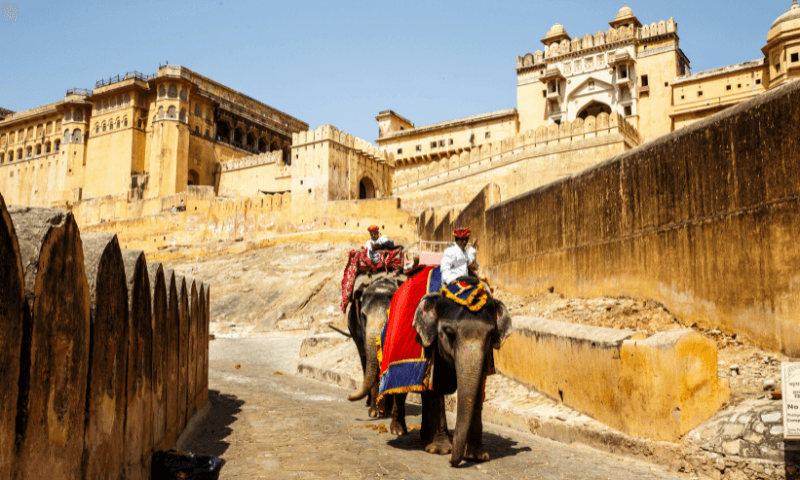
But the modern tourism landscape has complicated this legacy. Elephant rides at Amber Fort, once considered a quintessential Jaipur activity, have attracted growing criticism from animal welfare organisations and informed travellers. Concerns about the physical toll on the animals, the conditions in which they are kept, and the use of restraints have shifted public opinion significantly in recent years.
This is exactly the space where ethical sanctuaries like Elefantastic operate. While often listed among the Top Tourist Attractions in Rajasthan You Cannot Miss, they offer a more responsible alternative to traditional experiences. They acknowledge the historical bond between elephants and Jaipur’s culture, but redefine the terms of engagement. The focus shifts from spectacle to education, from riding to walking, from performing to simply being. For travellers who care about animal welfare, this distinction matters a great deal.
Elefantastic operates exclusively on advance bookings. Walk-ins are not accepted. Reservations can be made through the sanctuary’s official website or through trusted travel partners like Memorable India. It is important to book through verified channels, as there have been reported instances of unauthorised agents redirecting tourists to unrelated elephant operations under the Elefantastic name. The sanctuary itself is not located in Hathi Gaon (Elephant Village), and any claim suggesting otherwise should be treated with caution.
The sanctuary is situated approximately 9 to 25 kilometres from Jaipur’s city centre, near the Amber Fort area, against the backdrop of the Aravalli Hills. A private cab or pre-arranged transport is the most reliable way to reach it. Many booking packages include hotel pick-up and drop-off from central Jaipur, which simplifies logistics considerably.
The ideal months for visiting Elefantastic are October through March, when the weather in Rajasthan is pleasant and outdoor activities are comfortable. The summer months of April through June bring intense heat that can make the experience less enjoyable for both visitors and the elephants. Morning sessions are generally preferable during the warmer transitional months.
Comfortable, loose-fitting clothing that you do not mind getting wet is the best choice. Closed shoes or sandals with a firm grip are more practical than flip-flops. Carry a change of clothes for after the bathing session, sunscreen, a hat, and a refillable water bottle. If you are exploring Rajasthan, planning your attire this way ensures you stay comfortable across varied experiences. The sanctuary provides cold drinks and refreshments, but staying hydrated in Rajasthan’s climate is always a priority.
The Elefantastic experience works for a wide range of travellers, but it resonates most with a few specific groups.
Families with children find the format ideal because the activities are hands-on, gentle, and educational. Children are welcome, and the caregivers are experienced at helping younger visitors feel safe around the animals.
International tourists visiting Jaipur as part of a Golden Triangle itinerary frequently cite Elefantastic as one of the most memorable parts of their trip. The combination of wildlife interaction, cultural insight, and home-cooked food offers a contrast to the fort-and-palace circuit that dominates most Jaipur sightseeing schedules.
Solo travellers and couples looking for something meaningful beyond standard sightseeing also find the experience rewarding. The slow pace and personal attention create space for reflection and genuine engagement that a crowded tourist attraction simply cannot match.
Photographers and wildlife enthusiasts appreciate the proximity and relaxed setting. The caregivers help capture happy moments, and the natural light in the Aravalli foothills is particularly good during the golden hour sessions.
A visit to Elefantastic typically takes up a half day or a full afternoon. Most visitors combine it with a morning visit to Amber Fort, which is located nearby, or with a stop at Jal Mahal (the Water Palace) on the drive back to the city. Some packages include a visit to a local block printing workshop, adding another layer of Rajasthani cultural immersion to the outing.
For travellers spending two or more days in Jaipur, the recommended approach is to dedicate one day to heritage sightseeing: City Palace, Jantar Mantar, Hawa Mahal, the Amber Fort, and the bustling bazaars of the city.
The second day or afternoon can then be reserved for the Elefantastic experience, which benefits from not being rushed. Trying to squeeze the sanctuary visit between two fort tours is possible but it takes away from the contemplative quality that makes it special.
The Asian elephant is classified as an endangered species, and India is home to the largest population of these animals in the world. The relationship between elephants and Indian culture is ancient and layered, spanning religion, royalty, agriculture, and folklore. But the transition from a working relationship to a tourism-driven one has introduced new challenges around welfare, habitat, and the economics of captive elephant care.
Ethical sanctuaries like Elefantastic represent one model for addressing these challenges. By generating revenue through responsible visitor experiences rather than rides or performances, they create a financial incentive for good care. The fees paid by visitors directly fund the elephants’ food, veterinary treatment, and living conditions. This means that choosing to visit a well-run sanctuary is itself an act of support for elephant welfare.
For travellers, the most important step is informed decision-making. Before booking any elephant experience in India, it is worth asking a few straightforward questions. Does the facility offer rides? Are the elephants chained or restrained during interactions? Is booking required in advance, or does the operation accept unlimited walk-ins? Are the elephants rescued or retired, or are they acquired for commercial purposes? The answers to these questions will tell you a great deal about the nature of the operation.
If you are planning a Jaipur trip and want to include the Elefantastic experience, Memorable India can arrange the visit as part of a customised itinerary. The team handles hotel pick-up, transport to the sanctuary, and coordination with the Elefantastic staff, so you can focus entirely on the experience. For international travellers, this kind of logistical support is especially valuable, as it removes the uncertainty around navigation, timing, and avoiding unauthorised operators.
The Elefantastic experience can be combined with Jaipur city tours, Golden Triangle itineraries, or multi-destination Rajasthan packages. Memorable India’s destination specialists will build the visit into your schedule at the right point, ensuring it complements rather than competes with the rest of your trip.
The standard experience includes meeting and greeting the elephant, feeding her with sugarcane and fruits, walking alongside her through the sanctuary, painting with natural plant-based colours, bathing and scrubbing the elephant, and a home-cooked vegetarian meal at the owner’s family home. The entire visit lasts approximately three hours.
No. Elefantastic does not offer elephant rides. The sanctuary promotes only ethical, walk-along experiences. Guests walk beside the elephant rather than sitting on her. This approach is central to the facility’s commitment to animal welfare.
Yes. Children and older adults are welcome. The caregivers are experienced at adjusting the pace and proximity of activities to suit visitors of all ages. The elephants at the sanctuary are calm, well-socialised, and accustomed to gentle human interaction.
Bookings must be made in advance through the sanctuary’s official website or through authorised travel partners such as Memorable India. Walk-ins are not accepted. It is important to book through verified channels to avoid being redirected to unrelated elephant operations by unofficial agents.
The best months are October through March, when the weather in Rajasthan is pleasant for outdoor activities. The summer months of April through June bring extreme heat and are less comfortable for both visitors and the elephants. Morning sessions are recommended during warmer periods.
No. Elefantastic is not located in Hathi Gaon. The sanctuary has its own separate location near the Aravalli Hills, a short drive from Amber Fort. Any claim suggesting it is based in Elephant Village is inaccurate and may be an attempt by unauthorised agents to redirect visitors.

15 Amazing Temple Fairs in India: A Traveller’s Guide to Faith, Colour and Living Tradition
30 Sep 2026
13 Best Places to Explore in the Youngest State of Telangana
29 Sep 2026
12 Less Explored Destinations in Maharashtra Worth Adding to Your Travel List
28 Sep 2026
11 Must-Visit Museums in India for Wildlife Lovers
27 Sep 2026
11 Best Places in India to Celebrate Christmas
26 Sep 2026


