 +919871148514
 info@memorableindia.com
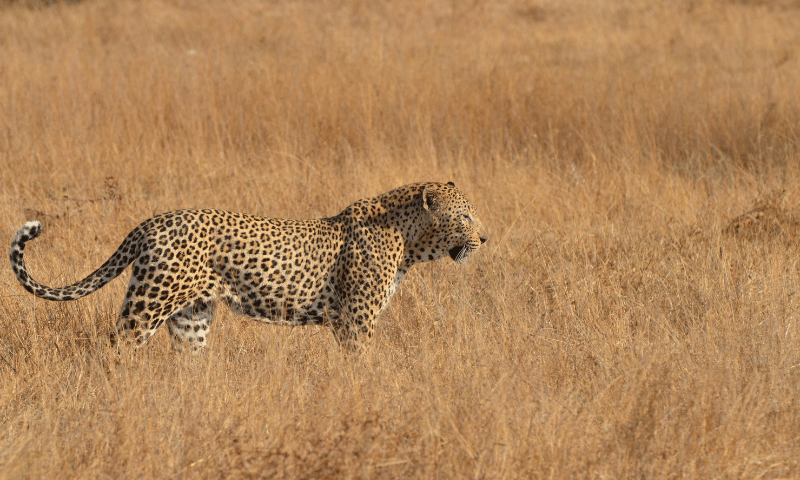
Tucked between the granite ridges of the Aravalli range in Rajasthan’s Pali district, Jawai has quietly become India’s most reliable destination for leopard sightings. Unlike the dense forest reserves that dominate wildlife tourism across the country, Jawai operates on a completely different model. Leopards here do not hide deep inside jungle cover. They live on open rocky outcrops, rest in shallow caves, and move through terrain shared with villages, temples, and grazing livestock. The result is a wildlife experience that feels raw, unscripted, and remarkably close.
What sets the Jawai leopard safari apart is not just the frequency of sightings but the context in which they happen. The local Rabari community, a semi-nomadic pastoral tribe, has coexisted with these big cats for generations. There is no fencing, no formal park boundary in the traditional sense, and no adversarial relationship between the predator and the people who share its land. For travellers looking beyond the tiger-centric safari circuit, Jawai offers something genuinely rare: a functioning model of human-wildlife harmony that doubles as one of India’s most thrilling wildlife encounters.
Most wildlife destinations in India earn their reputation through one flagship species, usually the Bengal tiger. Jawai flips the script. The Jawai Bandh Leopard Conservation Reserve, formally notified in 2010, protects an area where leopard density is among the highest anywhere in the country. The terrain itself plays a major role. Granite hills, scrubland, river valleys, and cave systems create a landscape where leopards are visible, not hidden.
Unlike Ranthambore or Bandhavgarh, where sightings depend heavily on luck and zone allocation, leopard spotting in Jawai benefits from the open terrain and the predictability of the cats’ movement. Leopards here are largely habituated to human presence. They rest on sunlit boulders in the morning, patrol rocky ridges in the late afternoon, and occasionally wander near village settlements after dark. Experienced local trackers know individual leopards by sight, their preferred caves, and their daily routes. This local knowledge translates into consistently high sighting success rates, particularly during the cooler months.
The reserve spans roughly 60 kilometres of rocky landscape covering around 16 villages and multiple leopard observation points, making every safari route distinct.
The Jawai region takes its name from the Jawai Dam (Jawai Bandh), an earthen-and-masonry structure built across the Jawai River. The dam was commissioned by Maharaja Umaid Singh of Jodhpur, with construction beginning in 1946 and completion in 1957. Today, the reservoir and the surrounding terrain form the backbone of the region’s ecosystem.
The landscape is a patchwork of granite outcrops, dry deciduous forest, thorn scrub, and the river valley. Vegetation includes species such as ber (Ziziphus mauritiana), kikar (Vachellia nilotica), and native grasses, typical of Rajasthan’s arid zones but dense enough to sustain a food chain.
While leopards are the primary draw, Jawai Bandh wildlife extends well beyond a single species. The area supports a healthy population of striped hyenas, Indian wolves, jungle cats, jackals, desert foxes, and nilgai (blue bull). Mugger crocodiles inhabit the dam and its connected water channels, and chinkaras (Indian gazelles) are frequently spotted on the scrubland fringes.
For birdwatchers, Jawai is a seasonal goldmine. The dam attracts large flocks of migratory birds during winter, including flamingos, demoiselle cranes, sarus cranes, pelicans, spoonbills, and several species of raptors. The combination of wetland, rocky habitat, and scrub forest ensures that a morning safari can produce sightings across multiple ecological niches, making this a rewarding destination for generalist nature enthusiasts and dedicated birders alike.
Safari operations in Jawai are fundamentally different from those in most national parks across India. There are no government-regulated entry gates, fixed zone allocations, or strict time windows in the way parks like Ranthambore or Kanha operate. Safaris here are conducted by private operators using open 4×4 jeeps (gypsies), accompanied by trained local naturalists and trackers.
Most operators run two safari slots daily. The morning safari typically begins at sunrise, around 5:30 to 6:00 AM, and runs for roughly three to three-and-a-half hours. The evening safari starts around 3:30 PM and continues until sunset, approximately 6:30 PM. Both windows coincide with peak leopard activity, when the cats move between resting spots, water sources, and hunting grounds.
There are no rigid government-mandated timelines for safari entry and exit in Jawai, unlike national parks with fixed gate closures. This flexibility means that if a sighting is in progress, guides can extend the experience rather than rushing back to meet a deadline.
A typical Jawai safari covers rocky terrain, scrubland trails, and paths near the dam. The trackers scan the granite boulders and cave mouths, looking for movement, paw prints, or the telltale signs of a leopard at rest. Sightings can be sudden and dramatic: a leopard stretched across a boulder, a mother with cubs moving along a ridgeline, or a solitary male surveying its territory from a cave entrance.
Many safari routes also pass through or near Rabari settlements and small temples, where leopards are frequently seen resting close to human activity. This is a rare phenomenon globally and adds a layer of cultural context that most wildlife safaris lack.
One of the most compelling aspects of a Jawai safari in Rajasthan is the relationship between the Rabari tribe and the leopards. The Rabari are a semi-nomadic pastoral community who have lived in this region for centuries, herding goats, sheep, and cattle across the rocky terrain.
Despite the fact that leopards occasionally prey on livestock, the Rabari do not retaliate. The community regards leopards with a degree of reverence, viewing them as linked to the divine and to the land itself. This belief has created a functioning model of tolerance that conservationists across India study with interest.
The absence of human-leopard conflict in Jawai is not accidental. It is the product of deep cultural conditioning, community-led protection, and the growing economic benefit that tourism brings to local livelihoods. Guides, trackers, camp staff, and hospitality workers drawn from the Rabari community have a direct stake in keeping the leopards safe. Tourism has created an economic incentive that reinforces cultural tradition, and the result is a conservation success story that does not depend on fences or forced relocation.
Several safari operators and luxury camps organise Rabari village walks, offering visitors a chance to see daily life, traditional clothing, and pastoral routines up close. These cultural add-ons are well worth including in your itinerary.
The ideal window for a Jawai leopard safari falls between October and March. Winter temperatures in the Pali district are comfortable, ranging from roughly 10 to 25 degrees Celsius, and the clear skies make early morning and late afternoon safaris pleasant for both sightings and photography.
October to March is the peak season. Leopard activity is high, migratory birds are present at the dam, and the weather is ideal for extended time outdoors. This is also when accommodation fills up fastest, so advance booking is strongly recommended.
April to June (summer) is surprisingly productive for leopard spotting. As temperatures rise and water sources become scarce, leopards and other animals concentrate around the dam and remaining waterholes. Sightings can be easier during this period, though the heat demands early starts and adequate hydration.
July to September (monsoon) is the least predictable season. Rainfall can disrupt safari routes, and some operators scale back operations. The landscape, however, transforms into lush green terrain, and the dam fills, creating a dramatic visual backdrop. Birding can be excellent in the post-monsoon weeks of September and early October.
Jawai is located in Rajasthan’s Pali district, in the Sumerpur tehsil, roughly midway between Udaipur and Jodhpur. Its position on the Rajasthan tourist circuit makes it a natural addition to longer itineraries.
The nearest airport is Maharana Pratap Airport (UDR) in Udaipur, approximately 140 kilometres away. Udaipur is well connected by domestic flights from Delhi, Mumbai, and Jaipur. From the airport, the drive to Jawai takes roughly three to four hours via NH48 and NH62, passing through scenic rural Rajasthan.
Mori Bera Railway Station is the closest broad-gauge stop, located just about 4 kilometres from the Jawai safari zone. It is connected to major cities including Jodhpur, Ahmedabad, and Mumbai. For travellers coming from Udaipur or Jaipur, a combination of rail and road works efficiently.
Jawai is accessible by road from both Udaipur (approximately 140 km) and Jodhpur (approximately 160 km). State highways connect the region well, and the drive from either city passes through Rajasthan’s rural heartland, offering a preview of the landscape before you reach the safari zone.
For travellers planning a wider Rajasthan tour, Jawai fits neatly into a Udaipur-Jodhpur route. Memorable India’s Rajasthan tour packages and Udaipur tour packages can be customised to include a Jawai stopover, combining palace tourism with a genuine wildlife experience.
A few practical considerations will make your Jawai trip smoother and more rewarding.
Book safaris and accommodation well in advance, particularly for visits between November and February. Jawai’s accommodation options range from luxury tented camps to mid-range resorts, most of which are clustered near Bera and Sumerpur. Many properties include safari coordination as part of the stay, handling vehicle allocation, guide assignment, and route planning.
Wear muted, earthy colours during safaris. Bright clothing can attract attention and startle wildlife. Browns, greens, and greys blend with the terrain and keep the experience undisturbed.
Carry binoculars and a telephoto lens if you are interested in photography. Jawai’s open terrain makes it one of the most photogenic wildlife destinations in India. The granite backdrop, the golden light at sunrise, and the proximity of sightings create frames that are difficult to replicate elsewhere.
Combine your Jawai visit with nearby attractions. Ranakpur’s Jain temples are roughly 90 kilometres away, and Kumbhalgarh Fort is within comfortable driving distance. Rajasthan’s wildlife safari circuit can also be extended to include Ranthambore for a tiger-and-leopard combination trip. Memorable India’s Ranthambore tour packages pair well with a Jawai addition for wildlife-focused itineraries.
Respect the environment and the community. Jawai’s conservation success rests on the goodwill of the Rabari people and the integrity of the habitat. Keep noise levels low during safaris, do not litter, and follow your guide’s instructions on proximity to animals.
India has a handful of destinations where leopard sightings are possible, but Jawai stands apart for several reasons. Jhalana Leopard Reserve in Jaipur offers urban-edge leopard safaris within city limits, making it accessible but limited in wilderness feel. Bera, which is essentially part of the greater Jawai region, shares the same leopard population and terrain.
What gives Jawai its edge is the combination of open terrain, high leopard density, cultural coexistence, and flexible safari operations. In forest-based reserves, leopards are elusive, canopy-dwelling, and difficult to photograph. In Jawai, the rocky landscape puts them in plain sight. Add to that the birdlife, the crocodile sightings, and the Rabari cultural experience, and the destination offers far more than a single-species outing.
For those comparing wildlife destinations in Rajasthan, Jawai complements rather than competes with tiger reserves. A well-planned Rajasthan wildlife itinerary might include Ranthambore for tigers and Jawai for leopards, covering two of India’s most iconic big cats in a single trip. Memorable India’s Rajasthan wildlife tour offers a structured way to build such combinations.
Leopard conservation in Jawai succeeds because it is community-driven rather than purely government-administered. The Rabari tribe’s cultural tolerance towards leopards provides the social foundation, while tourism generates the economic rationale. Local trackers and guides, many of them from the Rabari community, have a personal and professional investment in the leopards’ well-being.
The Jawai Bandh Leopard Conservation Reserve was formally notified in 2010, bringing a degree of official protection to the area. The Rajasthan Forest Department oversees monitoring and habitat management, though the day-to-day coexistence between leopards and villages remains largely self-regulated.
Challenges remain. Illegal mining, habitat encroachment, and the Delhi-Mumbai railway line that cuts through the reserve pose ongoing threats. However, the combination of community ownership, tourism revenue, and growing national attention has created a conservation model that other regions are beginning to study and adapt.
For travellers, choosing responsible operators and respecting local guidelines is the simplest way to contribute. Every safari booking supports the local economy and reinforces the value of keeping leopards alive and visible.
Jawai does not fit the template of a typical Indian wildlife destination, and that is precisely why it works so well. There are no ticketed entry gates, no elephant-back rides, and no crowds jostling at a single waterhole. What Jawai offers instead is an honest, ground-level encounter with one of India’s most graceful predators, set against a landscape that has not been sanitised for tourism.
The Rabari tribe Jawai connection, the open granite terrain, the high sighting success, and the flexibility of the safari format make this a destination that rewards both first-time safari-goers and seasoned wildlife travellers. If your Rajasthan trip has room for one unexpected addition, Jawai should be it.
Memorable India can help you build a Jawai-inclusive itinerary that fits your pace, interests, and travel style. Explore our Rajasthan tour packages or get in touch with our team to design a custom wildlife and culture circuit through western Rajasthan.
The best time to visit Jawai for a leopard safari is between October and March. Winter weather is pleasant, leopard activity is high, and migratory birds are present at the dam. Summer months (April to June) also offer good opportunities for sightings as animals gather near water sources.
Jawai is approximately 140 km from Udaipur and 160 km from Jodhpur, both of which are accessible by road. The nearest airport is Maharana Pratap Airport in Udaipur, and the closest railway station is Mori Bera, located about 4 km from the safari zone. The drive from Udaipur takes roughly three to four hours via NH48 and NH62.
No wildlife sighting is ever guaranteed, but Jawai has one of the highest leopard sighting success rates in India due to the open terrain, high leopard density, and the expertise of local trackers. Morning and evening safaris between October and March offer the best chances.
Apart from leopards, the Jawai region is home to striped hyenas, Indian wolves, jungle cats, nilgai, chinkaras, mugger crocodiles, and jackals. The Jawai Dam attracts migratory birds such as flamingos, demoiselle cranes, and pelicans during winter, making it an excellent birding destination as well.
A typical Jawai safari lasts approximately three to three-and-a-half hours. Morning safaris begin around sunrise (5:30 to 6:00 AM), and evening safaris start around 3:30 PM, continuing until sunset. Unlike most national parks, there are no strict government-regulated time limits for safari duration.
Jawai is located between Udaipur and Jodhpur, making it easy to include in a broader Rajasthan itinerary. Ranakpur (approximately 90 km) and Kumbhalgarh are nearby cultural stops. For wildlife enthusiasts, combining Jawai with Ranthambore offers a leopard-and-tiger safari experience within a single Rajasthan trip.
15 Amazing Temple Fairs in India: A Traveller’s Guide to Faith, Colour and Living Tradition
30 Sep 2026
13 Best Places to Explore in the Youngest State of Telangana
29 Sep 2026
12 Less Explored Destinations in Maharashtra Worth Adding to Your Travel List
28 Sep 2026
11 Must-Visit Museums in India for Wildlife Lovers
27 Sep 2026
11 Best Places in India to Celebrate Christmas
26 Sep 2026


