 +919871148514
 info@memorableindia.com
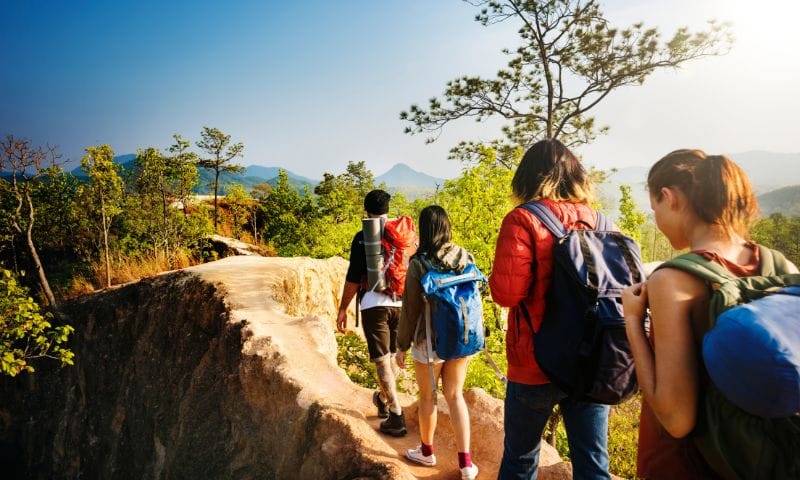
A group of Class 10 students standing inside the Sun Temple at Konark, tracing the wheel of a stone chariot with their fingers while their teacher explains how it doubled as a sundial, tells you more about India’s pull as an educational destination than any brochure can. Learning here is not confined to a museum wall or a printed guide. It lives in the streets of Varanasi, the observatories of Jaipur, the tea estates of Munnar, and the Buddhist ruins of Nalanda. Over the last decade, schools, colleges, and academic groups from within India and abroad have steadily turned to the country for structured learning journeys. The reasons are practical as much as they are cultural. This blog looks at what has shifted, why India now sits high on the list for educational trips, and how to plan one that actually delivers on its promise.
Few countries offer the compression of learning material that India does. Within a single week, a student group can move from Mughal architecture in Agra to a working spice plantation in Kerala to a wildlife reserve in Madhya Pradesh. Textbook chapters on medieval India, biodiversity, or the Indus Valley are not abstractions here. They are physical places you can walk through.
According to the UNESCO World Heritage Centre, India currently has 44 inscribed sites, placing it sixth globally by count. This concentration alone gives educational planners an unusually rich menu of stops. The Ajanta and Ellora rock-cut caves cover art history and religious studies. Nalanda ties into the roots of higher education itself, given that scholars from Tibet, China, and Central Asia studied there between the 5th and 12th centuries. The Sundarbans in West Bengal serves ecology and conservation modules. Jantar Mantar in Jaipur, a functioning 18th-century astronomical observatory, works for physics and mathematics groups.
Distance and diversity are the underlying advantage. A three-hour flight can shift a group from the Thar Desert to the Western Ghats, from stepwells in Gujarat to Ashokan pillars in Bihar. Few destinations pack this range into one country. Educational trips built around this variety often achieve in ten days what would require multiple international trips elsewhere.
The country’s educational value is not limited to history. Bengaluru and Hyderabad host visits to the Indian Space Research Organisation and premier science labs. Auroville in Tamil Nadu draws groups studying urban planning and sustainable communities. Delhi’s museums cover everything from crafts and textiles to modern political history. A single itinerary can cover subjects that would otherwise require multiple destinations.
Educational trips run on tight budgets. India offers strong value across accommodation, guided access, and transport, without asking families to compromise on the depth of the experience. Group rates at heritage hotels, government-approved guides at monuments, and well-priced domestic flight and rail networks all work in favour of school committees planning a meaningful trip.
Airports, highways, and railway networks have expanded significantly across regions that were previously difficult to reach. Ladakh, the Northeast, and the tribal belts of central India are now accessible for structured educational visits with proper permits and briefings. Reputable tour operators build safety protocols directly into itineraries, including verified transport, teacher-to-student ratios, and 24/7 ground support.
Indian tour operators regularly manage school and college groups of 30 to 100 travellers. English, Hindi, and regional-language guides are widely available. Air-conditioned coaches, dietary accommodation for vegetarians, vegans, and Jain groups, and pre-briefed hotel partners are standard on educational itineraries, not premium add-ons.
Since the National Education Policy of 2020 pushed experiential learning into mainstream curriculum planning, structured trips have moved from optional extras to formally recognised academic exercises. Schools now seek destinations that map cleanly to syllabus themes: geography and geology in Ladakh, biodiversity in the Western Ghats, cultural anthropology in Rajasthan, industrial and colonial history in Mumbai and Kolkata. India delivers on almost every theme without a group needing to leave the country.
The Golden Triangle of Delhi, Agra, and Jaipur remains the anchor for most first-time educational groups. Mughal architecture, Rajput fortifications, the Red Fort, Qutub Minar, and the Amber Fort form a natural sequence for history modules. Groups looking for greater depth can extend into the Central India heritage tour, which covers Khajuraho, Sanchi, and the Ajanta and Ellora caves within a single structured itinerary.
Bengaluru’s ISRO Visitors Centre, the National Centre for Biological Sciences, and the IIT campuses in Chennai and Bombay run structured visits for senior school and college groups. Jantar Mantar in Jaipur and the Central Research Institute campuses in Kasauli work well for interdisciplinary science trips that combine astronomy, mathematics, and applied research.
Ranthambore, Kanha, Bandhavgarh, Periyar, and Kaziranga anchor most conservation-themed itineraries. Educational visits usually pair a jeep safari with a session at the park’s interpretation centre, giving students a working understanding of habitat management. The Western Ghats and Sundarbans allow ecosystem-level fieldwork for older groups.
Varanasi, Bodh Gaya, Sarnath, Amritsar, and Rishikesh work for comparative religion and philosophy courses. Groups often combine these with visits to ashrams and academic institutions for lectures and interactions. Structured pilgrimage and spiritual tours can be adapted for academic content rather than devotional purpose, making them useful for university comparative-religion modules.
Village stays in Rajasthan, homestays in Sikkim, and community-tourism circuits in Kerala offer sociology and development-studies groups a grounded understanding of rural India. Craft clusters in Kutch and Chanderi work well for design schools studying textiles and traditional practice. NGO-led rural exposure programmes can be woven into these itineraries where academic supervisors want direct engagement with local communities.
The single most requested route for first-time educational groups. Delhi, Agra, and Jaipur cover Mughal, colonial, and Rajput layers in five to seven days. Transport is efficient, hotel supply is deep, and guides at every monument are well practised at handling student groups.
Backwaters at Alleppey, tea estates and the Kannan Devan Tea Museum in Munnar, spice plantations at Thekkady, and the multi-cultural port town of Fort Kochi make Kerala one of the most balanced educational destinations. It works particularly well for junior and middle-school groups because the pace is manageable and the learning content sits close to natural surroundings.
Beyond forts and palaces, Rajasthan offers geography and geology through the Thar Desert, water conservation studies through Jaisalmer’s traditional stepwells and johads, and craft studies through block-printing and mirror-work villages. The state is also strong on folk music and dance traditions for cultural studies groups.
Himachal Pradesh and Uttarakhand suit summer academic trips for hill geography, glaciology, and Himalayan ecology. Ladakh serves senior-school and college groups studying high-altitude geography and Buddhist philosophy. Our guide to the best places for a school tour during summer vacation covers the practical trade-offs for each region.
Madhya Pradesh, Odisha, and Bihar are gaining ground for groups looking beyond mainstream circuits. Nalanda, Rajgir, Konark, and Sanchi appear on more itineraries every year, particularly for higher-education groups working on Buddhist studies, archaeology, or ancient Indian history.
An educational trip is not a family holiday with a school badge. Planning has to be tighter, and expectations from the itinerary are different. A few points worth locking in early:
Reputable operators handle most of this quietly in the background. The point of a well-planned educational trip is that students remember the Sun Temple, the tea estate, the tiger sighting, and the Fort Kochi walk. What they should never notice is the logistics.
Memorable India has been designing structured tour programmes since 2005, with dedicated experience across school, college, and academic-group itineraries. Every educational trip is built around three practical requirements: a syllabus-aligned itinerary, verified safety infrastructure, and enough flexibility to accommodate the mixed pace of a group.
Groups get English, Hindi, and regional-language guides briefed in advance on the educational focus of the trip. Air-conditioned vehicles, hotels vetted for group logistics, and dietary planning are handled at the itinerary stage. On-trip support runs 24/7 through a dedicated ground team, which coordinates with drivers, guides, and hotels in real time. For international academic groups, visa documentation support, restricted-area permits for regions such as Ladakh and Arunachal Pradesh, and multilingual guide assignment are managed as part of the standard planning process.
School administrators, university faculty, and NGO programme leads can share group size, dates, and learning objectives with our travel specialists at Memorable India, and receive a customised proposal within 24 hours.
India’s rise as an educational destination is not about a single sight or a single subject. It is about the density of what a group can learn without leaving the country. A well-planned trip here does not just tick syllabus boxes. It sends students home with a real sense of how a civilisation, a landscape, and a modern nation coexist. The infrastructure has improved, group logistics have matured, and the range of themes now on offer is wider than at any earlier point. For any school, college, or academic group planning the next learning journey, India rewards the effort in ways that most destinations cannot match.
India offers unmatched subject density across history, ecology, science, and culture within one country. With 44 UNESCO World Heritage Sites, active scientific institutions such as ISRO, biodiversity hotspots like the Western Ghats and Sundarbans, and centuries of layered civilisation, students can cover multiple syllabus themes on a single well-planned trip.
The Golden Triangle of Delhi, Agra, and Jaipur is the most popular starting point for history and heritage. Kerala works well for ecology and cultural studies, Rajasthan for geography and craft traditions, and the Himalayan belt for physical geography and environmental science. Central India covers ancient history and Buddhist studies through Nalanda, Sanchi, and Khajuraho.
For a single-region focus, five to seven days works well. For a multi-region itinerary covering two or three learning themes, ten to twelve days is a practical range. International student groups typically plan two to three weeks to include cultural immersion alongside academic content.
October to March offers the most comfortable weather across most regions, particularly for heritage and cultural circuits. April to June suits Himalayan destinations, Ladakh, and hill stations. Wildlife-focused trips work best from November to May, before monsoon closures affect national parks.
Memorable India provides syllabus-aligned itineraries, briefed multilingual guides, air-conditioned group transport, vetted hotels, dietary planning for vegetarian and allergy-specific requirements, restricted-area permits where needed, and 24/7 on-trip ground support. Every group receives a dedicated coordinator through the trip.
Yes, when planned through experienced operators with defined safety protocols. Reputable tour operators handle vehicle standards, teacher-to-student ratios, first-aid provision, hospital tie-ups along routes, and 24/7 support lines. Multilingual guides and pre-briefed hotel partners further reduce day-to-day friction for international academic groups.

A Guide to Exquisite Indian Handicrafts and Where to Buy Them in India
26 Oct 2026
A Journey to Leh and Srinagar: Firsthand Travel Experience
25 Oct 2026
A Guide to Famous Temples in Himachal Pradesh
24 Oct 2026
9 Best Places to Visit in Lakshadweep, a Top Island Getaway in India
23 Oct 2026
7 Reasons Why One Should Travel by Indian Rail
22 Oct 2026


