 +919871148514
 info@memorableindia.com
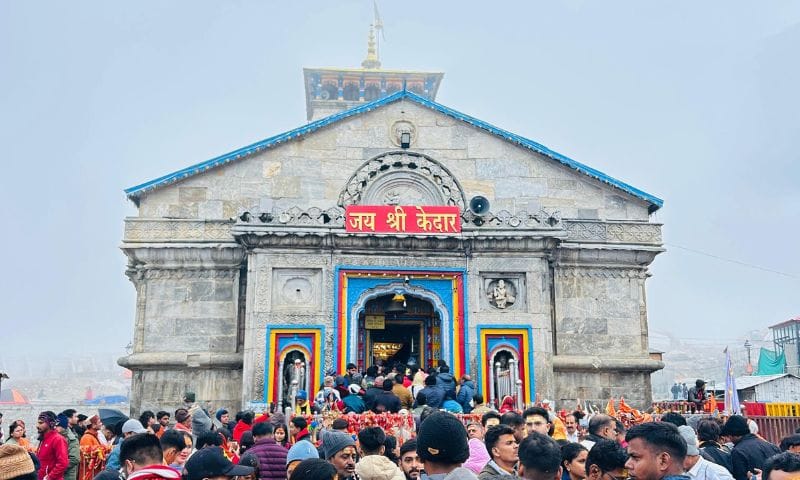
Ask any elderly relative in a north Indian household about the one journey they still hope to make before their years catch up with them, and the answer is almost predictable: Char Dham. Not a beach in Goa. Not a holiday abroad. Char Dham. The four shrines tucked into the folds of the Garhwal Himalayas, namely Yamunotri, Gangotri, Kedarnath and Badrinath, have held that grip on the Hindu imagination for well over a thousand years, and the pull has not weakened in the age of curated Instagram travel.
But what exactly makes this pilgrimage sit above so many others in a country crowded with sacred sites? The answer runs deeper than temple architecture or scenic value. It touches theology, geography, philosophy, and the way Hindus have long thought about life, duty, and release.
The Char Dham circuit did not emerge by accident. Around the 8th century CE, the philosopher-saint Adi Shankaracharya travelled the length and breadth of the subcontinent to consolidate Sanatana Dharma at a time when Hindu practice had grown fragmented. He established four cardinal mathas, or monastic seats, and codified the concept of a pan-India Char Dham: Badrinath in the north, Puri in the east, Rameswaram in the south, and Dwarka in the west.
The Uttarakhand circuit that most Indians today call the Char Dham is technically the Chota Char Dham, a smaller Himalayan cluster that gained wider popularity from the medieval period onward. Yet it inherited the same theological logic: sacred geography as a way to anchor faith to place. The idea was that walking to a shrine was itself a spiritual act, not just a means to reach one.
Each of the four dhams carries a distinct identity, and understanding what each one symbolises is central to grasping the religious importance of Char Dham Yatra.
Perched at 3,293 metres, Yamunotri honours goddess Yamuna, daughter of the sun god Surya and sister to Yama, the god of death. Pilgrims believe that a dip in the Surya Kund, a natural hot spring at the site, and prayers at the shrine can free the soul from an untimely or painful passing. The temple sits below the Champasar Glacier, and pilgrims traditionally cook rice and potatoes in the hot spring to offer as prasad, a ritual unique to this shrine.
At around 3,100 metres sits Gangotri, the mythic origin point of the Ganga. The story of King Bhagirath, who performed centuries of penance to bring the celestial river down to redeem his ancestors, is not merely legend for the devotee. It is the reason every drop of Ganga water is considered redemptive. The current temple was rebuilt by Gorkha commander Amar Singh Thapa in the 18th century, though the site has been revered for far longer.
Of the twelve Jyotirlingas of Lord Shiva scattered across India, Kedarnath sits highest, at 3,583 metres. Reaching it demands a 16 kilometre uphill trek from Gaurikund, a stretch that has broken and rebuilt many pilgrims across generations. The legend ties the site to the Pandavas, who sought Shiva after the Mahabharata war to be absolved of the sin of killing their kin. Shiva, unwilling to forgive easily, took the form of a bull and dived into the earth, leaving behind his hump at Kedarnath. The physical hardship of the trek is often described by devotees as part of the darshan itself.
Badrinath, at 3,133 metres, is the abode of Lord Vishnu in his meditative form. Set between the Nar and Narayan peaks with the Neelkanth summit as a backdrop, the shrine is one of the 108 Divya Desams revered in Vaishnava tradition. Pilgrims believe Vishnu meditated here for the welfare of humanity, sheltered by his consort Lakshmi, who took the form of a badri (jujube) tree. It is also the only dham of the four where the head priest, the Rawal, is traditionally a Namboodiri Brahmin from Kerala, a lineage set in place by Adi Shankaracharya himself.
The significance of Char Dham Yatra rests on a simple but powerful idea in Hindu thought: that certain places, sanctified by presence and time, can accelerate the soul’s release from the cycle of birth and death. Hindu tradition speaks of four purusharthas, the aims of a well-lived life: dharma (duty), artha (prosperity), kama (desire) and moksha (liberation). Pilgrimage sits squarely in the pursuit of moksha.
The Skanda Purana, one of the largest Hindu texts, devotes long passages to the sanctity of these sites. The belief is that a sincere yatra, completed with the right intent, can wash away accumulated karma in a way that no ritual performed at home can. This is why elderly Hindus often plan the yatra in the final decades of their lives, treating it as a conscious preparation for the next stage of the soul’s journey.
There is also the doctrine of tirtha itself. A tirtha is a crossing, a place where the divine and the mortal touch, where one can wade across the river of samsara. The four dhams together form four such crossings, arranged in a geography that mirrors an inward journey.
Traditional pilgrims complete the yatra in a specific order: Yamunotri first, then Gangotri, then Kedarnath, and finally Badrinath. This is not travel logistics alone. The sequence begins with the river of the sun’s daughter, moves to the mother of civilisations, ascends to the fiercest of the destroyer gods, and closes at the sustainer’s meditation seat.
Read symbolically, it is a passage from purification (Yamuna) to grace (Ganga) to surrender (Shiva) to rest (Vishnu). Many devotees describe finishing at Badrinath with a quietness they cannot quite explain. One accepts this framing or not; either way, the sequence gives the yatra a narrative arc that other pilgrimages lack.
The Char Dham Yatra also carries weight that goes beyond individual salvation. For centuries, it has been a great equaliser. Wealthy merchants from Rajasthan, farmers from Punjab, retired teachers from Chennai and Namboodiri priests from Kerala all walk the same paths, share the same rest houses, and eat the same simple meals. Caste, region and language flatten in a way rarely seen elsewhere in Indian public life.
The route has also historically driven the economy of Garhwal. Villages like Mana, the last inhabited settlement before the Tibet border, would not have survived as vibrantly as they have without pilgrim traffic. Local wool weavers, dhaba owners, mule handlers and priests have passed their trades across generations because of the yatra.
Pandemic-era closures made this visible in painful ways. When the routes reopened, the return of pilgrims felt less like tourism and more like a village receiving guests it had missed.
Part of what preserves the sanctity of the Char Dham Yatra is that it is genuinely difficult. The shrines open around late April or early May and close by Diwali, remaining sealed for the harsh Himalayan winter. Registration is now mandatory through the Uttarakhand government’s official pilgrim registration portal, a system introduced to manage crowd flow and pilgrim safety.
Altitudes cross 3,500 metres at Kedarnath, and altitude sickness is a real risk. The Kedarnath trek runs 16 km one way, and Yamunotri involves a 6 km climb. Weather turns quickly, especially post-monsoon. Landslides remain a hazard along the mountain roads. These are not deterrents so much as they are part of the yatra’s meaning: the effort is the offering.
For a full breakdown of temples, viewpoints and side trips along the route, our guide on the key places to visit in Char Dham Yatra covers the terrain in detail. Confirmed opening dates and registration steps for the upcoming season are updated in our Char Dham opening dates and tips guide.
Modern pilgrims face a practical question the medieval traveller did not: how to fit a spiritual journey of this scale into limited leave from work. The traditional yatra runs 10 to 12 days. Helicopter circuits compress the same route into 5 to 6 days, letting elderly parents and time-pressed professionals complete darshan without the physical strain of long treks.
Our full range of Char Dham Yatra tour packages covers everything from classic road itineraries starting in Delhi or Dehradun to helicopter-assisted routes and small group departures. If your family includes senior members or first-time trekkers, the choice of package can make the difference between a rushed trip and a genuine pilgrimage.
The team at Memorable India handles registrations, altitude-conscious pacing, vegetarian meals and 24/7 on-trip support. You can share your travel window and preferences through our contact page, and a travel specialist will respond within 24 hours.
The reason the Char Dham Yatra continues to matter, generation after generation, is not that it has been unchanged. It has changed a great deal. Helicopters now share the sky with eagles above Kedarnath. Registration is digital. Roads reach further than they used to. Yet the core of the yatra remains untouched: the belief that walking toward the divine, through difficult terrain and thin air, does something to the soul that comfort cannot.
For Hindus, the significance of Char Dham Yatra lies in this stubborn continuity. It is a promise that the sacred is still reachable, that liberation is still worth walking toward, and that some journeys are worth taking not for what waits at the end but for who one becomes along the way.
If you are considering the yatra for yourself or your family, reach out to our team for a customised itinerary shaped around your travel window and comfort needs.
Q1. Why is the Char Dham Yatra considered so important in Hinduism?
The Char Dham Yatra is considered central to Hindu practice because it takes devotees to four shrines associated with liberation, or moksha. Established in its current form by Adi Shankaracharya, the circuit is believed to purify accumulated karma and prepare the soul for release from the cycle of rebirth.
Q2. What is the difference between the original Char Dham and the Chota Char Dham?
The original Char Dham, set up by Adi Shankaracharya in the 8th century, spans four corners of India: Badrinath, Puri, Rameswaram and Dwarka. The Chota Char Dham refers to the smaller Himalayan circuit within Uttarakhand covering Yamunotri, Gangotri, Kedarnath and Badrinath. In common usage today, Char Dham Yatra usually means the Uttarakhand circuit.
Q3. Do you have to complete all four dhams in a single trip for it to count?
Traditionally yes, and most pilgrims aim to. However, Hindu practice does allow partial yatras when circumstances such as health, weather or time do not permit the full circuit. Many families return over multiple seasons to complete all four shrines.
Q4. Why do Hindus visit Yamunotri first and Badrinath last?
The west-to-east sequence follows both geography and spiritual symbolism. It moves from Yamunotri (purification through the sun’s daughter) to Gangotri (grace through the mother river) to Kedarnath (surrender before Shiva) to Badrinath (rest at Vishnu’s meditation seat), forming an inward journey toward peace.
Q5. Can non-Hindus visit the Char Dham shrines?
Yes. The shrines welcome visitors of all faiths, and many travellers make the journey for cultural or scenic reasons rather than religious ones. Basic respect for temple protocol, dress codes and photography rules is expected at each site.
Q6. When do the Char Dham temples open and close each year?
The temples open around late April or early May, timed to auspicious dates such as Akshaya Tritiya and Basant Panchami, and close around Diwali in October or November. Kedarnath and Badrinath close a few days apart. Winter darshan of the deities continues at their designated winter seats in the lower valleys.

A Guide to Exquisite Indian Handicrafts and Where to Buy Them in India
26 Oct 2026
A Journey to Leh and Srinagar: Firsthand Travel Experience
25 Oct 2026
A Guide to Famous Temples in Himachal Pradesh
24 Oct 2026
9 Best Places to Visit in Lakshadweep, a Top Island Getaway in India
23 Oct 2026
7 Reasons Why One Should Travel by Indian Rail
22 Oct 2026


