 +919871148514
 info@memorableindia.com
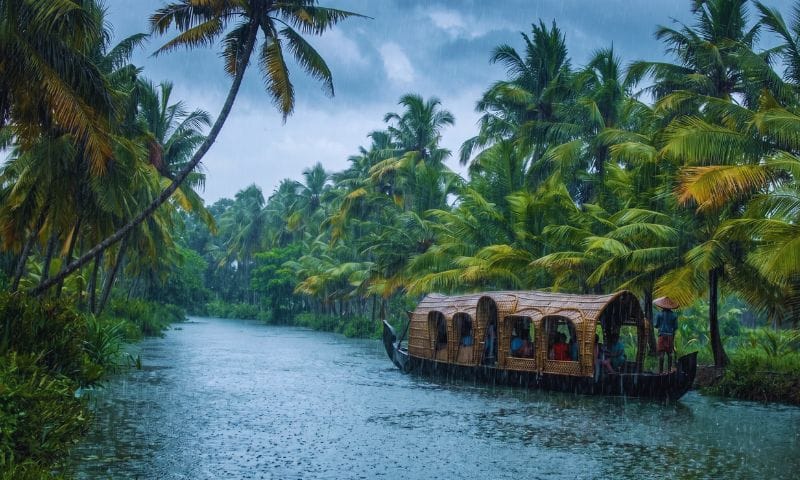
India between June and September is a different country altogether. The scorching plains cool down, dry riverbeds fill to the brim, hill stations vanish behind rolling clouds, and the Western Ghats turn so green they almost look digitally enhanced. Yet most travellers sit out the monsoon, convinced it means cancelled plans and soggy shoes. That is a mistake.
The Indian monsoon is one of the most dramatic natural events on the planet, which transforms familiar destinations into something worth seeing all over again. Waterfalls that barely trickle in March roar with full force by July. Tea gardens in Munnar look like they have been freshly painted. The backwaters of Kerala rise and shimmer under grey skies, and Rajasthan’s forts gain a moody grandeur that no amount of winter sunshine can replicate.
This guide covers the best places to visit during the Indian rainy season, from the well-known to the under-explored. It also walks you through what to pack, how to plan around the weather, and why a monsoon holiday might be one of the smartest travel decisions you make this year.
There is a practical argument for monsoon travel that goes beyond scenic beauty. Hotel rates drop significantly between June and September in most parts of India. Popular destinations that feel overcrowded in October or December are far more relaxed during the rains. You get better deals, shorter queues, and a genuine sense of space at places that are otherwise wall to wall with tourists.
Then there is the experiential side. Monsoon travel in India offers experiences that no other season can match: the sight of Dudhsagar Falls at full power, the sound of rain hammering a houseboat roof in Alleppey, the smell of wet earth on the Deccan Plateau. These sensory details make the trip more immersive and, frankly, more memorable.
For photographers, birdwatchers, and nature enthusiasts, the monsoon is genuinely the best season. Migratory birds arrive, wildflowers carpet the Western Ghats, and the light has that soft, diffused quality that works beautifully in photographs.
Kerala is arguably India’s most monsoon-ready state. The entire Ayurvedic wellness tradition is built around the idea that the monsoon is the ideal time for rejuvenation therapies. Treatments like Panchakarma and Abhyanga are traditionally recommended during the monsoon season. The climate is marked by higher humidity and relatively cooler temperatures, which is believed to enhance the body’s receptivity to Ayurvedic therapies and support better absorption of herbal oils.
Beyond wellness, Kerala’s backwaters take on a completely different character during the rains. The water levels rise, the surrounding paddy fields flood to a shimmering green, and houseboat journeys through Alleppey and Kumarakom become quieter and more atmospheric. Munnar’s tea plantations, often shrouded in mist during the monsoon, offer some of the best walking trails in the country during this period.
Kochi, Thekkady, and Wayanad are equally rewarding during this season. The region receives heavy rainfall, so waterproof gear is essential, but the payoff in terms of beauty and solitude is significant. If you are considering a full monsoon itinerary in the state, explore Kerala tour packages for curated options that factor in seasonal highlights and weather patterns
If you want to experience the Indian monsoon at its most intense, Meghalaya is the best place. Cherrapunji and Mawsynram consistently receive some of the highest rainfall on Earth, and their landscapes reflect it. Living root bridges, double-decker waterfalls, deep limestone caves, and cloud forests define the terrain here.
Shillong serves as a comfortable base for exploring the surrounding Khasi and Jaintia Hills. The drive from Shillong to Cherrapunji passes through some of the most jaw-dropping valley views in the Northeast, especially when clouds sit below the road level. Dawki, near the Bangladesh border, is known for its crystal clear Umngot River, though visibility varies during peak rainfall.
Monsoon travel in Meghalaya does require preparation. Roads can be slippery, leeches are common on forest trails, and mobile connectivity is patchy in remote areas. But for adventure seekers, this is one of the most rewarding monsoon destinations in India. For a broader look at the region, check North East India tour packages that cover Meghalaya alongside Assam, Arunachal Pradesh, and beyond.
Goa during the monsoon is a revelation for anyone who has only visited during peak season. The beaches are mostly empty, the shacks shut down, and the landscape shifts from golden brown to lush tropical green. Dudhsagar Falls, accessible by jeep from Mollem, is at its absolute best between July and September, cascading down a rocky face surrounded by dense forest.
Old Goa’s churches and the Latin Quarter of Fontainhas gain a quiet, almost European feel during the monsoon.
Spice plantations in Ponda offer monsoon-specific tours, and the local food scene, especially seafood, peaks during this period. Goa also hosts its monsoon arts festival, Serendipity, which draws musicians, filmmakers, and visual artists from across India.
Beach activities are limited during the monsoon due to rough seas and strong currents, so this is more of a culture and nature trip than a sunbathing holiday. That trade-off suits many travellers just fine. Browse Goa tour packages for itineraries that highlight the state’s off-season charm, from heritage walks to waterfall excursions.
Himachal Pradesh during the monsoon is a mix of stunning beauty and logistical caution. The Kullu Valley turns impressively green, the Beas River runs high and fast, and towns like Manali and Dharamshala are wrapped around in clouds. For travellers who enjoy moody mountain landscapes, the monsoon months here are unmatched.
Shimla and its surrounding areas, including Kufri and Mashobra, are pleasant during early monsoon (June to mid July) before the heavier rains set in. Dharamshala and McLeod Ganj offer a compelling mix of Tibetan culture, mountain trails, and rain-soaked pine forests.
A word of caution: Himachal is prone to landslides during heavy monsoon spells, particularly along the Manali-Leh highway and parts of the Kinnaur-Spiti circuit. Travellers should check road conditions, carry flexible itineraries, and avoid remote high altitude passes during peak rainfall weeks. For customised hill station routes, take a look at Himachal tour packages designed with monsoon-safe planning in mind.
Rajasthan in the monsoon is known for keeping India’s best seasonal secrets. The Aravalli range turns greener, the lakes around Udaipur fill up, and the forts of Jodhpur and Jaisalmer gain a dramatic atmosphere under overcast skies. The famous Pushkar and Sambhar lakes, often dry by April, start to hold water again by late July.
Udaipur, in particular, is outstanding during the monsoon. Lake Pichola and Fateh Sagar overflow, and the City Palace looks its best reflected in full, shimmering water. Ranthambore National Park remains open during parts of the monsoon for limited safaris, and the park’s tigers are more active in cooler and cloudy conditions.
Rajasthan receives relatively moderate rainfall compared to coastal or northeastern regions, so the monsoon here is less about heavy downpours and more about pleasant weather, lower crowds, and refreshed landscapes. Explore Rajasthan tour packages for heritage circuits and wildlife itineraries that work well during the rainy months.
The “Valley of Flowers” National Park in Uttarakhand is one of India’s most iconic destinations for monsoon experiences. This UNESCO World Heritage Site blooms between late July and early September, with hundreds of alpine flower species carpeting the valley floor. The trek from Govindghat is moderate and suitable for most fitness levels.
Rishikesh and Haridwar remain accessible during the monsoon, though river rafting is usually suspended when the Ganga is in spate. The spiritual atmosphere in these towns intensifies during the rainfall, with evening Ganga Aarti at Har Ki Pauri becoming particularly atmospheric against a backdrop of monsoon clouds.
For pilgrimage travellers, the Char Dham Yatra season overlaps with the monsoon, and while weather-related disruptions are possible, the spiritual significance of visiting Kedarnath and Badrinath during this time is deeply valued. For a wider range of Uttarakhand itineraries, including Valley of Flowers treks, see Uttarakhand tour packages.
A good monsoon trip starts with the right backpack. Waterproof backpacks or dry bags are essential, especially for treks and houseboat stays. Quick-dry clothing beats cotton, which stays damp and heavy. A lightweight rain jacket with a hood is more practical than an umbrella in windy conditions. Waterproof hiking shoes with a strong grip are non-negotiable if you plan to walk on wet trails.
Carry ziplock bags for electronics, a small first aid kit with insect repellent and antiseptic, and a portable charger since power outages are more common during storms. Packing light is important because wet luggage adds weight quickly.
India’s monsoon does not hit every region at the same time. The southwest monsoon typically arrives in Kerala by early June, reaches central India by mid June, and covers the north by July. The northeast monsoon (October to December) affects Tamil Nadu and parts of Andhra Pradesh separately. This staggered pattern means you can plan around the heaviest rainfall by choosing destinations that are either in the early or retreating monsoon phases.
Flexible itineraries are your best friend during the rainy season. Build in buffer days, avoid tight connections, and have backup plans for outdoor activities. Booking with experienced operators who understand regional monsoon patterns makes a significant difference during the journey.
Travelling during the monsoon does not have to mean winging it. Tour operators like Memorable India offer monsoon-specific packages designed around the season’s strengths rather than working against the weather. These itineraries factor in road conditions, regional rainfall patterns, and the best experiences available during the rainy months.
From houseboat stays in Kerala to living root bridge treks in Meghalaya, curated monsoon packages take the guesswork out of planning. They typically include flexible booking terms, experienced local guides, and accommodation that is suited to monsoon conditions. For travellers who want the beauty of the rainy season without the logistical stress, explore monsoon special tour packages for ready-made itineraries across India’s best rainy season destinations.
The Indian monsoon is not a season to avoid. It is a season to plan for, with the right destinations, the right gear, and the right mindset. The rewards are significant: lower costs, fewer crowds, greener landscapes, and experiences that simply do not exist during the dry months. From the misty hills of Meghalaya to the overflowing lakes of Udaipur, monsoon India is dramatic, immersive, and deeply satisfying.
If you have been putting off a monsoon trip, this is the year to reconsider. A little rain never ruined a good holiday. In India, it often makes one.
Kerala, Meghalaya, Goa, Himachal Pradesh, Rajasthan, and Uttarakhand are among the best monsoon destinations in India. Each offers unique experiences, from Ayurvedic wellness and backwater cruises in Kerala to living root bridge treks in Meghalaya and lush valley views in Himachal.
Yes, monsoon travel in India is safer with proper planning. Avoid flood-prone lowlands and landslide-risk mountain roads during heavy rainfall spells. Choose experienced tour operators, carry waterproof gear, and keep itineraries flexible to account for weather disruptions.
Pack quick dry clothing, waterproof hiking shoes, a rain jacket with a hood, ziplock bags for electronics, insect repellent, and a portable charger. A waterproof backpack or dry bag is essential, especially for treks and houseboat stays.
The southwest monsoon typically arrives in Kerala by early June and covers most of India by July. It begins retreating from northwest India by September. The northeast monsoon affects Tamil Nadu and coastal Andhra Pradesh from October to December.
Yes, tour operators like Memorable India offer curated monsoon tour packages designed around seasonal strengths. These include Kerala backwater tours, Meghalaya adventure treks, Rajasthan heritage circuits, and Himachal hill station itineraries, all planned with monsoon weather patterns in mind.
Meghalaya holds the record for the highest rainfall in India, with Mawsynram and Cherrapunji receiving extraordinary amounts of rain each year. The state’s landscape, including waterfalls, caves, and living root bridges, is shaped by this intense monsoon activity.
Absolutely. Rajasthan receives moderate monsoon rainfall, making it a comfortable destination during the rainy season. Udaipur’s lakes fill up, the Aravalli hills turn green, and popular sites like Ranthambore offer wildlife sightings in cooler, less crowded conditions.
What’s It Like to Travel in Rajasthan, India? A Grounded Look at the Land of Kings
18 Sep 2026
Where to Stay in 15 Most Popular Indian National Parks
15 Sep 2026
Top Buddhist Pilgrimage Sites in India: A Complete Circuit Guide
10 Sep 2026
Top 6 Tiger Reserves to Visit in India for a Bucket-List Safari
05 Sep 2026
Top 30 Must-Visit Hill Stations in South India
01 Sep 2026


