 +919871148514
 info@memorableindia.com
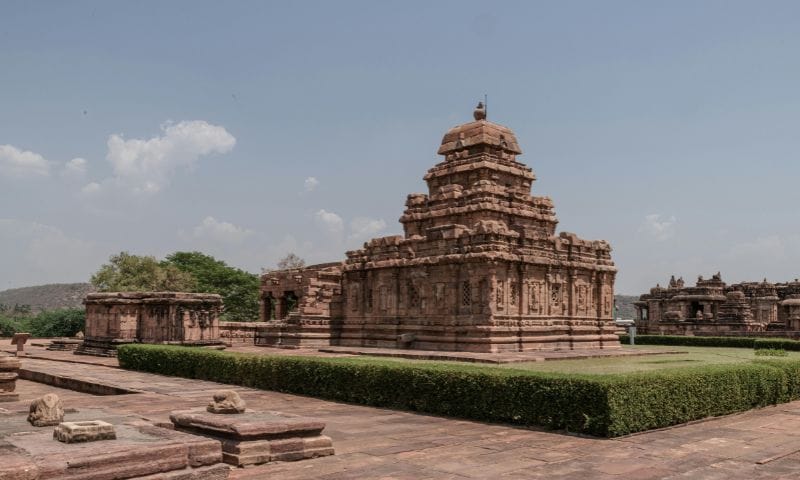
Badami occupies a sandstone gorge in the Bagalkot district of northern Karnataka, roughly 500 kilometres northwest of Bengaluru. The town was the capital of the early Chalukya dynasty between the 6th and 8th centuries, and the evidence of that reign is carved directly into the red sandstone cliffs that frame the town. Four rock-cut cave temples, a cluster of structural temples on a lakeside, and the ruins of two hilltop forts survive in a setting that has changed remarkably little in 1,400 years.
What makes Badami worth the journey, and it does require a journey, since the nearest airport is Hubli, 100 kilometres away, is the combination of architectural depth, natural setting, and the near-absence of the crowds that define more famous heritage sites. Hampi draws comparisons, and Hampi is the better-known name, but Badami predates Hampi by nearly 800 years and offers something Hampi cannot: the intimacy of a small town where the monuments are measured in metres rather than hectares.
Here are nine reasons that justify making the trip.
Badami’s four cave temples are carved into the southern face of a sandstone cliff overlooking Agastya Lake. Caves 1, 2, and 3 are Hindu, dedicated to Shiva and Vishnu, and date from the 6th century. Cave 4, added slightly later, is Jain. Together, they represent some of the earliest examples of Chalukya architecture and Deccan rock-cut art.
Cave 3 is the most elaborate. Its pillared verandah frames carved panels depicting Vishnu in his Trivikrama (cosmic stride), Varaha (boar), and Narasimha (man-lion) avatars. The ceiling panels retain traces of the original painted murals that once covered them. Cave 1, dedicated to Shiva, has an 18-armed Nataraja relief that remains one of the most celebrated sculptures in Indian art. The caves are connected by a stone staircase cut into the cliff, and the climb between them offers views across the lake and the town.
The town of Badami is built around Agastya Lake (also called Bhutanatha Lake), a man-made reservoir fed by springs and seasonal streams. The lake sits at the base of the sandstone gorge, with the cave temples rising on the southern cliff and the Bhutanatha temples standing on the eastern shore. The visual composition, red sandstone, still water, temple silhouettes, is one of the most striking in southern India.
The lake is sacred, and the ghats on its western edge are used for ritual bathing. In the early morning, before tourist traffic arrives, the reflection of the cliffs in the water creates a symmetry that photographers return for repeatedly. A walk around the lake takes about 30 minutes and connects most of Badami’s main monuments without requiring a vehicle.
The Bhutanatha group of temples sits at the eastern edge of Agastya Lake, partially extending into the water. These structural (built, not carved) temples date from the 7th to 12th centuries and are dedicated to Shiva in his Bhutanatha form. The main temple’s position, with its stone steps descending directly into the lake, creates an image that has become one of Karnataka’s most recognisable heritage compositions.
The carvings on the temple walls, including Shiva, Vishnu, and goddess figures, show the transition from early Chalukya to later Kalyani Chalukya styles. The complex is compact enough to appreciate in an hour but detailed enough to reward a closer look. Sunset here, with the western light turning the sandstone orange and the lake surface still, is a reliably good experience.
Pattadakal, a short drive from Badami, was the Chalukya coronation site and holds a group of 10 temples that collectively earned UNESCO World Heritage status in 1987. The site is significant because it represents a fusion of the northern (Nagara) and southern (Dravidian) architectural styles on a single temple campus, something very few sites in India achieve.
The Virupaksha Temple (not to be confused with Hampi’s Virupaksha) is the largest and most ornate, with narrative panels from the Ramayana and the Mahabharata covering its outer walls. The Papanatha Temple blends Nagara and Dravidian elements on a single structure. Pattadakal takes two to three hours to explore properly and is best combined with Badami and Aihole in a single day circuit.
The famous temples of Karnataka guide covers the Badami-Pattadakal-Aihole heritage circuit with practical routing advice.
Aihole, 35 kilometres from Badami, is where the Chalukyas experimented with temple design before settling on the forms that would define their later work at Badami and Pattadakal. The result is a dispersed open-air laboratory of over 100 temples, spread across the village and the surrounding fields, in styles that range from flat-roofed to curvilinear to apsidal (semi-circular).
The Durga Temple (named after its fortified appearance, not the goddess) and the Lad Khan Temple are the most visited, but the real pleasure of Aihole is walking between lesser-known shrines that sit in farm fields, beside village houses, and along the banks of the Malaprabha River. The lack of fencing and formal tourism infrastructure gives Aihole a raw, archaeological quality that Badami and Pattadakal, being more developed, have partly lost.
Badami’s red sandstone formations were shaped by erosion into layered cliffs, overhangs, and natural caves long before the Chalukyas carved temples into them. The gorge that frames the town is visually dramatic, particularly in the late afternoon when the rock face shifts from orange to deep red under the changing light. The North Fort and South Fort ruins, perched on the clifftops above the cave temples, require a climb but deliver panoramic views of the gorge, the lake, and the Deccan plateau stretching to the horizon.
For photographers and geology enthusiasts, the rock itself is worth the trip. The horizontal banding of the sandstone, the weathered surfaces, and the way the cliffs interact with water and light make Badami one of the more photogenic heritage towns in India.
The same sandstone cliffs that attracted the Chalukyas have attracted a different kind of visitor in recent years: rock climbers. Badami’s sandstone offers a variety of climbing faces, from vertical walls to overhangs, with routes established at grades suitable for both beginners and experienced climbers. The climbing community in Badami is small but active, with a few local operators offering equipment rental and guiding.
Climbing here is distinctive because the routes are within direct sight of 6th-century cave temples. There are few places in the world where you can work a climbing problem while looking across at a 1,400-year-old sculpture of Vishnu. The best climbing season is October to February, when temperatures are manageable and the sandstone is dry.
The Banashankari (or Banashankari Amma) Temple, five kilometres south of Badami, is dedicated to Goddess Banashankari (a form of Parvati) and is one of the most active pilgrimage sites in northern Karnataka. The temple sits beside a large temple tank (Haridra Tirtha) and hosts an annual fair (Banashankari Jatre) that draws large crowds from across the region.
For visitors already in Badami for the cave temples, Banashankari adds a layer that the archaeological sites do not provide: the experience of a living temple with active worship, rituals, and a community of devotees. The Chalukya-era architecture of the inner shrine grounds the visit in the same historical period as the caves.
This is the practical reason. Hampi is Karnataka’s best-known heritage destination and a UNESCO World Heritage Site in its own right. It draws significant domestic and international visitor numbers, and the infrastructure around it, from guest houses to tour buses, reflects that popularity. Badami, Pattadakal, and Aihole collectively hold architectural and historical depth comparable to Hampi, but at a fraction of the foot traffic.
The Chalukya temples predate Hampi’s Vijayanagara ruins by centuries and represent an earlier, arguably more experimental phase of Indian temple architecture. A visitor who has already seen Hampi will find Badami a valuable extension. A visitor choosing between the two will find Badami quieter, less commercialised, and in many ways more atmospheric. The two can be combined in a week-long Karnataka heritage circuit that also includes Hospet (for Hampi) and Hubli as a transport hub.
The South India tour package can be extended to include the Badami-Pattadakal-Aihole-Hampi circuit.
The nearest airport is Hubli (100 km), with connections from Bengaluru and Mumbai. Badami has its own railway station on the Hubli-Sholapur line, with daily trains from Bengaluru (10 to 12 hours) and Hubli (2 to 3 hours). By road, Badami is roughly 500 kilometres from Bengaluru (8 to 9 hours) and 130 kilometres from Hubli. A self-drive or hired car from Hubli is the most practical option for covering the Badami-Pattadakal-Aihole triangle in a single day.
October to February is the most comfortable window. Summers (March to May) push temperatures above 38 degrees Celsius, which makes the exposed cliff climbs and open-air temple sites uncomfortable. The monsoon (June to September) turns the sandstone cliffs a deeper red and fills the lake, which is visually dramatic but can make the cave temple stairs slippery.
Two full days covers Badami (cave temples, lake, forts, Bhutanatha temples) on day one and the Pattadakal-Aihole circuit on day two. A third day allows for Banashankari Temple, a morning of rock climbing, and a more relaxed pace. Combining with Hampi adds three to four more days.
For first-time visitors to Karnataka’s temple heritage, the India travel guide covers regional logistics, best seasons, and transport options.
Badami is not a place that markets itself aggressively. There are no resort chains, no sound-and-light shows, and no souvenir superstores. What there is instead is a gorge of red sandstone carved with 1,400-year-old temples, a lake that reflects them back, two neighbouring sites that hold UNESCO recognition, and a town that has not yet been reshaped by the volume of visitors it deserves. That gap between what Badami contains and how few people see it is precisely the window that makes a visit now feel well timed.
Memorable India’s heritage specialists design Karnataka itineraries covering the Badami-Pattadakal-Aihole triangle, Hampi, and South Karnataka’s coastal and hill circuits. Get in touch to start planning.
Two days is sufficient for Badami and the Pattadakal-Aihole circuit. A third day allows for Banashankari Temple, rock climbing, and a slower pace. Adding Hampi extends the trip to five to six days.
All three can be covered in a long day if you start early and have a car. The standard route is Badami caves and lake in the morning, Pattadakal after lunch, and Aihole in the late afternoon. A more relaxed approach spreads them across two days, with Badami on day one and Pattadakal-Aihole on day two.
October to February is the most comfortable period. Temperatures are moderate, skies are clear, and the lake is typically full from the preceding monsoon. March to May is hot (above 38 degrees Celsius), making outdoor exploration tiring. The monsoon (June to September) offers dramatic lighting and greener surroundings but can make cliff paths slippery.
Badami is suitable for families, though the cave temple approach involves climbing steep stone steps that require supervision with young children. The lakeside walk, Bhutanatha temples, and the drive to Pattadakal and Aihole are manageable for all ages. Carrying water and sun protection is important, as shade is limited at the open-air sites.
Hampi covers a much larger area and represents the Vijayanagara Empire (14th to 16th century). Badami represents the earlier Chalukya dynasty (6th to 8th century) and is significantly smaller and quieter. Architecturally, Badami’s cave temples offer something Hampi does not: rock-cut shrines with surviving sculpture and painting traces. Many heritage travellers visit both on a combined Karnataka circuit.
Badami has a limited but adequate range of hotels. The KSTDC Hotel Mayura Chalukya is a government-run property near the lake. A few private hotels and guesthouses operate in the town centre. Accommodation is simple compared to larger tourist destinations, but the proximity to the monuments compensates. Booking in advance is advisable during the October to February peak season.
Top 7 South Indian Temples Known for Their Architectural Beauty
16 Oct 2026
What to Expect On Your Dream Alleppey Houseboat Trip
15 Oct 2026
12 Top Tourist Destinations in Jammu and Kashmir for a Memorable 2026 Trip
13 Oct 2026
12 Tips to Remember Before Holidaying in the Northeast Indian States
11 Oct 2026
An Aesthetic Guide for Kerala Tour: Backwaters, Tea Hills and Coastal Light
11 Oct 2026


