 +919871148514
 info@memorableindia.com
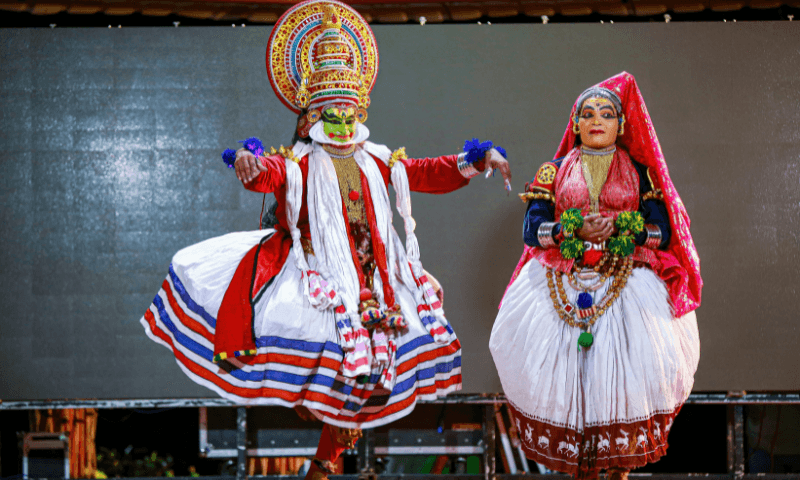
Kochi has been absorbing cultures for centuries. Arab traders, Portuguese colonisers, Dutch merchants, and British administrators each left something behind in this port city on Kerala’s Malabar Coast. Yet amid all that layered history, one of the most powerful cultural encounters a visitor can have here takes less than two hours and happens on a small stage lit by a single oil lamp.
A Kathakali dance show in Kochi is not casual evening’s entertainment. It is a condensed encounter with one of India’s most complex classical art forms, one that fuses dance, drama, music, and painting into a single performance tradition. For many travellers, particularly those visiting Kerala for the first time, it is the moment when the state’s cultural depth comes into sharp focus.
This guide covers the origins of Kathakali, what happens during a live performance, where to watch it in Kochi, and how to make the most of the experience as part of a broader Kerala itinerary.
The word Kathakali comes from two Malayalam words: “katha”, meaning story and “kali”, meaning play. It is, at its core, a story-play, a narrative performance where actors use no spoken dialogue. Instead, the story is communicated entirely through hand gestures (mudras), facial expressions, eye movements, body posture, and a codified system of makeup and costume that tells the audience who each character is before a single gesture is made.
Kathakali emerged as a distinct art form in the 17th century under the patronage of Kerala’s regional rulers, though its roots go much deeper. It draws from older performance traditions such as Koodiyattam (one of the oldest surviving forms of Sanskrit theatre), Krishnanattam (a dance-drama centred on Lord Krishna), and the martial art Kalaripayattu, which gives Kathakali its athletic footwork and physical rigour.
The themes are drawn primarily from the Mahabharata, the Ramayana, and the Puranas. These are not simplified retellings. A single Kathakali scene can take hours to perform in its traditional format, with every emotion, every conflict, and every moral question given full physical expression. It is a form of storytelling that predates cinema, television, and printed novels, and it remains remarkably potent on a live stage.
For travellers, a Kathakali performance that Kerala audiences have preserved for generations offers a direct window into the artistic and philosophical traditions that still shape life in this part of India.
One of the first things that strikes any viewer of Kathakali is the sheer visual intensity of the performers. The makeup process alone takes two to three hours, and it is not decorative. It is a precise visual language.
Kathakali uses a colour-coded makeup system to identify character types. The five primary categories are:
Pachcha (Green): Noble, virtuous characters such as kings and heroes. The green base signifies righteousness, and these roles are typically the protagonists of the story.
Kathi (Knife): Characters with a mix of nobility and villainy. The face combines green with red markings, suggesting a proud or arrogant nature. Roles like Ravana fall under this type.
Thadi (Beard): This category has three subtypes. Red-bearded characters represent aggressive, demonic figures. White-bearded characters, such as Hanuman, represent divine or wise beings. Black-bearded characters portray forest dwellers or hunters.
Kari (Black): Used for demonesses and characters of dark intent. The face is heavily blackened with minimal ornamentation.
Minukku (Polished): Reserved for virtuous female characters, sages, and Brahmins. The makeup is simpler, with a soft, luminous base.
The white facial border worn by many characters is called the chutti. It is built up in layers using rice paste and lime, applied painstakingly by a specialist. The chutti frames the face and amplifies every expression, making even a subtle eye movement visible to the audience.
Costumes are equally elaborate. Performers wear layered skirts made from many yards of fabric, heavy wooden headgear (kiritam), dark vests, and ornate jewellery. The overall effect is to transform a human performer into something larger than life, a figure from mythology made physically present on stage.
Understanding even the basics of this visual code deepens the experience considerably. It is worth arriving early at any Kerala Kathakali Centre or performance venue, as many centres offer a pre-show makeup demonstration that explains these elements in real time.
A traditional Kathakali performance follows a structured sequence, though what visitors see at cultural centres in Kochi is usually a condensed version lasting between 60 and 90 minutes.
Most centres in Kochi open their doors 30 to 60 minutes before the main performance to allow visitors to watch the actors apply their makeup. This is not a backstage peek; it is an integral part of the Kathakali experience. Watching the transformation from a plain-faced performer into a mythological character is fascinating, and centres often have a narrator who explains the significance of each colour and design element.
The show begins with the lighting of a brass oil lamp, a symbolic act that marks the sacred nature of the performance. This is followed by the kelikottu (an announcement drumming) and then the curtain introduction, where key characters are revealed to the audience from behind a hand-held curtain.
The story is enacted entirely through abhinaya (expression). Two vocalists sing the narrative in Sanskritised Malayalam, accompanied by percussion instruments, primarily the chenda and maddalam drums, along with cymbals and a gong. The performers interpret the sung text through 24 basic hand gestures and the nine core facial emotions (navarasam), creating a visual narrative that is astonishingly expressive once you begin to read it.
Many centres offer a brief question-and-answer session after the performance, where audience members can speak with the performers or the narrator. This is a valuable opportunity to ask about specific gestures, character motivations, or the training process behind the art form.
Kochi offers several venues for live Kathakali shows, most of them concentrated in and around the Fort Kochi area.
Located near the Santa Cruz Basilica, this is one of the most established venues for Kathakali in Kochi. The centre hosts daily evening performances and opens early for the makeup demonstration. It also stages Kalaripayattu (Kerala’s martial art) and Mohiniyattam performances on select evenings, making it a single stop for multiple Kerala classical dance traditions.
A cultural complex that combines Kathakali with other art forms in a multi-event evening format. The setting is intimate, and the performers are experienced practitioners.
Another well-known venue that offers nightly shows with English narration. The pre-show makeup session here is particularly well-structured, with explanations tailored for international visitors.
For travellers whose Kerala tour extends beyond Kochi, Kathakali performances are also available in other destinations such as Thekkady and Kumarakom, though the concentration and quality of shows is highest in Kochi.
Kathakali performances in Kochi run year-round, which is one of the advantages of this being a staged cultural experience rather than a seasonal festival. Most centres schedule their shows in the early evening, typically starting between 5:00 PM and 6:30 PM, with doors opening earlier for the makeup session.
That said, the broader timing of your Kerala trip matters. The period from October to March is widely considered the best season for visiting Kerala, with pleasant weather and peak cultural activity. If your visit coincides with festivals such as Onam (August/September) or Thrissur Pooram (April/May), you may also have the chance to see Kathakali performed in its traditional temple setting, which is a markedly different experience from a tourist-oriented show.
Regardless of when you visit, attending the pre-show makeup session is strongly recommended. It adds context that transforms the performance from a visual spectacle into an intelligible story.
Kochi is typically the starting point for most Kerala tour packages, and the city itself deserves at least a full day of exploration. A well-planned day in Kochi might look like this:
Morning: Walk through Fort Kochi’s colonial lanes, visit St. Francis Church (the oldest European church in India) and the Dutch Palace at Mattancherry. Spend time at the Chinese fishing nets along the waterfront.
Afternoon: Explore the Paradesi Synagogue in Jew Town, browse the spice markets, and visit a local art gallery. Fort Kochi’s streets are lined with cafes and independent shops that reward slow exploration.
Evening: Attend a Kathakali dance show in Kochi, arriving early for the makeup demonstration and staying for the full performance.
This combination of heritage sightseeing and a live cultural performance gives visitors a layered understanding of Kochi that goes well beyond surface-level tourism. The Kerala cultural experience you gain from a single day in Kochi, when structured this way, sets the tone for the rest of your journey through the state.
Kochi works naturally as the opening chapter of a multi-destination Kerala itinerary. From here, most travellers move to Munnar for hill station scenery and tea plantations, then to Thekkady for wildlife at the Periyar Wildlife Sanctuary, and onward to the backwaters of Kumarakom or Alleppey before finishing at Kovalam’s beaches.
A 7-day Kerala backwater tour or an 8-day classic Kerala tour typically includes Kochi as the first stop, with an evening Kathakali show built into the itinerary. For families, Kerala family packages often position the Kathakali show as one of the key cultural touchpoints alongside spice plantation visits and houseboat experiences.
The art form also connects thematically to Kerala’s broader heritage. Travellers interested in the state’s temple traditions can extend their trip to include Thrissur and Guruvayoor through a Kerala temple tour, where Kathakali’s religious roots become even more apparent.
A few details will help you get the most from your evening:
Arrive early. The makeup demonstration is as valuable as the performance itself. Plan to be at the venue at least 30 minutes before the show starts.
Choose a seat near the front. Kathakali’s storytelling relies on subtle facial expressions and precise hand gestures. Sitting close makes these details visible and the experience far more immersive.
Photography is usually permitted before and during the makeup session, but many venues request that you switch off flash during the actual performance. Check with the venue on arrival.
No special dress code is required, but comfortable clothing is advisable as you will be seated for up to 90 minutes. Venues are typically indoors and air-conditioned or fan-cooled.
A basic understanding of the story being performed helps enormously. Most centres provide a brief synopsis in English before the show, and some offer printed leaflets. Reading this material before the performance begins will help you follow the narrative.
If you are travelling with children, the visual spectacle of the makeup and costumes tends to hold their attention well, though younger children may find the slower dramatic passages less engaging. Venues with English narration are a better choice for families.
Kathakali is not background entertainment. It is a living art form that has been refined over centuries and continues to be performed by artists who train for years to master its demands. A Kathakali dance show in Kochi offers travellers a rare opportunity to witness this tradition up close, in the very city where colonial traders, religious scholars, and local artists have been exchanging ideas for generations.
For those planning a Kerala trip, an evening spent at a Kathakali performance adds a dimension to the journey that no amount of scenic sightseeing can replicate. It is the kind of experience that shifts your understanding of a place, turning a holiday into something more substantial.
Reach out to Memorable India to build a Kerala itinerary that pairs Kochi’s cultural richness with the state’s backwaters, hill stations, wildlife, and coastline.
Kathakali is a classical dance-drama from Kerala that tells stories from Hindu epics through hand gestures, facial expressions, and elaborate makeup. In Kochi, you can watch live performances at the Kerala Kathakali Centre in Fort Kochi, Greenix Village, and the Cochin Cultural Centre. Shows run daily in the evening throughout the year.
A Kathakali performance at a cultural centre in Kochi typically lasts between 60 and 90 minutes. If you arrive early for the pre-show makeup demonstration, the full experience extends to roughly two hours. Traditional temple performances can be much longer, sometimes continuing through the night.
Yes. The vivid makeup, colourful costumes, and dramatic expressions make Kathakali visually engaging for children and adults alike. Most venues in Kochi offer English-language narration or printed synopses, making the performance accessible to international visitors with no prior knowledge of the art form.
Kathakali shows run year-round at cultural centres in Kochi, so there is no specific season required. However, visiting between October and March offers the best overall weather for a Kerala trip. If you visit during Onam or Thrissur Pooram, you may have the opportunity to see Kathakali in its traditional temple-festival setting.
Booking advance is not always necessary for regular evening shows, but it is recommended during peak tourist season (November to February) when venues can fill up quickly. Tickets can typically be purchased at the venue or through your tour operator.
In addition to Kathakali, Kochi offers Kalaripayattu (Kerala’s martial art) demonstrations, Mohiniyattam dance performances, and Carnatic music recitals. A full day in Fort Kochi can also include visits to St. Francis Church, the Dutch Palace, the Chinese fishing nets, and the Paradesi Synagogue for a comprehensive Kerala cultural experience.

20 Best Hill Stations in Uttarakhand for Family Vacation, Corporate Trips, Nature Lovers & Adventure
26 Aug 2026
15 Best National Parks and Wildlife Sanctuaries in North East India
25 Aug 2026
16 Best Romantic Hill Stations in India for Honeymoon Holidays
23 Aug 2026
Top 30 Must-See Forts and Palaces in Rajasthan
21 Aug 2026
Top 30 Krishna Temples in India: A Complete Pilgrim and Traveller Guide
21 Aug 2026


