 +919871148514
 info@memorableindia.com
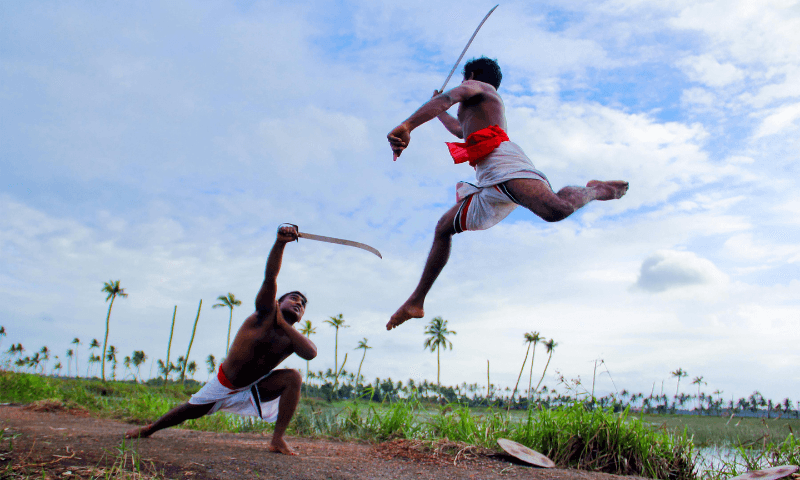
The sunken earthen arena is roughly four feet below ground level, lit by oil lamps, thick with the scent of coconut oil and medicinal herbs. A practitioner drops into a crouch that mimics a roaring lion, then launches into a spinning kick so fast it blurs. A second fighter answers with the urumi, a coiled flexible sword that whips through the air with a sound like tearing silk. This is Kalaripayattu in Thekkady, performed most evenings at the Kadathanadan Kalari Centre on the Kumily-Thekkady Road, and it remains one of the most visceral cultural encounters available in southern Kerala.
Kalaripayattu is widely regarded as one of the oldest surviving martial art systems in the world, with roots that trace back more than three thousand years into the warrior traditions of ancient South India. For travellers visiting Thekkady for its spice plantations and the Periyar Wildlife Sanctuary, a live Kalaripayattu demonstration adds a dimension that wildlife and landscape alone cannot offer. It is a direct encounter with a living tradition that shaped Kerala’s identity, its healing systems, and, according to many scholars, influenced combat forms across Asia.
This guide covers what Kalaripayattu actually involves, where to watch it in Thekkady, what to expect from a performance, and how to build this cultural highlight into a broader Kerala holiday.
Kalaripayattu combines armed and unarmed combat techniques with a deeply rooted philosophy of body-mind coordination. The word itself breaks down simply: “kalari” refers to the training ground, and “payattu” means combat or practice. What sets this form apart from other martial traditions is its integration of physical training, weapon mastery, and a therapeutic healing system known as Kalari Chikitsa, which uses knowledge of the body’s vital pressure points (marma points) for both attack and treatment.
The art draws its movement vocabulary from the natural world. Practitioners study and replicate the postures and attacks of animals, including the lion, tiger, elephant, wild boar, snake, and crocodile. Each animal form teaches a specific principle: the lion stance builds explosive forward power; the snake form develops low, fluid evasion; the elephant posture trains grounded strength. This is not decorative. Every movement has a functional combat application, refined over centuries of practice in Kerala’s warrior communities.
Historically, Kalaripayattu was the combat code of the Chola, Chera, and Pandya dynasties. It formed the backbone of military training across the region. During British colonial rule in the nineteenth century, the art was banned alongside several other indigenous martial traditions across South India, specifically because colonial administrators did not want a population trained in armed and unarmed combat. The practice survived in small pockets, particularly in temple-affiliated kalaris, and was revived after Indian independence in the twentieth century. Today, it is both a living cultural tradition and a growing draw for travellers interested in Indian art forms that go beyond surface-level performance.
Kalaripayattu training follows a structured progression that demands years of disciplined practice. Understanding these levels adds genuine depth to watching a live show, because what looks like spontaneous acrobatics is actually the product of a very specific curriculum.
The foundational stage focuses entirely on unarmed techniques. Students learn body control, balance, flexibility, and the core stances drawn from animal forms. Kicks, jumps, and low sweeps are drilled repeatedly until they become instinctive. This stage can take several years of daily practice, and many practitioners consider it the most important period of training, as everything that follows builds upon this physical literacy.
Once the student has demonstrated sufficient body control, training moves to wooden weapons. The primary instruments at this stage are the kettukari (long staff) and the cheruvadi (short stick). Sparring with these weapons teaches timing, distance management, and the coordination of attack and defence. Students learn to read an opponent’s movement and respond with precision.
This is where metal weapons are introduced. The student trains with the sword and shield (val and paricha), the dagger (kattari), the spear (kuntham), and eventually the urumi, the flexible whip-sword that is perhaps the most dramatic and dangerous weapon in the Kalaripayattu arsenal. The urumi is essentially a thin, long metal blade that coils like a belt and can be swung in sweeping arcs. Mastering it requires exceptional control, as a single miscalculation can injure the practitioner.
The highest level returns to empty-hand combat, but now informed by the full depth of weapons training. Practitioners at this stage understand marma points and can apply pressure-point techniques for both combat and healing. This level is where Kalaripayattu and Kalari Chikitsa (the healing tradition) converge, and only those who reach this stage are considered qualified to teach.
Thekkady has established itself as one of the most accessible locations in Kerala for watching live Kalaripayattu. The town’s position as a popular base for visiting the Periyar Tiger Reserve and the surrounding spice-growing country means that cultural centres here cater specifically to travellers.
The most well-known venue for Kalaripayattu in Thekkady is the Kadathanadan Kalari and Navarasa Kathakali Centre, located on the Kumily-Thekkady Road. Shows typically run daily in the evening, with the standard slot from 6:00 PM to 7:00 PM. At this centre, the martial art is performed in a traditional Kuzhi Kalari, a sunken training arena that is approximately four feet deep, forty-two feet long, and twenty-one feet wide. “Kuzhi” means “hollow” or “pit” in Malayalam, and this design is traditional to northern Kerala kalaris. The gallery seating is built to give the audience an elevated, unobstructed view of the action below, which also provides a natural safety barrier.
The demonstrations here cover the full range of techniques: unarmed combat sequences, staff fighting, sword and shield duels, and the crowd-drawing urumi sequences. Each segment is typically introduced in English, which helps international visitors follow the progression and understand the significance of what they are watching. The centre also stages Kathakali performances, so it is possible to see both art forms in a single evening visit.
The Mudra Cultural Centre in Thekkady is another reliable option for daily Kalaripayattu shows. Performances here draw inspiration from the animal forms that underpin the art, with performers demonstrating the raw power and fluid grace of each stance. The centre is committed to presenting the art in its traditional context, and the setting is intimate enough to feel the impact of the movements from every seat.
For travellers building a multi-day Kerala itinerary, watching a Kalaripayattu show in Thekkady pairs naturally with the other cultural highlights of the region. It complements the Kerala Heritage Tour experience and gives travellers a richer understanding of the state’s artistic traditions.
A typical Kalaripayattu show in Thekkady lasts approximately one hour and follows the traditional training sequence, moving from basic bodywork to weapons combat. Here is what you can anticipate.
The performance usually opens with a prayer and oil lamp lighting, acknowledging the spiritual dimension of the practice. The first section features unarmed techniques: high kicks, acrobatic jumps, and the animal stances. Practitioners move through a series of choreographed sequences (called vadivu) that demonstrate flexibility, balance, and raw athleticism.
The tempo shifts when wooden weapons are introduced. Staff-on-staff sparring is fast and rhythmic, with the crack of wood on wood echoing through the arena. The sound alone is startling the first time you hear it up close.
The most dramatic section involves metal weapons. Sword and shield duels move at speed, with practitioners dodging and parrying in close quarters. The finale often features the urumi, and this is the moment that tends to leave the strongest impression. Watching a practitioner spin a razor-sharp, flexible blade at full speed, inches from their own body, is genuinely arresting. It is not theatrical exaggeration; it is the real art, performed by trained practitioners who have spent years reaching this level.
Photography and video recording are generally permitted. Seats in the front rows offer the best view of the sunken arena, so arriving early or purchasing tickets earlier in the day is worth considering.
Kalaripayattu does not exist in isolation. It is one thread in a larger fabric of Kerala’s performing and healing traditions, and understanding this context makes the experience more meaningful.
The healing system of Kalari Chikitsa shares anatomical knowledge with Ayurveda, Kerala’s ancient medical tradition. Both systems work with the body’s vital energy points, though they apply this knowledge differently. Travellers interested in wellness and traditional medicine can pair a Kalaripayattu experience with a deeper Yoga and Ayurveda Tour in Kerala, creating a programme that covers both the combat and healing dimensions of Kerala’s physical culture.
Kathakali, Kerala’s elaborate dance-drama form, also draws on Kalaripayattu for its physical vocabulary. The demanding footwork, eye control, and facial expressions of Kathakali performers are trained using techniques borrowed directly from the martial art. Many Kathakali artists have a foundation in Kalaripayattu before they begin their dance training. Visiting Kochi, where Kathakali performances are staged regularly at Fort Kochi venues, allows travellers to see this connection firsthand.
There is also a widely cited tradition that Bodhidharma, the Indian Buddhist monk credited with founding the martial arts tradition at China’s Shaolin Temple, was himself a Kalaripayattu practitioner from Kerala. This narrative, while debated among historians, has given Kalaripayattu a prominent place in global martial arts history and adds another layer of significance for visitors with an interest in combat traditions.
Thekkady sits in the Idukki district of Kerala, roughly four to five hours by road from Kochi. Most travellers reach Thekkady as part of a multi-stop Kerala itinerary that includes Munnar, Kumarakom, and Alleppey. The 7 Days Kerala Backwater Tour and the 10 Days Kerala Tour both include Thekkady as a key stop, giving you time for wildlife, spice plantation visits, and a cultural evening.
The ideal period for visiting Thekkady is October through March, when temperatures are pleasant and outdoor activities, including evening cultural shows, are comfortable. The monsoon months (June through September) bring heavy rain, but the lush green landscape during this period has its own appeal, and indoor Kalaripayattu shows continue regardless of the weather.
Tickets for the Kadathanadan Kalari Centre shows can often be arranged through your hotel or resort in Thekkady, or purchased directly at the venue. Arriving a little early helps secure better seating. For travellers on a structured Kerala Spice Tour, the cultural evening can be slotted in after a day of plantation walks and Periyar boating.
The strength of Thekkady as a destination lies in its ability to offer both natural and cultural depth within a compact area. A morning boat ride on Periyar Lake, an afternoon at a cardamom or pepper plantation, and an evening Kalaripayattu show create a full, varied day that covers wildlife, agriculture, and heritage. For families visiting Kerala, this kind of layered experience is particularly rewarding. Kerala Family Packages from Memorable India can be customised to include all of these elements.
Kalaripayattu is an ancient martial art form that originated in Kerala, South India, more than three thousand years ago. It is widely considered one of the oldest surviving combat systems in the world and combines unarmed techniques, weapon training, and a traditional healing system called Kalari Chikitsa. The art is rooted in the warrior traditions of Kerala’s ancient dynasties.
The most popular venue is the Kadathanadan Kalari and Navarasa Kathakali Centre on the Kumily-Thekkady Road, which holds daily shows typically from 6:00 PM to 7:00 PM. The Mudra Cultural Centre in Thekkady also stages regular performances. Both centres perform in traditional settings and provide English-language introductions for international visitors.
A standard Kalaripayattu demonstration in Thekkady lasts approximately one hour. The show progresses through unarmed sequences, wooden weapon sparring, and metal weapon combat, typically concluding with a demonstration of the urumi (flexible sword).
Yes. The performances are safe for spectators of all ages, including children. The gallery seating is designed to keep the audience at a safe distance from the arena. Children are generally fascinated by the acrobatics and weapon displays, making it an engaging and educational experience for families.
October through March offers the most comfortable weather for visiting Thekkady. Temperatures are moderate, making it ideal for outdoor activities, wildlife excursions, and evening cultural programmes such as Kalaripayattu and Kathakali shows. The monsoon months are wetter, but the cultural shows continue indoors.
Some centres across Kerala, including the C.V.N. Kalari in Thiruvananthapuram and Kozhikode, offer short-term training sessions for visitors. In Thekkady, the centres are primarily performance-oriented, but travellers seeking hands-on training can arrange sessions through dedicated schools in Kochi or Thiruvananthapuram as part of a longer Kerala tour.
15 Amazing Temple Fairs in India: A Traveller’s Guide to Faith, Colour and Living Tradition
30 Sep 2026
13 Best Places to Explore in the Youngest State of Telangana
29 Sep 2026
12 Less Explored Destinations in Maharashtra Worth Adding to Your Travel List
28 Sep 2026
11 Must-Visit Museums in India for Wildlife Lovers
27 Sep 2026
11 Best Places in India to Celebrate Christmas
26 Sep 2026


