 +919871148514
 info@memorableindia.com
In Arunachal Pradesh, festivals are not squeezed into weekends. They arrive with the harvest, the first snow of Sela Pass, the migration of hornbills, or the phase of the moon that priests have tracked for generations. The state is home to more than 25 major tribes and over 100 sub-tribes, each with its own calendar of thanksgiving, prayer, and celebration. For a traveller, this means the answer to “when should I visit Arunachal Pradesh?” often depends less on the weather and more on which festival you want to see.
This guide covers the 10 most popular festivals in Arunachal Pradesh, when they happen, which tribe or region they belong to, and what actually takes place on the ground. Use it to time your trip, choose the right district, and plan around the celebrations that align with your interests.
Arunachal shares borders with Bhutan, Tibet, and Myanmar, and that geographic layering shows up in its cultural life. The western belt around Tawang and Bomdila leans Buddhist, with festivals tied to the Tibetan lunar calendar. Central Arunachal, home to the Apatani, Nyishi, Galo, and Adi communities, follows agrarian and animist traditions that revolve around sowing and harvest. The east, near the Mishmi hills and Namdapha, holds ceremonies that go back several centuries. According to the
According to the Arunachal Pradesh Tourism department, the state officially recognises dozens of festivals across its districts, and many are now open to visitors with an Inner Line Permit.
Tribe/Region: Monpa, Sherdukpen, Memba (Tawang and West Kameng)
When: February or March (Tibetan New Year, based on the lunar calendar)
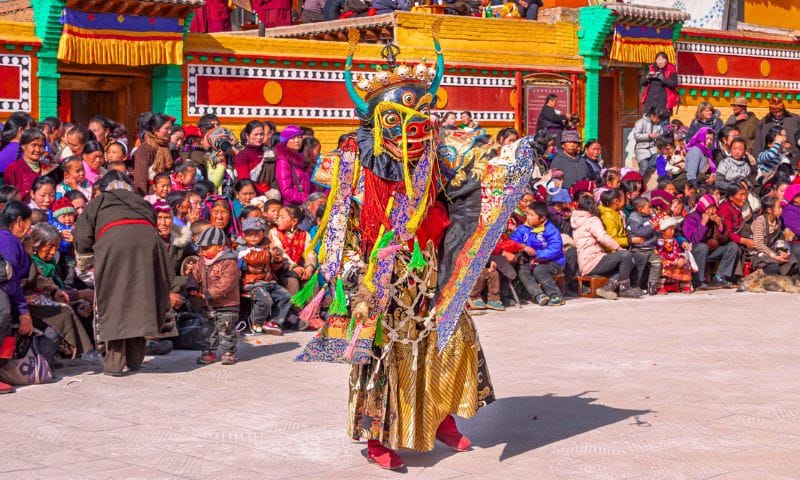
Losar marks the Tibetan New Year and is the most important festival for the Monpa community around Tawang. Homes are cleaned, prayer flags are replaced, and monasteries such as Tawang Monastery hold long ceremonies with masked Cham dances. Families prepare khapse, a fried pastry, and offer chhaang, the local barley beer, to guests. The festival lasts up to 15 days, though the first three see the most activity.
Best base: Tawang town. Reach via Guwahati to Tezpur, then a two-day road journey through Bomdila and Sela Pass.
Region: Ziro Valley, Lower Subansiri district
When: Last week of September (four-day event)
Not a tribal festival in the traditional sense, but arguably the most well-known contemporary celebration linked to the state. The Ziro Festival of Music is an outdoor independent music event held among the rice terraces of the Apatani heartland. Since its start in 2012, it has drawn Indian and international acts across folk, rock, electronica, and experimental genres. Camping is part of the experience, as is the food stalls run by Apatani families.
For readers planning around this event, our detailed piece on Ziro Valley and its cultural fabric covers what to expect beyond the festival stage.
Tribe: Galo (West Siang and Leparada districts)
When: 5 April (main day), celebrations run three to five days
Mopin is the harvest and purification festival of the Galo people. Participants smear each other with rice powder, a gesture believed to ward off evil and invite prosperity. Popir, the traditional Galo dance, is performed in circles by women dressed in white gale skirts. Rice beer flows generously, and community feasts are prepared using Apong, pork, and forest greens. Basar town is one of the most active locations for Mopin, alongside Aalo.
Tribe: Adi (East Siang, Upper Siang, Lower Dibang Valley)
When: 1 to 5 September
Solung is a post-sowing agricultural festival dedicated to Kine Nane, the goddess of crops, and Doying Bote, the deity of animals. The five days include animal sacrifice, weapon rituals called Taktor to protect the household, and the recitation of ancient oral history known as Abangs. It is a working festival, meaning fields are visited, granaries are blessed, and community elders lead prayers rather than staged performances. Pasighat is the most accessible town to experience Solung.
Tribe: Nyishi (largest tribe of Arunachal, spread across Papum Pare, Kurung Kumey, and Kra Daadi)
When: 26 February (declared date)
Nyokum is a prayer to Nyokum, the goddess of universal well-being, seeking peace, good harvest, and protection from disease. The central altar, called Yugang, is built with bamboo, and a nyub (priest) chants for hours around it. Community feasts and the ritual sacrifice of mithun, the state animal, mark the day. Itanagar hosts the most visible celebration, making it an accessible option for travellers.
Tribe: Apatani (Ziro Valley)
When: 5 to 7 July
Dree is the Apatani agricultural festival that prays for a bumper harvest and protection from famine, pests, and disease. Four deities are invoked, including Tamu and Metii. The ritual involves the sacrifice of fowls and eggs, followed by a community meal. Traditional Apatani sports, folk dances such as Daminda, and cultural exhibitions have made Dree one of the more visitor-friendly festivals in central Arunachal. Ziro is the base.
Region: Tawang Monastery, Monpa community
When: 28 to 30 December annually
Torgya is a three-day monastic festival held inside the courtyard of the 400-year-old Tawang Monastery. Monks perform masked Cham dances that dramatise the victory of good over evil forces and pray for the prosperity of the community for the coming year. Each of the 12 dances has its own symbolism, drawn from Tantric Buddhist traditions. The setting, with snow-dusted mountains as backdrop, makes Torgya one of the most photographed festivals in the state.
Practical note: December in Tawang is cold, and Sela Pass can close due to snow. Confirm road conditions before travel.
Tribe: Idu Mishmi (Lower Dibang Valley and Dibang Valley)
When: 1 to 6 February
Reh is the identity festival of the Idu Mishmi community, celebrating the bond between the community and their ancestral mother goddess Nanyi Inyitaya. The rituals stretch across six days and include the Idu priest known as Igu chanting the community history, communal dances, and offerings of yeti (rice beer) and mithun. Roing is the main venue and can be reached from Tinsukia in Assam.
Community: Khampti, Singpho, Tikhak, and Theravada Buddhist communities of eastern Arunachal
When: 13 to 15 April (coincides with the Southeast Asian New Year)
Sangken marks the Theravada Buddhist New Year and shares its roots with Songkran in Thailand and Thingyan in Myanmar. The central ritual is the ceremonial bathing of Buddha statues carried in procession, followed by community water-splashing. Namsai and Chongkham monasteries are the main hubs. The festival is joyful, spring-timed, and family-friendly.
Tribe: Apatani (Ziro Valley)
When: 20 March to early April (rotates between villages each year)
Myoko is a festival of friendship, fertility, and community bonding held among three Apatani villages that take turns to host it. A month-long series of rituals includes pig sacrifice, priestly chants, and the sharing of meat between families. The festival strengthens ties between clans and is deeply private in some segments, but visitors can attend the public rituals with local guidance. Hija, Duta, and Hari are among the villages that host Myoko.
All Indian visitors need an Inner Line Permit (ILP), and foreign nationals require a Protected Area Permit (PAP). ILPs can be applied online through the official state portal and typically process within a few working days. Applying at least two weeks before travel is a safer window during festival season.
The primary gateway is Guwahati Airport in Assam. From here, road transfers connect to Tawang (west), Ziro and Itanagar (central), and Pasighat, Roing, and Namsai (east). Donyi Polo Airport in Itanagar has also improved connectivity for central Arunachal. Rail access is limited, with Naharlagun and Tinsukia serving as the closest useful stations.
Homestays run by tribal families are the most rewarding option during festivals. They give access to community meals, rituals inside private homes, and honest cultural context. In Tawang and Itanagar, mid-range hotels and boutique properties are available. Ziro fills up quickly during September, so book several months ahead if targeting the music festival.
Most travellers who visit Arunachal for a festival end up staying longer to understand the community context around it. A structured Arunachal Tribal Tour that runs across Bomdila, Ziro, Daporijo, and the villages of the Nishi, Apatani, Tagin, and Hill Miri tribes tends to work well for this purpose. It gives cultural depth to the festival experience rather than reducing it to a single day of observation.
Travellers new to the wider region may also want to read our overview of the Seven Sisters of Northeast India to see how Arunachal fits within the broader cultural map of the region.
The festivals of Arunachal Pradesh are working traditions, not tourist reconstructions. They still mark harvests, still ask deities for protection, and still bring entire villages to a standstill for days. Attending one is less about spectatorship and more about being present for a moment that has repeated for generations. Choose the festival that aligns with your interests, plan the permit and logistics early, and travel with respect for the community hosting you.
For a customised festival-focused itinerary across Tawang, Ziro, or the eastern belt, reach out to our Arunachal travel specialists. Our team will handle permits, transfers, homestays, and community introductions so you can focus on the experience.
Losar, celebrated by the Monpa community in Tawang, and the Ziro Festival of Music are the two most widely recognised festivals of Arunachal Pradesh. Losar marks the Tibetan New Year and is deeply religious, while the Ziro Music Festival is a contemporary cultural event held every September.
February, April, and September are the busiest months. February hosts Nyokum, Reh, and often Losar. April brings Mopin and Sangken. September includes Solung and the Ziro Festival of Music. Each corresponds to an agricultural or spiritual calendar milestone.
Yes. Indian citizens need an Inner Line Permit (ILP) and foreign nationals need a Protected Area Permit (PAP). Both can be arranged online through the state portal or via a registered tour operator. Apply at least two weeks before travel, especially during festival season.
The Mopin festival is celebrated by the Galo tribe, primarily in West Siang and Leparada districts. It is a harvest and purification festival held around 5 April, and involves the smearing of rice powder, Popir dance, and community feasts. Basar and Aalo are the main venues.
The Ziro Festival of Music is held every year in the last week of September in Ziro Valley, Lower Subansiri district. Tickets are sold online months in advance, and accommodation ranges from camping onsite to homestays in Hapoli. An Inner Line Permit is mandatory for all attendees.
Choose the festival first, then work backwards. Fix your permit, fly into Guwahati or Itanagar, arrange a road transfer to the host district, and stay in a community homestay to get access to the rituals. A guided cultural itinerary that combines a festival with tribal village visits gives the fullest experience.

15 Best National Parks and Wildlife Sanctuaries in North East India
25 Aug 2026
16 Best Romantic Hill Stations in India for Honeymoon Holidays
23 Aug 2026
Top 30 Must-See Forts and Palaces in Rajasthan
21 Aug 2026
Top 30 Krishna Temples in India: A Complete Pilgrim and Traveller Guide
21 Aug 2026
Top 25 Award Winning Heritage Hotels in India: A Curated Guide to Royal Stays
20 Aug 2026


