 +919871148514
 info@memorableindia.com
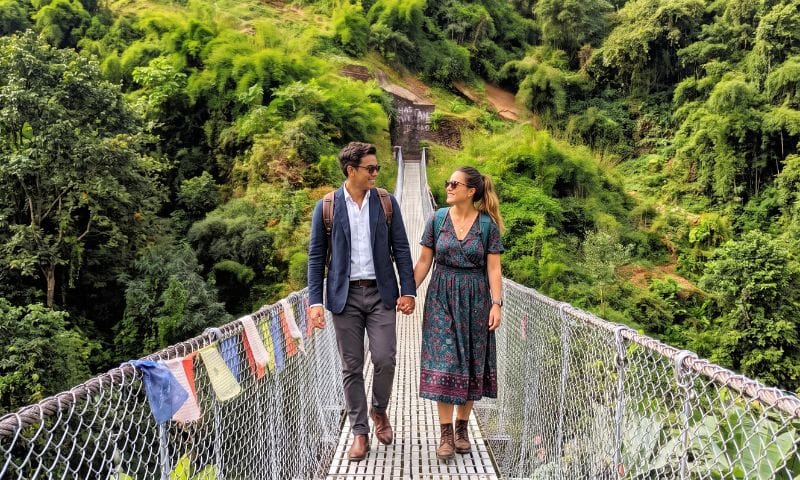
Few countries treat travellers to the kind of stillness that Bhutan does. Pine-scented air drifts through timbered villages, monasteries balance on cliff edges, and river valleys glow gold in the late afternoon light. For newly married couples looking beyond crowded beach resorts and repeat-visit hill stations, this small Himalayan kingdom offers something rarer: unhurried time together in landscapes that still feel largely untouched. Bhutan measures progress through Gross National Happiness, an approach that shapes everything from its low tourist volumes to its emphasis on culture and conservation, as noted by the official Tourism Council of Bhutan. The result is a country tailored for couples who want intimacy, meaning, and beauty in the same trip. This guide walks through ten of the most romantic retreats in Bhutan and how to weave them into a honeymoon that stays with you long after you fly home.
Bhutan is a quiet country by design. Tourist numbers are managed carefully, which means quieter viewpoints, unrushed dinners, and monasteries where you can actually hear the wind through the prayer flags. The distances between valleys are short enough to cover several regions in a single week, yet the scenery shifts dramatically from pine-forested passes to rice-terraced river beds. Couples travelling here also benefit from the country’s Sustainable Development Fee, a per-night contribution that supports free healthcare, education, and conservation for locals, as published on the official Bhutan tourism portal. Add boutique lodges, warm hospitality, and food that leans on cheese, chillies, and buckwheat, and you have a honeymoon setting that feels both indulgent and grounded.
Paro is where most honeymoon journeys in Bhutan begin, and it sets the tone beautifully. The valley is wide, unhurried, and framed by cypress-covered hills. Couples usually spend a day hiking together to the legendary Paro Taktsang, or Tiger’s Nest, a monastery clinging to a cliff nearly 900 metres above the valley floor. The climb takes roughly four to five hours in total and rewards you with panoramic views ideal for that first honeymoon photograph you will actually print. Evenings in Paro can be spent along the Paro Chhu river, browsing hand-woven textiles on the main street, or dining on ema datshi at a family-run restaurant. It is a gentle, romantic introduction to the country.
Bhutan’s capital feels less like a city and more like a large village that grew tastefully. There are no traffic lights, no glass towers, and no rush. Couples can wander through Tashichho Dzong at dusk when floodlights pick out its golden roofs, sip pour-over coffee at cafes tucked into cedar-panelled shops, or drive up to the 51-metre Buddha Dordenma for views across the Wang Chhu valley. For a slower afternoon, our guide to the top places to visit in Thimphu lists heritage museums and craft institutes worth a quiet detour. Thimphu is best treated as a two-night pause between longer valley stays, giving couples time to breathe before the drive east.
Punakha sits lower than most of Bhutan’s touristed valleys, which makes it noticeably milder in winter and lush in spring. The centrepiece is Punakha Dzong, positioned at the meeting of the Pho Chhu and Mo Chhu rivers and considered one of the most photogenic fortresses in the Himalayas. Couples often cross the long suspension bridge nearby, walk through rice terraces toward Chimi Lhakhang, or spend a slow afternoon rafting on the Mo Chhu. Lodges in Punakha tend to be terraced into the hillsides, and a private dinner on your balcony as the valley darkens is one of those small honeymoon moments that lingers.
Set at around 3,000 metres in central Bhutan, Phobjikha is a glacial valley best known as the winter home of the endangered black-necked crane. From late October to early March, the birds settle in the marshes and can be watched from the Royal Society for Protection of Nature centre near Gangtey. Beyond the birdlife, the valley is broad, quiet, and largely free of mobile-tower clutter, which gives couples an unusual sense of remove. The Gangtey Nature Trail is a gentle two-hour walk suitable for anyone in normal fitness, and the wooden farmhouse stays here are among the most atmospheric in the country.
Bumthang is where Bhutan feels most timeless. Four connected valleys hold some of the oldest temples in the kingdom, including Jambay Lhakhang and Kurjey Lhakhang, both dating back over a thousand years. Couples who enjoy slow travel will find plenty here: apple orchards, small cheese and honey producers, and short walks past prayer wheels turned by mountain streams. The Red Panda Brewery, run by a Swiss expatriate family, produces small-batch weissbier and pairs well with a cool afternoon. Bumthang is not close to the western valleys, so it is best planned as part of a longer honeymoon, either by domestic flight from Paro or an unhurried road journey.
Only a two-and-a-half hour drive from Paro over the Chele La pass, the Haa Valley remains one of the least visited regions in the country. It was closed to foreign tourists until 2002, which explains the sense of stepping into an older Bhutan the moment you arrive. Couples come here for pine-scented walks between hamlets, visits to the twin Lhakhang Karpo and Lhakhang Nagpo temples, and evenings in farmhouse stays where dinner is cooked over a bukhari stove. It is the retreat to choose if you want proper quiet, minimal traffic, and a rural pace that suits couples who have been meaning to switch off from work.
Dochula is not a destination in itself, but skipping it would be a mistake. The pass sits at 3,100 metres between Thimphu and Punakha and is crowned by 108 memorial chortens built in memory of Bhutanese soldiers. On a clear morning, the eastern Himalayas rise across the horizon, with Gangkhar Puensum visible on the best days. Many couples plan an early breakfast at the Dochula Resort cafe, allowing time for a walk among the chortens and photographs of the prayer flags fluttering above the ridgeline. It is one of those short stops that ends up carrying more emotional weight than the guidebooks suggest.
A short drive from Punakha, Chimi Lhakhang is dedicated to Lama Drukpa Kunley, the fifteenth-century saint known as the Divine Madman. The temple is traditionally visited by couples hoping to be blessed for children, which gives it a warm, hopeful quality that many honeymooners appreciate. The walk to the temple crosses rice paddies and passes through Lobesa village, where the houses are painted with murals of the Divine Madman’s most famous symbol. It takes about twenty minutes each way. Combine this with lunch at one of the small hillside restaurants overlooking the valley for a genuinely charming half-day.
Trongsa sits at the geographical centre of Bhutan and is the ancestral home of the royal family. Its dzong is one of the largest in the country, dramatically stretched along a spur above the Mangde Chhu gorge. Couples travelling between the western valleys and Bumthang will pass through here naturally, and it makes sense to spend a night rather than a rushed lunch stop. The Ta Dzong museum offers rich context on Bhutan’s monarchy, while quieter walks around the town reveal a working Bhutanese settlement that has not been polished for tourists. Trongsa suits couples who like their romance layered with history.
Just half an hour from Punakha, Wangdue Phodrang is often used as a gentle base for exploring central Bhutan without the higher-altitude cold of Phobjikha. The area is known for its bamboo craft, slate stones, and the reconstructed Wangdue Dzong, which is regaining its former grandeur after a 2012 fire. Couples staying here can visit hillside villages, walk to Rinchengang for one of the finest valley views in Bhutan, and enjoy quieter roads than those around Thimphu. It is a good closing stop for a honeymoon that has already covered the main valleys and now wants an unhurried final chapter.
Bhutan’s climate is defined by four clear seasons, and each has its own appeal for couples. Spring, from March to May, brings rhododendron blooms in the higher valleys and comfortable daytime temperatures. Autumn, from late September to mid-November, is widely considered the finest window, with crisp air, clear Himalayan views, and the country’s most colourful festivals. Winter, from December to February, is cold but rewarding in the lower valleys of Punakha and Wangdue Phodrang, and the fewer visitors mean quieter monasteries and lodges. Summer is monsoon season and less suited to travel, though the landscapes turn intensely green. For a broader look at the country’s highlights beyond honeymoon retreats, our guide to the top places to visit in Bhutan for first-time travellers is a useful companion read.
A few practical notes go a long way toward keeping the trip effortless. First, allow at least seven nights so you can pace yourselves rather than rushing between valleys. Second, factor in the Sustainable Development Fee when budgeting, since it is charged per person per night for most international travellers. Third, choose your route by valley rather than by monument list; hopping between too many places dilutes the calm that Bhutan is prized for. Fourth, book boutique lodges early for autumn and spring, as inventory is limited. For a curated route with permits, guides, and stays already arranged, our Bhutan honeymoon tour package is designed specifically for couples on their first Himalayan trip.
A honeymoon in Bhutan does not compete with palm-fringed beach resorts or European city breaks. It offers something distinctly its own: cool mountain air, deep culture, and long stretches of quiet you can only really share with one person. The ten retreats above cover the range, from Paro’s cinematic first day to the rural pace of Haa and Wangdue Phodrang. If you would like a route tailored to your dates, altitude comfort, and interests, our team can help you plan it end to end. Get in touch through our contact page and a travel specialist will respond within twenty-four hours with a route that fits your calendar and pace.
Seven to ten nights works best for a honeymoon in Bhutan. This gives couples time to acclimatise, cover the western valleys of Paro, Thimphu, and Punakha, and add a slower retreat like Phobjikha or Bumthang without rushing through any single destination.
Punakha is widely considered the most romantic base among the romantic retreats in Bhutan, thanks to its milder climate, riverside dzong, terraced rice fields, and boutique lodges built into the hillsides. Paro is a close second for its dramatic Tiger’s Nest hike and heritage feel.
Bhutan sits in the mid to premium range as a honeymoon destination. The Sustainable Development Fee, permit costs, and small hotel inventory push the total higher than a Thailand or Bali honeymoon, but it remains comparable to a curated Himalayan trip within India.
March to May and late September to mid-November are ideal for a honeymoon in Bhutan. Spring brings rhododendrons and mild weather, while autumn offers the clearest Himalayan views and the biggest festivals, including Thimphu Tshechu and Paro Tshechu.
Indian nationals do not need a tourist visa for Bhutan. They need an entry permit, which can be arranged through a registered tour operator using a valid passport or voter ID. Other nationalities require a tourist visa arranged in advance through a licensed Bhutanese agent, along with the Sustainable Development Fee.
For a five to six-night honeymoon in Bhutan, focus on Paro, Thimphu, and Punakha with a Dochula Pass stop in between. This route covers the country’s most iconic scenery, culture, and boutique lodges without asking couples to cover long central-Bhutan distances.
Best Time to Visit Tadoba National Park, Maharashtra: A Season-by-Season Guide
09 Jul 2026
12 Jyotirlingas of Lord Shiva in India and Their Mythological Importance in Hindu Religion
08 Jul 2026
10 Romantic Retreats in Bhutan: The Perfect Honeymoon Spot
07 Jul 2026
10 Most Popular Festivals in Arunachal Pradesh You Should Plan Your Trip Around
06 Jul 2026
10 Most Beautiful Villages in Uttarakhand You Must Visit
05 Jul 2026


