 +919871148514
 info@memorableindia.com
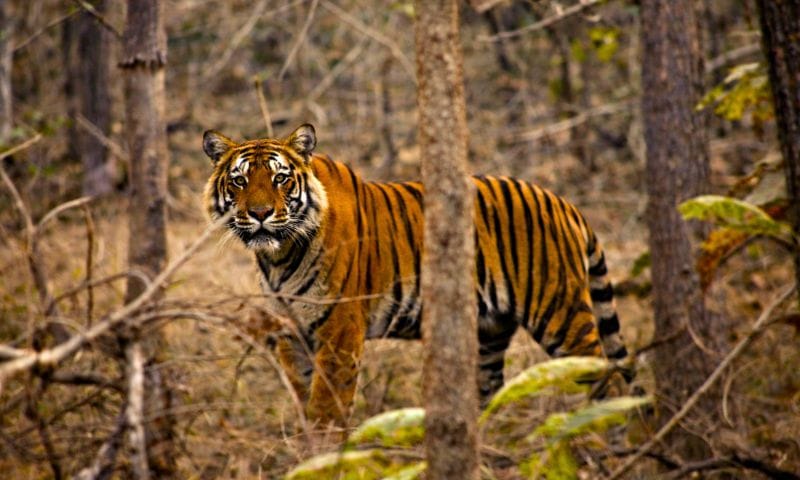
Ask any naturalist in central India where a first-time safari-goer stands the highest chance of a clean, unhurried tiger sighting, and the answer almost always circles back to one name: Tadoba. Tucked into the Chandrapur district of eastern Maharashtra, this reserve has quietly built a reputation for open-grassland encounters, dense tigress-cub bloodlines, and a road network that gets you close without feeling intrusive. The catch, as with every wildlife park in India, lies in timing. A trip planned in the wrong month can mean closed gates, muddy trails, or hours of driving through empty teak forest. Planned around the right window, the same reserve delivers back-to-back sightings that safari veterans remember for years.
This guide walks through what actually shapes the best time to visit Tadoba National Park, month by month and zone by zone, so you can align your trip with the reader you are: a photographer chasing dry-forest light, a family building a first wildlife holiday, or a birder tracking migrant flocks along the Andhari river.
Tadoba Andhari Tiger Reserve, spread across roughly 1,727 square kilometres of dry deciduous forest, is Maharashtra’s oldest and largest national park. It was notified in 1955, later merged with the Andhari Wildlife Sanctuary in 1986, and now functions as one of the flagship reserves under Project Tiger, monitored by the National Tiger Conservation Authority. What sets the reserve apart is a rare combination of high tiger density, six distinct core safari gates (Moharli, Kolara, Khutwanda, Navegaon, Pangdi, and Zari), and a growing buffer safari network that stays partially open even during the monsoon.
Three factors decide when to go:
Understanding how these three shift through the year is the fastest way to plan a satisfying visit.
Winter is the sweet spot for travellers who want a balance of good weather, healthy vegetation, and decent tiger sightings. Daytime temperatures sit between 12°C and 28°C, mornings can dip low enough to need a fleece for that 6 a.m. safari, and afternoons stay pleasant for a second drive. The forest is still holding some moisture from the retreating monsoon, so the landscape photographs beautifully in soft, low-angle light.
What to expect through the season:
Winter suits families, senior travellers, and first-timers who want to enjoy the surrounding forest as much as the tiger chase. If you plan to combine your visit with a broader central India circuit, this is also when the neighbouring parks in Madhya Pradesh perform well.
If seeing a tiger is the single most important goal of the trip, summer is when the odds shift meaningfully in your favour. As surface water shrinks across the reserve, animals concentrate around a limited number of perennial pools, streams, and the Tadoba and Kolsa lakes. Tigers, gaur, sloth bears, and wild dogs become far more predictable, and long, patient waits at a waterhole often reward with sightings that winter simply cannot match.
The trade-off is heat. April and May routinely cross 40°C by mid-morning, and the afternoon safari can be genuinely uncomfortable if you are not prepared. That said, seasoned wildlife travellers plan their trips precisely around these months because sighting frequency, movement of dominant males across territories, and photography light quality all peak.
Month-by-month within summer:
Our detailed guide to the best wildlife safaris in India expands on how Tadoba compares with Bandhavgarh, Ranthambore, and Kanha during this window, if you are building a longer central India trip.
Most travellers assume Tadoba shuts entirely during the monsoon. That has not been true for several years now. The core zones close from 1 July to 30 September for breeding, habitat recovery, and safety on unpaved forest roads. However, several buffer zones remain open on rotation, and this window has quietly become one of the most interesting times for a specific type of traveller.
What monsoon offers:
What it does not offer:
If you are a repeat wildlife traveller who has already ticked the tiger box on a previous visit, a monsoon trip focused on buffer safaris, forest photography, and birding can be genuinely rewarding. For a first Tadoba visit, wait for the core to reopen.
A quick reference for planners:
Match the month to your priorities, not to a generic best-time label. A photographer, a family with children, and a birder will each have a different ideal window.
Tadoba runs two safari slots each day, adjusted for daylight:
Core zone permits open on the official Maharashtra tiger reserve booking portal 60 days in advance, and Moharli, Kolara, and Khutwanda gates sell out fastest for weekends and long weekends. Buffer permits are easier to secure and often bookable closer to the date.
A practical rule for peak season:
Our long-form breakdown on wildlife photography tours in India covers zone selection and permit strategy in more depth for travellers who want to optimise for photography.
A few things that consistently improve a Tadoba trip regardless of when you visit:
For a longer overview of what a day inside the reserve actually looks like, this account of a day out with tigers at Tadoba Andhari Tiger Reserve captures the pace well.
Tadoba sits about 140 kilometres south of Nagpur, which is the nearest major transport hub.
If you are planning a longer wildlife circuit, Tadoba pairs naturally with Pench, Kanha, and Bandhavgarh. Our curated wildlife India tours cover these routes end to end.
Tadoba rewards travellers who plan around what they want out of the visit rather than around a generic peak-season label. Winter for comfort and landscape, summer for tiger sightings, monsoon for buffer birding and green-forest photography, each has its case. If you would like help matching the right month, gate, and stay to the way you travel, get in touch with our team at Memorable India and we will put together a Tadoba itinerary shaped around your dates and priorities.
The best time to visit Tadoba National Park is between October and June, when the core zones are open. For balanced weather and reliable sightings, November to February works well. For the highest tiger sighting probability, March to May is the peak window.
The core zones of Tadoba Andhari Tiger Reserve close from 1 July to 30 September every year. However, several buffer zones remain open on rotation during the monsoon, making short safaris and birding trips possible even in the rains.
April and May consistently record the highest tiger sighting frequency. As surface water dries up, animals cluster around perennial waterholes, making predictable safari routes highly productive.
Tadoba has six main core safari gates: Moharli, Kolara, Khutwanda, Navegaon, Pangdi, and Zari. Moharli and Kolara are historically the most popular for tiger sightings, while Khutwanda offers a slightly quieter experience. Buffer zones such as Junona and Agarzari deliver strong value during peak season.
Core zone permits open 60 days in advance on the official Maharashtra tiger reserve portal. For weekend visits in peak months (April and May), book the moment the window opens. Buffer permits are more relaxed and can often be secured within a week or two of travel.
Muted-tone clothing, a warm layer for early mornings, a wide-brim hat, sunscreen, sunglasses, insect repellent, a refillable water bottle, binoculars, and a camera with a telephoto lens if photography matters to you. Avoid bright colours and strong perfumes.

Best Time to Visit Tadoba National Park, Maharashtra: A Season-by-Season Guide
09 Jul 2026
12 Jyotirlingas of Lord Shiva in India and Their Mythological Importance in Hindu Religion
08 Jul 2026
10 Romantic Retreats in Bhutan: The Perfect Honeymoon Spot
07 Jul 2026
10 Most Popular Festivals in Arunachal Pradesh You Should Plan Your Trip Around
06 Jul 2026
10 Most Beautiful Villages in Uttarakhand You Must Visit
05 Jul 2026


