 +919871148514
 info@memorableindia.com
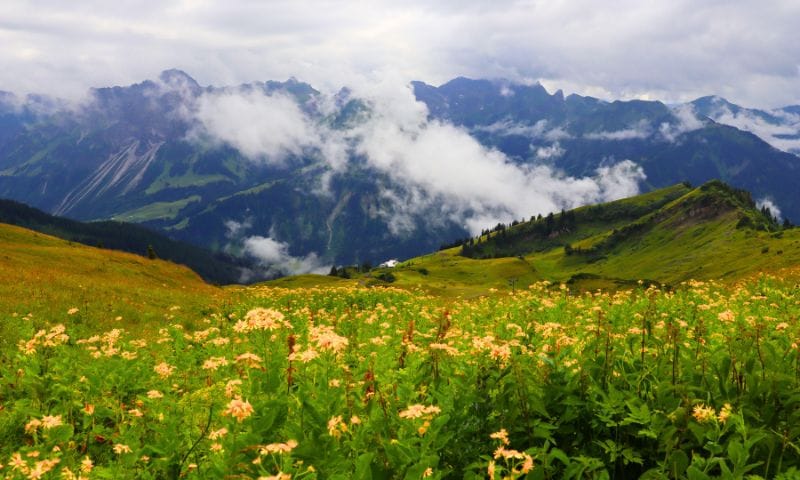
Somewhere above Govindghat, after the rhododendron forests thin out and the Pushpawati river starts to sound closer than it looks, the landscape does something unusual. The gradient softens, the peaks step back a little, and a wide, tilted meadow opens up with colour running through it like brushstrokes. This is the Valley of Flowers National Park, a protected alpine basin in the Chamoli district of the Uttarakhand Himalayas that has been drawing botanists, trekkers and slow travellers for close to a century. It is not a quick weekend from Delhi, and it is not the kind of place you tick off in a hurry. What it offers, in return for the effort, is one of the most concentrated displays of endemic Himalayan flora anywhere in India, wrapped in a UNESCO-listed ecosystem that changes character every few weeks between June and October. Here are six grounded reasons the trek continues to earn its reputation, and what they actually mean for your trip.
The Valley of Flowers was inscribed on the UNESCO World Heritage list in 2005, jointly with the adjacent Nanda Devi National Park, under the Nanda Devi and Valley of Flowers National Parks property. That listing is not decorative. It reflects a rare combination of geology, altitude and monsoon exposure that produces a flora unlike almost anywhere else in the western Himalayas. The valley sits at roughly 3,352 to 3,658 metres, tilted just enough to catch monsoon moisture and hold it in a shallow basin fed by glacial streams.
The bloom is not a single event. It moves in phases. Early July belongs to primulas, potentillas and anemones. By late July and early August, the meadow shifts into deep blues and purples with Blue Poppy (Meconopsis aculeata), Brahma Kamal and cobra lilies. By late August into September, asters, geraniums and gentians take over. The Uttarakhand Forest Department and botanists at institutions like the Botanical Survey of India have documented over 500 species of flowering plants inside the park, including several that are endemic to the western Himalayan alpine zone.
For anyone with even a passing interest in botany, wildlife photography or slow, observational travel, the density of species per square kilometre is what makes this park different from a generic hill-station meadow. You are not looking at a garden. You are walking through a functioning alpine ecosystem that shifts on a weekly timeline.
The Valley of Flowers trek is best described as moderately demanding rather than technical. That distinction matters, because it puts the trail within reach of reasonably fit first-time trekkers without diluting the sense of accomplishment. The route begins at Govindghat, roughly 275 kilometres from Rishikesh, and follows the Alaknanda before turning into the Bhyundar valley.
The Valley of Flowers trek from Govindghat is broken into two clear segments. The first is a 9 to 10 kilometre climb to Ghangaria base camp at 3,049 metres, which can be walked, done by pony or partly covered by helicopter from Govindghat. Ghangaria is the only overnight village in this zone and serves both the Valley of Flowers and Hemkund Sahib traffic. From Ghangaria, the valley itself is a separate 3.5 to 4 kilometre one-way walk with a gentle gradient, entering the national park gate and continuing to the memorial of Joan Margaret Legge, the British botanist who documented the flora here in 1939.
What the effort buys you is scale. The valley opens up in a way that photographs rarely capture, with the Rataban and Nilgiri Parbat massifs rising behind the meadow and the Pushpawati cutting through the middle. Travellers who want to build a broader Himalayan experience often combine this trek with other high-altitude routes through our Uttarakhand trekking tour packages, or extend the trip with a slower stay through curated summer camping options across Uttarakhand.
The park sits inside the broader Nanda Devi Biosphere Reserve, which is one of the most ecologically significant protected areas in the Indian Himalayas. That surrounding buffer explains why the wildlife checklist here is more serious than most visitors expect from a flower valley.
Recorded fauna inside and around the park includes the Himalayan monal, the Himalayan snowcock, koklass pheasants and a range of alpine songbirds. Larger mammals recorded in the wider Nanda Devi Biosphere Reserve include Himalayan black bear, blue sheep, musk deer and, at higher elevations, the elusive snow leopard. You are unlikely to see a snow leopard on a standard trek, but the presence of one in the surrounding habitat tells you something about how intact this landscape still is.
Butterflies are the other quiet story. On a warm afternoon in the valley you can watch several species working the same patch of flowers, including apollos and painted ladies. For readers who care about cleaner, higher-altitude ecosystems, the park often appears alongside other protected zones covered in our guide to pollution-free places in India worth visiting.
One reason the Valley of Flowers trek has a steady stream of visitors, even outside pure botany crowds, is that Ghangaria is also the base for Hemkund Sahib, the high-altitude Sikh gurudwara at 4,329 metres. The two experiences share a trailhead but pull very different travellers, and there is a particular quality to Ghangaria in season because of it.
Hemkund Sahib sits beside a glacial lake ringed by seven peaks and is deeply tied to Guru Gobind Singh in Sikh tradition. Pilgrims often walk the steep 6 kilometre climb from Ghangaria at dawn, and the gurudwara serves langar at altitude. For travellers who are not on a religious visit, the option to add a day for Hemkund gives the trip a second, very different summit day, with wide views of the Bhyundar valley on the descent.
This overlap is also why the region features in broader spiritual itineraries. Many travellers combine the Valley of Flowers with a visit to Badrinath on the Char Dham Yatra circuit, since Govindghat lies directly on the road to Badrinath. Done well, the combination gives you flora, faith and Himalayan geography inside a single itinerary without feeling forced.
Most of the Indian Himalayas quietly close for business during the monsoon. Landslides, low visibility and washed-out roads make July and August a difficult window for standard hill-station travel. The Valley of Flowers is the rare exception where the monsoon is the reason to go, not the reason to stay away.
The park is only open from around 1 June to 4 October each year, and the peak floral display sits squarely inside the monsoon months of mid-July to late August. Rain, mist and short bursts of sunlight are part of the experience. The trail is well-defined and forested for long stretches on the Govindghat to Ghangaria leg, which gives some shelter, and the valley itself often clears for a few hours around midday, giving photographers a workable window.
The practical trade-off is real. Leeches, wet shoes and delayed drives are all part of the deal. But for anyone who has grown tired of April to June crowds in mainstream Uttarakhand, the monsoon calendar here is a rare chance to see the state at its most alive without the peak-season pressure.
The park is not a free-for-all. Overnight stays inside the valley are not permitted. Visitors must enter and exit on the same day between roughly 7 am and 5 pm, and camping, cooking, plucking flowers and playing music are all prohibited. Entry is regulated through the Uttarakhand Forest Department, with separate fees for Indian and foreign nationals and a permit system enforced at the gate near Ghangaria.
These rules are not a hassle. They are the reason the ecosystem is still intact. Compared to alpine meadows elsewhere in the country that have quietly degraded under uncontrolled tourism, the Valley of Flowers has held its ground because access is capped and behaviour is regulated. For travellers who care about where their footprint lands, this is one of the few Himalayan destinations where the tourism model and the conservation model actually agree with each other.
It also means the park rewards preparation. Reading up on the flowering calendar, choosing a fortnight that suits your interest and going in with realistic expectations about weather will do more for your experience than any premium add-on.
The Valley of Flowers National Park is one of those rare Himalayan destinations where the effort, the timing and the terrain all reward preparation. Once you have your dates and fitness in place, the logistics of permits, transfers, Ghangaria stays and Hemkund add-ons are worth handing to someone who does this regularly. If you would like a route built around your interests, whether that is peak-bloom photography, a Hemkund extension or a longer Uttarakhand loop, contact our travel team at Memorable India and a specialist will respond within 24 hours with a tailored plan.
The park is open from 1 June to 4 October. The best time to visit Valley of Flowers is between mid-July and mid-August, when the largest number of species are in bloom. Late August into September is quieter and better for those who prefer fewer visitors and cooler weather.
The trek is moderate. It involves around 13 to 14 kilometres of walking one way, spread over two days, with the first day gaining significant altitude between Govindghat and Ghangaria. First-time trekkers with reasonable fitness can complete it comfortably with the right pacing.
Yes. Entry permits are issued at the forest check-post near Ghangaria, with different fees for Indian and foreign nationals. Permits are valid for a single day of entry, and overnight stays inside the valley are not allowed. Carry an original government-issued photo ID.
Yes, and most travellers do. Ghangaria is the shared base for both. A typical itinerary allocates one day for the Valley of Flowers and a separate day for Hemkund Sahib, which sits at 4,329 metres and involves a steeper 6 kilometre climb.
Children above 10 and older adults in good health regularly complete the trek. The Govindghat to Ghangaria leg can be done by pony or helicopter to reduce fatigue. The valley walk itself, from Ghangaria, is gentler and manageable for most healthy visitors.
Pack for cool, wet weather even in summer. A good waterproof jacket, quick-dry base layers, one warm mid-layer, waterproof trekking shoes, a rain cover for your bag, a headlamp and a basic first-aid kit are essential. Temperatures in Ghangaria at night can drop to single digits Celsius even in peak season.
15 Amazing Temple Fairs in India: A Traveller’s Guide to Faith, Colour and Living Tradition
30 Sep 2026
13 Best Places to Explore in the Youngest State of Telangana
29 Sep 2026
12 Less Explored Destinations in Maharashtra Worth Adding to Your Travel List
28 Sep 2026
11 Must-Visit Museums in India for Wildlife Lovers
27 Sep 2026
11 Best Places in India to Celebrate Christmas
26 Sep 2026


