 +919871148514
 info@memorableindia.com
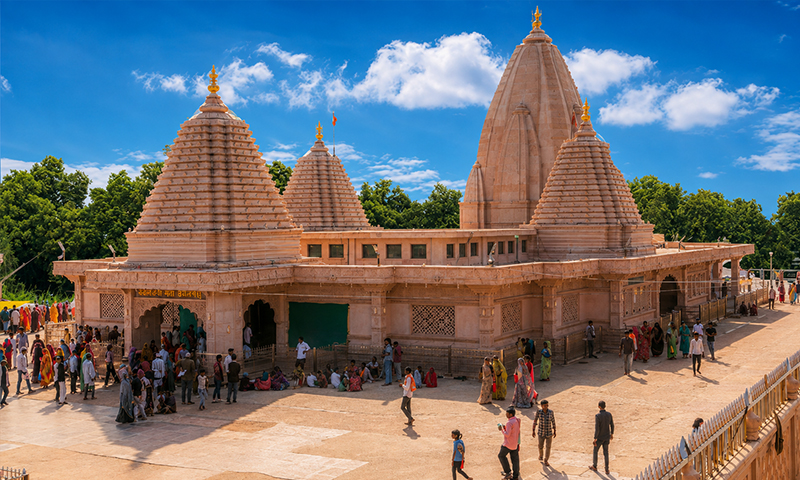
Every temple in India tells a story, but a few tell the same story together. Scattered across mountains, riverbanks, forests, and coastal towns lie ancient shrines that Hindu tradition links to a single cosmic event: the dismemberment of Goddess Sati and the falling of her body parts across the subcontinent. These sites are known as Shakti Peethas, and they form one of the oldest continuous pilgrimage circuits in the country.
For a traveller, visiting the shakti peethas in india is less about ticking off temples and more about understanding how faith, geography, and cultural memory intertwine. Some sites sit inside busy metros, others on hilltops accessible only after a steep climb, and a few remain quiet enough to feel almost forgotten. This guide walks you through the most significant ones, the legend that binds them, and practical planning notes for anyone considering a pilgrimage tour in India built around them.
The origin story is rooted in the Daksha Yagna episode. King Daksha, Sati’s father, refused to invite her husband Lord Shiva to a grand ritual. Insulted, Sati attended anyway and, unable to bear the humiliation directed at Shiva, immolated herself in the sacrificial fire. Grief-struck, Shiva carried her body across the cosmos in the Tandava, a dance of destruction that threatened to unbalance creation itself.
To calm him, Lord Vishnu released his Sudarshana Chakra, which cut Sati’s body into pieces. Wherever a body part or an ornament fell, a Shakti Peetha rose. Each site is guarded by a specific form of the Goddess and by a Bhairava, a fierce manifestation of Shiva who watches over the shrine. This is why the tradition frames these temples not as isolated buildings but as living seats of divine feminine energy.
Ancient texts do not agree on a single count. The Devi Bhagavata Purana mentions 108 seats, while other scriptures reference 18, 51, or 52 principal sites. The most widely accepted 51 shakti peethas list is derived from the Tantra Chudamani and includes shrines spread across present-day India, Nepal, Bangladesh, Sri Lanka, and Pakistan. Within India, 42 of these seats are still active places of worship, ranging from major pilgrimage hubs like Kamakhya and Kalighat to smaller village temples that draw only regional devotees.
For most travellers, attempting all 42 in one trip is impractical. Regional clusters make more sense: a Northeast circuit centred on Assam and West Bengal, a Himalayan circuit across Himachal Pradesh and Uttarakhand, or a western circuit linking Gujarat, Maharashtra, and Madhya Pradesh.
The following shrines are chosen for their historical weight, ease of access, and the intensity of devotional experience they offer. Each has a distinct atmosphere, and together they cover most of the geographic and cultural range of the tradition.
Perched on Nilachal Hill, Kamakhya Temple is often considered the most powerful of all Shakti Peethas. It marks the site where Sati’s yoni is believed to have fallen, which is why the temple has no idol in its sanctum. Instead, a natural spring flows over a stone cleft that devotees revere as the Goddess herself. The Ambubachi Mela, held every June, draws lakhs of tantric practitioners and pilgrims from across South Asia.
The temple architecture, with its beehive shaped shikhara, is a rare surviving example of the Nilachal style. Reach it by a short drive from Guwahati airport, and pair the visit with a Brahmaputra sunset cruise for a fuller Assam experience.
Legend holds that the toes of Sati’s right foot fell here, on the banks of the Adi Ganga. The current temple dates to the early nineteenth century, but the site itself is far older and gave Kolkata a version of its name. The presiding deity is Kali in her three-eyed, tongue-out form, adorned with gold ornaments and hibiscus garlands.
Expect crowds. Kalighat is one of the busiest temples in eastern India, and the surrounding lanes throb with flower vendors, sweet shops, and pandas offering ritual assistance. Visit early morning if you want quieter darshan, and combine the trip with Belur Math and Dakshineswar for a full day of Shakta pilgrimage in the city.
Among the most unusual Shakti Peethas, Jwala Ji has no idol. The Goddess is worshipped as nine eternal flames that burn from fissures in the rock. Geologically, these are natural gas vents; devotionally, they mark the spot where Sati’s tongue fell. Emperor Akbar reportedly tried to extinguish the flames and failed, later offering a gold canopy to the temple.
The shrine sits in the Kangra Valley of Himachal Pradesh, well connected by road from Dharamshala and Pathankot. Pair it with Chamunda Devi and Brajeshwari Devi for a compact three-temple circuit that most itineraries wrap in two days.
Located on the banks of the Baner river against a backdrop of the Dhauladhar range, Chamunda Devi is where Sati’s feet are said to have fallen. The temple is dedicated to the fierce warrior form of Durga who defeated the demons Chanda and Munda. Its riverside setting makes it one of the more scenic Shakti Peethas in the country.
The shrine is around 15 kilometres from Palampur and works well as a stop within a broader Himachal itinerary. Aarti timings shift by season, so confirm before planning your darshan.
Set on a hilltop overlooking the Gobind Sagar reservoir, Naina Devi is one of the most visited Shakti Peethas in North India. Legend traces the site to Sati’s eyes falling here. The temple is reached by a short walk or a ropeway ride, and Navratri sees pilgrim numbers cross several lakhs across the nine days.
From Chandigarh, the drive is roughly three and a half hours, which makes it a natural weekend pilgrimage for travellers based in Punjab, Haryana, and Delhi.
Ujjain is best known for the Mahakaleshwar Jyotirlinga, but it also holds a significant Shakti Peetha at Harsiddhi Mandir, where Sati’s elbow is believed to have fallen. The temple’s tall Deep Stambh, a pillar of lamps lit during festivals, is one of the most photographed sights in the city. Emperor Vikramaditya considered the Goddess his patron deity.
Combining Harsiddhi with the Mahakaleshwar Jyotirlinga is a common practice. Travellers building a broader spiritual itinerary often extend to a 12 Jyotirlinga tour in India that weaves both traditions into one route.
Ambaji lies near the Rajasthan border in the Aravalli hills and is regarded as the site where Sati’s heart fell. The sanctum contains no image; instead, a Vishwa Yantra inscribed with sacred geometry is worshipped as the Goddess. The main structure is faced in white marble, capped by a golden shikhara that catches sunlight from a distance. Our detailed spiritual trip to Ambaji guide covers rituals, nearby Gabbar Hill, and darshan timings in depth.
The temple is around four hours from Ahmedabad and pairs well with Mount Abu, which sits just across the state border.
At the southern tip of the Indian mainland, where three seas meet, stands the Bhagavathy Amman Temple. The Goddess is worshipped here as Kanya Kumari, the virgin form of Parvati, and the site is linked to Sati’s spine in Shakti Peetha tradition. The diamond nose ring of the deity is said to be visible from ships out at sea, a detail woven into local folklore.
Sunrise and sunset at Kanyakumari are experiences in their own right, and the temple visit ties neatly with a boat ride to the Vivekananda Rock Memorial.
Tarapith is associated with the fall of Sati’s third eye and is one of the most important tantric shrines in eastern India. The presiding deity, Tara, is worshipped in her fierce form, and the adjoining cremation ground is central to sadhaka practices. The saint Bamakhepa, considered a nineteenth century mystic of great repute, lived and meditated here.
Located roughly 250 kilometres from Kolkata, Tarapith works as a two-day pilgrimage from the city and is often combined with Nalhati and Bakreshwar for a Birbhum Shakti circuit.
Because the shrines are spread across states, a well-designed itinerary matters more than a long one. A few realities to build around:
Shakti Peethas are open year round, but two festival windows carry special significance. Navratri, celebrated twice a year in Chaitra (March or April) and Sharad (September or October), transforms every Devi temple into a hub of continuous rituals, cultural performances, and night-long darshan. Durga Puja in Bengal, timed with Sharad Navratri, is the peak season at Kalighat and Tarapith.
For quieter darshan, the winter months from November to February work well for most sites except high-altitude Himalayan shrines, which can face heavy snowfall. Kamakhya’s Ambubachi Mela in June is a unique window for those interested in tantric traditions, though crowd density is intense.
A meaningful Shakti Peetha journey is rarely a standard package. Group size, mobility, festival dates, and personal devotional focus all shape the route. For senior pilgrims, we often replace difficult climbs with helicopter or palki options where available. For younger travellers, we build in cultural stops around each shrine so the trip carries more than temple visits. If you are considering a custom multi-state circuit, our team at Memorable India can help design an itinerary aligned to your calendar, comfort, and specific peethas of interest.
The Shakti Peethas are not just religious sites. They are anchors of a cultural memory that has survived invasions, empires, and centuries of change. Visiting them offers something rare: a chance to trace a single story across the length and breadth of India, and to see how that story shapes daily worship in villages, hill towns, and metropolitan neighbourhoods alike. A short two-temple visit or a longer regional circuit both call for the same mindset: patience over pace. The Goddess, in every tradition linked to these seats, rewards attention over speed.
Of the 51 principal Shakti Peethas mentioned in the Tantra Chudamani, 42 are located within present-day India. The remaining sites lie in Nepal, Bangladesh, Sri Lanka, and Pakistan.
Kamakhya Temple in Guwahati is widely considered the most powerful, as it marks the fall of Sati’s yoni. It is a major tantric centre and hosts the annual Ambubachi Mela.
Practically, no. The 42 Indian Shakti Peethas are spread across more than a dozen states. Most pilgrims cover them in regional clusters over multiple trips spanning several years.
Shakti Peethas are associated with Goddess Sati and represent the divine feminine energy. Jyotirlingas are 12 sacred abodes of Lord Shiva. A few sites, such as Srisailam, are considered both.
Vaishno Devi is a highly revered Shakti shrine and is often visited as part of Devi pilgrimage circuits. However, it is not part of the classical 51 Shakti Peethas list defined in the Tantra Chudamani.
Chaitra and Sharad Navratri are the most auspicious windows. For calmer darshan, the winter months from November to February are ideal, except at high-altitude shrines that face snowfall.
10 Most Significant Buddhist Pilgrimage Sites in India: Complete Travel Guide
19 Oct 2026
A First-Time Traveller’s Guide to Car Rental in India
18 Oct 2026
13 Best Things to See and Do in Mizoram: A Traveller’s Guide to India’s Northeast Gem
17 Oct 2026
Top 7 South Indian Temples Known for Their Architectural Beauty
16 Oct 2026
What to Expect On Your Dream Alleppey Houseboat Trip
15 Oct 2026


