 +919871148514
 info@memorableindia.com
India is a land of profound spirituality, where divinity flows through rivers, temples, mountains, and in the hearts of millions. Among its many sacred traditions, the Jyotirlinga Yatra stands as one of the most revered pilgrimages that a devotee of Lord Shiva can undertake. The twelve luminous shrines, scattered across the subcontinent, are not just temples; they are living embodiments of cosmic light, known as Jyoti, where Lord Shiva revealed himself in radiant energy to bless his devotees.
Embarking on the 12 Jyotirlinga Tour in India is more than travel; it is a journey of surrender, devotion, and awakening. For those who seek to experience the fullness of Shiva’s divine presence, our 28 Days Sacred 12 Jyotirlingas tour package is the perfect way to fulfill your wish. We offer a complete immersion into the sacred geography and mystical heart of India to make your journey memorable. For travellers who have earlier explored cultural circuits like the Golden Triangle India Tour Guide or planned shorter routes such as an India Tour Itinerary for 10 Days, this pilgrimage offers a deeper and more spiritually immersive experience. Read on to know more:
The term “Jyotirlinga” originates from Sanskrit, where Jyoti means “light,” and Linga signifies the “Symbol of Shiva”. Together, they represent the infinite cosmic pillar of light, the form in which Lord Shiva first manifested to prove his supremacy over other deities. The twelve Jyotirlingas are thus considered self-manifested and supremely sacred; they are said to radiate divine energy and grant liberation (moksha) to those who visit with a pure heart.
Each Jyotirlinga is linked to a distinct legend from Hindu mythology. While they all glorify the same Lord Shiva, every shrine carries a unique spiritual vibration, architectural beauty, and divine tale. Visiting all twelve is akin to traversing the different forms and energies of the Supreme Being – from destroyer and ascetic to healer and protector.
The journey to the twelve Jyotirlingas is a pilgrimage across India’s vast cultural and geographic expanse, from the snowy Himalayas to the sun-washed southern seas. Each temple bears an identity that connects heaven and earth.
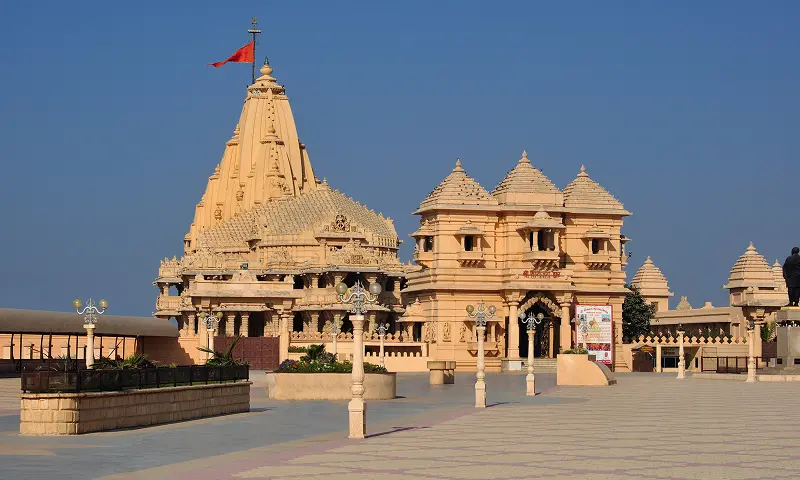
The first and foremost Jyotirlinga, Somnath, is located on the shores of the Arabian Sea in Prabhas Patan. It has been rebuilt several times, yet its spirit remains unshaken. Legends say that the “Moon God” (Chandra) worshipped Shiva here to regain his lost brilliance, and since then, this mythological event has made this shrine a symbol of renewal and faith.
The Nageshwar Jyotirlinga temple is located on the route between Dwarka and Beyt Dwarka, where Lord Shiva vanquished the demon Daruka and freed his devotee Supriya. It signifies Shiva as the eternal protector who destroys evil. The towering statue of Shiva at this temple stands as a beacon of calm amid chaos.
Bhimashankar Jyotirlinga is nestled in the Sahyadri Hills of Maharashtra. It is surrounded by lush green forests and tranquil waterfalls. It is believed that Shiva incarnated here to destroy the demon Bhim, and his sweat formed the sacred Bhima River.
This temple is located near Nasik in Maharashtra, and it is renowned for its three-faced linga representing Brahma, Vishnu, and Shiva together. The sacred Godavari River originates nearby, adding more spiritual charm to this sacred beauty.
One of the smallest Jyotirlingas, this sacred site is situated near the serene Ellora Caves. The temple’s red-stone architecture and the legend of Kusuma, the devoted wife whose faith restored her husband’s life, make it a moving site of devotion for many pilgrims.
The Mahakaleshwar Jyotirlinga lies in the city of Ujjain, renowned for its divine significance and architecture. It is the only south-facing Jyotirlinga in the world. Shiva here is worshipped as the
“Lord of Time”(Mahakaal), and every year, millions of devotees come here to seek the blessings of Lord Shiva to get spirituality and prosperity in their lives.
Omkareshwar Jyotirlinga is located on an island that is in the shape of “Om” in the Narmada River. This divine heritage embodies the union of sound, energy, and consciousness. Devotees believe that chanting “Om Namah Shivaya” here yields infinite blessings. If you’re someone who is looking for a peaceful spiritual retreat, then this is the best spiritual retreat to choose. Many travellers combine this region with the Heart of Central India Tour to experience both devotion and heritage together.
The spiritual heritage of India is located in Varanasi, the land that is known for its beautiful ghats and tranquil landscapes. This is the place where Lord Shiva is worshipped as Kashi Vishwanath. One of the most visited Jyotirlingas, people used to believe that a visit to this sacred site would lead to Moksha (liberation from the cycle of birth and death).
This sacred heritage is also called Vaidyanath Dham, located in Deoghar, Jharkhand. In this temple celebrates Shiva as the Divine Healer. It is believed that Ravana offered his ten heads to please Shiva, who then manifested as Vaidyanath to heal him. It is both a Jyotirlinga and a Shakti Peetha, and unlike other temples, devotees can perform Jalabhishek (offering holy water) themselves.
Perched on Srisailam Hill, this temple is one of the rare sites where both a Jyotirlinga and a Shakti Peetha exist together, representing the union of Shiva and Shakti. Mallikarjuna Jyotirlinga represents the union of masculine and feminine divine energies in one sacred site. Devotees exploring southern pilgrimage routes often extend their journey to Explore South India Tour circuits that beautifully blend temple architecture, culture, and spirituality.
On the serene island of Rameswaram, Lord Rama is said to have worshipped Shiva before crossing to Lanka. The temple’s long corridors and carved pillars mirror the spiritual endurance of a devotee’s quest.
Set amid snow-capped peaks, Kedarnath is accessible only for a few parts of the year. It is believed to be the place where the Pandavas sought forgiveness after the Kurukshetra war. The temple’s icy silence resonates with the voice of eternity.
Undertaking the Jyotirlinga Yatra is an act of devotion and endurance. It is not a mere tour but a conscious passage through sacred vibrations that cleanse, heal, and elevate the souls. Each temple represents one aspect of life’s spiritual spectrum – faith, protection, wisdom, compassion, and liberation.
1) The Journey of Surrender
When devotees set out on this sacred path, they symbolically surrender the ego. The long travels, varying climates, and humble accommodations remind one of the simplicity and detachment that Lord Shiva embodies.
2) Purification of Mind and Karma
Bathing in holy rivers, attending early morning aartis, and meditating in temple courtyards wash away the impurities of the mind. It is believed that darshan at all twelve Jyotirlingas absolves a person from the cycle of rebirth and death.
3) Unity in Diversity
From the sands of Somnath to the snow of Kedarnath, this pilgrimage unites India’s diversity through devotion. The architecture, rituals, and languages may differ, but the chant “Har Har Mahadev” resonates the same everywhere.
4) A Journey Through India’s Spiritual Geography
Every shrine stands in a region rich in mythological resonance -on riverbanks, mountains, or coastlines. Together, they map India’s sacred geography, linking energy centres (Shakti Pithas) and cosmic vibrations through the Jyotirlingas.
A complete 28-day pilgrimage allows devotees to experience each temple with the reverence and calm it deserves. Unlike rushed itineraries, this structured spiritual journey offers time for rest, meditation, and exploration.
Balanced Pace for Reflection
A month-long schedule ensures that the pilgrimage remains spiritually immersive rather than physically exhausting. The rhythm of visiting, praying, and reflecting allows every devotee to internalise Shiva’s energy.
Cultural Enrichment
Travellers experience regional customs- Gujarati arti, Maharashtrian bhajans, Tamil pujas, and Himalayan chantings-revealing how Lord Shiva transcends boundaries while embracing all forms of worship.
Comprehensive Spiritual Experience
The 28 Days Sacred 12 Jyotirlingas tour package is often curated to include interactions with local priests, aarti ceremonies, river baths, and cultural excursions that deepen the connection between faith and culture.
Journey of Transformation
Devotees often return from this pilgrimage with renewed mental clarity, emotional balance, and a sense of divine purpose. The journey becomes an inner pilgrimage-one from ignorance to wisdom, from chaos to peace.
Each Jyotirlinga follows distinct traditions, yet all revolve around devotion, purification, and service.
Abhishekam (Holy Bathing of the Linga): Devotees pour milk, water, and sacred herbs over the linga to cleanse both the symbol and the self.
Rudrabhishek Puja: Chanting the Rudram and offering Bilva leaves are considered powerful acts of worship.
Aarti and Darshan: Every temple holds morning and evening aartis when the energy of Shiva is at its peak.
Pradakshina (Circumambulation): Walking around the sanctum signifies humility and surrender to divine will.
Meditation and Mantra Chanting: Pilgrims recite “Om Namah Shivaya,” invoking peace and inner awakening.
Through these rituals, one experiences Shiva not merely as a deity but as pure consciousness—unbounded, formless, and eternal.
The 12 Jyotirlinga temples are architectural marvels that trace India’s evolution from ancient Dravidian to Nagara styles. Intricate carvings, ancient scripts, and mythological murals adorn their walls, narrating the timeless dance between creation and destruction.
Somnath’s Chalukyan architecture stands tall against the sea, echoing resilience.
Rameshwaram’s corridors, stretching over 1,200 metres, are among the longest in the world.
Kedarnath’s stone temple, built over 1,000 years ago, has withstood floods and earthquakes—testimony to the indestructible spirit of Shiva.
Mahakaleshwar’s linga, self-manifested and south-facing, challenges conventional design, symbolising the omnipresence of the divine.
Every pillar, sculpture, and chant within these temples tells a story—of gods and humans intertwined, of faith surviving centuries of upheaval, of silence that speaks louder than words.
Pilgrims often describe their 12 Jyotirlinga tour as life-changing. The path, though demanding, brings about moments of stillness that no words can capture.
Many narrate standing before the Shivalinga as an experience of time dissolving—a sudden, profound silence within. Others find transformation in the camaraderie among fellow travellers, the shared prayers, and the simplicity of temple meals.
During the 28 Days Sacred 12 Jyotirlingas tour package, these shared experiences become threads of unity. Strangers become companions; the group becomes a collective family of seekers, bound by devotion and discipline.
While spirituality guides the heart, practical planning ensures comfort and safety.
Best Time to Travel: March to October avoids extreme weather and ensures Himalayan accessibility.
Accommodation: Many pilgrims stay in dharamshalas or government-approved lodges near temples for proximity and cultural authenticity.
Attire: Modest clothing is recommended, with comfortable walking shoes and layers for varying climates.
Local Cuisine: Each region offers simple, vegetarian meals that align with Satvik principles -light on the body, uplifting for the mind.
Cultural Etiquette: Respect temple customs; photography inside sanctums is often restricted.
These details, when well-organised within your 28 Days Sacred 12 Jyotirlingas tour package, make the pilgrimage smoother and more rewarding.
In an age where modernity often divides people, the Jyotirlinga Yatra is one of the journeys that unites. People from every state, caste, and background walk side by side, chanting the same mantra. It is one of the few experiences where India’s spiritual democracy shines most vividly.
This pilgrimage sustains local economies, too. Artisans, priests, drivers, cooks, and guides all play vital roles, making it a collective act of devotion and livelihood. Moreover, the environmental and cultural awareness generated by such tours inspires efforts to preserve heritage and ecology.
Undertaking the 12 Jyotirlinga Tour in India is more than a pilgrimage- it is a dialogue with the divine. Over 28 days, as you traverse from Somnath’s shores to Kedarnath’s snow, you walk through India’s spiritual spine and your own soul’s pathway.
The 28 Days Sacred 12 Jyotirlingas Tour Package offers not just the convenience of travel but a chance to rediscover the timeless rhythm of faith. It allows one to slow down, breathe the mantras of the land, and realise that the Jyotirlinga is not an object, but it is light, consciousness, and the very essence of being.
For the Shiva devotees, this sacred journey becomes a lifetime’s blessing. For the traveller, it becomes a revelation. For the seeker, it is the ultimate homecoming to Shiva, the limitless light within.

A Journey to Leh and Srinagar: Firsthand Travel Experience
25 Oct 2026
A Guide to Famous Temples in Himachal Pradesh
24 Oct 2026
9 Best Places to Visit in Lakshadweep, a Top Island Getaway in India
23 Oct 2026
7 Reasons Why One Should Travel by Indian Rail
22 Oct 2026
6 Reasons to Visit Chopta Valley in the Himalayas
21 Oct 2026


