 +919871148514
 info@memorableindia.com
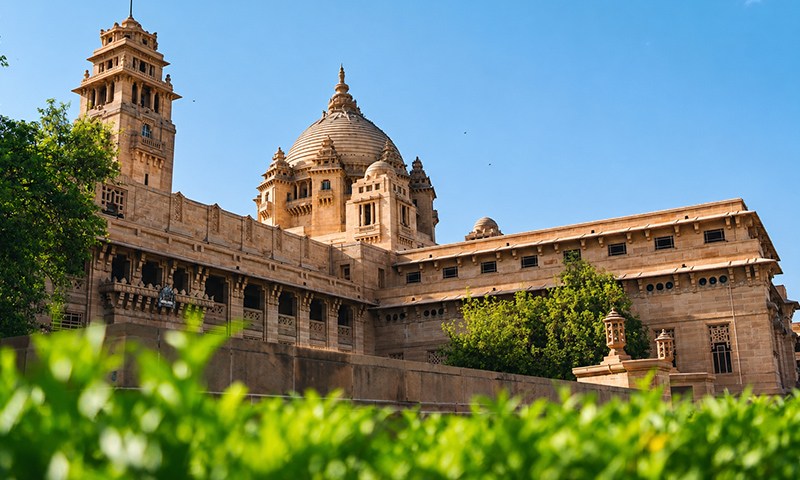
India’s palace hotels are living archives of Rajput courts, Nizami wealth, Maratha resilience, and colonial ambition, restored with white glove precision and recognised by the world’s most demanding travel juries. TripAdvisor Travellers’ Choice, Condé Nast Readers’ Choice, the UNESCO Asia Pacific Awards for Cultural Heritage Conservation, Michelin Keys, and Relais & Châteaux inductions have all recognised Indian properties consistently over the past decade. This curated list of 25 award winning heritage hotels India travellers can consider draws directly from that recognition. It is meant for planners looking for meaningful royal stays rather than a checklist of famous names.
Recognition in this segment is rarely decorative. Global juries evaluate restoration integrity, service depth, cultural stewardship, and the quality of the guest experience. Every property on this list has earned at least one significant award, whether from a global body like UNESCO, a travel authority like Condé Nast Traveller, or India’s own Ministry of Tourism through the National Tourism Awards. Where possible, we have noted the specific recognition and year alongside each entry.
Adrift on Lake Pichola since 1746, this former summer palace of the Mewar royals became India’s first palace converted to a hotel in 1963. It was named the World’s Number One Hotel in the 2023 TripAdvisor Travellers’ Choice Awards. Its 65 rooms and 18 suites carry a level of Rajput opulence few can match, accessed only by launch.
The Art Deco masterpiece completed in 1943 remains one of the world’s largest private residences. Managed by Taj since 2005, it has been named the World’s Best Hotel multiple times by Condé Nast Traveller Readers’ Choice Awards and topped the TripAdvisor Travellers’ Choice list for India in 2016 and again in 2018.
Once the residence of Maharaja Sawai Man Singh II and Maharani Gayatri Devi, Rambagh Palace was declared the Best Hotel in the World by Condé Nast Traveller in September 2009. It topped TripAdvisor’s Travellers’ Choice for the World in 2023. Its 78 rooms and suites sit within Mughal gardens where peacocks still roam.
The 15th century fort restored by Aman Nath and Francis Wacziarg received the Ministry of Tourism’s National Tourism Award for its restoration model. Just under two hours from Delhi, Neemrana is widely credited with launching India’s heritage hotel movement when it opened in 1991.
Ninety minutes north of Jaipur, this 475 year old ancestral palace of the Samode family is famed for its Sheesh Mahal and Durbar Hall frescoes. It has featured multiple times on Condé Nast Traveller’s Gold List and on Travel + Leisure’s It List for boutique heritage properties.
A 300 year old fort palace 28 kilometres from Udaipur, rebuilt as an all suite minimalist retreat. Devigarh has won multiple architectural awards for its blending of white marble, sandstone, and contemporary design, and has featured on Condé Nast Traveller’s Hot List since its earliest years.
An 18 acre Indo Saracenic property from 1745, Jai Mahal Palace is managed by Taj and has featured on the TripAdvisor Travellers’ Choice lists for its expansive gardens and traditional Rajasthani hospitality. It works well as a quieter alternative to Rambagh within Jaipur city limits.
Overlooking Lake Pichola from inside the City Palace complex, this Mewar era property has been repeatedly recognised in Condé Nast Traveller’s Readers’ Choice Awards. Its Durbar Hall and Crystal Gallery hold one of the world’s rarest crystal collections, commissioned by Maharana Sajjan Singh in 1877.
A HRH Group heritage property, this crescent shaped palace within the City Palace complex has been a Travel + Leisure India’s Best favourite. It remains the pick for guests who want direct Mewar family stewardship rather than a hotel chain operation, with rooms opening around a marble courtyard pool.
Recognised by the World Travel Awards as the World’s Leading Heritage Hotel multiple times and named the World’s Leading Boutique Hotel. Raj Palace dates to 1727 and offers 29 unique suites, including the Presidential Suite spread over three floors and decorated in the original Mughal tradition.
Set beneath the ramparts of Mehrangarh Fort, this restored 18th century haveli won the UNESCO Asia Pacific Award of Merit for Cultural Heritage Conservation in 2011. The award recognised the sensitivity of its adaptive reuse, blending original sandstone façades with contemporary interiors.
India’s first heritage hotel to open its doors to paying guests in 1976, when the youngest brother of the Maharaja of Jodhpur converted his residence. It remains a Ministry of Tourism recognised heritage property and is often used as a gentler introduction to Jodhpur’s palace hospitality.
Built in the vernacular style of the Thar and inspired by the region’s caravanserais, Suryagarh is a repeat winner in Condé Nast Traveller’s Readers’ Choice Awards and Travel + Leisure India’s Best. Its Rajasthani experiences programme, from Bhati clan history walks to Chudail Trail evenings, is widely imitated.
The former royal guesthouse of Maharaja Sawai Man Singh II, restored by SUJAN and inducted into Relais & Châteaux. It has featured on Condé Nast Traveller’s Hot List with 14 dramatically designed suites and rooms decorated by Adil Ahmad in a maximalist Jaipur palette.
Perched 609 metres above the city, the former residence of the sixth Nizam earned the coveted Three Michelin Keys rating in 2024, Michelin’s highest recognition for hotels. Restored painstakingly between 2000 and 2010, its Venetian chandeliers and 101 seat dining table remain among Asia’s most photographed interiors.
The first Indian building granted its own registered trademark by the Trade Marks Registry in 2017. The 1903 harbour icon has hosted royalty and heads of state for over a century, holds multiple Travellers’ Choice titles, and remains a fixture on lists of the world’s most iconic hotels.
Perched above the Narmada in Madhya Pradesh, this 18th century fort palace was restored by Prince Richard Holkar, descendant of Rani Ahilyabai Holkar. It has appeared on Condé Nast Traveller’s Gold List for over a decade and is a longstanding member of Relais & Châteaux.
The Grand Dame of Chowringhee has hosted travellers since 1898 and is a repeat winner in the Travel + Leisure World’s Best and Condé Nast Traveller Readers’ Choice Awards for city hotels in Asia. Its neoclassical façade opens onto the Kolkata Maidan.
Built in 1902 as a royal guesthouse for the Scindia family, Usha Kiran is regularly listed among Madhya Pradesh’s top heritage stays. It has featured on TripAdvisor Travellers’ Choice Best of the Best lists and offers a rare Scindia era interiors experience within its 40 rooms and suites.
A tiny 10 room 18th century property once owned by Maharaja Prabhu Narain Singh. Its low room count and Taj hospitality have earned it multiple luxury awards from the Travel + Leisure and Condé Nast Traveller stables. It remains a favoured base for private Ganga tours.
Built in 1921 by the Maharaja of Mysore for the Viceroy of India, this white palace styled after St Paul’s Cathedral is managed by ITDC’s Ashok Group and has won National Tourism Awards in the heritage category. Its Italian marble staircase and Belgian glass windows survive intact.
Originally opened in 1884, The Oberoi Cecil retains its colonial elegance in the heart of Shimla and has been recognised repeatedly in Condé Nast Traveller’s Readers’ Choice Awards and Travel + Leisure India’s Best hill hotels lists. Rudyard Kipling was among its earliest guests.
A restored 130 year old Tamil Chettiar mansion in Pondicherry’s Muslim Quarter, Maison Perumal is a CGH Earth property that received the UNESCO Asia Pacific Award of Merit for Cultural Heritage Conservation in 2012. The award recognised the fidelity of the restoration to original Chettinad materials and methods.
CGH Earth’s flagship in Fort Kochi is built on a colonial era boatyard site and has been a repeat feature on Condé Nast Traveller Gold Lists. Its Portuguese, Dutch, and British architectural cues reflect the layered trading history of Kochi across four centuries.
Designed by an associate of Sir Edwin Lutyens and opened in 1936, The Imperial has featured on the Condé Nast Traveller Gold List and holds one of India’s most respected private art collections, spanning over 5,000 works of colonial era Indian art. It sits on Janpath, walking distance from Connaught Place.
A palace stay works best when the trip is designed around it rather than tacked on. A few practical notes drawn from consistent guest feedback:
For travellers planning a full circuit built around palaces and havelis, our Royal Rajasthan tour with heritage stays and dedicated Jodhpur tour packages weave several award winning heritage hotels into a single itinerary with private ground transport and English speaking guides.
A heritage hotel stay is not simply about a room. It is about walking corridors where dynasties once passed, dining in halls that hosted queens, and sleeping under ceilings painted centuries before the trip was ever imagined. The 25 heritage hotels in India above have all earned their recognition through decades of guest experience, restoration work, and cultural stewardship. For travellers weighing several options, our editorial guide to India’s finest luxury retreats covers the wider luxury landscape, while our Udaipur tour packages show how a single city can anchor a palace focused itinerary. To begin planning a personalised heritage stay circuit with our team, reach us through the Memorable India contact page.
India’s Ministry of Tourism defines heritage hotels as properties built before 1950 in a palace, castle, fort, haveli, or hunting lodge that retains their original architectural character. The Ministry categorises them further into Heritage Basic, Heritage Classic, and Heritage Grand, based on facilities and heritage quality.
Taj Lake Palace in Udaipur, Umaid Bhawan Palace in Jodhpur, and Rambagh Palace in Jaipur each hold a large collection of top honours from TripAdvisor Travellers’ Choice, Condé Nast Traveller Readers’ Choice, and Travel + Leisure. Taj Falaknuma Palace in Hyderabad added a Michelin Three Keys rating in 2024, one of only a handful in India.
Rates vary widely. The most iconic palace suites at Umaid Bhawan, Taj Lake Palace, and Rambagh can run into six figures per night in Indian rupees during peak season. Mid range heritage properties like Neemrana, Samode Bagh, and Ajit Bhawan start considerably lower, and Ministry of Tourism registered heritage homestays can start at a fraction of palace rates.
October to March offers the most comfortable weather across Rajasthan, with clear days and cool nights ideal for palace courtyards and open air dining. September and early April are quieter shoulder months with better rates. May and June are extremely hot in the desert cities, though monsoon rates in July and August can be attractive for hill and southern properties.
Ahilya Fort in Maheshwar and Sujan Rajmahal Palace in Jaipur are among the current Indian members of Relais & Châteaux, the international association of independent luxury hotels and restaurants. Membership is by invitation and is renewed annually on the basis of service and character.
Taj properties participate in the IHCL Taj InnerCircle programme with partial recognition of Marriott Bonvoy tiers due to the group’s alliance. Oberoi properties run their own One programme. Independent heritage hotels like Samode, Neemrana, Ahilya Fort, and Sujan typically do not participate in global chain programmes but often offer direct booking benefits equivalent in value.
15 Amazing Temple Fairs in India: A Traveller’s Guide to Faith, Colour and Living Tradition
30 Sep 2026
13 Best Places to Explore in the Youngest State of Telangana
29 Sep 2026
12 Less Explored Destinations in Maharashtra Worth Adding to Your Travel List
28 Sep 2026
11 Must-Visit Museums in India for Wildlife Lovers
27 Sep 2026
11 Best Places in India to Celebrate Christmas
26 Sep 2026


