 +919871148514
 info@memorableindia.com
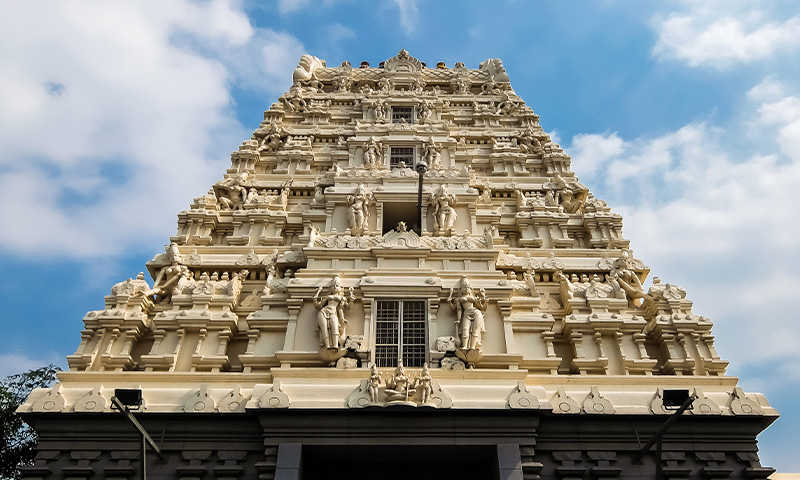
South India holds some of the oldest continuously functioning Hindu temples on the subcontinent, and many of them double as living museums of engineering, sculpture, and ritual urban planning. For travellers who care about stonework, scale, and the stories carved into granite, the region offers a trail that spans more than a thousand years of design evolution, from the austere Pallava rock cuts of the seventh century to the maximalist Vijayanagara mandapas of the sixteenth.
This guide covers seven temples that consistently feature in heritage circuits across Tamil Nadu, Karnataka, and Kerala. Each entry pairs the architectural highlight with practical planning notes so you can decide what fits your itinerary. The focus is on structural beauty, not just religious significance, though the two are rarely separate here.
If you are planning a first visit to the south, treat these temples as reference points rather than a checklist. Three days in Thanjavur and Madurai will teach you more about Chola and Nayaka craftsmanship than a hurried week trying to tick off every site. The temples that reward unhurried attention also happen to be the ones where guides, local scholars, and resident priests are most willing to share context, which is where the trip stops feeling like sightseeing and starts feeling like fieldwork.
South Indian temple architecture is largely associated with the Dravidian style, which took shape under the Pallavas, matured under the Cholas, and reached ornamental peaks under the Vijayanagara, Hoysala, and Nayaka dynasties. Three visual markers help identify it:
The Hoysala temples of Karnataka branch off from this template with soapstone construction, star shaped platforms, and lathe turned pillars. Kerala temples add their own layer with sloping copper roofs that respond to the monsoon. Reading these differences on the ground is half the pleasure of the trail. A Chola vimana at Thanjavur, a Nayaka gopuram at Madurai, a Hoysala frieze at Halebidu, and a Pallava rock cut at Mahabalipuram are, in effect, four different vocabularies drawn from the same architectural grammar, and the sequence shows how the style moved from restraint to ornament over seven or eight centuries.
Commissioned by Chola emperor Rajaraja I and consecrated in 1010 CE, the Brihadeeswarar Temple is the oldest of the three Great Living Chola Temples recognised as a UNESCO World Heritage Site. The main vimana rises to roughly 66 metres, built almost entirely from interlocking granite blocks hauled from quarries far from the Kaveri delta.
Three details reward slow looking:
Best visited in the early morning before the granite heats up. Allow two hours for an unhurried walk. The adjoining Thanjavur Palace and Saraswathi Mahal Library make a natural afternoon pairing, and the Chola bronzes in the palace museum help you read the temple sculpture back home.
The Meenakshi Amman Temple is the headline act of Dravidian ornamentation. The present structure dates largely to the Nayaka period in the sixteenth and seventeenth centuries, though worship on the site is far older. Fourteen gopurams rise over the compound, the tallest nearing 52 metres, each face packed with painted figures of deities, dvarapalas, and mythological scenes.
Interior highlights include the Thousand Pillar Hall, now partly a sculpture museum, and the Potramarai Kulam, a tank used for ritual bathing. The temple sits at the geographic heart of Madurai, with the old city laid out around it in concentric squares, a layout that itself is studied in urban planning schools. The daily routine inside the temple, from the dawn Udhayamarthanda Seva to the night Palli Arai ceremony that puts the deities to rest, is a working liturgical schedule carried on more or less unchanged for centuries, and it is part of what gives the stonework its weight.
If this temple sits high on your list, the Madurai Tour Package by Memorable India covers it along with Thirumalai Nayakkar Palace and other city highlights, with guided access that saves you queue time.
Virupaksha anchors the ruins of Vijayanagara, now the UNESCO listed Group of Monuments at Hampi. The temple has been in continuous worship since at least the seventh century, with major expansions under the Vijayanagara rulers in the fourteenth to sixteenth centuries.
The 50 metre eastern gopuram, built by King Krishnadevaraya in 1510, is the entry point most travellers photograph first. The scale catches most visitors by surprise, especially set against the open bazaar street that leads up to it, which is itself a surviving slice of Vijayanagara urban planning. Inside, look for:
The 4 Days Hampi Hospet Badami Tour Package is a focused way to cover the Vijayanagara and Chalukya heartland together, with a knowledgeable guide to make sense of the ruins.
Built in the twelfth century at the Hoysala capital of Dwarasamudra, Hoysaleswara is a masterclass in soapstone carving. The exterior walls carry continuous friezes of elephants, lions, horses, and scenes from the epics, each band only a few hundred millimetres tall yet densely populated with figures.
Architectural features worth noting:
Halebidu pairs naturally with Belur and Somnathpur for a day of Hoysala architecture. The site was inscribed on the UNESCO list in 2023 as part of the Sacred Ensembles of the Hoysalas. Chennakesava Temple at Belur, a half hour drive away, is the companion piece most travellers combine with Halebidu for a single day of twelfth century craftsmanship, and the smaller Kesava Temple at Somnathpur rounds out the trio.
The Shore Temple sits on the Coromandel Coast about 60 kilometres south of Chennai and belongs to the broader Group of Monuments at Mahabalipuram, a UNESCO World Heritage Site. Built in the early eighth century under Pallava king Narasimhavarman II, it is one of the earliest structural temples in South India, meaning it was assembled from cut stone rather than carved out of a cliff face.
Three features stand out:
Early morning offers the best light and the fewest crowds. The sea has reshaped the base of the temple over the centuries, which is itself part of the story. The temple also marks the beginning of the open air sculpture trail that gives Mahabalipuram its reputation as a Pallava workshop frozen in granite, with the Krishna Mandapa, Varaha Cave, and Mahishasuramardini relief all within a short walk.
Padmanabhaswamy is a hybrid, blending Dravidian and traditional Kerala temple architecture. The seven tiered gopuram at the eastern entrance is pure Tamil in profile, while much of the inner complex, with its sloping copper roofs and timber mandapas, is unmistakably Keralan.
The temple houses a reclining Vishnu idol viewed through three separate doorways, and its granite corridor of 365 and a quarter sculpted pillars, each distinct, is one of the finest examples of carved stone in southern India. Dress code is strict, with men expected to wear a mundu and women a sari or set mundu. Entry into the sanctum is restricted to practising Hindus, though the outer corridors, the Kulasekhara mandapam, and the vast gopuram front remain open for everyone to observe closely.
For travellers planning a wider southern trip that includes this temple, the Kerala Tour Packages by Memorable India weave Thiruvananthapuram into a route that also covers the backwaters and hill stations.
Ramanathaswamy sits on Rameshwaram Island at the eastern tip of Tamil Nadu and is one of the twelve Jyotirlinga shrines. Its claim to architectural fame is the longest temple corridor in the world, with pillared passageways stretching over 1,200 metres, each pillar carved individually and arranged in near perfect visual symmetry.
What to look for:
Pair the visit with Dhanushkodi for a half day of coastal driving if time allows. The approach across the Pamban Bridge is a short architectural experience of its own, and the Agnitheertham sea bathing ritual at sunrise, carried out just behind the temple, is one of the more memorable openings to a south Indian pilgrimage day.
A full seven temple circuit is possible in 10 to 14 days, though most travellers split it across two trips, one focused on Tamil Nadu plus Kerala and another on Karnataka. The practical sequencing matters: distances in South India look manageable on a map and are often longer in practice, especially on the smaller state highways that connect temple towns. A few practical notes:
Memorable India’s wider South India Tour Packages include private transport, English speaking guides, and heritage focused itineraries that cover these sites with the context they deserve.
The seven temples above are not a ranked list in any strict sense. Each one represents a different architectural moment, from the austere confidence of the early Cholas to the ornamental exuberance of the Nayakas and the quiet sophistication of the Hoysalas. Travelled as a sequence, they offer a readable history of how South Indian architecture evolved while remaining recognisably itself. For heritage first travellers, few other circuits in India reward the attention quite so generously.
A good itinerary leaves room for the smaller temples that sit beside the famous ones: the Airavatesvara at Darasuram, the Chennakesava at Belur, the Vittala complex at Hampi, and dozens of unlisted village shrines that still carry superb Chola, Chalukya, or Nayaka work. The seven in this guide are the entry doors; the trail extends well past them for anyone with the time to walk through.
For a tailored itinerary that covers these architectural landmarks with private transport, expert guides, and heritage sensitive accommodation, our South India Tour Packages are a reliable starting point. For pilgrimage focused travellers, our India Pilgrimage Tour offers a dedicated circuit of major temple towns. Write to us through the contact page with your travel dates and interests, and our team will design a route that fits your pace and priorities.
Q1. Which is the most architecturally significant temple in South India?
The Brihadeeswarar Temple at Thanjavur is widely considered the most architecturally significant, both for the scale of its 11th century granite vimana and for the engineering innovation of its 80 tonne capstone. It is also a UNESCO World Heritage Site, which places it on the shortlist for any serious heritage trail.
Q2. What is Dravidian temple architecture?
Dravidian temple architecture is the southern Indian architectural style defined by a pyramidal vimana over the sanctum, towering gopurams at the entrances, pillared mandapas, and concentric prakara courtyards. It developed primarily under the Pallava, Chola, Pandya, Vijayanagara, and Nayaka dynasties between the 6th and 17th centuries.
Q3. How many days do I need to cover the top South Indian temples?
A focused circuit covering the top seven temples across Tamil Nadu, Karnataka, and Kerala takes about 10 to 14 days by road. Travellers short on time usually split the trail into two trips, one covering Tamil Nadu with Kerala and a separate trip for Hampi, Halebidu, and Belur in Karnataka.
Q4. Are foreign tourists allowed inside South Indian temples?
Most South Indian temples admit visitors of all nationalities into the outer and middle courtyards. A few shrines, including the inner sanctum of Padmanabhaswamy in Thiruvananthapuram and certain other Kerala temples, restrict inner entry to practising Hindus. Dress codes are enforced strictly at the major temples.
Q5. Which South Indian temples are UNESCO World Heritage Sites?
Three temple groupings in South India hold UNESCO status: the Great Living Chola Temples at Thanjavur, Gangaikonda Cholapuram and Darasuram, the Group of Monuments at Mahabalipuram, and the Group of Monuments at Hampi. The Sacred Ensembles of the Hoysalas covering Belur, Halebidu, and Somnathpur were added in 2023.
Q6. What is the best time to visit South Indian temples?
The best time is November to February, when the weather across Tamil Nadu, Karnataka, and Kerala is cool and dry. March to May brings high heat in the plains, while June to September is the southwest monsoon season, which suits Kerala coastal temples better than inland sites.
Top 7 South Indian Temples Known for Their Architectural Beauty
16 Oct 2026
What to Expect On Your Dream Alleppey Houseboat Trip
15 Oct 2026
12 Top Tourist Destinations in Jammu and Kashmir for a Memorable 2026 Trip
13 Oct 2026
12 Tips to Remember Before Holidaying in the Northeast Indian States
11 Oct 2026
An Aesthetic Guide for Kerala Tour: Backwaters, Tea Hills and Coastal Light
11 Oct 2026


