 +919871148514
 info@memorableindia.com

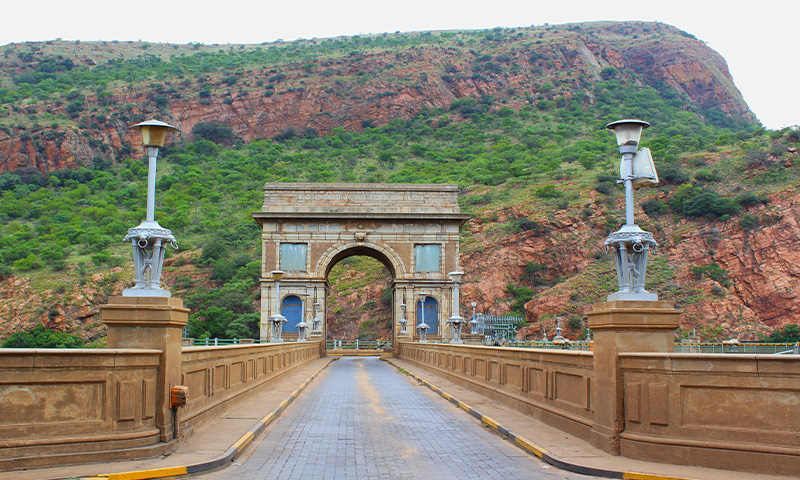
Gwalior rewards travellers who like their history served with scale. The city sits on the old pilgrim and trade route between Agra and Khajuraho, and most visitors still arrive on a day train from Delhi or as a loop extension to a Madhya Pradesh circuit. What greets them is a sandstone plateau fort that owns the skyline, a Scindia palace with a chandelier the size of a small apartment, and tombs where the roots of Hindustani music still feel close enough to touch.
This guide skips the usual list treatment. Each of the 15 places to visit in Gwalior below is grouped by what you are actually doing on the ground, with practical notes on timing, access and what to pair it with. If you have two unhurried days or a single long one, it will help you decide what makes the cut, and where to spend the extra half hour that heritage travel always demands.
The fort complex rises roughly 100 metres above the city on a sheer sandstone outcrop. Mughal emperor Babur called it the pearl among Indian forts, and the compound still carries five palaces, several water tanks and a cluster of temples. Plan at least half a day here and start early to avoid the sun on the open ramparts.
The fort itself is the single most important stop in Gwalior sightseeing. Walk up the Urwai Gate approach for the carved Jain tirthankaras, or drive up through Gwalior Gate for a quicker entry. The UNESCO tentative listing for Gwalior Fort gives a useful summary of its layered history, from Raja Suraj Sen in the 8th century through Tomar, Mughal and Scindia rule.
Within the fort, Man Mandir Palace is the headline building. Raja Man Singh Tomar built it in the late 15th century, and the turquoise and yellow tilework on the outer walls has aged better than it has any right to. Go into the inner chambers to see the acoustic jaali screens and the underground floors where royal women once sat through the summer.
The oldest surviving structure in the fort compound, Teli Ka Mandir is a 9th century shrine with a Dravidian style barrel-vaulted roof grafted onto a North Indian base. It stands over 100 feet tall and reads almost brutalist from a distance, which is part of what makes it compelling in person. The carvings around the entrance are worth a slow look, and the shikhara doorway framing is in surprisingly good condition for a monument of its age.
A 11th century twin temple pair dedicated to Vishnu, the Sas Bahu complex is often confused for a mother-and-daughter-in-law shrine thanks to its colloquial name. The actual meaning traces back to Sahastrabahu, a thousand-armed form of Vishnu. The larger temple carries three storeys of relief work. Both temples sit on the eastern side of the fort with an open view toward the city below.
Cut into the fort cliff on the southwestern approach, the Siddhachal caves hold 24 colossal Jain tirthankara figures, the tallest standing close to 17 metres. They were commissioned during Tomar rule in the 15th century, defaced during Babur’s campaigns, and partially restored over the centuries. Early morning light is the right time to see them.
Inside the fort, this gurdwara marks the place where the sixth Sikh guru, Guru Hargobind, was held and later released by Emperor Jahangir. Guru Hargobind refused to leave without 52 other imprisoned kings, and the gurdwara takes its name from that act. The structure itself is 20th century, but the kirtan sessions in the morning carry a very particular stillness.
Built in 1874 for the Scindia royal family under Jayajirao Scindia, Jai Vilas is an Italian-influenced sprawl of Tuscan, Corinthian and Baroque elements. The Durbar Hall holds two of the heaviest ceiling chandeliers in the world, each weighing close to 3,500 kilograms. Local legend has it that ten elephants were walked across the roof to test if it could carry them. Part of the palace still houses the Scindia family; the rest runs as the Jai Vilas Palace Scindia Museum, one of the most absorbing stops in Gwalior.
Raja Man Singh Tomar built Gujari Mahal in the 15th century for his beloved queen Mrignayani. It now functions as the archaeological museum of Gwalior and holds early medieval sculpture, terracotta, and the celebrated Shalbhanjika statue from Gyaraspur, often treated as a reference piece for Indian classical form. The palace itself is modest from the outside and often skipped, which keeps it quieter than the fort above.
Housed in the ancestral haveli of the Bangash family, Sarod Ghar is a small, well-curated museum devoted to the sarod and to the lineage of Hindustani classical musicians who shaped it. Instruments, correspondence, photographs and the occasional live recital turn this into one of the more rewarding under-the-radar things to do in Gwalior for anyone with even a passing interest in Indian music. The courtyard is modest and the staff genuinely enjoy explaining the instruments, which makes it an easy 45-minute stop that most tour groups skip entirely.
Mian Tansen, one of the Navratnas of Emperor Akbar’s court, was born near Gwalior and is buried here beside his teacher, Mohammad Ghaus. The tomb is simple, but the tamarind tree in the compound carries a long-held belief that chewing a leaf lends the voice its sweetness. Every December, the four-day Tansen Samaroh music festival turns this ground into one of the most important dates in the Hindustani classical calendar.
A short walk from Tansen’s resting place, this early Mughal tomb was built in the 16th century for the Sufi saint Mohammad Ghaus, a spiritual advisor to Emperor Humayun. The square sandstone structure with its hexagonal jaali screens is an underrated example of Indo-Islamic design and deserves more attention than most itineraries give it.
Modelled loosely on the Konark Sun Temple in Odisha, the Gwalior Sun Temple was built in 1988 by the industrialist G.D. Birla. It is clearly a modern structure, but the red sandstone exterior, chariot-wheel reliefs and quiet garden around it make it worth a short stop, especially in the late afternoon when the stone warms up and the shadows across the facade turn deep. Dress code is relaxed and photography is permitted outside the sanctum.
The royal cenotaphs of the Scindia dynasty sit in a walled complex that most visitors miss entirely. The main chhatri, raised in memory of Jayajirao Scindia, carries a layered marble and sandstone silhouette that reads almost Rajput at first glance. Early mornings here, with the mist on the lawns, are among the most photogenic hours in the city. Entry is free in most cases and the caretakers are usually happy to point out the smaller cenotaphs for the royal consorts set along the perimeter wall.
Laid out in the 1920s during Madho Rao Scindia’s reign, Phool Bagh is the open-air lung of central Gwalior. The gardens hold a gurdwara, a Jama Masjid, a Theosophical Society lodge and the small Gopachal Parvat Jain complex nearby. For families travelling with older parents or young children, this is where you break the day between fort climbs and museum rooms.
Set within the Phool Bagh grounds, the municipal zoo has a modest but reasonably maintained collection, including white tigers, which are closely associated with the region historically. The grounds are shaded, the walking is easy, and ticket prices are low. Treat it as a pleasant pause rather than a destination in itself.
About 23 kilometres from the city centre, Tighra Dam on the Sank river is where locals head for an evening on the water. Boating, including pedal boats and motor cruises, runs through the cooler months, and the small food stalls along the embankment carry the usual pakora and chai routine that goes with Indian picnic spots. For a travel plan heavy on monuments and museums, half a day at Tighra is a useful landscape counterpoint before you leave town, especially if you are travelling with children who need a break from guided walks.
Gwalior sits roughly 320 kilometres south of Delhi and 120 kilometres from Agra, which makes it a natural extension of a Golden Triangle route or a bridge into Madhya Pradesh. The Vande Bharat and Shatabdi trains from Nizamuddin take under four hours, and the city has its own airport with daily connections to Delhi, Mumbai and Bengaluru. Road access via the Yamuna Expressway and NH44 is well-paved and workable as a self-drive route, though most travellers prefer the train for the time it saves.
For visitors building this into a longer heritage route, our Golden Triangle Tour with Khajuraho package threads Delhi, Agra and Jaipur into the Madhya Pradesh temple belt and includes Gwalior as an entry point to the state.
Pairing Gwalior with the wider Madhya Pradesh route works especially well. Our Central India Heritage Tour covers the Gwalior, Orchha, Khajuraho and Bhopal sweep, which is the most natural way to see the state’s temple and palace architecture in one trip.
Gwalior is one of those cities where the headline sights, the fort and the palace, genuinely deliver, but the quieter stops around them, like a sarod museum, a Sufi tomb, a Scindia cenotaph at dawn, often leave the sharper memory. If you are building a Madhya Pradesh circuit, start here. If you are extending a Golden Triangle, add two nights. Either way, speak to the team at Memorable India to tailor the route around your pace, budget and interests, including private cars, guided fort walks and festival-aligned timing.
Gwalior is best known for its hilltop sandstone fort, the Scindia-era Jai Vilas Palace, the tombs of Tansen and Mohammad Ghaus, and its long association with Hindustani classical music. It is one of the most important heritage cities in Madhya Pradesh.
Two unhurried days are ideal to cover the fort cluster, Jai Vilas Palace, the main tombs, Sarod Ghar and the Scindia Chhatris. A single day is manageable if you focus on the fort and the palace.
The leading historical places to visit in Gwalior are Gwalior Fort with Man Mandir Palace, Teli Ka Mandir, Sas Bahu Temple, Siddhachal Jain Caves, Jai Vilas Palace, Gujari Mahal, the Tomb of Tansen and the Tomb of Mohammad Ghaus.
The best time to visit Gwalior is between October and March, when temperatures are cool and most sightseeing is comfortable. December is especially good if you want to align your trip with the Tansen Samaroh music festival.
Gwalior is roughly 320 kilometres from Delhi. The fastest option is the Vande Bharat or Shatabdi Express from Hazrat Nizamuddin, which takes under four hours. The city also has an airport with daily flights, and the Yamuna Expressway makes a self-drive route via Agra straightforward.
Yes, this is one of the most popular Madhya Pradesh circuits. A typical route adds Gwalior as a bridge between Agra and Orchha, then continues to Khajuraho for the Chandela temples. Four to six days are enough for an unhurried version of this trip.

7 Reasons Why One Should Travel by Indian Rail
22 Oct 2026
6 Reasons to Visit Chopta Valley in the Himalayas
21 Oct 2026
5-Step Guide to Plan a Jungle Safari Trip to Corbett National Park
20 Oct 2026
6 Popular Short Treks in Sikkim You Must Explore
19 Oct 2026
5 Jeep Safari Routes to a Paradise Called Leh
18 Oct 2026


