 +919871148514
 info@memorableindia.com

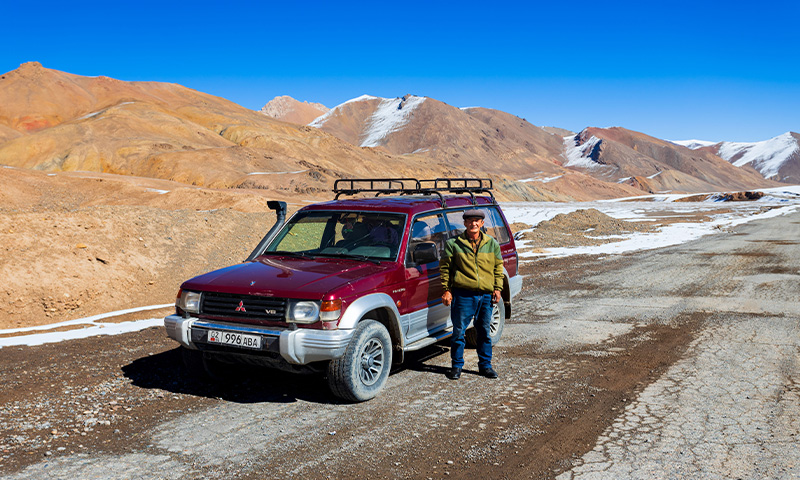
Leh sits at roughly 3,500 metres in the lap of the Trans-Himalaya, ringed by passes that climb another thousand or more before falling into valleys with names that read like a quiet geography lesson. For anyone who wants to see Ladakh beyond the airport-to-market stretch, a jeep safari remains the most sensible way to cover the ground. Public transport is thin, cycling demands weeks of acclimatisation, and the terrain punishes anything smaller than a mid-size SUV. The road itself is also part of the experience here, which is why bus tours tend to feel like watching Ladakh through a sealed window.
This guide walks through five tested Leh jeep safari routes, each chosen for a different reason: scenery, cultural depth, altitude experience, remoteness, and border-area access. The goal is a trip that balances variety with physical realism, and to flag what each route actually feels like on the ground.
Ladakh’s road network is a mix of smooth BRO blacktop, river crossings, broken gravel, and the occasional afternoon stream that forms as glacial melt peaks. A sturdy SUV, usually a Scorpio, Innova Crysta, or Thar, handles these conditions without turning the drive into a mechanical gamble. River crossings near Shyok and the Chushul loop can rise sharply by late morning, so starting early is less a style preference and more a safety choice.
The format gives you flexibility too. You can stop at a roadside chorten, wait out a sudden hail shower, or detour to a lesser-known monastery without worrying about bus timings. For families with older parents, Gen Z travellers chasing viewpoints, or couples on a short break, a jeep safari in Ladakh compresses distance without sacrificing the slower moments that define this region.
A good safari pairs an experienced local driver with a sensibly paced route plan. Altitude is the real variable, and no itinerary should ignore it. If you are still shortlisting what to see first, our collection of Leh Ladakh tour packages offers a sensible starting point before you commit to any single route.
Distance: Around 120 km one way | Drive time: 5 to 6 hours | Peak altitude: Khardung La at approximately 5,359 metres per BRO signage (satellite surveys place it slightly lower per Wikipedia)
The Nubra route is where most first-time Ladakh travellers begin, and the choice holds up. The climb from Leh to Khardung La is dramatic without being technically punishing, and the descent into the Shyok and Nubra valleys reveals a landscape that shifts from grey scree to pale sand dunes within a single afternoon. The road itself is mostly tar now, though a few patches around South Pullu stay broken through the season.
Hunder, the usual overnight halt, sits on a cold desert plain where double-humped Bactrian camels still roam, a quiet nod to the old Silk Route trade that once passed through here. Diskit Monastery, with its 32-metre Maitreya statue overlooking the valley, deserves an unhurried morning rather than the standard twenty-minute photo stop. If you have an extra day, Panamik’s hot springs and Yarab Tso, the hidden lake above Sumur, reward a short detour that most group tours skip. Nubra also has the gentlest night-time altitude profile of the five routes, which makes it the kindest start for travellers who flew in from sea level the previous day.
Who it suits: First-time Ladakh visitors, families with teenagers, anyone wanting a sampler of what the region can offer.
Distance: Around 225 km one way | Drive time: 6 to 7 hours | Peak altitude: Chang La at roughly 5,360 metres
Pangong Tso needs no cinematic introduction, though it is worth noting the lake stretches about 134 km in length with roughly two-thirds lying across the Line of Actual Control in Tibet. The drive crosses Chang La, usually the second high pass most travellers tackle, and then descends through Tangtse before the final stretch along the lake’s western shore unfolds in slow, saturated colour.
Spangmik and Man-Merak are the two most common overnight stops. Spangmik keeps you closer to the main viewpoint, while Man-Merak offers quieter homestays if you prefer village pace over camp activity. Early morning light on the water, when the lake turns from indigo to turquoise within an hour, is the moment most photographers plan the trip around. Night-sky conditions at Pangong are also strong on moonless weeks, though not as clean as Hanle.
A longer loop through Durbuk and Shyok back to Nubra is possible for travellers with a week in hand, though the Shyok route stays weather-dependent. Camps along the shore run on solar and limited diesel power, so phone charging is slow and heating is modest if you travel in September or October.
Who it suits: Photographers, couples, those who want one marquee landscape rather than a cluster of smaller sights.
Distance: Around 220 km one way to Tso Moriri | Drive time: 7 to 8 hours | Peak elevation: Namshang La around 4,900 metres
Tso Moriri sits at roughly 4,522 metres on the Changthang plateau, inside the Changthang Wildlife Sanctuary. The drive follows the Indus along the Leh-Manali highway as far as Chumathang, where hot springs make a reasonable lunch stop, before turning south toward Mahe Bridge and climbing to the lake. The last 40 km stretch runs along a wide, high-altitude plain where kiang, the Tibetan wild ass, often appear in small herds.
Korzok, the small settlement on the lake’s western shore, has basic homestays and a 400-year-old monastery that holds the Korzok Gustor festival each summer. Birders tend to time the trip for May and June, when bar-headed geese, black-necked cranes, and brahminy ducks pass through on migration. Combining Tso Moriri with Tso Kar on a two-day loop works well if you add a night at Thukje or Rajbaug, and the Puga Valley sulphur geysers sit comfortably on the return leg if your driver is willing to add two hours.
The route sees far fewer vehicles than Pangong, which is reason enough for travellers who prefer stillness over Instagram queues.
Who it suits: Return visitors to Ladakh, birders, those avoiding the Pangong crowd.
Distance: Around 265 km one way | Drive time: 8 to 9 hours | Elevation at Hanle: approximately 4,500 metres
Hanle is where India’s astronomy community goes when the sky stops being a city rumour. The Indian Astronomical Observatory, operated by the Indian Institute of Astrophysics, sits atop Mount Saraswati at 4,500 metres and ranks among the highest optical observatories in the world (see the Indian Institute of Astrophysics Hanle page for background). In 2022, the region around Hanle was designated the Hanle Dark Sky Reserve, India’s first.
The drive follows the Mahe Bridge turn-off and continues through Loma and Nyoma before reaching the Hanle plain. Permits are mandatory, since this is an inner-line border area, and night-time light discipline is now part of the stay. Homestays in the reserve follow red-light protocols, meaning no outdoor white lights after sundown, allowing the Milky Way to show up with a clarity most Indians have never seen from home. A few homestays also run small telescopes for guests, and the Astronomy Ambassadors programme trained local villagers to guide amateur stargazers through the basics.
Pair Hanle with Umling La, the Border Roads Organisation-maintained road widely cited as the highest motorable pass in the world at 5,798 metres per BRO figures, for a route that genuinely tests both vehicle and traveller. Umling La needs an additional day and permit, and oxygen support is not optional for travellers who have not already spent several nights above 4,000 metres.
Who it suits: Astronomy enthusiasts, serious road-trip travellers, those seeking the quietest corner of Ladakh.
Distance: Around 205 km one way from Leh via Hunder | Drive time: 7 to 8 hours total | Altitude at Turtuk: approximately 2,900 metres
Turtuk opened to tourists only in 2010, having been part of Pakistan until the 1971 war. The village sits on the Shyok River in the Balti cultural belt, closer to Karakoram geography than to Tibetan Buddhist Ladakh. Apricot orchards, terraced buckwheat fields, wooden mosques, and a palpably different cuisine make this the most culturally distinct stop on any Leh itinerary. The Balti kitchen leans on buckwheat pancakes, apricot kernel oil, and slow-cooked meat preparations that feel entirely separate from the thukpa-momo circuit most visitors associate with Ladakh.
The drive extends the Nubra Valley route by another 85 km past Hunder, following the Shyok through narrow gorges and sudden green pockets. Pack a full day here. The old village across the river, the royal house of the Yabgo dynasty, and conversations with Balti-speaking elders fill the hours more usefully than a hurried photo stop. For a trip that already includes Nubra, our 6 Days Ladakh with Nubra Valley tour package is a sensible base to extend by one or two days for Turtuk, since the altitude drop into the village is a welcome break on any longer Ladakh route.
Who it suits: Culture-first travellers, repeat Ladakh visitors, those uncomfortable with sustained altitude above 4,500 metres.
Most of these routes require an Inner Line Permit, issued online via the LAHDC Leh permit portal. Indian nationals pay a modest fee; foreign nationals follow a separate Protected Area Permit process through the UT administration. Carry multiple hard copies for checkpoints, since mobile data drops out well before you reach the restricted zones, and the paper copy is what the posts actually keep.
The jeep safari season in Leh runs from mid-May to mid-October for most routes. Pangong and Nubra now stay accessible in winter for experienced operators, but Hanle, Tso Moriri, and the Umling La extension are better attempted between June and September when passes are reliably open and homestays operate on full staff.
Acclimatisation is non-negotiable. Spend two full nights in Leh before any route crosses a 5,000-metre pass. Carry a basic altitude kit with Diamox taken on a doctor’s advice, oral rehydration salts, and a pulse oximeter. Hydration matters more than any gadget, and avoiding alcohol for the first 48 hours in Leh helps far more than any supplement. For travellers who want to pair a safari with trekking on either end, our 7 Days Sham Valley trekking tour offers a gentle introduction to Ladakhi village life at manageable altitudes.
The five routes above work equally well as standalone three-to-four-day loops or as building blocks for a longer eight-to-ten-day Ladakh itinerary. Pangong and Nubra sit at the easier end of the altitude curve, which is why most first-timers combine them. Hanle and the Tso Moriri belt reward travellers willing to invest more days in slower pacing and lighter sightseeing goals.
Vehicle choice matters more than people assume. A Scorpio or Thar handles the rough stretches of the Hanle and Tso Moriri routes with more composure than an Innova, which stays the better pick for the smoother Nubra and Pangong highways. Fuel stops are also fewer than you might expect, so plan refills in Leh, Diskit, Karu, and Nyoma rather than hoping for a pump at the next village. Carry at least one jerry can on the Hanle and Umling La legs since the Nyoma pump occasionally runs dry during peak weeks.
Cost structures also deserve attention. A reputable operator bakes in local driver per diem, camp kitchen staff, permit fees, oxygen cylinders where relevant, and vehicle breakdown cover. The cheapest quote usually leaves one or more of these out, and the gap only surfaces when something goes wrong at 4,500 metres.
If you are at the point of locking dates and vehicle preferences, our team can structure the drive around your acclimatisation window, budget, and photography or birding priorities. Reach out through the Memorable India contact page with a rough date range and we will build the route into a working document you can review before booking anything.
The Leh to Nubra Valley via Khardung La route is the standard first-timer pick. The drive is dramatic but not overly long, altitude exposure above 5,000 metres is brief, and Nubra itself sits lower than Leh, which helps with sleep on the first night out of town.
Yes, every route to Nubra, Pangong, Tso Moriri, Hanle, and Turtuk requires an Inner Line Permit for Indian nationals and a Protected Area Permit for foreign nationals. Both are issued through the LAHDC Leh permit system online, and your tour operator usually handles the paperwork.
A trip covering Nubra, Pangong, and Tso Moriri comfortably needs eight to ten days including arrival and acclimatisation. Add two to three days if you want to extend to Hanle or Turtuk. Anything under six days means skipping either acclimatisation or one of the marquee destinations.
Mid-June to mid-September is the most reliable window, with all major passes open and homestays fully staffed. May and October work for Nubra and Pangong but can see sudden snow at the higher passes. Winter safaris to Pangong are now possible but should only be attempted with experienced operators.
Non-Ladakh registered private vehicles are not allowed to run as tourist taxis within Ladakh, which is why most safari operators use locally registered SUVs with local drivers. Self-driving a personal vehicle for your own use is permitted, but the altitude, fuel planning, and road conditions make hiring a local jeep the easier choice for most travellers.
Nubra and Pangong are generally fine for both groups with proper acclimatisation and a slower pace. Tso Moriri, Hanle, and Umling La routes involve sustained time above 4,500 metres and are better suited to healthy adults. A pre-trip medical clearance is sensible for any traveller with cardiac, respiratory, or blood-pressure conditions.

7 Reasons Why One Should Travel by Indian Rail
22 Oct 2026
6 Reasons to Visit Chopta Valley in the Himalayas
21 Oct 2026
5-Step Guide to Plan a Jungle Safari Trip to Corbett National Park
20 Oct 2026
6 Popular Short Treks in Sikkim You Must Explore
19 Oct 2026
5 Jeep Safari Routes to a Paradise Called Leh
18 Oct 2026


